
Parque das Nações (EXPO)
Parque das Nações is a recently developed neighbourhood recreated in the late 1990s to host EXPO98, the World Exposition held in Lisbon in 1998, where the majority of the world's countries were represented through their cultures and performances. Parque das Nações is Lisbon's most modern district, built on the site of a former industrial area to create the city's newest neighbourhood. Parque das Nações falls within the Junta de Freguesia do Parque das Nações, a formerly industrial and run-down part of Lisbon prior to Expo 1998. The area has since been transformed into one of the city's most prestigious and sought-after districts, with approximately 5 km of riverside frontage along the Tagus River, making it a popular destination for families with children, executives, tourists during the day, and young people socialising and enjoying the nightlife.

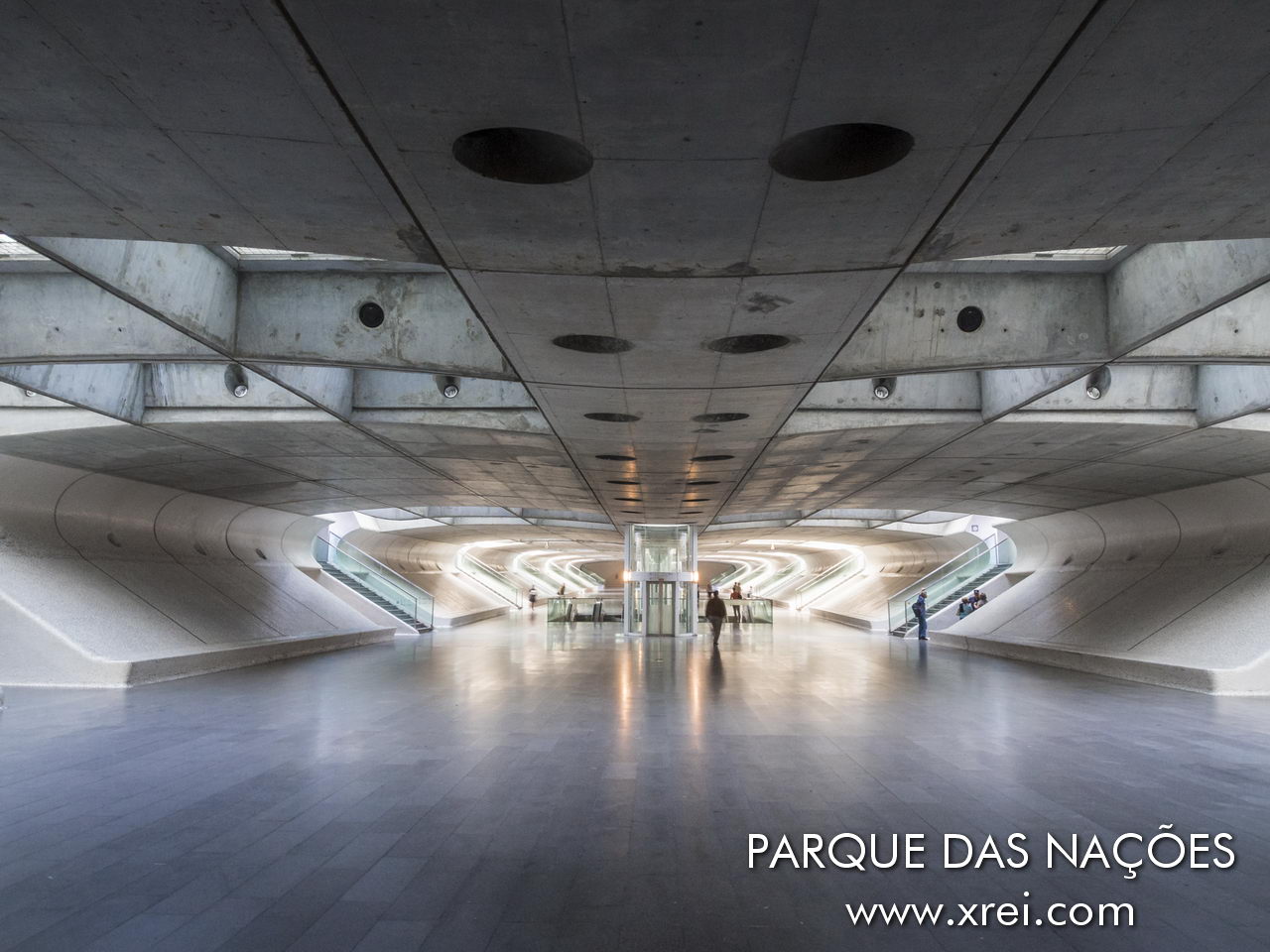
The Expo, as it is also known, is one of the main nightlife destinations in the Portuguese capital, with a strip of bars and nightclubs. Parque das Nações is a draw for lovers of contemporary architecture, with numerous modern buildings including the Pavilhão de Portugal designed by Álvaro Siza Vieira, the Lisbon Oceanarium designed by Peter Chermayeff, the Pavilhão Atlântico designed by Regino Cruz, the Teatro Camões designed by Manuel Salgado, and the Gare do Oriente designed by Santiago Calatrava.

For nature lovers, approximately one third of Parque das Nações is covered by gardens and green spaces featuring urban art, including the Alameda dos Oceanos, the Jardins Garcia d'Orta and the Jardins Suspensos, alongside buildings decorated with works by António Segui, Arthur Boyd and Erró, as well as pieces by Adalgisa Duarte, António Vidigal and João Cutileiro along the avenues and promenades.

Parque das Nações is one of Lisbon's main passenger transport hubs, served by suburban and long-distance trains, buses, the metro (with a direct connection to Lisbon Airport) and taxis. It is a modern, cosmopolitan and multicultural area where residents and visitors can walk, exercise, do business and live safely.
Administrative Organisation
Parque das Nações is administered by the Junta de Freguesia do Parque das Nações.
Top 10 Attractions in Parque das Nações
1. Lisbon Oceanarium is one of the largest public aquariums in the world, located on Esplanada Dom Carlos I. The Lisbon Oceanarium was inaugurated in 1998 to a design by architect Peter Chermayeff, with the aim of raising public awareness about the overexploitation of the oceans. Key highlights include:
- Central aquarium holding approximately 5 million litres of salt water;
- Over 1 million visitors per year;
- Submerged Forests exhibition by Takashi Amano;
- More than 25,000 species including sea otters, Magellanic penguins, rockhopper penguins, sea anemones and sharks.
2. Casino de Lisboa is Portugal's largest casino, located on the Alameda dos Oceanos. It opened in 2006 and receives approximately two million visitors per year. Key highlights include:
- 3 Restaurants: Le Buffet, a Portuguese specialities buffet restaurant; Hua Ta Li, a luxury Chinese restaurant; BelTejo, an event space for birthdays, galas, meetings and private dinners.
- 4 Bars: Arena Lounge; Paly Bar; Joker Bar; Baccarat Bar.
- 2 Entertainment spaces:
-
- Arena Lounge, the venue for circus performances and live music;
- Auditório dos Oceanos, the dedicated space for theatre productions.
-
- 1,100 slot machines
- Tables for Roulette, Blackjack, Caribbean Stud Poker, Banca Francesa and Ponto e Banca.
3. Centro Comercial Vasco da Gama is a shopping centre benefiting from abundant natural light thanks to its modern glass construction, with 4 floors of shops and restaurants in generous open spaces and multiple parking levels, located on Avenida Dom João II. It opened in 1999 and was named in honour of the navigator Vasco da Gama. Key highlights include: 170 shops across 2 restaurant floors, covering the main fashion, books, technology and hypermarket brands; 6 cinema screens; 1 health club.
4. Pavilhão de Portugal is a multicultural space managed by the University of Lisbon, located on the Alameda dos Oceanos. It was inaugurated in 1998 to a design by architect Álvaro Siza Vieira. Key features include:
- A central square of approximately 60 by 50 metres, used for official ceremonies and public events;
- A pre-stressed concrete canopy weighing 1,400 tonnes, one of the landmark innovative projects by Álvaro Siza Vieira; and the Exhibitions Centre.
5. Pavilhão do Conhecimento houses the Centro Ciência Viva of Parque das Nações, located on Largo José Mariano Gago. It was inaugurated in 1998 to a design by architect Carrilho da Graça and later converted into the Centro Ciência Viva, an interactive science museum. Activities and spaces include: Circuitos Ciência Viva; Auditorium; Library; Cafeteria; Augmented Reality Exhibition; Explora Exhibition; Módulos em Fuga Exhibition; Women in Science Exhibition; Ciência Viva Academy.
6. Teatro Camões is a cultural venue hosting a variety of performances, located in Parque das Nações near the Oceanarium. It was inaugurated in 1998 to a design by architect Manuel Salgado. Key features include: a glass façade facing the Tagus River; an auditorium with 873 seats; and an orchestra pit 16 metres wide and 5.5 metres deep.
7. Jardim Alameda dos Oceanos is a promenade approximately two kilometres long, located on the Alameda dos Oceanos. It was inaugurated in 1998 and features three distinct paths:
- Southern Path, running between the Torre da Galp and the Rotunda do Cabeço das Rolas;
- Gare do Oriente Path, the widest and most tree-lined route, situated near the Gare do Oriente and the Pavilhão de Portugal;
- Northern Path, featuring fountains, water features and shrub borders.
8. Telecabine Lisboa is a cable car running the full length of the former exposition waterfront, connecting the Torre Vasco da Gama area to the Oceanarium. It was inaugurated in 1998 with forty cabins each carrying up to eight passengers, offering views over Parque das Nações and the Tagus River along a journey of 8 to 12 minutes covering 1,230 metres at a height of 30 metres.
9. Estação do Oriente is a modern architectural transport hub housing the train, bus and metro station, located on Avenida Dom João II. It was inaugurated in 1998 to a design by architect Santiago Calatrava and is one of Lisbon's most important transport interchanges, served by train, bus, metro and taxis. The station received the Brunel Award for Architecture in 1998, with its upper-level glass canopy as the centrepiece.
10. MEO ARENA (Pavilhão Atlântico) is the country's largest events and entertainment arena, located on Rossio dos Olivais. It was inaugurated in 1998 to a design by architect Regino Cruz and the international firm Skidmore, Owings and Merrill. The MEO ARENA has hosted major national and international music concerts, corporate and municipal events, and political gatherings.
Further Attractions in Parque das Nações
Ponte Vasco da Gama was, at the time of its inauguration, the longest bridge in Europe, linking Lisbon to Montijo. It opened in 1998 and was named in honour of Vasco da Gama to mark the 500th anniversary of his arrival in India, to a design by TPF Consultores. Key characteristics include:
- Total length of over 17 km;
- Central towers reaching 150 metres in height;
- Deck situated 47 metres above water level;
- Three weather monitoring stations along the bridge;
- 91 traffic management cameras.
Parque Tejo is a landscaped riverside park located on Passeio do Tejo. It was inaugurated in 1998 and connects Parque das Nações to the mouth of the Trancão river. Points of interest include:
- Landscaped gardens running along the Tagus River;
- A popular weekend destination for Lisbon residents and tourists seeking rest and outdoor activities;
- A prime location for birdwatching along the Tagus Estuary.
Rossio dos Olivais is the central square of Parque das Nações, situated between the Centro Comercial Vasco da Gama and the Pavilhão Atlântico. It is known for the flags of the countries that participated in the 1998 Lisbon World Exposition, its water corridor and the large number of trees planted throughout.
Marina do Parque das Nações is one of Lisbon's most recently developed marinas, located on Rua Rio Tejo. The marina accommodates 602 berths for vessels up to 25 metres in the South Basin, and cruise ships or mega yachts up to 230 metres at the Ponte Cais. Services include: marina assistance; hypermarket with direct delivery to the vessel; laundry; books and films for guest use; banking; healthcare; bicycle rental; birthday event facilities.
Sky Bar Oriente is a rooftop bar located on Avenida Dom João II, offering panoramic views over the Tagus River and Parque das Nações.
Torre da Galp is a former oil refinery tower located on Rua Tomás da Fonseca. It is an example of industrial archaeology, restored for the 1998 Lisbon World Exposition as a reminder of the period when Parque das Nações was an oil refinery site.
LX Skate Park is a skate park located in Parque das Nações. Points of interest include the variety of ramps and obstacles for skateboarding manoeuvres, the quality of the surface, the proximity to the Parque das Nações riverside promenade, and the views towards the Ponte Vasco da Gama.
Jardim Cabeço das Rolas is a garden within Parque das Nações located on Avenida Ulisses, notable for sitting 33 metres above the level of the Tagus River and for historically being a resting point for turtle doves. Points of interest include: views over the Tagus River and the Ponte Vasco da Gama; a lake of 2,500 m²; fountains and water jets; a variety of tree species including orange trees, cypresses and olive trees.
Jardim Garcia d'Orta is an exotic flora garden located on Rua Alfredo Pimenta. It was inaugurated in 1998 to a design by landscape architect João Gomes da Silva, featuring plant species from Cape Verde, Goa, São Tomé and Príncipe, and the Azores and Madeira.
Jardins d'Água are landscaped gardens with water as their central theme, located in the riverside area of Parque das Nações. They were inaugurated in 1998 and feature: Jardins da Palmeira; Pomar do Mediterrâneo; Lago de Ulisses; Edifício de Cascata; Jardim Hidráulico.
Hospital CUF Descobertas is one of Lisbon's leading hospitals, located on Rua Mário Botas. It opened in 2001 with a daily capacity of approximately 1,500 outpatient consultations, 2,000 diagnostic examinations, 300 emergency cases, 60 surgical procedures, 10 births and 35 inpatient discharges. Facilities include:
- 158 inpatient beds
- Central Operating Theatre with 5 rooms
- Maternity Suite with 3 delivery rooms
- 116 specialist consultation rooms
Urban Art Route, covering the various outdoor exhibition areas throughout Parque das Nações, including:
- Tile panels by Abdoulaye Konaté;
- Work by Angela Ferreira;
- Structure by António Vidigal;
- Statue of Queen Catherine of Braganza by Audrey Flack;
- Tile panels depicting comic strip characters by Icelandic visual artist Erró;
- Works by Fernanda Fragateiro, including Jardim das Ondas and a giraffe sculpture;
- Portuguese cobblestone pavement depicting ocean waves in front of the flags of the countries that participated in the 1998 Lisbon World Exposition, by Fernando Conduto;
- Tile panel on the ECRAN building by Jorge Martins;
- Iron sculpture approximately 20 metres tall and weighing 15 tonnes, representing the Sun, by Jorge Vieira;
- Portuguese cobblestone pavement depicting sea monsters by Pedro Proença.

- Jardins Suspensos
- Esplanada Dom Carlos I
- Campus de Justiça
- Feira Internacional de Lisboa
- Jardim Sul
- Torre Vasco da Gama
Main Streets and Squares of Parque das Nações
Avenida Dom João II is one of the largest and busiest avenues in Parque das Nações, running between the Rotunda da República da Colômbia and Avenida Ulisses. It was built for the 1998 Lisbon World Exposition and named in 2009 in honour of King Dom João II. The avenue is close to several points of interest, including:
- Statue in honour of Dom João II by sculptor Manuel Rosa;
- Centro Comercial Vasco da Gama;
- Estação do Oriente.
Avenida Ulisses runs between Praça do Príncipe Perfeito and Rotunda da República da Argentina. Avenida Ulisses features the following points of interest:
- Alameda dos Oceanos;
- Jardins de Água;
- Caminho da Água;
- Jardim Cabeço das Rolas.
Avenida Fernando Pessoa is one of the avenues of Parque das Nações, running between the Alameda dos Oceanos and Avenida Marechal Gomes da Costa, close to the Alameda dos Oceanos and the Torre da Galp.
Educational Establishments
- Colégio Oriente
- Colégio Pedro
- Creche
- Externato João XXIII
Tourist Accommodation
- Exemplo Hotel
- Olissipo Oriente
- Tivoli Oriente
- Tryp Oriente
- VIP Executive Arts
Shopping
- Centro Comercial Vasco da Gama
- Gare do Oriente
Transport and Access

- Gare do Oriente
AeroShuttle: bus service with direct connection between Parque das Nações and Lisbon Airport every thirty minutes, stopping at the Tryp Oriente, Tivoli Tejo, Olissipo Oriente and VIP Art's hotels
Buses (Rodoviária de Lisboa and Transportes Sul do Tejo)
Trains: suburban (Linha da Azambuja and Linha de Sintra), national (Alfa Pendular, Intercidades and Regional) and international (Comboio Sud-Expresso and Lusitânia Comboio Hotel)
Express Coaches
Metro (Linha Vermelha)
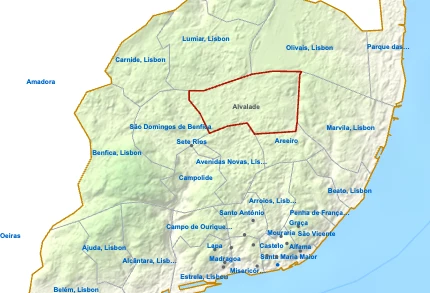
Location of the Parque das Nações Parish on the Lisbon Map
Parque das Nações is located...