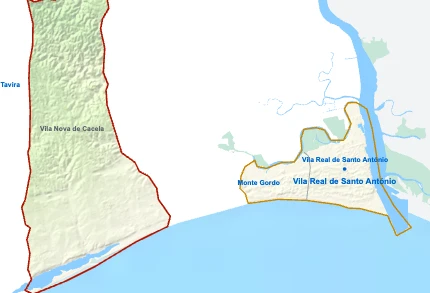

Vila Real de Santo António is a border city on the Rio Guadiana, with 18 824 inhabitants across 61 km², founded in 1774 by the Marquis of Pombal on a grid plan.
A long waterfront avenue with historic buildings faces the river and the Spanish town of Ayamonte. Shopping streets lead from the river to the main square.
Beaches in Vila Real de Santo António
- Praia de Santo António: beach south of the city, behind the dune forest.
- Praia de Monte Gordo: long beach with warm, calm water in Monte Gordo.
- Praia da Lota: family beach west of Monte Gordo.
- Praia da Manta Rota: beach at the eastern end of the Ria Formosa.
Monuments in Vila Real de Santo António
- Praça Marquês de Pombal: main square in Pombaline style, with the Igreja Matriz, an obelisk in honour of King José I and turrets at its four corners.
- Farol de Vila Real de Santo António: working lighthouse with a round tower, open to visitors.
Museums and culture in Vila Real de Santo António
- Arquivo Histórico Municipal António Rosa Mendes: historical documents on the region.
- Centro Cultural António Aleixo: cultural centre hosting regional performances.
Markets in Vila Real de Santo António
- Mercado Municipal: traditional market by the river.
Nature and leisure in Vila Real de Santo António
- Mata Nacional das Dunas de Vila Real de Santo António: pine forest on the dunes behind the beaches.
- Adventure Park: tree-top activity park in the dune forest.
- Casino de Monte Gordo: gaming rooms and an entertainment programme.
Marinas in Vila Real de Santo António
- Porto de Recreio do Guadiana: capacity for 360 vessels, with the sailing school of the Associação Naval do Guadiana.
Parishes of Vila Real de Santo António
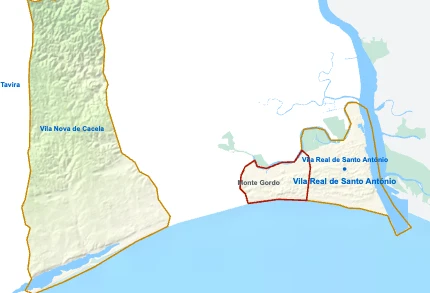
- Monte Gordo (3 197 inhabitants · 4 km²): beach resort west of the city.
- Vila Nova de Cacela (3 873 inhabitants · 46 km²): parish with the village of Cacela Velha and the golf courses of Monte Rei and Quinta da Ria.
Places to visit in the Algarve