
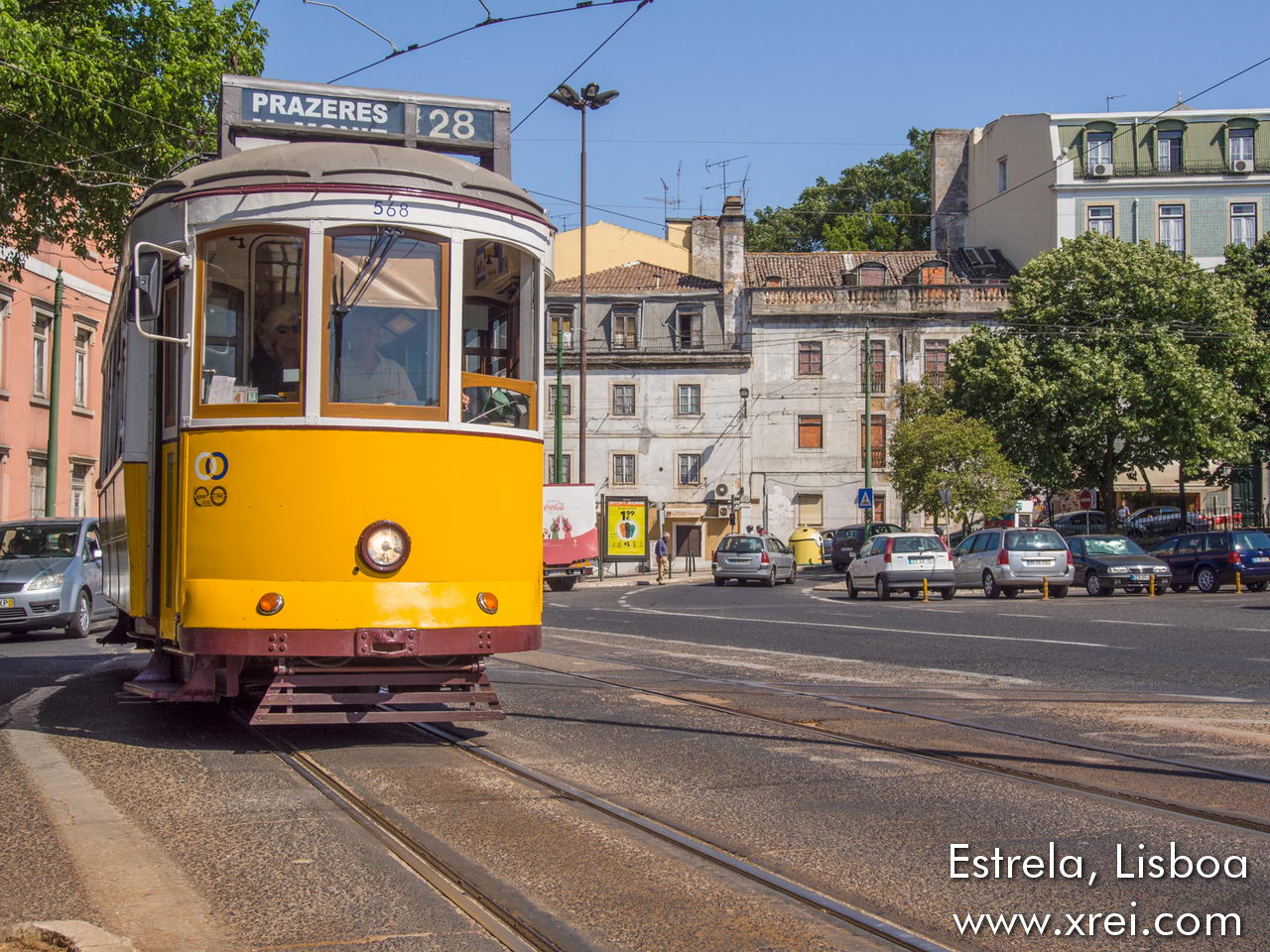
Estrela, a Chic Neighborhood of Lisbon
The Estrela neighborhood is one of the most noble, tranquil, and safe residential areas in the city of Lisbon. Built in the 18th and 19th centuries, primarily with two-story buildings, many inhabited by a single family, the Estrela neighborhood is highly sought after by Portuguese and foreign families. In the Estrela neighborhood, we find the headquarters of the Social Democratic Party, the official residence of the Prime Minister of Portugal, and the Lisbon neighborhood with the highest number of embassies housed in perfectly preserved former neoclassical palaces. In the Estrela neighborhood, we find businesses, family residences, design shops, and antique stores.
The Estrela neighborhood owes its name to the five streets that radiate from Praça da Estrela, a central square located between the Estrela Basilica and the Estrela Garden. The main street is Calçada da Estrela.
The Estrela neighborhood includes two typical Lisbon districts: the Santos neighborhood and the Madragoa neighborhood. Estrela is a neighborhood with many historical buildings of great heritage value, a noble, tranquil, traditional, and modern area, ideal for living or for establishing and developing a business in safety and comfort.
The Estrela parish encompasses The Estrela neighborhood | The Lapa neighborhood | The Santos-O-Velho neighborhood | The Madragoa neighborhood | The São Bento neighborhood.

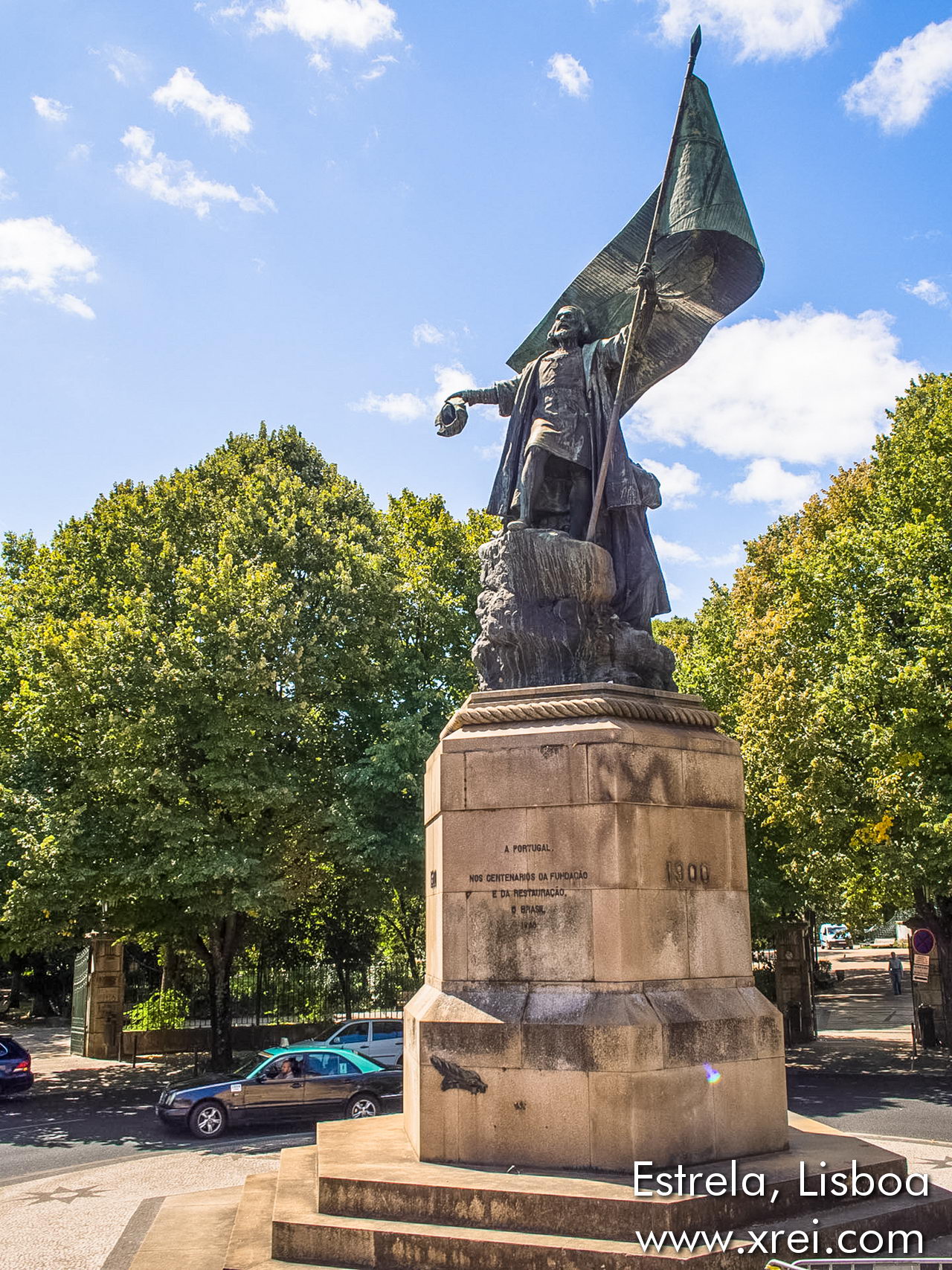
The Estrela neighborhood is administered by the Estrela Parish Council.
Attractions to Visit in the Estrela Neighborhood
1. Estrela Basilica is the first church in the world consecrated to the worship of the Sacred Heart of Jesus, located in Praça da Estrela, a stop for Tram 28. The Estrela Basilica was commissioned by Queen Maria I as a fulfillment of a vow for having an heir to the throne, with the birth of Dom José. The Estrela Basilica was designed in the Baroque and Neoclassical styles by architect Mateus Vicente, the same architect of the National Palace of Queluz, and by Reinaldo Manuel, inaugurated on November 15, 1789. The Estrela Basilica features the following highlights:
- Main Facade - notable for its two bell towers with clocks and a set of four statues representing Faith, Devotion, Gratitude, and Liberty;
- Basilica Viewpoint;
- Nativity Scene with over 500 pieces by Machado de Castro;
- Statuary Ensemble of the basilica by Machado de Castro, specifically representing the Virgin Mary, Saint Joseph, and the Holy Spirit;
- Tomb of Queen Maria I;
- Main Altar Retable by Pompeo Batoni (1708-1787);
- “The Last Supper”: paintings depicting “The Last Supper” and “The Incredulity of Saint Thomas” by Pompeo Battoni;
- “The Supper at Emmaus and Saint Paul”: paintings depicting “The Supper at Emmaus and Saint Paul,” “Education of the Virgin by Saint Anne,” “The Holy Family,” “Immaculate Conception and the Martyrdom of Saint Sebastian” by Pedro Alexandrino de Carvalho (1729/1819);
- Organs by António Machado e Cerveira
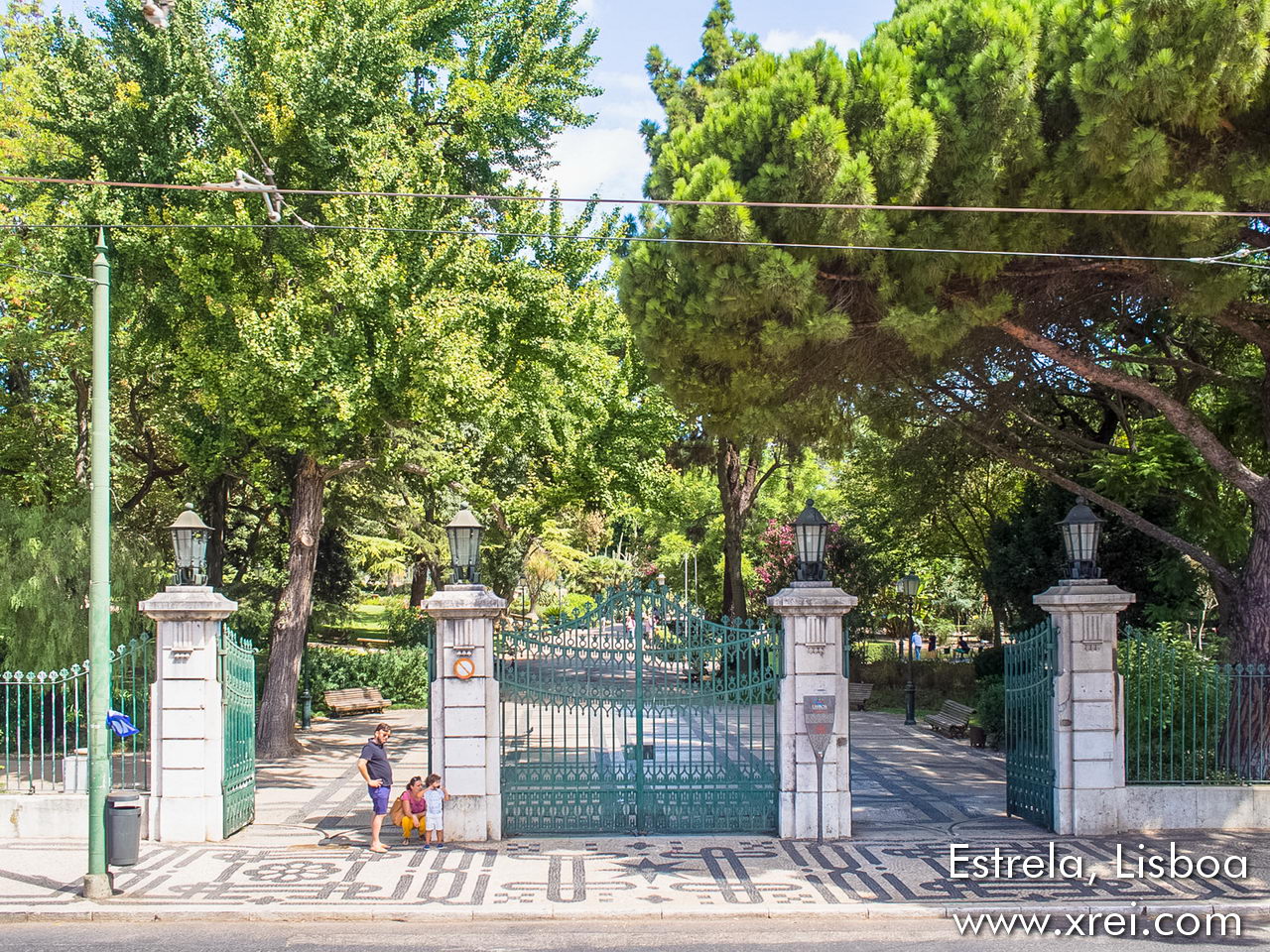
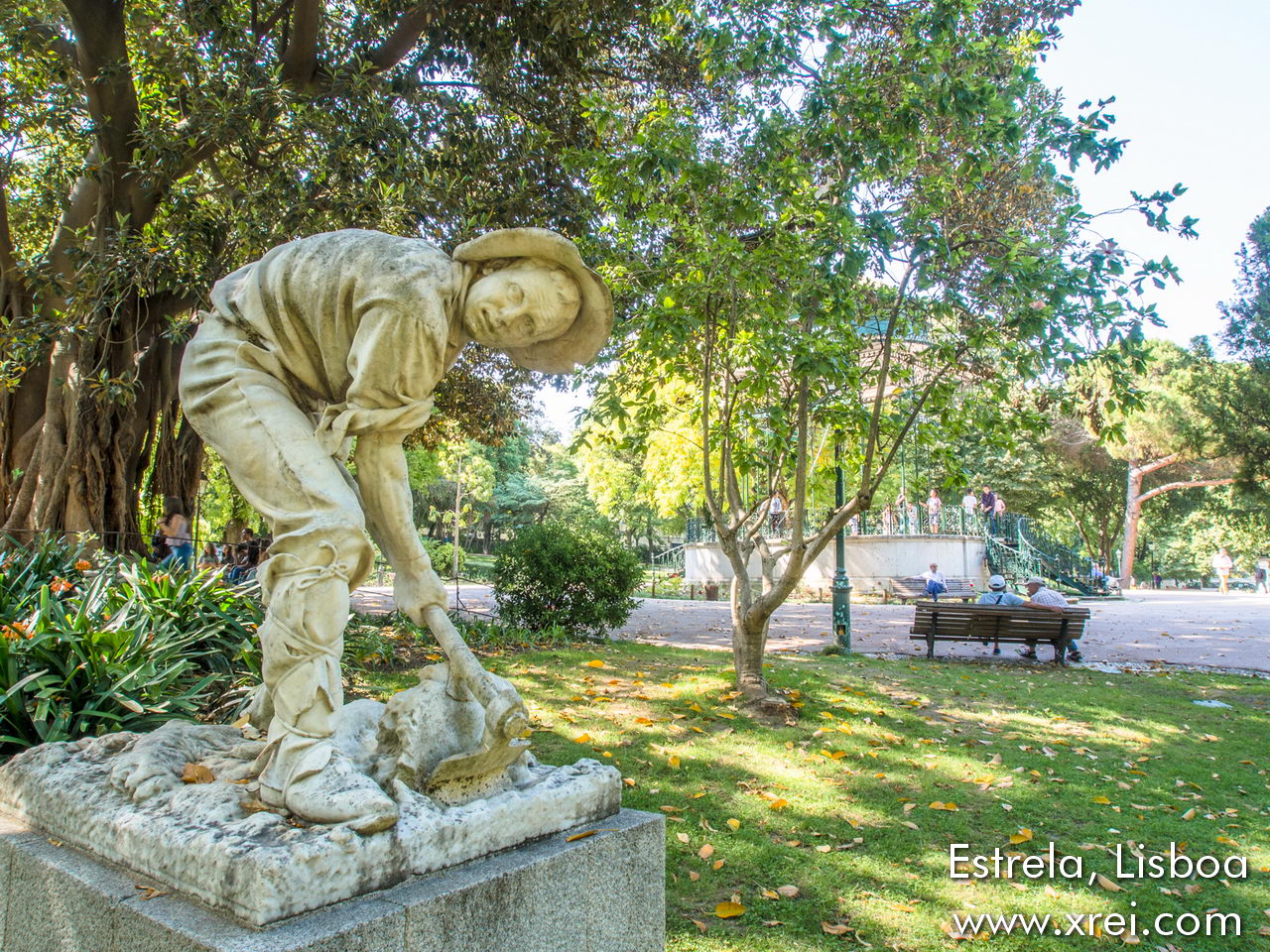
2. Estrela Garden: located in the center of the Estrela neighborhood, it is one of the oldest and most frequented public gardens in Lisbon. This garden was built in the 19th century based on English gardens of the era, featuring very old trees. It is an area with five entrances, located in Praça da Estrela. The Estrela Garden is officially named Jardim Guerra Junqueiro, inaugurated in 1856 as “O Passeio da Estrela.” The Estrela Garden is a popular spot for tourists, Portuguese families, and students of all ages who conduct study visits to learn about the Romantic style in which the garden was built. Furthermore, this garden is an excellent place for strolls, sports, relaxation, or picnics in the heart of Lisbon. The main highlights of the Estrela Garden are the Iron Bandstand; the Children's Playground; the lake; the ducks, peacocks, and fish; the kiosks; and the library.

3. Museum of the Orient: a museum dedicated to showcasing the historical and commercial connection between Portugal and the East, located on Avenida Brasília. The Museum of the Orient was inaugurated in 2008 in the Pedro Álvares Cabral Building, constructed in the 1940s with a design by architect João Simões and renovated by architects Carrilho da Graça and Rui Francisco in the 2000s. The Museum of the Orient displays its collection of over 13,000 pieces across various exhibitions, including the “Portuguese Presence in Asia” Exhibition; and the “Gods of Asia” Exhibition.
In addition to these permanent exhibitions, the main highlights of the Museum of the Orient include a terrace offering views of the Tagus River and the Arrábida mountain range, a panoramic restaurant, a specialized Documentation Center on the East, and a Meeting Center.
4. Necessidades Palace is the building housing the Ministry of Foreign Affairs of Portugal, located in Largo das Necessidades. The Necessidades Palace, commonly known as the “Pink Palace,” was the only Royal House residence to survive the 1755 earthquake. It was built between 1743 and 1752 under the direction of architect Caetano Tomás de Sousa and remodeled in the 19th century by Reinaldo Manuel dos Santos. The Necessidades Palace served various functions, including as a residence for foreign princes visiting the country, a royal residence, the seat of the Royal Academy of Sciences, and the Ministry of Foreign Affairs. The main highlights are:
- Tapada das Necessidades is a garden of approximately ten hectares enclosed by a wall, located in Largo das Necessidades. The Tapada das Necessidades was inaugurated in 1745 with a design by architect Caetano Tomás de Sousa. This area hosts various events, including "Out Jazz" with free concerts for Lisbon residents and tourists. The main attractions are the Fountain with Obelisk; the Cactus Garden, considered one of the oldest cactus gardens in Europe; the Circular Greenhouse, built by order of King Dom Pedro V; the Casa do Regalo, inaugurated in 1889 to serve as Queen Dona Amélia's painting studio. The Casa do Regalo has served various functions, including as a facility for children with tuberculosis, administrative services for the Portuguese Army, studios for various Portuguese artists, the office of former President Jorge Sampaio, and the National Forestry Station; the Duke of Lafões Lake; the Palm Lake; the Bird of Paradise Lake; and “The Virtues,” represented by a set of statuary.
- Queen's Library: a library intended to house Queen Dona Amélia's Literature Collection and King Dom Carlos's Oceanography Collection;
- Chapel of Nossa Senhora das Necessidades: featuring statues representing Our Lady of Necessities, Saint Paul, Saint Peter, Saint Philip Neri, and Saint Francis de Sales;
- Ambassadors' Hall: with special mention to the ceiling stuccoes and the blue silks on the walls;
- Ladies' Hall: also known as the Etruscan Hall, it features representations of “The Triumph of Love,” “The Loves of Mars,” and “The Judgment of Paris” on the ceiling as main attractions.
5. Jardim Lisboa Antiga: this garden was formerly the site of the Convento das Francesinhas, located on Rua das Francesinhas. The Jardim Lisboa Antiga is also known as Jardim das Francesinhas. Attractions include the lake; the Sculpture “The Family” by Leopoldo de Almeida; and the Kiosk known for its crepes.
6. Jardim de Elisa Baptista de Sousa Pedroso is a garden dedicated to pianist Elisa Pedroso, located on Rua da Imprensa à Estrela. The Jardim de Elisa Baptista de Sousa Pedroso, also known as Jardim Salazar or Jardim Imprensa, is situated behind the Assembly of the Republic and features the sculpture “Portuguese Women Grateful to Salazar” by Leopoldo de Almeida.
7. Jardim Olavo Bilac: a small garden located in front of the Church of Necessidades Palace. Jardim Olavo Bilac, also known as Jardim do Largo das Necessidades, was named in honor of the Brazilian poet Olavo Bilac. The Jardim Olavo Bilac was commissioned by King Dom João V, with a design by architect Caetano Tomás de Sousa, featuring a View over Alcântara, the Tagus River, and the 25 de Abril Bridge; and the Necessidades Fountain.
8. Jardim Infantil da Praça da Armada is a small playground with safe facilities for children to play, located in Praça da Armada.
Main Streets and Squares in the Estrela Neighborhood
Calçada da Estrela is the most important street in the Estrela neighborhood, connecting Praça da Estrela and Praça Poiais de São Bento. The street was named Calçada da Estrela to honor Nossa Senhora da Estrela. Calçada da Estrela is very busy due to its various attractions, including Tram 28, and numerous restaurants and bars.
Praça da Estrela is possibly the busiest square in the Estrela neighborhood due to the presence of the Estrela Basilica and the Estrela Garden, connecting Calçada da Estrela and Avenida Infante Santo.
Avenida Infante Santo is one of the most important road arteries in the Lisbon coastal area, providing access to the Santos, Estrela, and Campo de Ourique neighborhoods. It connects Praça da Estrela and Avenida Brasília. Avenida Infante Santo is a vibrant area, multicultural due to its proximity to the Campo de Ourique neighborhood, the presence of nightlife establishments, and the tile panels by various Portuguese artists, including Maria Keil, Júlio Pomar, and Carlos Botelho. Avenida Infante Santo is named in honor of Dom Pedro (1402-1443), known as Infante Santo, who died during the disaster of Tangier.
Rua São Domingos à Lapa: the most important street in the Lapa neighborhood, connecting Travessa da Conceição à Lapa and Rua das Janelas Verdes. Rua São Domingos à Lapa features numerous attractions, including Tram 25, which runs between Praça da Figueira and the Lapa neighborhood, the Aga Khan Foundation Portugal, Palácio Porto Covo, the Portuguese Writers Association, the Former Constância Ceramic Factory, and Palácio Ramalhete.
Educational Institutions in the Estrela Neighborhood
- Centro Social do Sagrado Coração de Jesus
- Escola Secundária Pedro Nunes
- Escola Superior de Educação João de Deus
- Externato Rainha Dona Amélia
Hotels and Tourist Accommodations in the Estrela Neighborhood
- As Janelas Verdes Boutique Hotel
- Hotel da Estrela
- Palácio Ramalhete
- York House Hotel
Location of the Estrela Parish on the Lisbon Map
