Avenida da Liberdade
The Avenida da Liberdade is Lisbon's avenue known for luxury. Initially conceived by the Marquis of Pombal as a broad thoroughfare, it is 90 metres wide and just over one kilometre long, with pedestrian zones paved in traditional Portuguese cobblestone and a landscaped central strip composed of gardens with large trees, lakes and water fountains, outdoor terraces, statues, monuments, and a commercial corridor running the full length of the avenue — comprising luxury brand boutiques, luxury hotels, luxury restaurants, offices housing the country's leading national and international companies, and a theatre. The Avenida da Liberdade begins at Praça dos Restauradores and ends at the Rotunda do Marquês de Pombal. The Avenida da Liberdade is one of the city's busiest and most cosmopolitan areas and a popular destination for a stroll. It is an important business centre in Portugal. The Avenida da Liberdade is a destination for those interested in architecture, owing to the variety of architectural styles on display, including Art Nouveau buildings. It is highly regarded by visitors for its safe and tranquil atmosphere.
The Avenida da Liberdade is the area of Lisbon with the highest average property price per square metre, reflecting its super-prime location in the city centre and its investment return potential.
Administrative organisation of the Avenida da Liberdade
The Avenida da Liberdade extends approximately 1,300 metres, beginning at Praça dos Restauradores and ending at the Rotunda do Marquês de Pombal.
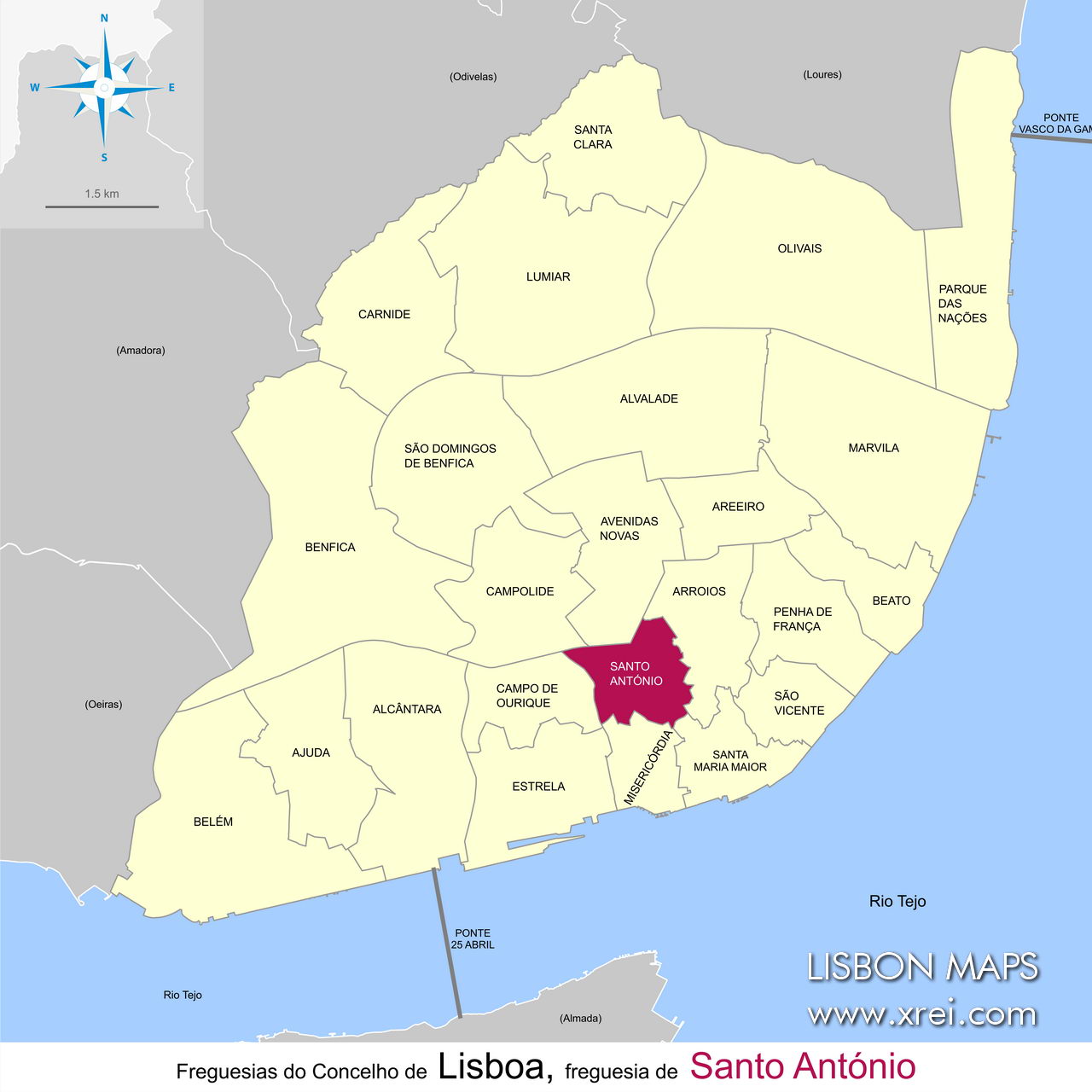
The Avenida da Liberdade falls within the Junta de Santo António, created in the political reform of civil parishes in 2012, and incorporates the former parishes of São José, Coração de Jesus and São Mamede.
The main attractions to visit on the Avenida da Liberdade (top 10)
Beyond the luxury atmosphere that pervades the entire Avenida da Liberdade — with its shops, hotels and services — the avenue has locations that merit a visit in their own right.
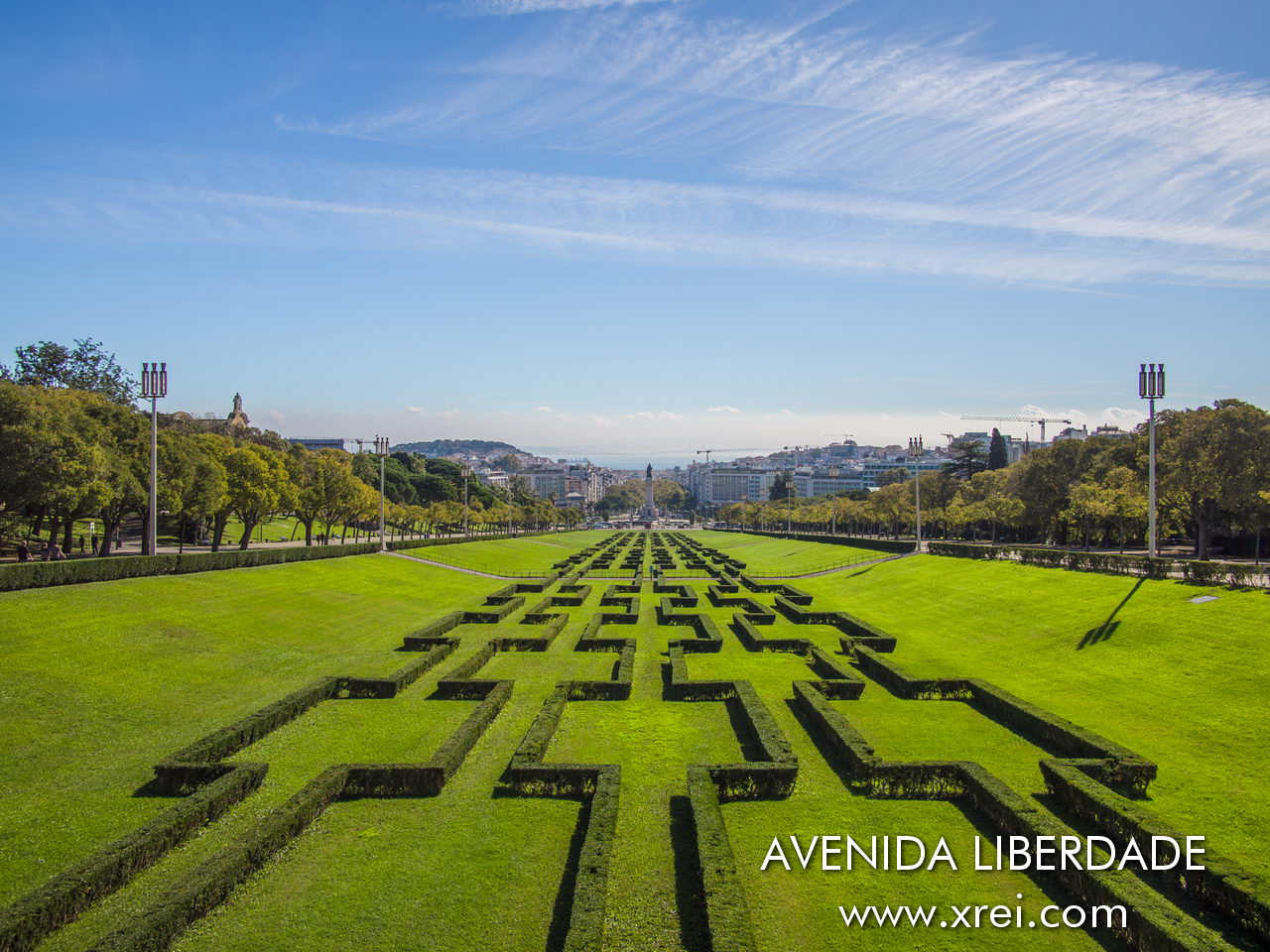
1. Parque Eduardo VII is the largest green park in Lisbon and one of the city's most visited viewpoints, located north of the Rotunda do Marquês de Pombal. Parque Eduardo VII is one of the viewpoints most frequented by tourists, owing to the view over the park's gardens with the city centre as a backdrop, the monument dedicated to the Marquis of Pombal, the buildings of the city centre, Castelo de São Jorge, the Baixa, Praça do Comércio, the Tagus River and the Serra da Arrábida. Parque Eduardo VII was inaugurated in the late 19th century under the name Parque da Liberdade, with a design by Henri Lusseau inspired by urban parks such as Regent's Park in London and Central Park in New York. Parque Eduardo VII was renamed in 1903 following the visit of King Edward VII of England to Lisbon, to mark the long-standing Anglo-Portuguese Alliance. The park was maintained and improved to its current state through the work of landscape architect Francisco Caldeira Cabral, and features the following points of interest:
- Pavilhão Carlos Lopes;

- Estufa Fria;
- Botequim do Rei;
- Clube Desportivo Clube VII;
- Jardim Amália Rodrigues;
- Monument to 25 April 1974;
- Restaurante Eleven;
- Café Linha d'Água.
2. Ascensor da Glória is the most widely used traditional funicular in Lisbon, carrying approximately three million passengers per year, linking the Avenida da Liberdade to Rua de São Pedro de Alcântara in the Bairro Alto. The Ascensor da Glória was inaugurated in 1885 with a design by Mesnier du Ponsard, covering a route of approximately two hundred metres. The main attractions of the Ascensor da Glória are:
- Proximity to Praça dos Restauradores, the Avenida da Liberdade and the Bairro Alto;
- The opportunity to observe the surrounding buildings and the movement of tourists along the route.
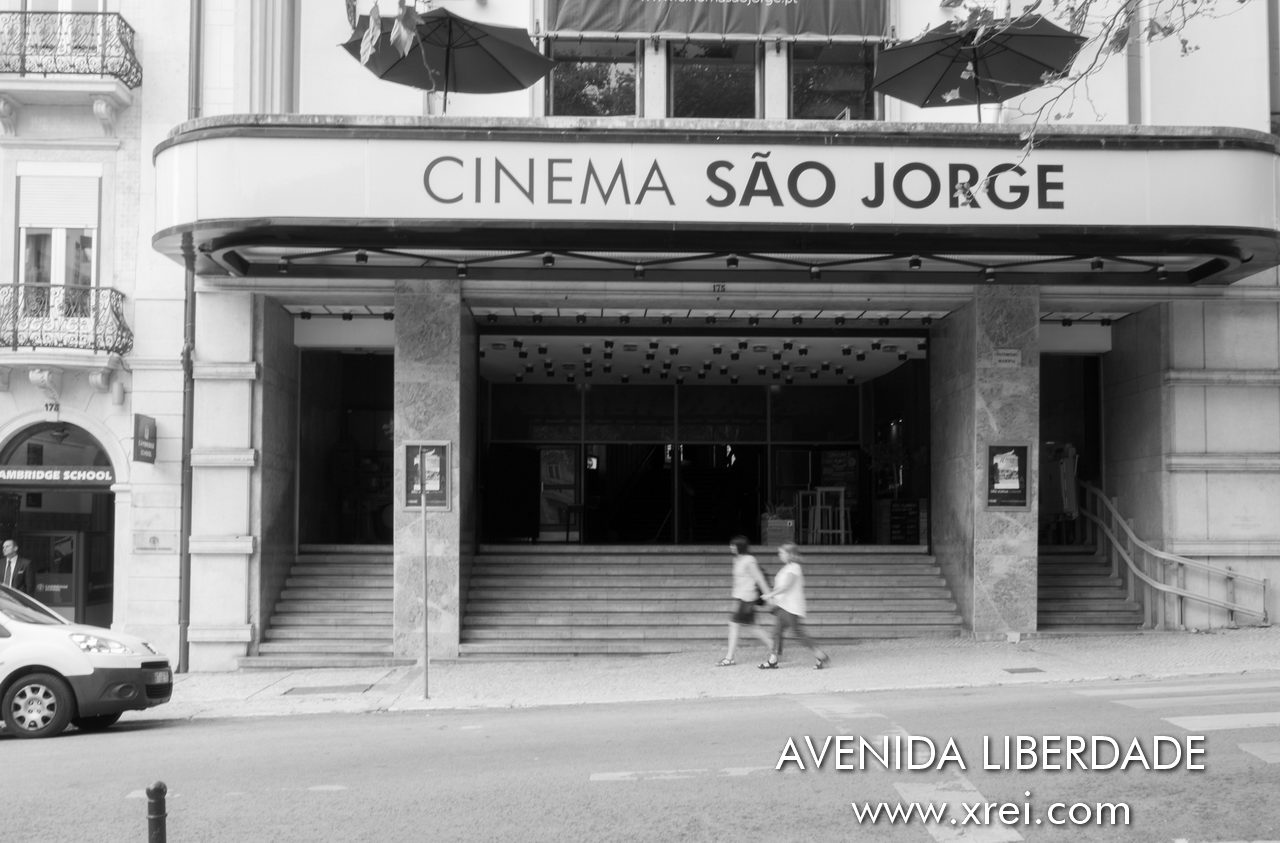
3. Cinema São Jorge — Cinema São Jorge is one of the most iconic cinemas in the city of Lisbon, located on the Avenida da Liberdade. The cinema was inaugurated in 1950 with a design by Fernando Silva and features the following attractions:
- Film Festivals — with particular highlights including DocLisboa and the French Film Festival;
- Sala Manoel de Oliveira with more than 800 seats;
- Cafeteria.

4. Casa do Alentejo is the headquarters of the Associação Regionalista Alentejana, located on Rua das Portas de Santo Antão, established with the purpose of promoting and preserving Alentejo culture. The main points of interest of the Casa do Alentejo are:
- Library
- Alentejo cuisine restaurants;
- Andalusian central courtyard: a courtyard inspired by Moroccan patios, where it is possible to admire small palm trees, Neo-Moorish arched colonnades, Moorish-inspired tiles and a central fountain.

5. Ascensor do Lavra is the oldest funicular in Lisbon, linking Largo da Anunciada to Rua Câmara Pestana, located on Calçada do Lavra. The Ascensor do Lavra was inaugurated in 1884 and takes its name from its proximity to the Palácio do Lavra. The main attractions of the Ascensor do Lavra are:
- Views of the residential buildings along Calçada do Lavra;
- Views over part of the city of Lisbon;
- View of the tower of the Palácio do Lavra;
- Proximity to the Jardim do Torel.
6. Cinemateca Portuguesa: described as "the national body under the Ministry of Culture whose mission is the safeguarding and promotion of cinematographic heritage", located on Rua Barata Salgueiro. The Cinemateca Portuguesa was founded in 1948 and features the following points of interest:
- More than 70,000 items related to cinema;
- More than 21,000 Portuguese film productions;
- Cinemateca Júnior;
- Pre-Cinema Interactive Exhibition;
- Cinemateca Digital.
7. Casa-Museu Medeiros e Almeida: a space where visitors can explore one of the largest private collections of European and Asian decorative arts up to the 19th century, located on Rua Rosa Araújo. The Casa-Museu Medeiros e Almeida was commissioned by entrepreneur António de Medeiros e Almeida (1895–1986) as a private residence and converted into a foundation in 1974. The main points of interest are:
- Napoleon Bonaparte's Portuguese tea service;
- Clock collection;
- Paintings by Veloso Salgado depicting the "Islamic School of Medicine in Córdoba";
- Pocket watch used by Wellington and Junot;
- 18th-century Portuguese silver toothpick holders;
- Paintings by 17th-century Flemish painters Brueghel;
- 17th-century portrait by Rembrandt;
- Chapel;
- Library.
8. Jardim do Torel: a little-known garden in Lisbon, located on Rua Júlio de Andrade. The garden is named in honour of magistrate Cunha Thorel, who donated the land to Lisbon City Council in 1928. The garden is relatively unknown among Lisbon residents and tourists alike, but offers several points of interest, namely:
- Viewpoint from which the Avenida da Liberdade and the São Roque hill can be observed;
- Kiosk with outdoor terrace;
- Artificial lake that is converted into a swimming pool during the summer.
9. Sociedade de Geografia de Lisboa: an institution whose aim is the promotion of the scientific study of Geography, Ethnology and the History of the Portuguese presence in Africa and Asia, located on Rua das Portas de Santo Antão. The Sociedade de Geografia was inaugurated in 1875 and installed in its current building in 1897, founded by prominent figures of Portuguese society including Luciano Cordeiro (1844–1900) and Teófilo Braga (1843–1924). The Sociedade de Geografia is visited by Lisbon residents, tourists and school students who come to consult its 60,000 works, 6,000 manuscripts and 230,000 available titles. The attractions of the Sociedade de Geografia de Lisboa are:
- Entrance: painting by Veloso Salgado depicting the arrival of Vasco da Gama in India;
- Ethnographic and Historical Museum: this museum, located in the Sala Portugal, holds approximately 30,000 items, including a "Double Indian Dagger" from the early 20th century, the "Urn of Dom Afonso de Albuquerque from Old Goa" from the 16th century, an oil portrait of Vasco da Gama and a 17th-century India cabinet;
- Sala Algarve: a space used for conferences and meetings, which also houses statues representing Vasco da Gama, Infante Dom Henrique and Luís Vaz de Camões;
- Sala dos Padrões: here it is possible to view the original Portuguese stone pillars used by navigators to mark their arrival at previously unknown territories;
- Library: here visitors may consult more than 60,000 available works, including the manuscript of the "Purchase contract in favour of Vasco da Gama for the towns of Vidigueira and Frades" of 1519, and the "Book of Calculations" by Serpa Pinto of 1878;
- Mapoteca: a space housing some of the most important maps and globes in the history of Portugal, including the "Globi Coronelli" by Vincenzo Coronelli (1650–1718), the "Portolan Chart from the Atlas of Giovanni Battista Agnese" of 1536/39, and the "Map of the Geodesic Mission to São Tomé and Príncipe" of 1916;
- Fonoteca: approximately 20,000 items in a wide variety of formats, including photographs of Mozambique, São Tomé and Príncipe and Angola from the early 20th century.
10. Loja Ginjinha Sem Rival is a shop selling ginjinha that forms part of Lisbon's network of historic shops, located on Rua das Portas de Santo Antão. The shop has been selling ginjinha since it opened in 1840 and retains virtually the same appearance: a small marble counter with a wooden top and a U-shaped cabinet where the various bottles of "Ginja Sem Rival" are displayed.
Other attractions to explore on the Avenida da Liberdade
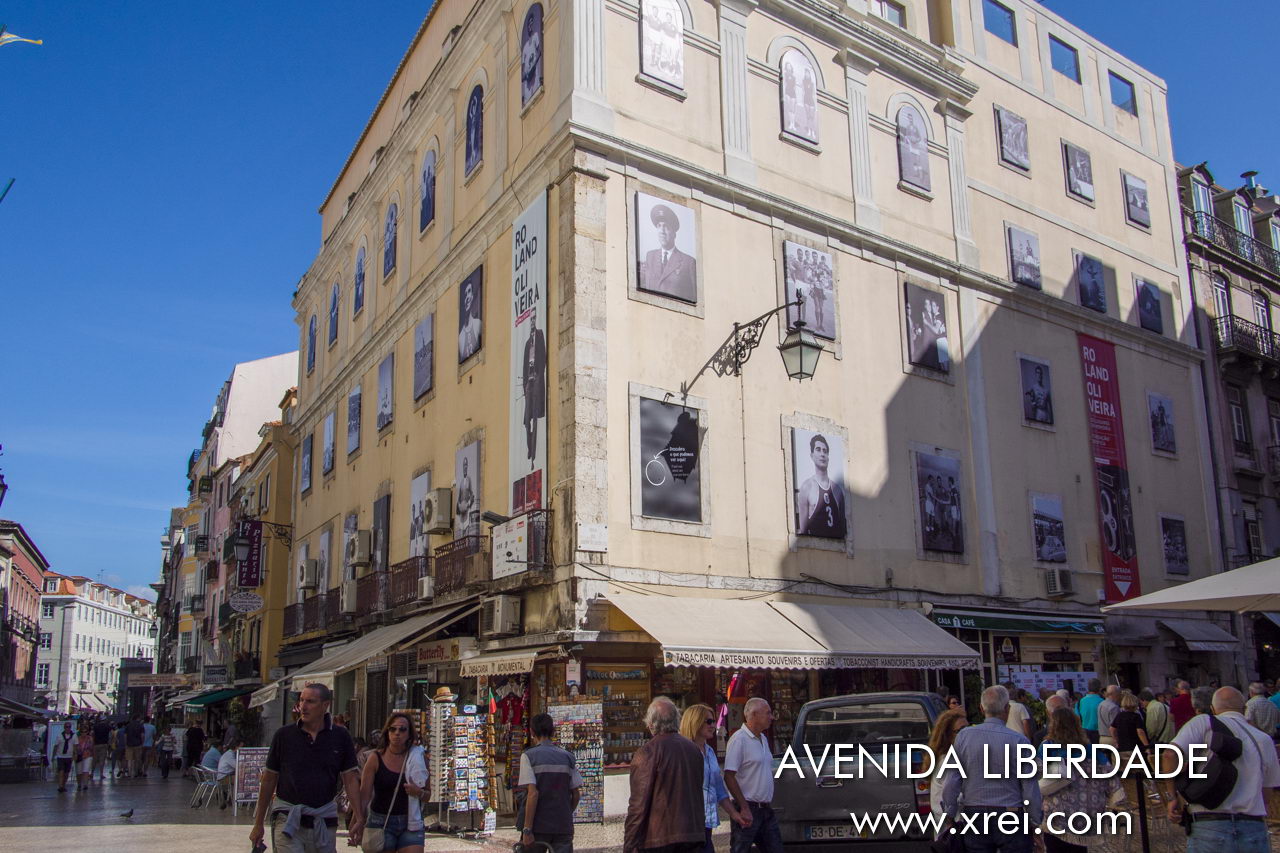
Museu e Biblioteca Nacional do Desporto is a museum space where visitors can discover the history of Portugal's participation in the Olympic Games, located in Praça dos Restauradores. The museum was inaugurated in the Palácio Foz in 2012 to mark 100 years of Portuguese participation in the Olympic Games. The main points of interest of the Museu e Biblioteca Nacional do Desporto are:
- Olympic Heritage Space, where posters, medals and equipment related to the Olympic Games can be viewed;
- Biblioteca Nacional do Desporto with more than 60,000 publications;
- Trainers worn by António Rodrigues at the 1932 Los Angeles Olympics;
- Equipment worn by Rosa Mota when she won the marathon at the 1988 Seoul Olympic Games;
- Jersey belonging to cyclist Joaquim Agostinho;
- Ballon d'Or won by Eusébio in 1965.
Teatro Tivoli BBVA is one of the most important cultural venues in the city of Lisbon, where theatre performances, ballets, concerts and comedy festivals can be attended, located on the Avenida da Liberdade. Performances are almost permanently sold out and the venue is frequented by Lisbon residents and tourists of all social backgrounds and ages. The space was inaugurated in 1924 at the behest of Frederico Lima Mayer and commissioned from architect Raul Lino. The main attractions of the Teatro Tivoli BBVA are:
- Ballet performances, including "Swan Lake" and "Sleeping Beauty";
- Concerts by Portuguese artists such as Teresa Salgueiro and David Fonseca;
- Festivals, particularly the Festival Super Bock em Stock and the Fashion TV Awards.
Coliseu dos Recreios is one of the most frequented and well-known performance venues in Lisbon, located on Rua das Portas de Santo Antão. The Coliseu dos Recreios was inaugurated in 1890 with the aim of being a performance venue for the lower social classes but offering quality productions. This cultural space is currently widely patronised by Lisbon society owing to the high standard of its performances and concerts, including "Mário Laginha e Camané", "Circo de Natal", "Swan Lake" and "The Nutcracker".

Kiosks on the Avenida da Liberdade are places where Portuguese cuisine can be enjoyed, located along the Avenida da Liberdade. The green-painted kiosks total seven, namely:
- "Banana Café": comprising two kiosks on the avenue where fresh juices, cocktails, toasted sandwiches and salads are served;
- "Hot Dog Lovers": a kiosk where traditional and vegetarian hot dogs can be tried;
- "Ribadouro": the "Ribadouro" kiosk belongs to the "Ribadouro" seafood restaurant located on the Avenida da Liberdade;
- "Charcutaria Lisboa": this kiosk specialises in cheeses and cured meats;
- "Melhor Bolo de Chocolate do Mundo": this kiosk's main offering is the chocolate cake classified as the best in the world in 2011.
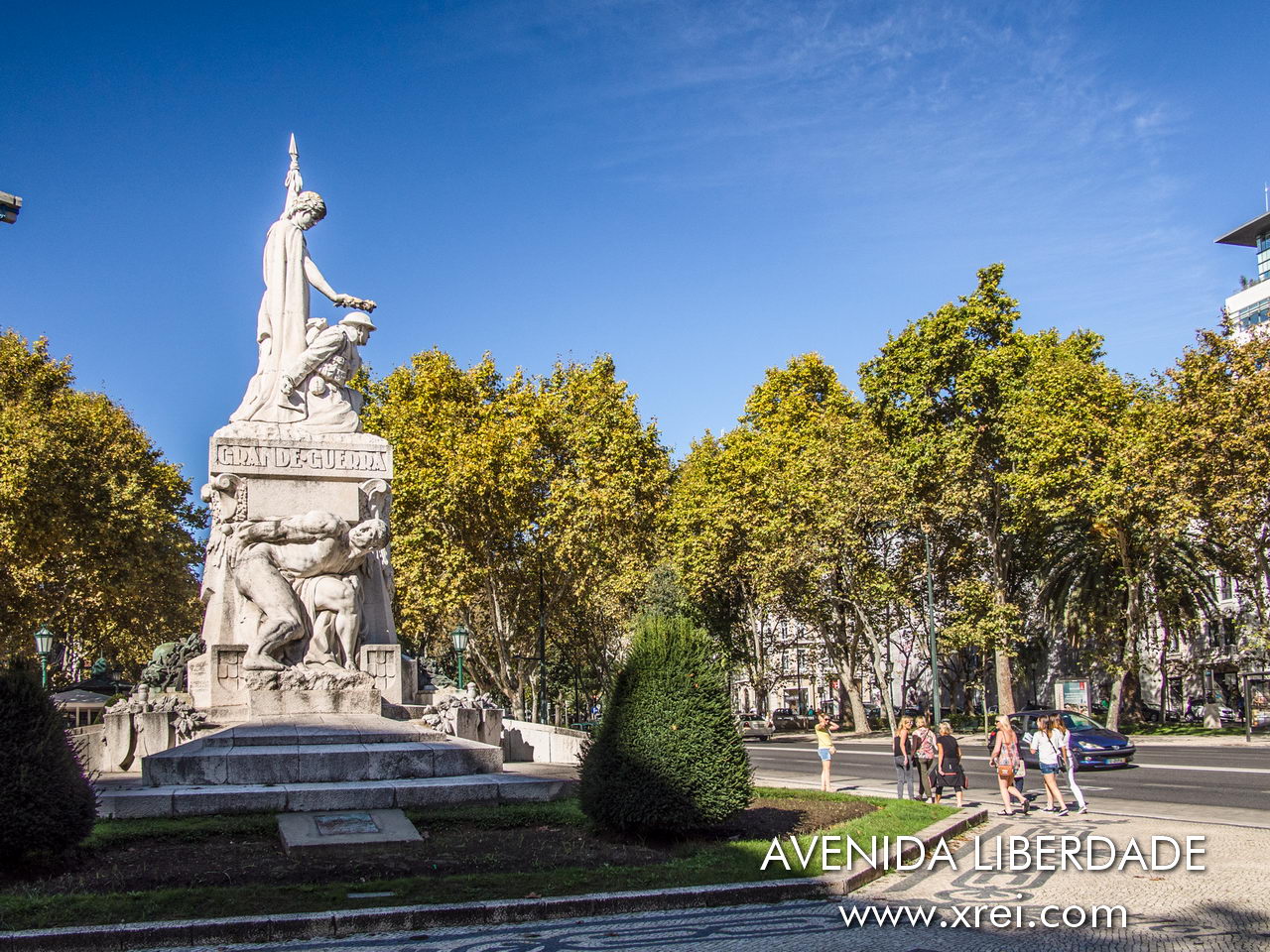
Monument to the Combatants of the Great War: a monument honouring the "Soldier of the First World War" who participated in the First World War, by sculptor Maximiano Alves and architect Guilherme Rebelo de Andrade. The Monument to the Combatants of the Great War comprises a central figure of the "Soldier" representing "The Fatherland", inaugurated in 1931 on the Avenida da Liberdade; and two male figures symbolising the weight of the 5,000 soldiers who died in the First World War (1914–1918).
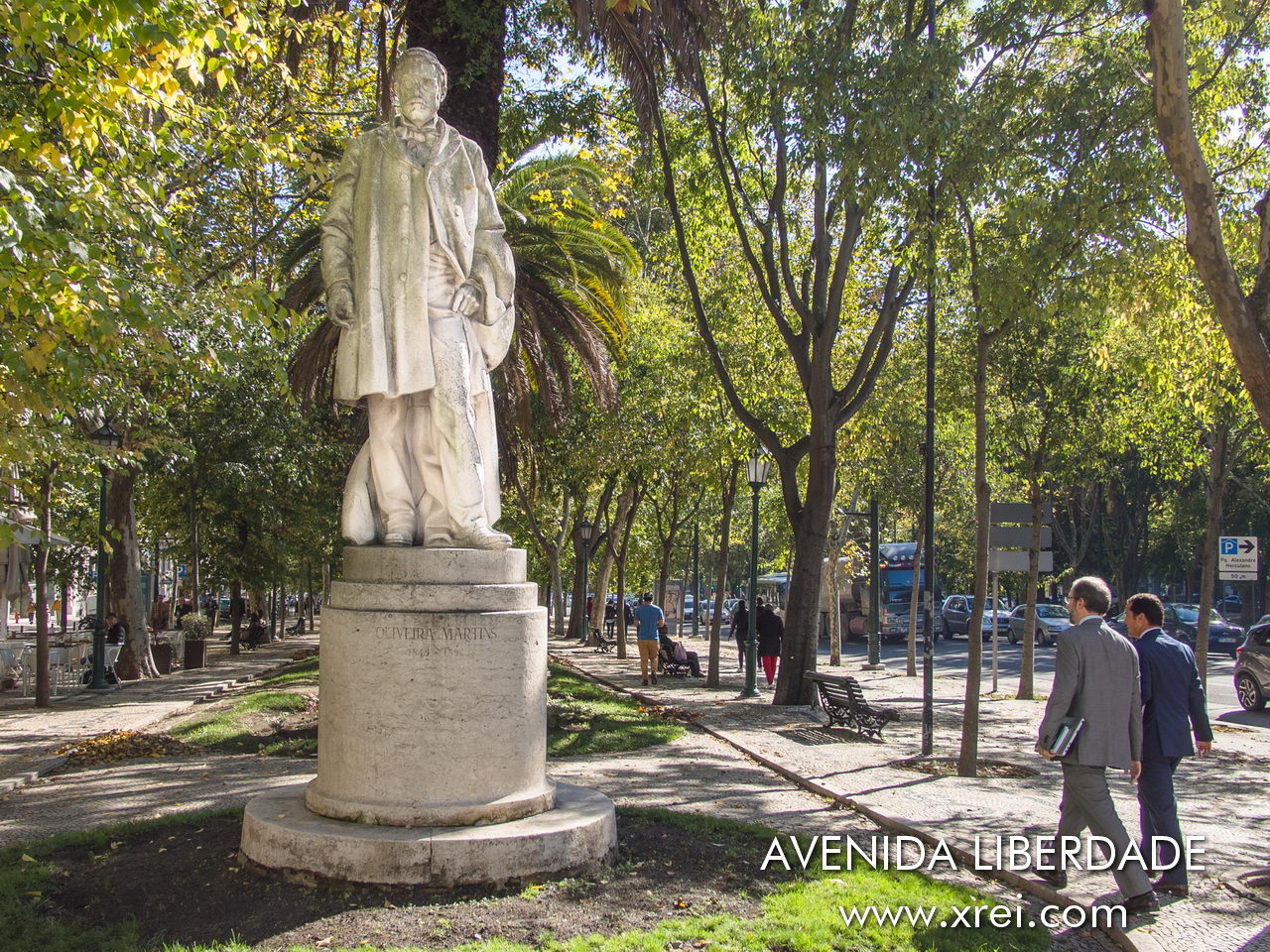
Statuary of the Avenida da Liberdade is a collection of statuary paying homage to seven figures from Portuguese culture and politics:
- Statue of Almeida Garrett on the Avenida da Liberdade, sculpture by BARATA FEYO

- Statue of Oliveira Martins, by Leopoldo de Almeida
- Sculpture by Rui Chafes
- Bust of Fryderyk Chopin, by Bolesław Syrewicz
- Statue of Simón Bolívar, by Arturo Rus Aguilero

- Monument Allegory to the Tagus River, by Alexandre Gomes
- Monument to Pinheiro Chagas, by Costa Motta-tio
- Hotel Tivoli
- Casa-Museu Medeiros e Ferreira
- Parque Mayer
- Igreja da Pena
- Igreja de São Luís dos Franceses
- Jardim Botânico de Lisboa
- Hotel Clube Portugal
- Sociedade de Geografia de Lisboa
- Terraço Hotel Altis Avenida
- Terraço I'm in Eden
- Terraço Level Eight
- Terraço Limão
- Terraço Sky Bar
Main streets and squares
Rotunda do Marquês de Pombal
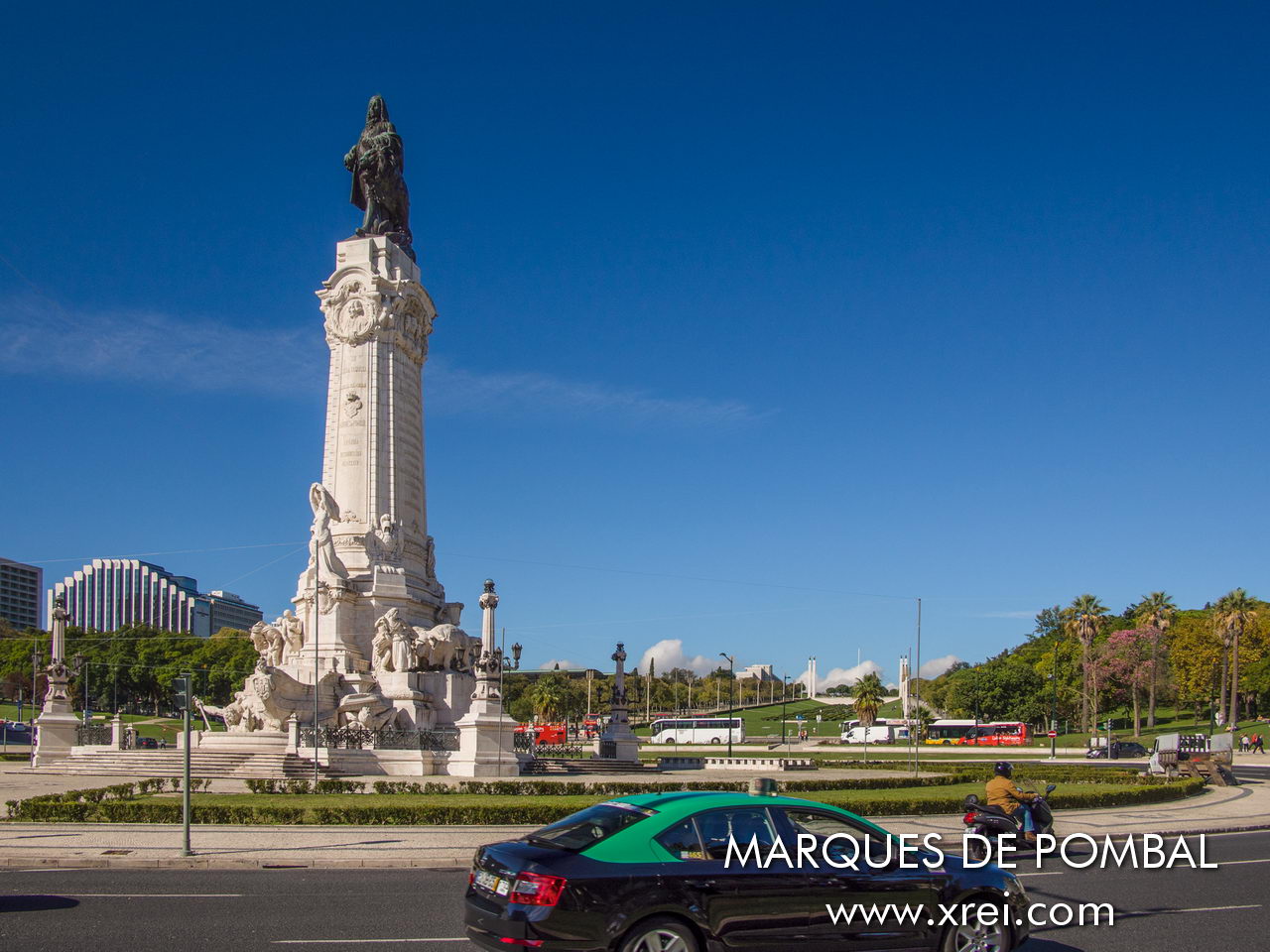
The Praça Marquês de Pombal is the largest roundabout in the city of Lisbon, located between the Avenida da Liberdade and Parque Eduardo VII. The square reflects the typical urban bustle and cosmopolitan character of Lisbon. A central node of the city, it distributes traffic to the main road arteries and serves primarily as a thoroughfare for Lisbon residents, tourists, tuk-tuks and vehicles. The roundabout has borne this name since 1882 in honour of Prime Minister Marquis of Pombal, considered the principal architect of the reconstruction of the Baixa following the earthquake of 1 November 1755. The square's current appearance began to take shape from 1934 with the inauguration of the Monument in Homage to the Marquis of Pombal, by sculptors Francisco Santos, Simões de Almeida and Leopoldo de Almeida and architects Adães Bermudes and António Couto. The Praça Marquês de Pombal has been the setting for important events in Portugal's modern history, namely:
- Political events — the proclamation of the Republic in 1910, the Coup d'État of 1926 and the Carnation Revolution of 25 April 1974;
- Official ceremonies — ceremonies marking the Restoration of Independence of 1640, the Carnation Revolution, the 5th of October 1910, and the Festas Populares de Santo António;
- Social and professional demonstrations — demonstrations by teachers, police officers and the general population.
The Praça Marquês de Pombal features numerous attractions, namely:
- Monument in Homage to the Marquis of Pombal — a monument inaugurated on 13 May 1934, standing forty metres tall, by architects Adães Bermudes and António do Couto and sculptors Francisco dos Santos, Simões de Almeida (nephew) and Leopoldo de Almeida. The main highlights are:
- Statue of the Marquis of Pombal with a lion, symbol of strength and power;

-
- Medallions with portraits representing various Portuguese figures, namely sculptor Joaquim Machado de Castro (1731–1822), writer Luís António Verney (1713–1792), German General Count of Lippe (1724–1777), Minister José de Seabra da Silva (1732–1813), physician António Nunes Ribeiro Sanches (1699–1783), architect Eugénio dos Santos (1711–1760), diplomat Dom Luís da Cunha (1662–1749) and engineer Manuel da Maia (1677–1768)
- Inscription at the base of the pedestal recording the major reforms carried out by the Marquis of Pombal, namely "Creation and Protection of many industries", "Modernisation and Agricultural Development", "Rebuilding of Lisbon", "Foundation of the First School of Commerce", "Reform of Higher Education: Colégio dos Nobres and University of Coimbra", "Expulsion of the Jesuits", "Abolition of Slavery in Portugal", "Reorganisation of the Army and Navy";
- Statues representing Lisbon at the centre of the monument;
- Statues representing "Agriculture" on the right side, "Education" through the sculpture of the Goddess Minerva at the centre, and on the left a representation of Commerce.

- Parque Eduardo VII
- Avenida da Liberdade
- Hotel Fénix Lisboa
Avenida da Liberdade: the main thoroughfare of the city of Lisbon, located between Praça dos Restauradores and the Rotunda do Marquês de Pombal. The Avenida da Liberdade is one of the longest avenues in the country at approximately 1.5 km in length and 90 metres in width, making it a privileged location in the city for luxury shopping, culture, meetings and movement. The Avenida da Liberdade was inaugurated in 1886 with the aim of providing the Portuguese capital with an avenue comparable to Las Ramblas in Barcelona and the Champs-Élysées in Paris. The Avenida da Liberdade is a cosmopolitan, safe and economically central space in the city, with the following points of interest:
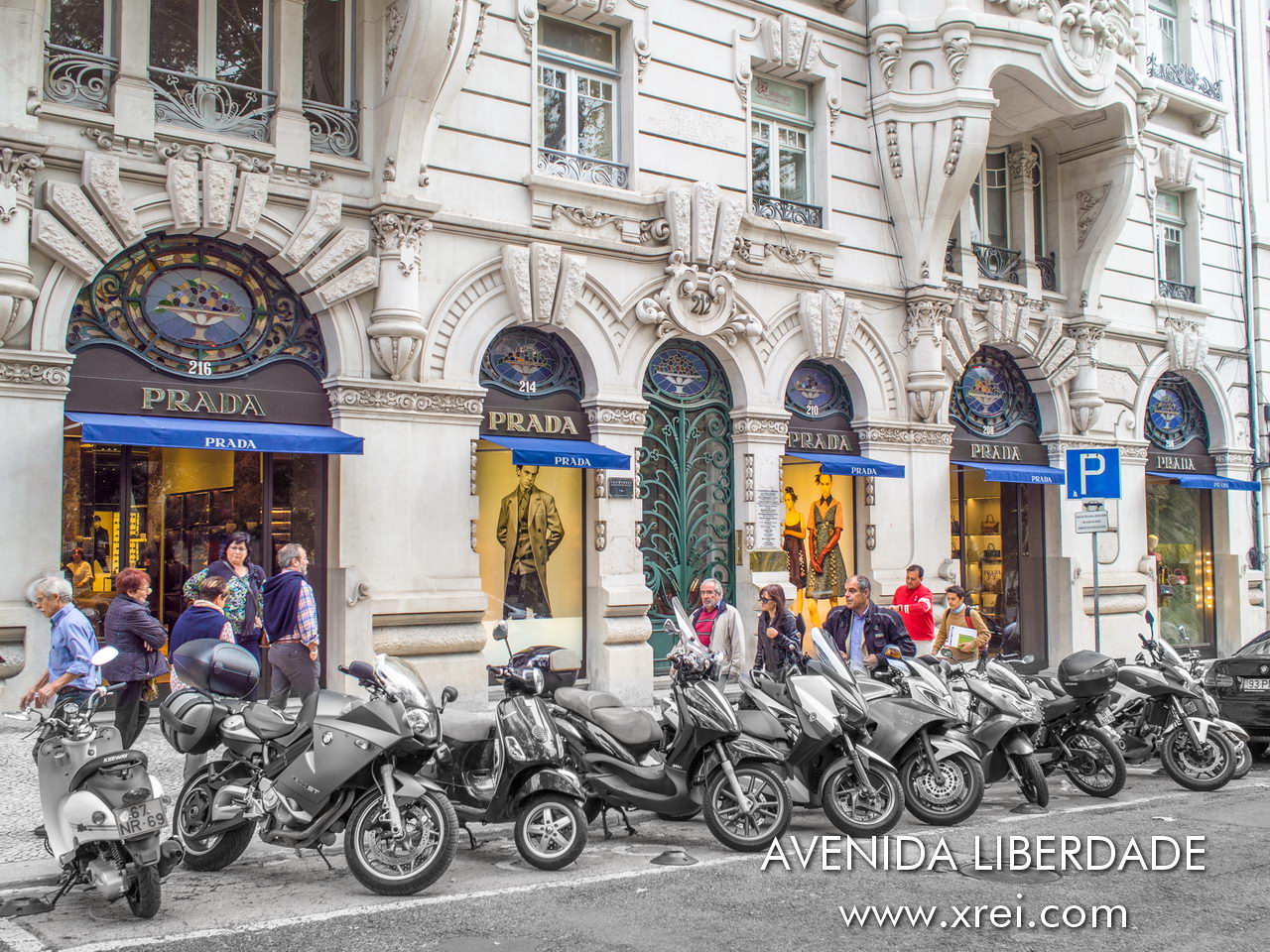
- Luxury fashion boutiques;
- Monuments and statues;
- Kiosks with outdoor terraces;
- Institutions of importance to the city, including Teatro Tivoli, the Hard Rock Café, the headquarters building of Diário de Notícias and Cinema São Jorge.
Praça dos Restauradores: one of the most important squares and transit areas in the city of Lisbon, linking Praça Dom Pedro IV (Rossio) to the Avenida da Liberdade. The Praça dos Restauradores is a busy central area of Lisbon, a transit point for tourists, tuk-tuks, vehicles and public transport. The main attractions are:
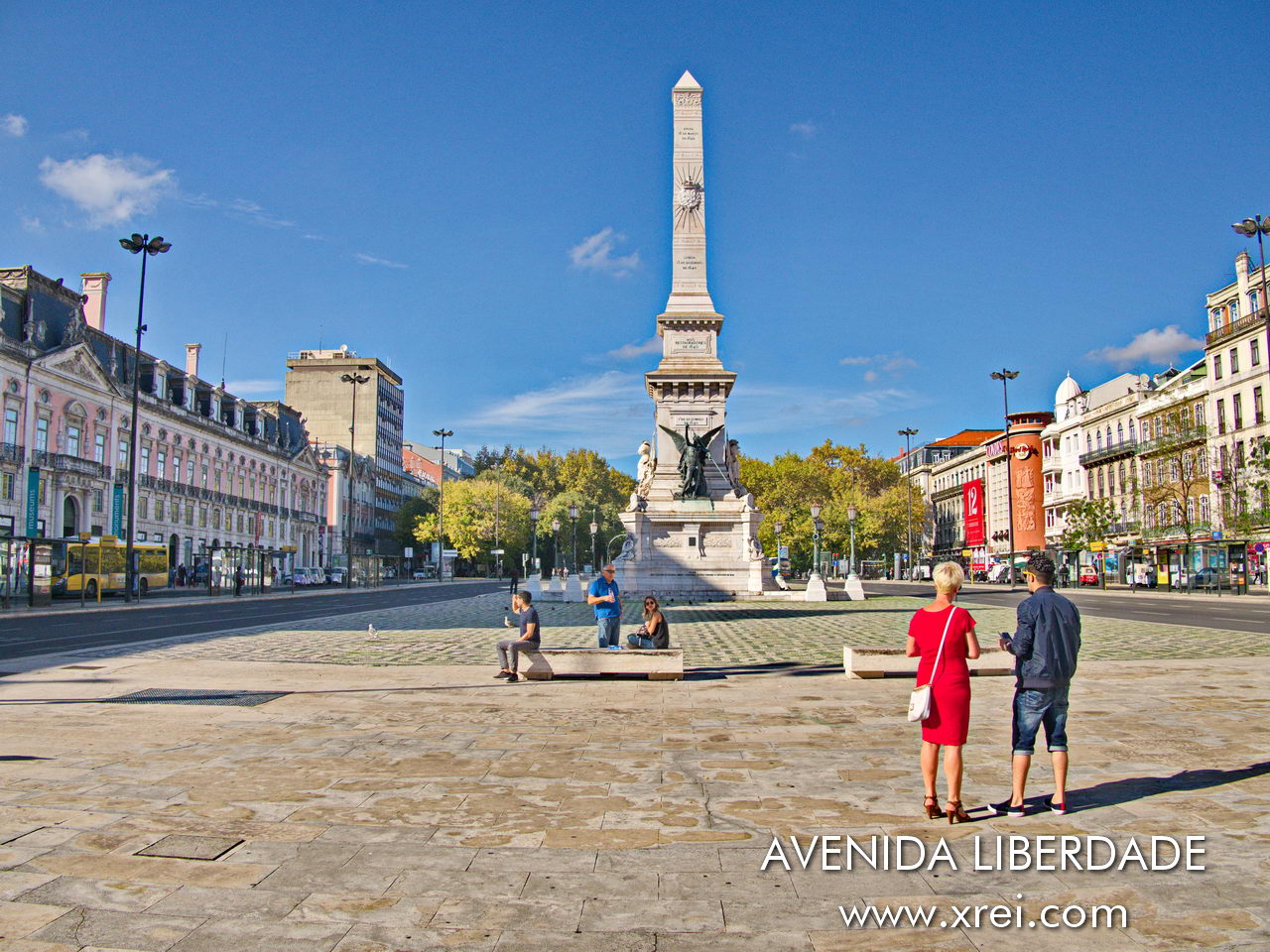
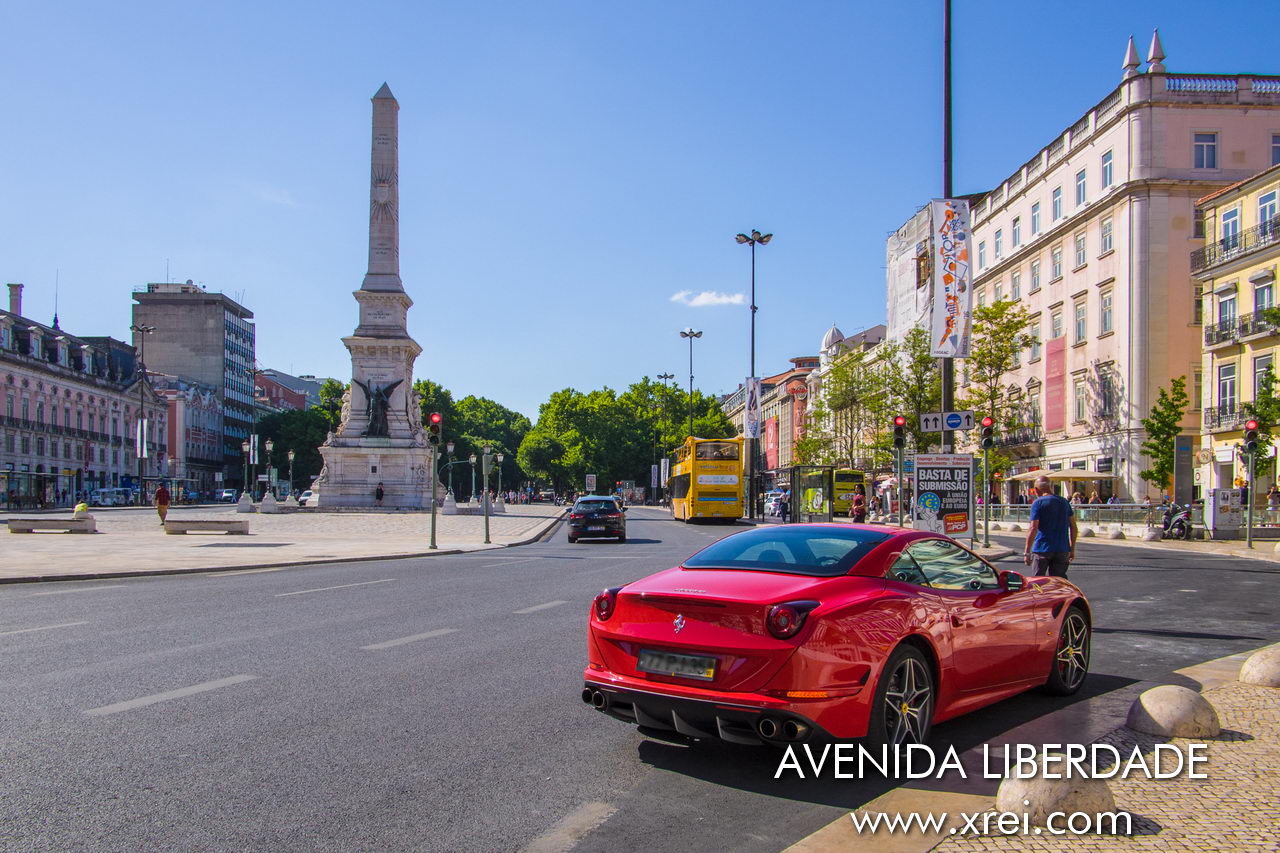
- Monument of the Restauradores inaugurated in 1886 with a design by Tomás da Fonseca to honour the War of Restoration of Independence of 1640, with highlights including the Obelisk approximately 33 metres tall, symbolising the worship of the Sun; the bronze statue representing the "Genius of Independence" by Alberto Nunes, symbolising Portugal's liberation from Spain; the bronze statue representing "Victory" by Simões de Almeida; and the inscription on the pedestal of the dates and names of the most important battles of the War of Restoration;
- Statue in Homage to the Lisbon Pavement Layer by Sérgio Stichni, with particular emphasis on the representation of the Barca de São Vicente in Portuguese cobblestone;
- Hard Rock Café: a restaurant integrated into the building of the former Cine Condes, where American cuisine can be enjoyed. The Hard Rock Café was inaugurated in 2003, having been one of the first American brands to establish itself in Portugal. At the Hard Rock Café on the Avenida da Liberdade, the tables are surrounded by more than 73,000 items related to the history of music, including guitars autographed by renowned guitarists, clothing worn in concert by major artists, and many more accessories belonging to famous personalities.
- Hotel Avenida Palace is a luxury hotel housed in a 19th-century palace. The Avenida Palace was inaugurated in 1892 and stands out for its 82 luxury rooms.
- Palácio Foz is the space housing several institutions, including the Museu do Desporto and the Museu Nacional da Música. The Palácio Foz was inaugurated in the 18th century and features the Abadia, the Garden, the Cinemateca Júnior and the Library.
Rua das Portas de Santo Antão is one of the busiest pedestrian streets in the city, linking Largo de São Domingos to Rua de São José. The Rua das Portas de Santo Antão is popular with tourists and locals alike for its outdoor terraces, historic buildings, restaurants and theatres. The Rua das Portas de Santo Antão is one of the oldest streets in the city of Lisbon, having been one of the main entrances to Lisbon between the 14th and 18th centuries. On the Rua das Portas de Santo Antão the following attractions can be explored:
- Sociedade de Geografia de Lisboa;
- Elevador do Lavra;
- Casa do Alentejo;
- Pátio do Tronco;
- Ateneu Comercial de Lisboa;
- Coliseu dos Recreios;
- Teatro Politeama;
- Loja Ginjinha Sem Rival;
- Leitaria Anunciada;
- Restaurante Gambrinus;
- Restaurante Solar dos Presuntos.
Fairs, Festivals and Celebrations on the Avenida da Liberdade
- Feira na Avenida: held monthly on the second weekend
- Marchas Populares de Lisboa: held annually on the night of 12 to 13 June
Shopping on the Avenida da Liberdade
- André Opticas
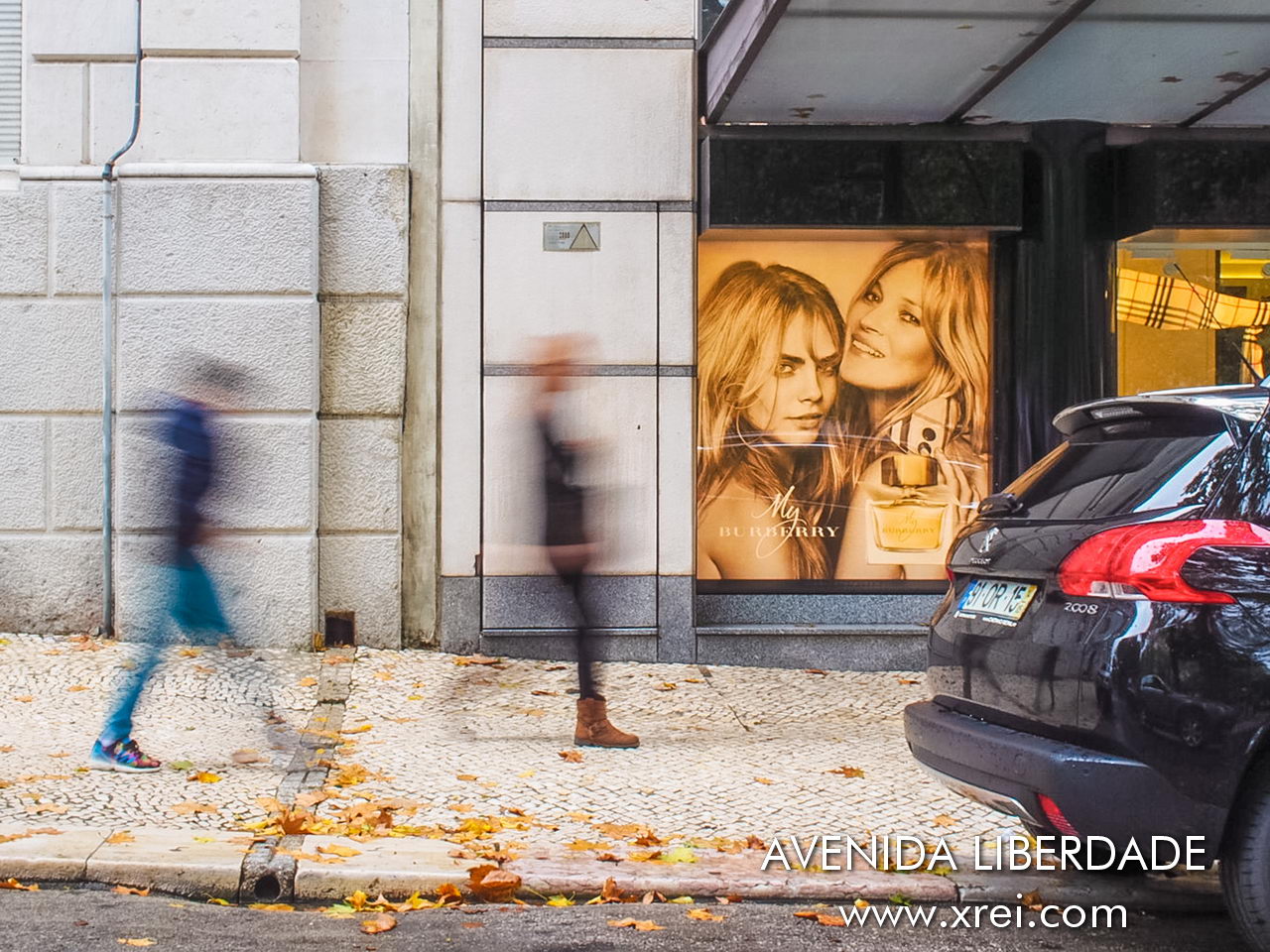
- Burberry
- Carolina Herrera
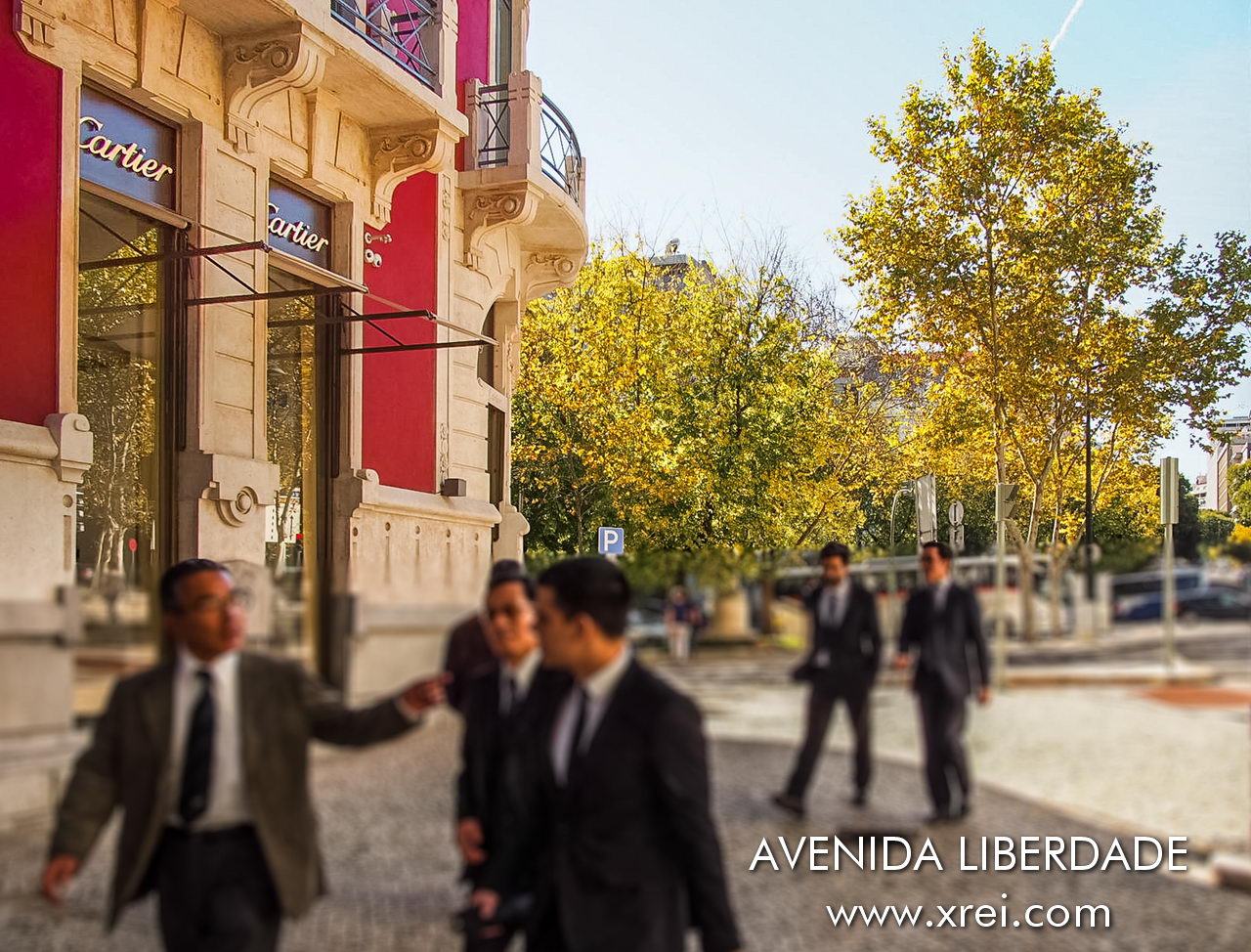
- Cartier
- Comcor
- COS: Collection of Style
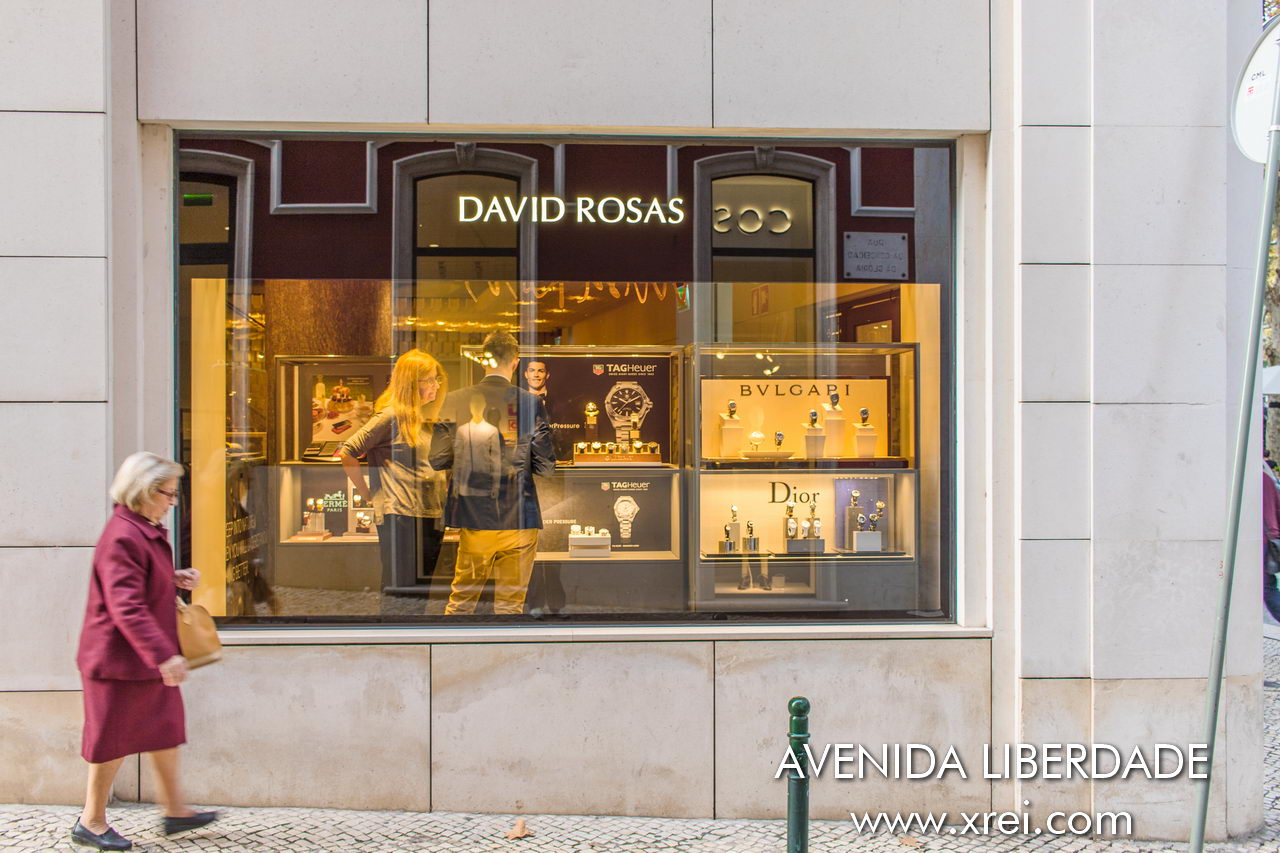
- David Rosas
- Dolce & Gabbana
- Emporio Armani
- Ermenegildo Zegna
- Fashion Clinic
- Fátima Lopes
- Fly London
- Foreva
- Gant
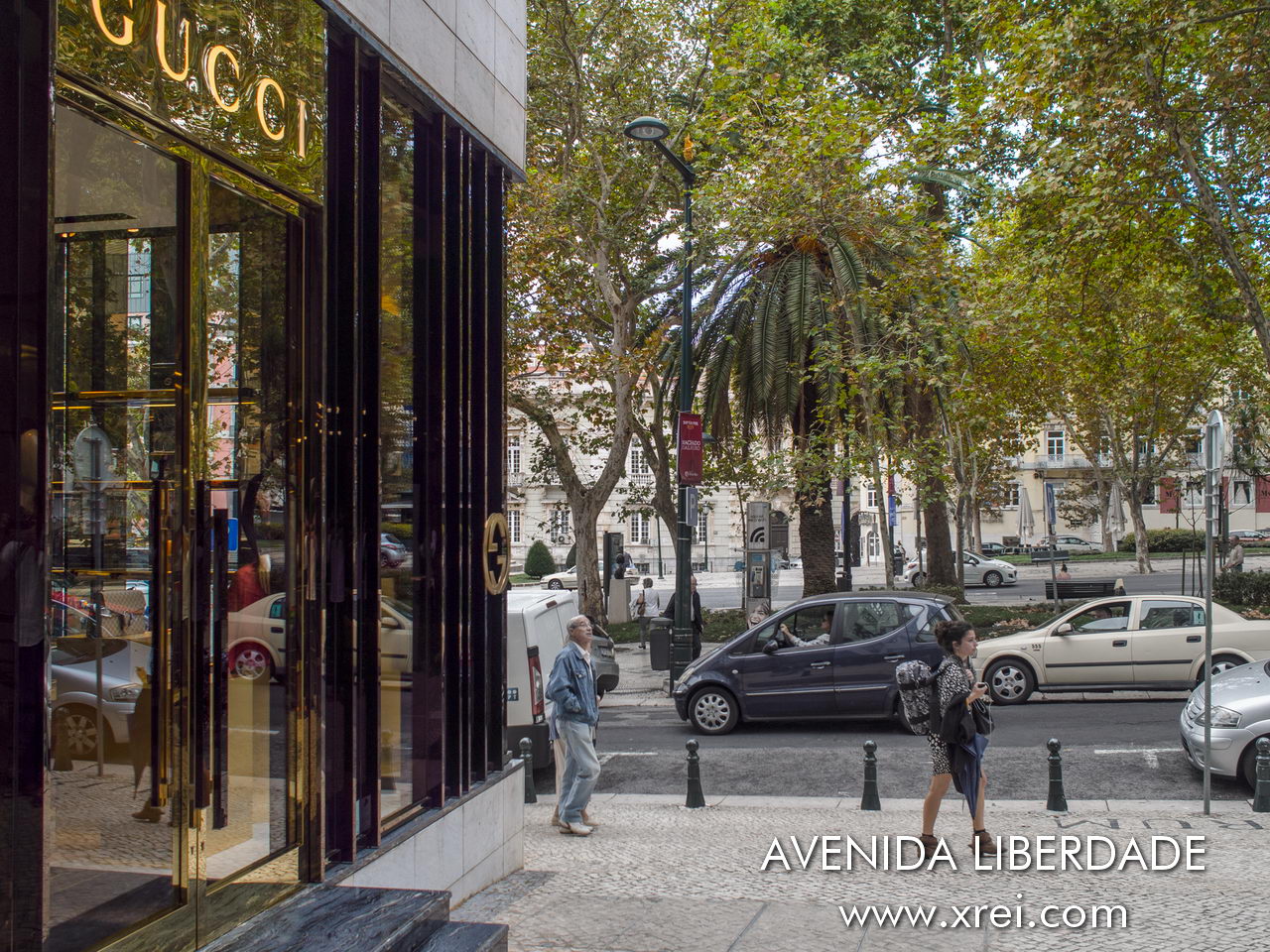
- Gucci
- Gilles Fine Jewellery
- Hugo Boss
- I Pinco Pallino
- Juliana Herc
- Lanidor
- Livraria Leya na Buchholz
- Loja das Meias
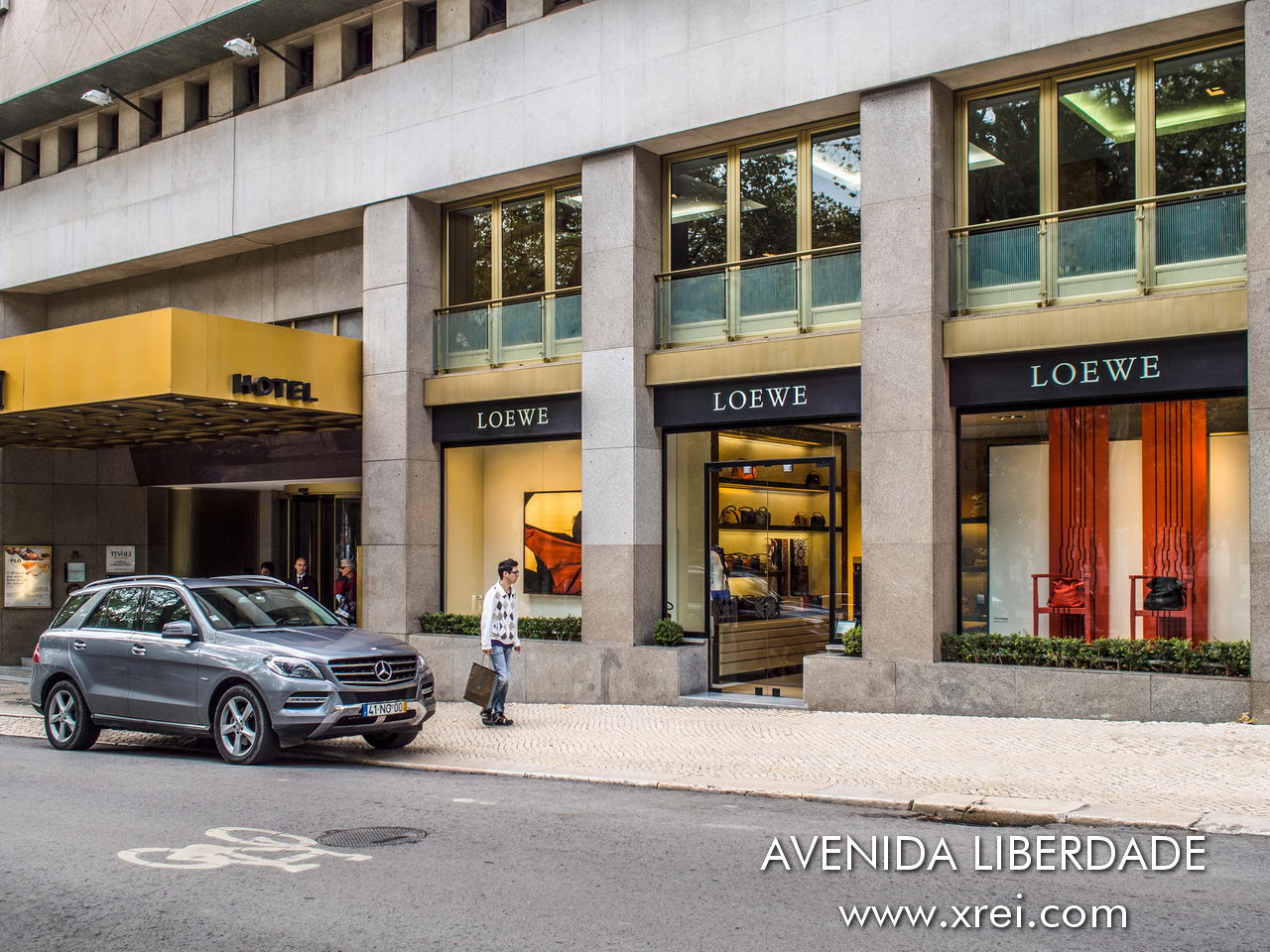
- Loewe
- Longchamp
- Louis Vuitton
- Luís Onofre
- Machado Joalheiro
- Maria João Bahia
- Max Mara
- Michael Kors
- Miu Miu
- Montblanc
- Panerai
- Prada
- Rosa e Teixeira
- Stivali
- Tivoli Forum
- Tod's
- Tony Miranda
- Torres Joalheiros
- Wicket Jones
- Zadig & Voltaire
Tourist accommodation on the Avenida da Liberdade

- Altis Avenida Hotel
- Fontecruz Lisboa Autograph Collection
- Hotel Avenida Palace
- Porto Bay Liberdade
- Sofitel Lisbon Liberdade
- Tivoli Avenida da Liberdade
- Torel Palace
- Valverde Hotel
- Avani Avenida Liberdade
- BessaHotel Liberdade
- Heritage Avenida
- Hotel Fénix Lisboa
- Hotel Florida
- Hotel Lisboa Plaza
- Hotel Marquês de Pombal
- Inspira Santa Marta
- NH Collection Lisbon Liberdade
- Turim Avenida Liberdade Hotel
- Vincci Liberdade
Transport and access to the Avenida da Liberdade
The Avenida da Liberdade is served by the following transport options:
- Lisbon Metro: three stations are located along the avenue:
- Restauradores station (Blue Line);
- Avenida station (Blue Line);
- Marquês de Pombal station (Blue Line and Yellow Line).
- Trains: train services are available from Rossio station, located next to Praça dos Restauradores. From Rossio station it is possible to travel within the city of Lisbon or to destinations outside the capital, such as Sintra. The Rossio station building merits a detailed visit for its architectural style, and also houses a Starbucks coffee shop and the tourist accommodation Lisbon Destination Hostel.
- Car parks: three car parks are located on or near the Avenida da Liberdade:
- Praça dos Restauradores;
- Praça da Figueira;
- Parque da Avenida Alexandre Herculano (close to the Avenida da Liberdade).
History of the Avenida da Liberdade
The Avenida da Liberdade was Lisbon's first public garden, created after the earthquake of 1 November 1755. In 1764 it was an enclosed garden surrounded by a wall, reserved exclusively for the Portuguese aristocracy. The Marquis of Pombal placed architect Reinaldo Manuel in charge of the project; in 1821 the wall was demolished and the garden was opened to the general public. The Avenida da Liberdade began to take its current form. The aim of this new project was to provide the Portuguese capital with a great avenue modelled on the Champs-Élysées in Paris. The Avenida da Liberdade began to take its current form between 1879 and 1882. The Avenida da Liberdade is the area with the highest property price per square metre in Lisbon and hosts several events, most notably the Marchas Populares de Lisboa parade — the highlight of the city's festivities on the night of 12 June.
Location of the Parish of Santo António (Avenida da Liberdade) on the Lisbon map