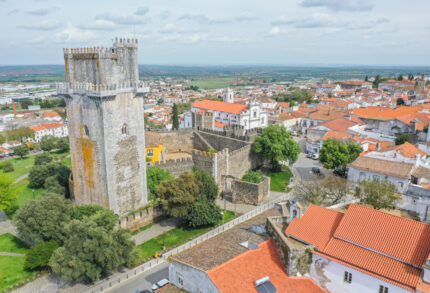
Beja is the main city of the Baixo Alentejo, built on a low hill above a wide plain of wheat fields, olive groves and cork oaks, with long, hot summers. The castle, the museum and the churches of the old town are within walking distance of each other.
This page covers how to reach Beja, what to see in the city, and its music, food and fairs.
Getting to Beja
- By air: Beja Airport, near the city, opened to civil flights in 2011.
- By road: Beja is about 180 kilometres south-east of Lisbon, reached from the A2 motorway.
In the city of Beja
- Praça da República: the main square of the old town, with the Misericórdia church and houses of the 16th and 17th centuries.
- Rua do Sembrano: an archaeological centre that shows remains of Iron Age walls and Roman baths under the street.
- Igreja do Carmo: an 18th-century church on Largo do Carmo, with Baroque, Rococo and Neoclassical altars.
- Parque da Cidade: the city park, with a lake, gardens and play areas, west of the centre.
Cinco Reis beach
- LocationBeja
- Beach typeInland beach
Cante Alentejano
- The music: a choral singing of the Alentejo, sung without instruments by groups of men, women or mixed choirs.
- The form: a solo voice called the ponto opens the song, a second high voice called the alto follows, and then the whole choir joins.
- UNESCO: Cante Alentejano was inscribed as Intangible Cultural Heritage of Humanity on 27 November 2014.
Food and fairs in Beja
- Alentejo cooking: dishes based on bread, olive oil and herbs, such as açorda and migas, and pork from the black Alentejo pig.
- Gaspacho: a cold soup of tomato, cucumber and pepper, served in summer.
- Ovibeja: the agricultural fair of Beja, held each spring.