
The Old Cathedral of Coimbra, the Sé Velha, is a Romanesque cathedral in the Alta of Coimbra, begun after 1139, when Afonso Henriques chose Coimbra as the capital of his kingdom, and built mainly from 1162 with the support of Bishop Miguel Salomão. King Sancho I was crowned here in 1185, and it is one of the most important Romanesque buildings in Portugal.
The cathedral is a National Monument and part of the University of Coimbra, Alta and Sofia, a UNESCO World Heritage site.
What to see at the Old Cathedral of Coimbra
- Façade: a fortress-like Romanesque front with battlements, attributed to the French master Roberto.
- Porta Especiosa: the Renaissance side portal of the 16th century.
- High altarpiece: a late Gothic altarpiece of gilded carved wood in the chancel.
- Cloister: the cloister, begun about 1218, in the reign of King Afonso II.
- Tomb of Sesnando: the tomb of Sesnando Davides, the first Count of Coimbra.
History of the Old Cathedral of Coimbra
- After 1139: Afonso Henriques decides to pay for a new cathedral, and works begin under Bishop Bernardo.
- 1162: Bishop Miguel Salomão gives the definitive push to the works.
- 1185: Sancho I, the second King of Portugal, is crowned in the cathedral.
- Early 13th century: the main works are completed, and the cloister is begun about 1218.
- 16th century: the Porta Especiosa is added.
Visiting the Old Cathedral of Coimbra
- Location: the cathedral stands on Largo da Sé Velha, in the parish of the historic centre, a short climb from the Baixa through the Arco de Almedina.
- Nearby: the University of Coimbra, Alta and Sofia is a short walk further up the hill.
- Tickets: the cathedral and its cloister are visited with a ticket.
Places to visit in Coimbra
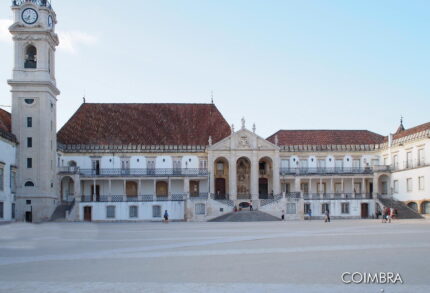
Coimbra, Portugal
University of Coimbra – Alta and Sofia
Santa Cruz Monastery
Old Cathedral of Coimbra
Santa Clara-a-Velha Monastery
Portugal dos Pequenitos
History of Coimbra
Visiting Coimbra