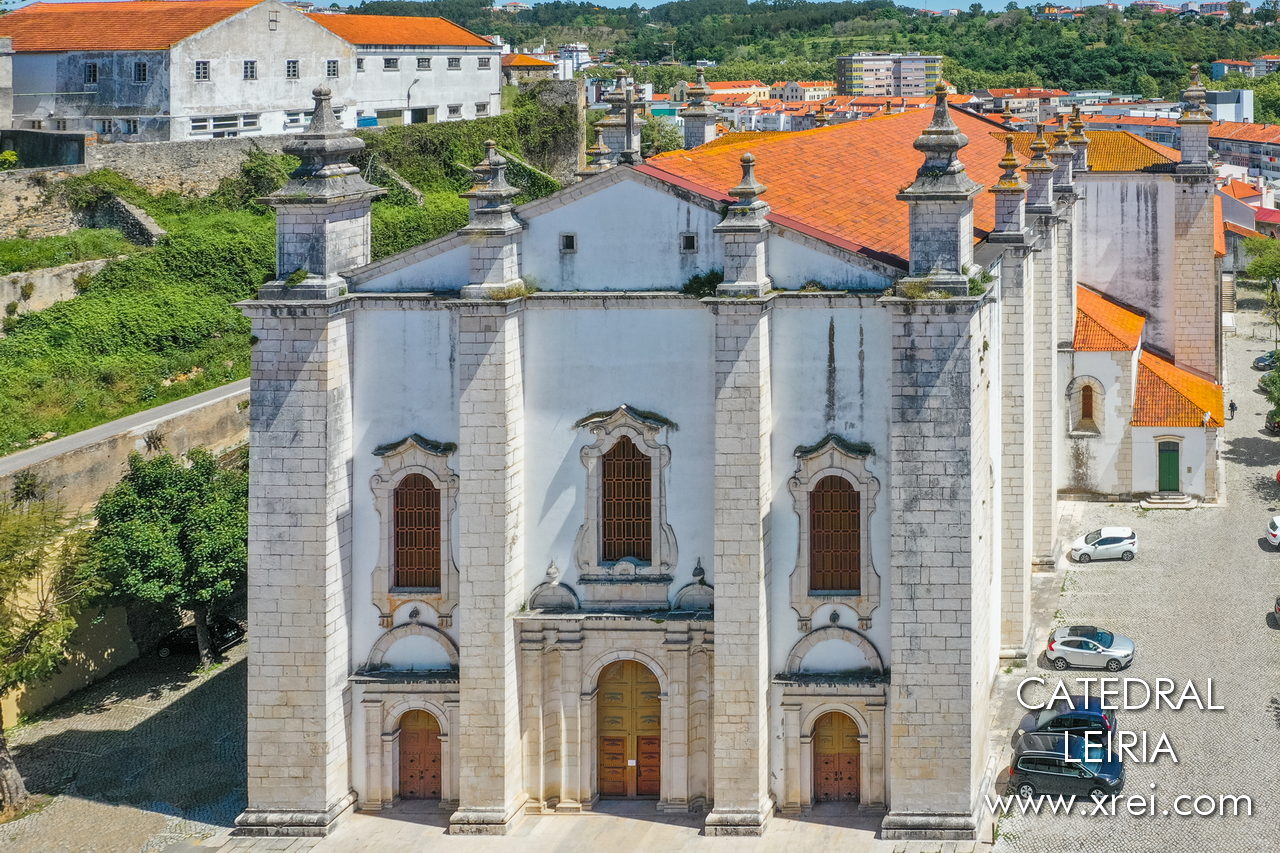
Leiria Cathedral is a Mannerist cathedral at the foot of the castle hill in Leiria, built after Pope Paul III created the Diocese of Leiria on 22 May 1545. The architect Afonso Álvares directed the works, which began in earnest in 1559, and the cathedral chapter moved into the unfinished church in 1574.
The cathedral is a hall church, with three naves of the same height, and is classified as a National Monument since 2014.
What to see at Leiria Cathedral
- Nave: three naves of equal height divided by cross-shaped pillars, under ribbed and star vaults, in a Latin-cross plan with a projecting transept.
- High altarpiece: a 16th-century Mannerist altarpiece of gilded carved wood and painted panels, in two storeys.
- Façade: a sober front divided by strong buttresses, with three round-arched doors, much altered after the earthquake of 1755.
- Cloister: a cloister of three wings joined to the apse.
- Bell tower: a Baroque bell tower built in 1772, apart from the church, near the gate called Porta do Sol.
History of Leiria Cathedral
- 22 May 1545: Pope Paul III creates the Diocese of Leiria at the request of King João III, and Leiria becomes a city.
- 1550: the first stone is laid, and in 1551 Afonso Álvares arrives in the city with the plan of the new cathedral.
- August 1559: construction begins in earnest under Bishop Gaspar do Casal.
- 1569 to 1572: the chancel is finished, and the body of the church and the façade follow.
- 1574: the cathedral chapter moves into the new church.
- 1755: the earthquake seriously damages the façade.
- 1772: a new Baroque bell tower is built.
- 2014: the cathedral is classified as a National Monument.
Visiting Leiria Cathedral
- Location: the cathedral stands in the historic centre, below Leiria Castle.
- Visits: the cathedral is open for worship and visits, and the Diocese of Leiria-Fátima publishes current times.
Places to visit in Leiria