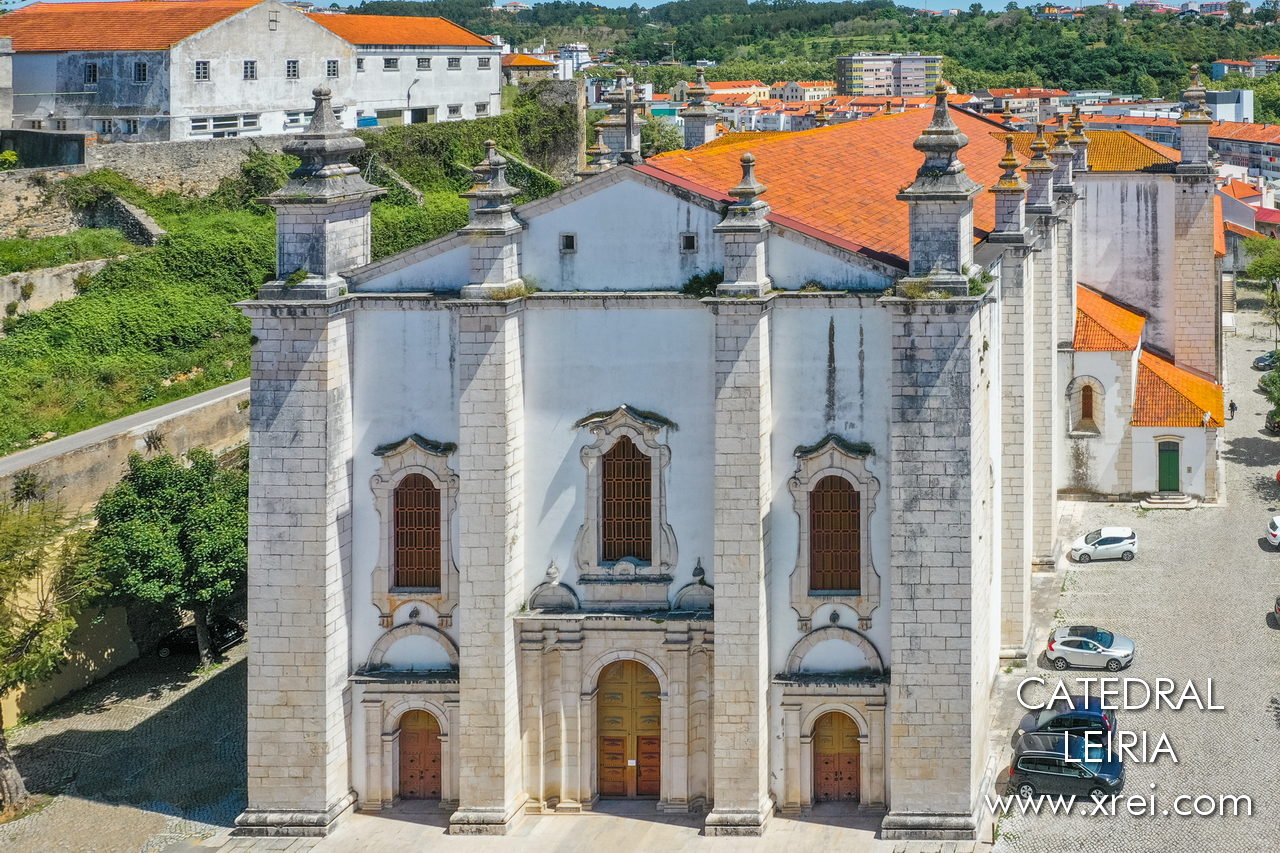
Leiria Cathedral er en manieristisk katedral ved foden af borgbanken i Leiria, der blev opført, efter at pave Paul III oprettede bispedømmet Leiria den 22. maj 1545. Arkitekten Afonso Álvares ledede arbejdet, som for alvor begyndte i 1559, og domkapitlet flyttede ind i den ufærdige kirke i 1574.
Katedralen er en halikirke med tre skibe i samme højde og har været klassificeret som et nationalmonument siden 2014.
What to see at Leiria Cathedral
- Nave: three naves of equal height divided by cross-shaped pillars, under ribbed and star vaults, in a Latin-cross plan with a projecting transept.
- High altarpiece: a 16th-century Mannerist altarpiece of gilded carved wood and painted panels, in two storeys.
- Façade: a sober front divided by strong buttresses, with three round-arched doors, much altered after the earthquake of 1755.
- Cloister: a cloister of three wings joined to the apse.
- Bell tower: a Baroque bell tower built in 1772, apart from the church, near the gate called Porta do Sol.
History of Leiria Cathedral
- 22 May 1545: Pope Paul III creates the Diocese of Leiria at the request of King João III, and Leiria becomes a city.
- 1550: the first stone is laid, and in 1551 Afonso Álvares arrives in the city with the plan of the new cathedral.
- August 1559: construction begins in earnest under Bishop Gaspar do Casal.
- 1569 to 1572: the chancel is finished, and the body of the church and the façade follow.
- 1574: the cathedral chapter moves into the new church.
- 1755: the earthquake seriously damages the façade.
- 1772: a new Baroque bell tower is built.
- 2014: the cathedral is classified as a National Monument.
Visiting Leiria Cathedral
- Location: the cathedral stands in the historic centre, below Leiria Castle.
- Visits: the cathedral is open for worship and visits, and the Diocese of Leiria-Fátima publishes current times.
Places to visit in Leiria