
Monserrate Palace is a 19th-century palace in a park of plants from every continent, west of the town of Sintra and part of the Cultural Landscape of Sintra. The English merchant Francis Cook bought the estate in 1863 and rebuilt the palace with the architect James Knowles on the ruins of an earlier neo-Gothic house.
The Cook family used Monserrate as their summer residence.
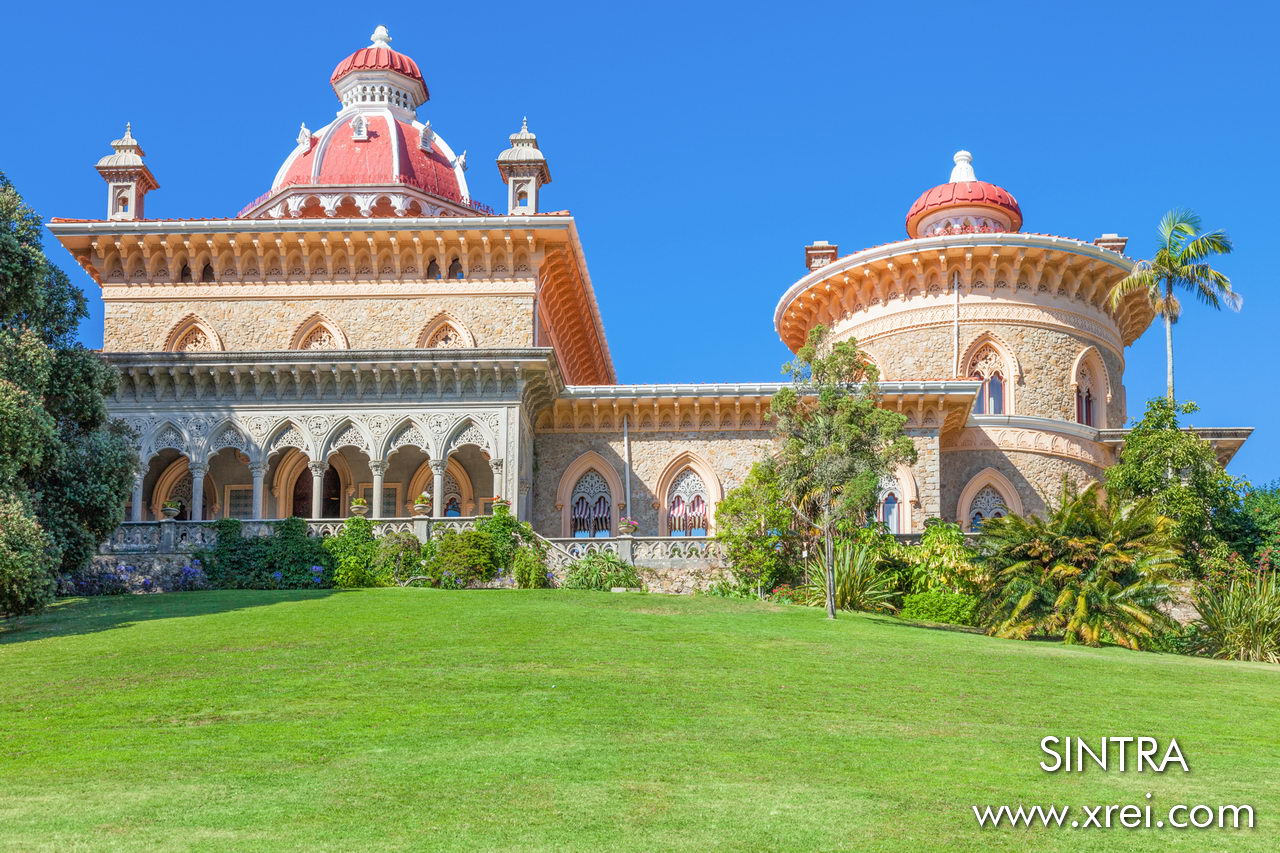
What to see at Monserrate Palace
- Palace: the decoration combines Gothic and Indian influences with Moorish details, in carved stone inside and out.
- Music Room: a round hall under a dome, at one end of the main gallery.
- Park: Francis Cook created the park with the landscape painter William Stockdale, the botanist William Nevill and the master gardener James Burt. Native species such as cork oaks and strawberry trees grow next to species from every continent.
- Paths, lakes and waterfalls: winding paths lead through the park past lakes, waterfalls and ruins.


History of Monserrate Palace
- 1540: Friar Gaspar Preto, rector of the All Saints Hospital in Lisbon, builds a chapel dedicated to Our Lady of Monserrate on the estate.
- 17th and 18th centuries: the Mello e Castro family holds the estate, which Caetano de Mello e Castro acquires in 1718.
- 1755: the Lisbon earthquake devastates the estate.
- 1789: the English merchant Gerard de Visme rents the estate and builds a neo-Gothic house.
- 1794: the English writer William Beckford becomes the tenant and works on the house and gardens, until he leaves in 1799.
- 1809: Lord Byron visits the abandoned house and describes Monserrate in the poem Childe Harold's Pilgrimage.
- 1856: Francis Cook rents the estate, and buys it in 1863. King Luís I later gives him the title of Viscount of Monserrate.
- 1949: the Portuguese State buys the estate and the palace.
- 1995: UNESCO inscribes the Cultural Landscape of Sintra on the World Heritage List.
- 2000: Parques de Sintra takes over the management of the estate. The palace reopens in 2010 after work on the roofs and façades, and the interiors are restored by 2016.
Visiting Monserrate Palace
- Management: Parques de Sintra manages the palace and park. Its website publishes current opening times and prices.
- Location: the estate is on the road from Sintra to Colares, west of the historic centre and past Quinta da Regaleira.
Other places in the Cultural Landscape of Sintra