
The history of Aveiro is the history of its lagoon. The town lived on salt, fishing and sea trade, lost its outlet to the sea when the sandbar closed in the 16th century, and recovered when a new channel was opened to the Atlantic in the 19th century.
This page lists the main dates in the history of Aveiro and the people linked to the city.
Timeline of Aveiro
- Middle Ages: the town grows on salt production, fishing and trade on the lagoon.
- 1434: Aveiro receives the right to hold a free fair, which survives as the Feira de Março.
- 1458: the Convent of Jesus is founded, today the Aveiro Museum.
- 1472 to 1490: Princess Joana, daughter of King Afonso V, lives in the convent, and later becomes the patron of the city.
- 15th and 16th centuries: Aveiro takes part in the cod fishery off Newfoundland and in the sea trade of the age of the voyages.
- Late 16th century: the sandbar closes and the lagoon silts up, cutting the port off from the sea and starting a long decline.
- 1759: King José I raises Aveiro to the status of a city.
- 1808: a new channel is cut through the sandbar, reopening the lagoon to the Atlantic.
- 19th century: salt, fishing and the railway bring back trade, and the canals take their present form.
- 1904 to 1920: Art Nouveau buildings rise along the canals.
- 1911: the Aveiro Museum is created in the former convent.
- 1973: the University of Aveiro is founded.
People linked to Aveiro
- Princess Joana: the daughter of King Afonso V, who lived in the Convent of Jesus and is the patron of the city, remembered on 12 May.
- João Augusto Marques Gomes: the founder of the city museum in 1911.
- Francisco Augusto da Silva Rocha: the architect of many of the Art Nouveau buildings of Aveiro.
Places to visit in Aveiro
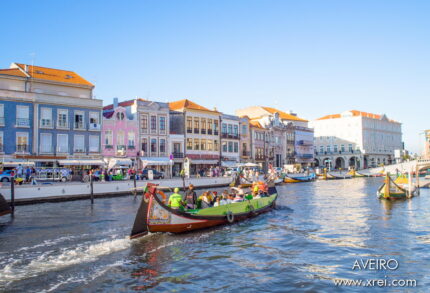
Aveiro, Portugal
Aveiro & Costa Nova
Canals of Aveiro
Aveiro Salt Pans
Aveiro Museum, Monastery of Jesus
Art Nouveau of Aveiro
History of Aveiro
Visiting Aveiro