Sanctuary of Fátima, Portugal

Sanctuary of Fátima, Portugal

Sanctuary of Fátima
Santuário de Nossa Senhora de Fátima is one of the most important religious tourism destinations in the world

Fátima, Portugal

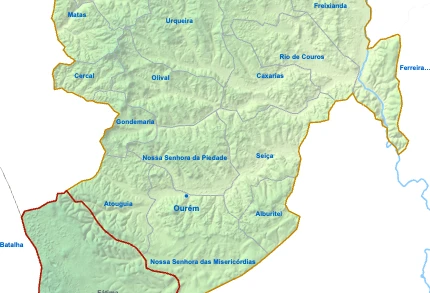
Fátima is a Portuguese city situated in the Centre region of Portugal, known for the Santuário de Nossa Senhora de Fátima. The city is one of the most important religious tourism destinations in the world. The landscape of Fátima is defined by the Sanctuary and the vast square that forms part of it. From the air the immensity of the square can be appreciated, along with the Basílica de Nossa Senhora do Rosário, the Capelinha das Aparições and the Basílica da Santíssima Trindade. Fátima is located in a valley of the Serra de Aire e Candeeiros, approximately 127 km from Lisbon, about one hour and twenty minutes by car. Fátima forms part of the district of Santarém, the Centre region and the municipality of Ourém. The main economic activities of Fátima are religious tourism, restaurants and hospitality. Fátima receives approximately six million visitors per year and set a record of 9.4 million people in the centenary year of the Apparitions in 2017.

The Miracle of Fátima

The apparitions of the Angel of Peace...

Fátima is intimately connected to the apparitions of the Angel of Peace and of Nossa Senhora de Fátima. The Angel of Peace appeared three times: 1. The First Apparition of the Angel took place in the Spring of 1916 at the Loca do Cabeço, while the shepherds were tending their flock. According to accounts, the Angel of Peace always appeared preceded by a gust of wind. 2. The Second Apparition of the Angel took place in the Summer of 1916 at the home of Lúcia, situated at Poço do Arneiro. 3. The Third Apparition of the Angel took place once again at the Loca do Cabeço. In this apparition the Angel of Peace gave communion to the Three Shepherd Children. According to accounts by Sister Lúcia (Lúcia de Jesus Rosa dos Santos, shepherd child of Fátima), the Angel of Peace carried a chalice and a host which he left suspended in the air — the chalice for Jacinta and Francisco, and the host for Lúcia.

...and the apparitions of Nossa Senhora de Fátima

There followed 6 apparitions of Our Lady: 1. The First Apparition of Nossa Senhora de Fátima was on 13 May 1917 at Cova da Iria, the site of the current Sanctuary of Fátima. The first apparition was preceded by a flash of lightning at the location where the Basílica das Aparições now stands. Fearing rain, the shepherd children began to make their way home until, at the spot where the Capelinha das Aparições now stands, a second flash of lightning occurred and the children glimpsed the image of Nossa Senhora de Fátima above the holm oak tree. It was during this first apparition that Nossa Senhora de Fátima asked the shepherd children "Will you offer yourselves to God?" 2. The Second Apparition of Nossa Senhora de Fátima was in June 1917, when she announced the deaths of Francisco and Jacinta. 3. The Third Apparition took place on 13 July 1917, when the Secret of Fátima was conveyed in three parts: the first part with the vision of Hell; the second part foretelling a new war — the Second World War — the triumph of Communism and the fall of the Berlin Wall in 1989; the third part was written by Sister Lúcia in 1944, describing the attempted assassination of Pope John Paul II in Rome in 1981. 4. The Fourth Apparition of Nossa Senhora de Fátima took place on 19 August 1917 at Valinhos, following the three-day imprisonment of the three shepherd children in the jail of Ourém. Nossa Senhora de Fátima promised to perform a miracle for all to see. 5. The Fifth Apparition took place on 13 September 1917, when Nossa Senhora de Fátima appeared to convey that it was essential for the three shepherd children to continue praying for the First World War (1914–1918) to end. 6. The Sixth Apparition was on 13 October 1917 at noon, when the Miracle of the Sun took place. On that day approximately 70,000 people of all faiths and professions gathered under torrential rain that stopped suddenly. The sun then began to rise and fall, according to accounts of the time. Meanwhile, the three shepherd children were witnessing other events in three phases: in the first phase they saw Nossa Senhora de Fátima, the Infant Jesus and Saint Joseph blessing the world; in the second phase they saw Nossa Senhora de Fátima and Nossa Senhora das Dores blessing the world; and in the final phase they observed Nossa Senhora do Carmo.

The canonisation of the Shepherd Children of Fátima

In the 1950s, following the Apparitions of the Angel of Peace, of Nossa Senhora de Fátima and the deaths of Francisco and Jacinta, the stages of the beatification process began through two requests. The first request came from the Catholic Women's Youth for Jacinta and the second from the Catholic Men's Youth for Francisco. The beatification process was concluded in 1979, the year in which Father Kondor was appointed Vice-Postulator for the Cause of Canonisation of the Shepherd Children of Fátima. What had until then been forbidden by the Catholic Church happened for the first time when a canonisation process was submitted for young people under the age of 16 who had not died as martyrs. Father Kondor led the canonisation process and contacted as many bishops around the world as possible for their support, writing letters to Pope John Paul II requesting the beatification of the two shepherd children. The result was the submission of three hundred apostolic letters requesting canonisation and the convening of a meeting in April 1981 by Pope John Paul II, attended by professionals from numerous fields including theologians and physicians. The meeting lasted several weeks and centred on the question of whether holiness during childhood was possible. At the conclusion of the meeting it was decided that holiness during childhood was indeed possible, and ecclesiastical law was amended with the creation of the Decree of Heroicity of Virtues on 13 May 1989. On 13 May 2000 Pope John Paul II visited Fátima to beatify the two shepherd children, Jacinta and Francisco. From this moment the Cult of the Shepherd Children was established and 20 February was designated as the Day of the Shepherd Children. The Igreja dos Pastorinhos de Alverca was the first church built for the practice of the Cult of the Shepherd Children.

The history and legends of the origin of the name Fátima

The first theory of the name Fátima is connected to the story of one of the daughters of the Prophet Muhammad (571–632), Fatimah bint Muhammad (604–632). Legend has it that Moorish knights who were hospitalised in the area would see a woman dressed in white, who came to be associated with Fatimah, daughter of the Prophet Muhammad. There is another legend that tells the story of the Traga-Mouros, Count of Ourém — one of the finest warriors and poets of Dom Afonso Henriques (c. 1109–1185). According to the legend of Gonçalo Ermiges, a Templar Knight who fell in love with the Moorish princess Fátima upon catching a distant glimpse of her. From that moment he could not stop thinking of her, and in order to marry the princess he devised a plan to abduct her. On the night of the Festa das Luzes — today's São João — he gathered some knights and rode to Alcácer do Sal, where the princess lived, and abducted Fátima. He then sought permission from Dom Afonso Henriques to marry her, which was granted on two conditions: that the princess be baptised, and that the knight defeat Prince Abu. As Dom Afonso Henriques wished, Fátima was baptised with the Christian name of Oureana, and Prince Abu was defeated. As a reward, Dom Afonso Henriques gifted the village of Abegas, which in honour of Oureana was renamed the village of Oureana and later the village of Ourém. According to the legend, both lived happily until Oureana died. Gonçalo Ermiges chose to withdraw from earthly life to join the Order of Saint Bernard at the Mosteiro de Tomareis, where he died. From this moment the land where Fátima had lived came to be called the Terras de Fátima and, later, Fátima.

The political situation in Portugal and the Miracle of Fátima

The politically unstable First Republic recognised that the Message of Fátima could be used to achieve peace and to gain the support of the people. The year 1929 was pivotal in the growth of Fátima's prominence in Portuguese society, in the Portuguese Catholic Church and within the political regime, owing to the rise to the top of the Portuguese ecclesiastical hierarchy of Cardinal Cerejeira (1888–1977) — a believer in the Marian Cult and in the Miracle of Fátima. Relations between the Portuguese Catholic Church and the Portuguese government were regularised, and with the emergence of the Estado Novo the importance of Fátima grew significantly. Fátima came to be used as propaganda to legitimise the Salazar dictatorship and in the European struggle against Soviet Communism. The Miracle of Fátima arose in a deeply violent and turbulent European and national context, being interpreted as a sign of peace and divine intervention by believers, and seen as political exploitation by non-believers. In Europe and Portugal between 1917 and 1920 there occurred a series of disturbing events: the First World War (1914–1918), the Russian Revolution of 1917, the influenza outbreak across Europe in 1918, the dispatch of Portuguese troops to France in January 1917, the massacre of La Lys where many Portuguese soldiers died, the rise to power of Afonso Costa which led to strikes, riots and attacks on shops, the revolt of 3 December 1917 led by Sidónio Pais, the entry into force of rationing coupons on 23 September 1918, the assassination of Sidónio Pais on 14 December 1918, the serious outbreak of typhus and infectious influenza in Portugal in 1918, and the occupation of Porto by Paiva Couceiro in January 1919, where he declared the Monarquia do Norte, which lasted until February.

TOP 10 attractions in the city of Fátima

Sanctuary of Fátima

1. Sanctuary of Fátima: considered one of the most important places of worship in the Catholic faith in the world, located in Portugal at Cova da Iria. The Sanctuary of Fátima began to be built in 1917 with the placement of an arch at the site of the First Apparition. In 1919 the arch was replaced by the Capelinha das Aparições.

  • Capelinha das Aparições was the first structure of the Sanctuary, built at the site of the apparitions. The first chapel was inaugurated on 15 June 1919, was destroyed in a bombing attack in 1922 and re-inaugurated in 1923. The highlights of the Capelinha das Aparições are the porch built to receive Pope John Paul II in 1982, the ceiling lined with Siberian pine wood in 1988, the column bearing the statue of Nossa Senhora de Fátima — representing the site of the first apparition — by José Ferreira Thedim, and the organ by Gerhard Grenzing.
  • Basílica de Nossa Senhora do Rosário de Fátima, erected at the location where on 13 May 1917 the three shepherd children were playing when a flash of lightning occurred. The foundation stone of the basilica was blessed on 13 May 1928 by the Archbishop of Évora Dom Manuel Mendes. The project was completed on 12 October 1953. It received the title of basilica on 12 November 1954, conferred by Pope Pius XII. The building was constructed entirely from materials extracted from the quarries of Moimenta and marbles from Estremoz, Pêro Pinheiro and Fátima. The main exterior highlights are the bell tower standing 65 metres tall, the carillon with 62 bells by José Gonçalves Coutinho, a bronze crown weighing seven tonnes cast at the Fundição do Bulhão, the clock designed by Bento Rodrigues, the façade angels by Albano França, and the statue of the Immaculate Heart of Mary sculpted by Thomas McGlynn in accordance with the directions of Sister Lúcia — measuring 4.5 metres and weighing 15 tonnes. The main interior highlights are the mosaic produced by the Vatican Workshops representing the Holy Trinity crowning Nossa Senhora de Fátima, the stained-glass windows depicting scenes from the daily life of Nossa Senhora de Fátima, the Apparitions and the Message of Fátima, the altarpiece painting representing the Message of Nossa Senhora de Fátima, fourteen side altars representing the fourteen Mysteries of the Rosary, the vaulted Chapel of the Main Altar where the Fifteenth Mystery of the Rosary is represented, the tomb of Dom José Alves Correia da Silva, an organ assembled in Padua in 1952 with 152 stops and 12,000 pipes of lead, tin and wood, on the right side of the Main Altar the tomb of Francisco, on the left side the tomb of Jacinta Marto and the Chapel of the Blessed Sacrament, which has exhibited the Blessed Sacrament since 1960.
  • Basílica da Santíssima Trindade, designed by architect Alexandros Tombazis, was inaugurated on 12 October 2007. The basilica has seating capacity for 8,633 in an area of 40,000 square metres. The foundation stone was donated by Pope John Paul II and forms part of the tomb of the Apostle Saint Peter. The main highlight is the roof of the basilica, designed to accommodate photovoltaic panels.
  • Reflecting Pools located at the entrance to the Basílica da Santíssima Trindade represent Baptism (through the water cascade) and Creation (through the water rising from the fountain). The project is by architect Tombazis. The main points of attraction are the presbytery panel by Father Marko Ivan Rupnik.
  • Chapel of the Angel of Peace, formerly the Chapel of the Perpetual Exposition of the Blessed Sacrament, inaugurated on 1 January 1987, with the foundation stone blessed by Pope John Paul II on 13 May 1982. Since 1 January 1960 the Blessed Sacrament has been exposed twenty-four hours a day for the veneration of the faithful. Architect José Carlos Loureiro was responsible for the chapel. The main points of interest are the two entrance stained-glass windows by Rolando Sá Nogueira and the silver monstrance by Zulmiro de Carvalho.
  • Rectorate Building inaugurated on 13 May 1986 by Cardinal Dom António Ribeiro. This building houses the administrative services of the Sanctuary and the Casa de Retiros de Nossa Senhora do Carmo.
  • Casa de Retiros de Nossa Senhora do Carmo is the residence where Pope Paul VI and Pope John Paul II stayed.
  • Hostel and Retreat House of Nossa Senhora das Dores are used as shelter for the sick who come to take part in the pilgrimages. The main highlight is the Chapel of the Sun, which features a painting representing the Triumph of the Immaculate Heart of Mary and a stained-glass window depicting the Miracle of the Sun.
  • Sanctuary Square, an imposing square built by Cottinelli Telmo (1897–1948).
  • Colonnade linking the buildings on either side of the sanctuary. The main points of interest are the monumentality conveyed by the 200 columns, the 14 altars representing the 14 Stations of the Cross with paintings by Lino António, and the 17 images of saints devoted to Nossa Senhora de Fátima.
  • Monument to the Sacred Heart of Jesus, with the gilded bronze statue at the centre of the Sanctuary as a symbol of the centrality of Jesus in the Message of Fátima.
  • Berlin Wall Block — a 2.6-tonne block of the Berlin Wall that fell in 1989, inaugurated here on 13 August 1994. This block was donated by a Portuguese emigrant living in Germany, Virgílio Casimiro Ferreira. The project is by José Carlos Loureiro.
  • Centro Pastoral Paulo VI inaugurated in 1982 by Pope John Paul II.
  • Cruz Alta inaugurated on 29 August 2007, standing 34 metres tall and 17 metres wide. The project is by Robert Schad.
  • Monument to Pope John Paul II inaugurated in 2007, standing 3.5 metres tall. The project is by Czeslaw Dzwigaj. At the base of the statue is a quote from John Paul II: "To the Most Holy Trinity goes this my worshipping thought, made explicit in this blessed land of Fátima: Blessed be God, rich in mercy, for the great love with which He loved us."
  • Monument to Fathers Formigão and Fischer designed by Graça Costa Cabral and inaugurated on 13 October 1998, in homage to the two priests most important in spreading the message of Fátima.

Aljustrel

2. Aljustrel: the village of Aljustrel was the birthplace of the three shepherd children Francisco, Jacinta and Lúcia. Aljustrel had approximately 100 inhabitants in 1917. The highlights are Casa de Lúcia — the place where Lúcia lived until the age of fourteen and where she was first questioned. Casa de Lúcia was donated by Lúcia herself to the Sanctuary of Fátima in 1981 and recreates the daily life of the family. The main highlight is the Poço do Arneiro at the back of the house, where the Angel appeared for the second time and where Lúcia saw one of the Popes weeping in a large house. Casa de Jacinta e de Francisco is the birthplace of both shepherd children and where Francisco died of bronchopneumonia.

Museu do Santuário de Fátima

3. Museu do Santuário de Fátima: inaugurated in 1955. The main highlights of the museum are the permanent exhibitions on the themes Fátima Light and Peace and Casa-Museu de Aljustrel. The primary aim of the museum is to promote the history of the Sanctuary of Fátima.

Via Sacra

4. Via Sacra: also called the Hungarian Calvary, this is a Way of the Cross beginning at the southern roundabout at the exit of Fátima and ending at a chapel on Monte dos Valinhos. The Via Sacra was born during the Second World War at the wish of two Hungarian priests, Father Elias Kardos and Father Luís Kondor. The Hungarian Calvary represents the Hungarian desire for national rebirth following occupation by the Soviet Union. The project by Hungarian architect Ladislaw Marec was presented in 1956 to Dom José Alves Correia da Silva, the Bishop of Leiria. The Via Sacra was funded by Hungarian refugees living in the West and inaugurated on 12 May 1964. Along the Via Sacra there are 14 chapels representing the Fourteen Mysteries and a 15th chapel donated by the parish of Lajosmizse in Hungary, inaugurated on 13 October 1992 following the fall of Communism. The highlights of the Via Sacra are the Chapel of Saint Stephen inaugurated on 13 October 1992 and remodelled in 1994 — inside, notable for mosaics depicting the Apparitions of Nossa Senhora de Fátima at Cova da Iria, the Seven Sorrows of Nossa Senhora de Fátima and the consecration of Hungary to the Virgin Mary, the low-relief station panels depicting the visions of Catherine Emmerich, the image of the Patron of Hungary, sculptures, stained-glass windows representing Hungarian saints, mosaics portraying the apparitions of Nossa Senhora de Fátima, and the offering of the Crown of Hungary by King Saint Stephen to Nossa Senhora de Fátima. Loca do Cabeço — the site of the first and third apparitions of the Angel of Peace — with images of the Angel and the three shepherd children. It was here that the Angel gave communion to the shepherd children and taught two prayers to console the Offended God. And the Monument in homage to Our Lady at the site where Nossa Senhora de Fátima appeared on 19 August 1917.

Igreja Paroquial de Fátima

5. Igreja Paroquial de Fátima: located approximately 2 km from the Sanctuary of Fátima, with Nossa Senhora dos Prazeres as patron saint. It was in the Igreja Paroquial de Fátima that the three shepherd children were baptised, where Sister Lúcia made her First Communion, and it was a place of prayer for Francisco and where Nossa Senhora de Fátima appeared to Jacinta to teach her to pray the rosary. The highlights are the sculpted image of Nossa Senhora do Rosário painted in accordance with Lúcia's directions, images of Nossa Senhora de Fátima, Francisco and Jacinta by Jaime Santos and Manuel Machado, and the baptismal font where the three shepherd children were baptised.

Casa-Museu de Aljustrel

6. Casa-Museu de Aljustrel: the former home of Lúcia's godmother, subsequently acquired by the Sanctuary of Fátima. The Casa-Museu was inaugurated in 1992 with the aim of representing the daily life of the village's inhabitants in 1917. The main highlight is the Furniture, Home and Work collection.

Museu de Cera

7. Museu de Cera: located near the Sanctuary in the city centre of Fátima, it portrays the main events in the history of the city. The main highlights are 32 scenes with 120 figures representing scenes related to the pilgrimage, the story of the three shepherd children, the history of Fátima, important events for Portugal and a figure of Pope Francis.

Museu das Aparições

8. Museu das Aparições: located on Rua Jacinta Marto, this is a museum dedicated to the Apparitions of the Angel of Peace and of Nossa Senhora de Fátima. The main highlights are the 31 statues and the recreation of the vision of Hell and of the Miracle of the Sun through light and sound effects surrounding the statues.

Museu Milagre de Fátima

9. Museu Milagre de Fátima: located on Avenida Dom José Alves Correia da Silva, the museum tells the story of the Apparitions through virtual reality. The museum comprises seven virtual exhibitions on the themes "The World in 1917", "Apparitions of the Angel", "Apparitions of Nossa Senhora de Fátima", "Doubt, The Miracle of the Sun", "The Secret of Fátima", "Fátima — a Universal Devotion", "John Paul II — the Pope of Fátima" and "The Sharing".

Capela de Nossa Senhora da Ortiga

10. Capela de Nossa Senhora da Ortiga: a pilgrimage site located in Ortiga, near Fátima. Legend holds that Nossa Senhora de Fátima appeared here in 1758 to a mute shepherdess. Today it is a pilgrimage destination for the faithful of Nossa Senhora da Ortiga, and the venue for the Festas de Nossa Senhora da Ortiga on the first Sunday of July and the two following days.

Figures of Fátima

  • Lúcia de Jesus dos Santos (1907–2005): Lúcia was born on 28 March 1907 in Aljustrel and died on 13 February 2005 in the city of Coimbra. Lúcia was a cousin of Francisco and Jacinta. She was the daughter of António dos Santos (1873–1919) and Maria Rosa (1869–1942), the youngest of six siblings, and enjoyed playing, walking and dancing. In addition to these leisure activities she also worked as a shepherdess from a very young age due to the family's poverty. Lúcia's life, along with those of her cousins Francisco and Jacinta, changed from 1917 with the occurrence of the Miracle of Fátima. Lúcia was the only one able to see, hear and speak with Nossa Senhora de Fátima. After the deaths of her cousins, Lúcia went to live with the Congregation of Saint Dorothy in Spain, and later at the Carmelite convent in Coimbra, where she adopted the name Sister Maria Lúcia de Jesus e do Coração Imaculado.
  • Francisco Marto (1908–1919): born on 11 April 1908 and died on 4 April 1919 in Aljustrel. Francisco was the penultimate child of Manuel Pedro Marto and Olímpia de Jesus. According to accounts he was a peaceful, gentle and reserved boy who enjoyed playing the fife. Saint Francisco died at home from pneumonic influenza. The shepherd child was beatified by Pope John Paul II on 13 May 2000 and canonised on 13 May 2017 by Pope Francis. The feast day of Francisco is 20 February. Francisco Marto is interred in the Basílica das Aparições.
  • Jacinta Marto (1910–1920): Jacinta was born on 5 March 1910 in Aljustrel and died on 20 February 1920 in Lisbon at the Hospital Dona Estefânia. According to accounts, the shepherdess always had a serious expression but was at the same time modest and pleasant. It was Jacinta who broke the code of silence among the three shepherd children, who had agreed not to reveal that they had seen the Angel of Peace and Nossa Senhora de Fátima. Following her death at Hospital Dona Estefânia, Jacinta's body lay in funeral ceremony at the Igreja dos Anjos in Lisbon, before being transferred on 25 February to the cemetery of Ourém in the vault of the Barons of Alvaiázere. On 12 September 1935 her remains were transferred to Fátima and on 1 May 1951 she was moved to the Basílica de Nossa Senhora do Rosário. Saint Jacinta was beatified by Pope John Paul II on 13 May 2000 and canonised by Pope Francis on 13 May 2017. The feast day of Jacinta is 20 February.
  • Dom José Alves Correia da Silva (1872–1957): Dom José Alves Correia da Silva was born on 15 January 1872 in Maia and died on 4 December 1957 in Leiria. He was appointed Bishop of Leiria on 15 May 1920 and received episcopal ordination on 25 July 1920. He was the first Bishop of the Diocese of Leiria, which was reactivated on 17 January 1918 after having been suppressed in 1882. Pope John Paul II renamed it the Diocese of Leiria-Fátima on 13 May 1984. Dom José Alves Correia da Silva played an essential role in the promotion of the Message of Fátima. He established the Museu do Santuário de Fátima in 1955. The Bishop of Nossa Senhora de Fátima, as he was also known, received the Gran-Cruz da Ordem de Benemerência from President of the Republic Óscar Carmona in 1945, the Cruz Meritíssima de São Raimundo de Peñafort from the Spanish head of state in 1948, and was appointed assistant to the pontifical throne in 1956 by Pope Pius XII. Dom José Alves Correia da Silva is interred in the Basílica de Nossa Senhora do Rosário de Fátima.
  • José Ferreira Thedim (1892–1971): Portuguese sculptor responsible for creating the statue of Nossa Senhora de Fátima housed in the Capelinha das Aparições.
  • Father Luís Kondor (1928–2017): Hungarian priest of the Society of the Divine Word and Vice-Postulator for the Cause of Beatification of Francisco and Jacinta Marto. Father Luís Kondor played an essential role in promoting the Message of Fátima and in the beatification of the shepherd children through the publication of a bulletin in seven languages, written from 1959 with the aim of making known the lives of Francisco and Jacinta Marto. Father Kondor was also responsible for launching the Monument of Valinhos, the Via Sacra, the Calvary Chapel, the Colégio de São Miguel in Fátima, and the Diocesan Seminary and Episcopal Palace in Leiria.
  • Father Manuel Nunes Formigão (1883–1958): the principal promoter of Fátima and of the Cult of the Apparitions. Father Formigão conducted a series of interrogations of the three shepherd children that contributed to the drafting of a canonical report on 3 May 1922. This report was essential for the validation of the occurrence of the apparitions by the Bishop of Leiria in 1930. Father Formigão was a sceptic when he was sent to Fátima; however, over time he became one of the principal believers in the Apparitions of Fátima and developed a series of actions essential to the promotion of Fátima, including accounts of the first pilgrimages to Cova da Iria, writing one of the first books about Fátima, and coordinating the purchase of land for the construction of the Capelinha das Aparições. The beatification process of Father Formigão began on 13 September 2001 and was concluded on 16 April 2005, when it was submitted to the Congregation for the Causes of Saints in Rome. Father Formigão's principal books are "Os Episódios Maravilhosos de Fátima of 1921", "Os Acontecimentos de Fátima of 1923", "As Grandes Maravilhas de Fátima of 1927", "Fátima", "o Paraíso na Terra of 1930", "O que é Fátima of 1936", "Fé e Pátria of 1937", "Calendário de Nossa Senhora de Fátima of 1940" and "Almanaque de Nossa Senhora de Fátima of 1944".
  • Pope Pius XI (1857–1939): born on 31 May 1857 in Desio, Italy, and died on 10 February 1939 in Vatican City. Ambrogio Damiano Achille Ratti served as Pope from 6 February 1922 to 10 February 1939. He was the first ruler of the Vatican, as the Vatican had lost its independence with the abolition of the Papal States in 1870, a situation resolved by the Lateran Treaty of 1929 under his pontificate. On 1 November 1926, the diplomatic representative of Pius XI, Monsignor Sebastiano Nicotra, visited Fátima. This visit contributed to the dispatch of priests to Cova da Iria on 27 January 1927. Pope Pius XI performed the first two official acts recognising the importance of Fátima: he blessed and in 1929 distributed prints of Nossa Senhora de Fátima with the invocation "Most Clement Mother, save Portugal", and blessed a statue of Nossa Senhora de Fátima by José Ferreira Thedim to be placed in the Pontifical Portuguese College in Rome.
  • Pope Pius XII (1876–1958): born on 2 March 1876 in Rome, Italy, and died on 9 October 1958 in Italy. Eugenio Maria Giuseppe Pacelli served as Pope from 2 March 1939 to 9 October 1958. Pius XII was the first Pope born in Rome since 1724 and the first Pope to officially recognise the religious phenomenon of Fátima. He is known as the Pope of Fátima. It was Pius XII who consecrated the world to the Immaculate Heart of Mary and sent Cardinal Aloisi Masella (1879–1970) to Fátima on 13 May 1946 to crown the image of Nossa Senhora de Fátima.
  • Pope Paul VI (1897–1978): born on 26 September 1897 in Concesio, Italy, and died on 6 August 1978 in Castel Gandolfo, Italy. Giovanni Battista Enrico Antonio Maria Montini served as Pope from 21 June 1963 to 6 August 1978. Pope Paul VI was the first Pope to go to Fátima and pray for world peace, calling himself a Pilgrim of Fátima on 13 May 1967. Paul VI proclaimed the Blessed Virgin Mary as Mother of the Church and offered the Golden Rose to the Sanctuary of Fátima in 1965.
  • Pope John Paul II (1920–2005): Karol Józef Wojtyła was born on 18 May 1920 in Wadowice, Poland, and died on 2 April 2005 in the Vatican. Wojtyła served as Pope from 16 October 1978 to 2 April 2005. Pope John Paul II visited Portugal on three occasions: on 12 and 15 May 1982, during which visit Pope John Paul II gave thanks to Nossa Senhora de Fátima for the protection afforded to him during the assassination attempt he had suffered at the Vatican on 13 May 1981. During this visit, Pope John Paul II was also the target of an attack by the integralist priest Juan María Fernández y Krohn, who did not accept the authority of the Pope. Pope John Paul II was the first Pope in history to beatify children — Francisco and Jacinta. On 10 and 13 May 1991, Pope John Paul II visited Lisbon, the Azores, Madeira and Fátima, celebrating Mass in Fátima and Lisbon. On 12 and 13 May 2000: Pope John Paul II beatified Francisco and Jacinta Marto.

Curiosities about Fátima

  • Fátima, Football and Fado was the motto used by the Estado Novo regime (1933–1974) to characterise Portugal.
  • The apparitions of Our Lady at Fátima are among the sixteen apparitions of Nossa Senhora de Fátima officially recognised by the Holy See, out of a total of two thousand reported apparitions.
  • Fátima is represented in approximately ten thousand locations distributed across the five continents.
  • Fátima receives six million visitors who take part in religious ceremonies — more than those who visit the Vatican and Lourdes in France.
  • During the years of the First World War (1914–1918) there were reports of several apparitions of Nossa Senhora de Fátima, including at Barral, at Ponte da Barca and an apparition to a shepherd on 11 May 1917 in the Lisbon area.
  • The Image of Nossa Senhora de Fátima from the Capelinha das Aparições has travelled throughout the Iberian Peninsula since 1942.
  • The Image of the Pilgrim Virgin has travelled to various countries around the world since 1942.
  • The bullet extracted from the body of Pope John Paul II was offered to Fátima as a symbol of persecution against the Catholic Church.
  • The first church dedicated to the cult of Nossa Senhora de Fátima built outside Fátima was the Igreja de Nossa Senhora do Rosário de Fátima in São Paulo, Brazil.
  • The Blessing of Vehicles takes place on Sundays and holy days at 12:45 and 17:00 in a car park located at the rear of the Sanctuary bookshop.
  • The Blessing of Religious Objects takes place daily at the end of the official Mass of the Sanctuary of Fátima.
  • The Candlelight Procession takes place on the night of 12 to 13 May each year and brings together thousands of people annually.

Quick Facts about Fátima

  • 2017, the centenary year of the apparitions, was the year with the highest number of visitors — approximately nine million.
  • Fátima received its first municipal charter in 1588.
  • Fátima has approximately 11,600 inhabitants.

Fátima Glossary

  • Beatification: beatification means conferring the status of Blessed. It is a step towards a person becoming a saint (canonised). The beatification process is normally conducted by the prefect of the Congregation for the Causes of Saints.
  • Canonisation: the decision by the Catholic Church establishing the cult of veneration of a deceased person, who is henceforth called a saint.
  • Círio: the name given to Marian pilgrimages. Each parish has a group of círios who carry candles to Nossa Senhora de Fátima.
  • Host: the term used for the consecrated bread distributed at the end of each Mass. The most common form is unleavened bread.
  • Immaculate Conception: the Immaculate Conception is celebrated on 8 December and invokes the life and virtue of the Virgin Mary, Mother of Jesus. The Immaculate Conception is a very important religious holiday for Portugal because on 25 March 1646 King Dom João IV (1604–1656) declared Nossa Senhora da Conceição to be the patron and queen of Portugal at the Igreja de Nossa Senhora da Conceição in Vila Viçosa. From that moment no king ever wore a crown again.
  • Candlelight Procession: the Candlelight Procession brings together thousands of people at the Sanctuary every year. Each person holds a lit candle and recites the rosary. After Mass the Candlelight Procession begins between the Capelinha and the Sanctuary. The procession takes place between May and October.
  • Procissão do Adeus: the procession that marks the end of the 13 May celebrations. It begins at the altar in the precinct and ends at the Capelinha das Aparições.
  • Golden Rose: one of the highest distinctions that can be conferred by the Vatican. The Golden Rose has been awarded since Pope Leo IX (1049–1054) with the aim of honouring rulers, sanctuaries or cities that have contributed to the Catholic Church. Fátima has received three Golden Roses: one in 1965 awarded by Pope Paul VI, one by Pope Benedict XVI in 2010 and the last by Pope Francis in 2017. The blessing of the Golden Roses takes place on Laetare Sunday, at the end of Lent. Perpetual Adoration is the continuous exposition of the Most Blessed Sacrament of the Eucharist — the sacred host — to the faithful. The Blessed Sacrament is exposed, in most cases, for approximately forty hours in honour of the time Jesus Christ spent in the tomb before rising.
  • Theophany: a theophany describes a visible manifestation of God, as He wills.
  • Venerable: one who possesses holiness but has not yet been canonised.
  • Visionary: one who observes supernatural phenomena.

Chronology of events at the Sanctuary of Fátima

  • 13 May 1917: First Apparition of Nossa Senhora de Fátima
  • 13 June 1917: Second Apparition of Nossa Senhora de Fátima
  • 13 July 1917: Third Apparition of Nossa Senhora de Fátima
  • 19 August 1917: Fourth Apparition of Nossa Senhora de Fátima
  • 13 September 1917: Fifth Apparition of Nossa Senhora de Fátima
  • 13 October 1917: Sixth Apparition of Nossa Senhora de Fátima and Miracle of the Sun
  • 17 January 1918: Diocese of Leiria established
  • 4 April 1919: death of Francisco
  • 20 February 1920: death of Jacinta
  • 28 April to 15 June 1919: construction of the Capelinha das Aparições
  • May 1920: first image of Nossa Senhora de Fátima
  • 17 June 1921: Sister Lúcia departs for the Asilo de Vilar in Porto
  • September 1921: the Bishop of Leiria Dom José Alves Correia da Silva visits Cova da Iria
  • October 1921: first Mass celebrated in the Capelinha das Aparições
  • 6 March 1922: the Capelinha das Aparições was bombed
  • 13 October 1923: publication of Voz da Fátima begins
  • 13 May 1928: construction of the Basílica das Aparições begins
  • December 1929: Pope Pius XI blessed an image of Nossa Senhora de Fátima to be sent to the Portuguese College in Rome
  • 13 October 1930: in a Pastoral Letter the Bishop of Leiria confirms the veracity of the visions of the Three Shepherd Children and officially permitted the cult of Nossa Senhora de Fátima
  • 31 October 1942: Pope Pius XII consecrated the world to the Immaculate Heart of Mary
  • 13 May 1946: Pope Pius XII sent Cardinal Masella to Fátima to crown the statue of Nossa Senhora de Fátima
  • 13 May 1946: return of Sister Lúcia to Fátima
  • 13 May 1948: Lúcia joined the Order of Discalced Carmelites in Coimbra
  • 1952: the beatification process of Francisco and Jacinta began
  • 1964: Pope Paul VI declared Nossa Senhora de Fátima as the Mother of the Church and granted the Golden Rose to the Sanctuary of Fátima
  • 13 May 1967: Pope Paul VI made a pilgrimage to Fátima. This was the year Fátima became the principal place to pray for World Peace.
  • 19 September 1977: Fátima was elevated to the status of a village
  • 1979: the beatification of Francisco and Jacinta submitted to the Vatican
  • 13 May 1982: Pope John Paul II went to Fátima in pilgrimage to give thanks for divine protection during the assassination attempt of 1981 in Rome and to consecrate Men and Peoples to the Immaculate Heart of Mary
  • 1984: the Image of Nossa Senhora de Fátima was sent to Rome so that Pope John Paul II could renew the consecration of the world to the Immaculate Heart of Mary
  • 1989: the bullet that struck Pope John Paul II was set into the Crown of the Image of Nossa Senhora de Fátima
  • 13 May 1991: John Paul II visited Fátima, ten years after the assassination attempt he had suffered
  • 4 July 1997: Fátima was elevated to the status of a city
  • 11 to 14 May 2010: Pope Benedict XVI visited Portugal and celebrated Mass in Lisbon at Praça do Comércio before approximately 500,000 people. During the visit he also travelled to Fátima and Porto.
  • 12 and 13 May 2017: Pope Francis canonised Francisco and Jacinta

We're Close to You

XREI operates from offices across Portugal — from Porto to the Algarve.

North

Porto — Edifício ICON

Rua Direita de Francos, 165 Piso 1 · 4100-211 Porto

Greater Lisbon

Lisboa — Rua Castilho

Rua Castilho, 39 · 1250-068 Lisboa

Greater Lisbon

Estoril

Avenida Aida, 353A · 2765-187 Estoril

Alentejo Coast

Comporta

Av. 18 Dezembro, 37 · 7570-779 Carvalhal

Algarve

Vilamoura — Marina Plaza

Av. da Marina, 3 · Marina Plaza Loja 14/15 · 8125-401 Quarteira