
Chiado
Chiado è un quartiere storico tradizionale di carattere intellettuale e culturale, con una reputazione distinta, situato nel cuore di Lisbona. Chiado è un connubio di cosmopolitismo, tradizione, storia, commercio, lusso e glamour. Il cuore della città comprende importanti vie commerciali fiancheggiate da edifici storici, tra cui Rua Garrett, Largo do Chiado, Largo do Carmo, Rua do Carmo, Rua Nova do Almada e Rua Serpa Pinto. Chiado fu sviluppato a partire dal XIX secolo per riflettere il lusso e il glamour di Parigi — in particolare il quartiere di Montmartre, considerato il quartiere dei pittori nella capitale francese, e gli Champs-Élysées. Chiado fu il centro culturale e intellettuale della città e il cuore della Lisbona romantica e borghese nel XIX e all'inizio del XX secolo. Durante questo periodo era comune vedere signore in abiti eleganti e signori con cilindri passeggiare per Chiado e prendere un caffè da Benard o A Brazileira. Da allora, Chiado è diventato noto come il centro del lusso, del glamour, dell'intellettualismo e dell'arte di Lisbona, grazie alla presenza di numerose biblioteche, accademie, teatri, caffè, club e librerie dell'usato. Lo sviluppo e la crescita di Chiado furono segnati da due disastri: il terremoto del 1° novembre 1755 e l'incendio del 25 agosto 1988, entrambi portarono alla ricostruzione e al restauro di gran parte del quartiere.
Il Bairro do Chiado è un luogo dove prevale l'armonia tra il nuovo e l'antico, la tradizione e il cosmopolitismo. Chiado è l'anima di Lisbona — un luogo dove si può vivere, socializzare e fare affari in sicurezza. È un punto d'incontro per persone di molte nazionalità, culture ed età. Chiado è ampiamente visitato per i suoi stili architettonici, in particolare negli edifici del XVIII e XIX secolo. Chiado è sempre stato un punto di ritrovo privilegiato per intellettuali e artisti nazionali e internazionali.

A Chiado è possibile percepire il passato e vedere statue di scrittori come Fernando Pessoa ed Eça de Queirós seduti fuori dal caffè A Brasileira in Rua Garrett. Chiado ospita Bertrand, la libreria più antica del mondo, fondata nel 1773; il Restaurante Tavares, il ristorante più antico del Portogallo; uno dei primi ascensori del continente europeo, situato nell'attuale negozio Benetton in Rua Garrett; e la caratteristica pavimentazione in ciottoli portoghesi.

Il Bairro do Chiado è un'area vibrante, piena di vita giorno e notte, dove i visitatori possono divertirsi, fare affari e sperimentare la celebrata cucina portoghese. Chiado è anche un luogo dove si può vivere in sicurezza e armonia, in costante contatto sia con il vecchio che con il nuovo.

Top 10 Attrazioni a Chiado
- Livraria Bertrand: La Livraria Bertrand a Chiado è la libreria più antica del mondo ancora in attività, situata in Rua Garrett e certificata dal 2011 dal Guinness World Records. La libreria fu fondata da Pedro Faure nel 1732 e acquisita dai fratelli Bertrand nel 1750. Era frequentata regolarmente da figure illustri tra cui Bocage, Eça de Queiroz, Alexandre Herculano, Oliveira Martins, Antero de Quental e Fernando Pessoa. La Livraria Bertrand comprende 7 sale, ognuna decorata con temi che fanno riferimento a celebri scrittori portoghesi.
- Igreja de São Roque: La Igreja de São Roque è una delle poche chiese sopravvissute al terremoto del 1755 e rimane uno spazio culturale e religioso vivo, ospitando numerose attività tra cui messe, concerti di musica classica, concerti di fado, concerti di musica da camera e visite scolastiche da tutto il Portogallo. La chiesa fu costruita nel 1565 per servire da quartier generale della Società di Gesù in Portogallo, nello stile di una chiesa-auditorium. Questa chiesa cattolica fu un luogo privilegiato per sermoni di figure importanti, in particolare Padre António Vieira (1606–1697), missionario e diplomatico portoghese del XVII secolo. La Igreja de São Roque servì da quartier generale della Società di Gesù fino all'espulsione dell'ordine dal Portogallo nel 1759, dopodiché fu ceduta nel 1768 alla Santa Casa da Misericórdia de Lisboa. I principali punti di interesse della Igreja de São Roque sono:
- Capela de São João Batista: La Capela de São João Batista è la cappella più costosa del Portogallo, commissionata dal Re Dom João V (1689–1750) in parte per contrastare le voci di insolvenza finanziaria all'interno della Casa Reale Portoghese. La cappella fu dedicata a São João Batista perché San Giovanni Battista era il santo patrono di Dom João V. Il progetto fu affidato agli architetti Vanvitelli e Nicola Salvi — progettista della Fontana di Trevi a Roma — e supervisionato dall'orafo e architetto reale João Frederico Ludovice tra il 1744 e il 1747. La Capela de São João Batista fu inaugurata nel 1752, due anni dopo la morte di Dom João V. I principali punti di interesse sono:
- Rappresentazioni del Battesimo di Cristo da parte di San Giovanni Battista, dell'Annunciazione e della Pentecoste, realizzate in pietre preziose da Mattia Moretti e Agostino Masucci
- 24 tipi di marmo che decorano la cappella
- Collezione di oreficeria comprendente pezzi come il Monstrance di São João Batista di Tomasio Politi, la Pala d'altare di António Arrighi, Bernardino Ludovisi e Agostino Corsini, e il Candelabro Monumentale di Giuseppe Gagliardi, Leandro Gagliardi e Giovanni Battista Maini
- Soffitto: Il soffitto della chiesa fu costruito in legno prussiano durante il regno di Filippo II del Portogallo (1581–1598) ed è opera di Francisco Venegas. È l'unico soffitto rimasto a Lisbona del periodo manierista (XVI e XVII secolo). I dipinti sulle bande laterali del soffitto raffigurano l'Esaltazione della Santa Croce, di Amaro do Vale.
- Chapel-Mor: finanziata da tre sacerdoti della Società di Gesù e costruita tra il 1625 e il 1628. L'altare maggiore include sculture che rappresentano Sant'Ignazio di Loyola — fondatore della Società di Gesù — San Francesco Saverio, San Luigi Gonzaga, San Francesco Borgia e Nostra Signora con il Bambino Gesù. Le tele dell'altare vengono ruotate secondo il calendario liturgico, per le seguenti festività:
- Annunciazione di Bento Coelho da Silveira;
- Adorazione dei Pastori, artista sconosciuto;
- Circoncisione, artista sconosciuto;
- Calvario di Bento Coelho da Silveira;
- Resurrezione, artista sconosciuto;
- Pentecoste, artista sconosciuto;
- Assunzione, artista sconosciuto.
- Sacrestia: notevole per tre serie di dipinti, in particolare:
- Prima serie raffigurante episodi della vita di San Francesco Saverio di André Reinoso
- Seconda serie con dipinti raffiguranti scene della Passione di Cristo di André Gonçalves
- Terza serie di Domingos da Cunha raffigurante episodi della vita di Sant'Ignazio di Loyola, fondatore della Società di Gesù
- Museu Nacional de Arte Contemporânea do Chiado: Il Museu Nacional de Arte Contemporânea do Chiado è un museo d'arte contemporanea che ospita opere d'arte nazionali e internazionali. Il museo fu inaugurato nel 1911, chiuso nel 1990 e riaperto nel 1994 in Rua Serpa Pinto nell'edificio dell'ex Convento de São Francisco. Lo spazio museale è stato ridisegnato dall'architetto Jean-Michel Wilmotte e include collezioni di artisti portoghesi e internazionali dal 1850 ai giorni nostri, tra cui Cândido Portinari, Auguste Rodin, Almada Negreiros, Mário Cesariny, Miguel Ângelo Lupi e Columbano Bordalo Pinheiro.
- Cervejaria da Trindade: La Cervejaria da Trindade è il più antico ristorante-birreria del Portogallo, situato nell'edificio dell'ex Mosteiro da Trindade in Rua Nova da Trindade. Occupa l'ex Convento da Trindade, costruito nel 1294, e presenta i seguenti punti salienti:
- Pannelli di azulejos di ispirazione massonica del pittore "O Ferreira das Tabuletas", direttore artistico della Fábrica de Cerâmica Viúva Lamego;
- Pannelli in ciottoli portoghesi di Maria Keil degli anni '40;
- Cucina portoghese, in particolare il Bife à Trindade, il Bacalhau à Santo Ofício e i frutti di mare.
- Basílica dos Mártires: La Basílica dos Mártires è una chiesa del XVIII secolo — l'unica chiesa di Lisbona a detenere il titolo di Basilica — situata in Rua Garrett. La parrocchia di Nossa Senhora dos Mártires fu istituita nel 1147, anno della Conquista di Lisbona ai Mori, e la prima cappella fu costruita sul sito dell'accampamento dell'esercito inglese che assistette alla presa della città. La Basílica dos Mártires fu inaugurata nel 1784 in stile barocco e neoclassico, su progetto dell'architetto Reinaldo Moreira dos Santos (1731–1791). I punti salienti della Basílica dos Mártires sono i seguenti:
- Dipinto di San Vincenzo Martire;
- Dipinto di Frate Bartolomeu dos Mártires;
- Fonte battesimale dove furono battezzati São Bartolomeu dos Mártires (1514–1590) e Fernando Pessoa (1888–1935);
- Immagine di Nossa Senhora dos Mártires;
- Soffitto: Il dipinto del soffitto della basilica raffigura Dom Afonso Henriques, il cavaliere Guilherme Longa e Nostra Signora, di Pedro Alexandrino;
- Medaglioni che rappresentano i "Quattro Evangelisti" — Matteo, Marco, Luca e Giovanni — e i "Quattro Dottori della Chiesa" — Sant'Ambrogio, Sant'Agostino, San Girolamo e San Gregorio Magno;
- Presepe del XVIII secolo della Basílica dos Mártires di Joaquim Machado de Castro (1731–1822).
- Igreja de Nossa Senhora do Loreto: La Igreja de Nossa Senhora do Loreto serve da chiesa della comunità italiana a Lisbona dal 1785 ed è l'unica chiesa della città a celebrare messe in italiano. Nossa Senhora do Loreto è la santa patrona d'Italia, e la sua presenza a Lisbona riflette i forti legami della comunità italiana con la capitale portoghese, in particolare il gran numero di mercanti e marinai genovesi e veneziani attivi a Lisbona. La chiesa attuale fu costruita attraverso la collaborazione di artisti italiani e portoghesi sotto la direzione dell'architetto Joaquim António dos Reis Zuzarte, e successivamente di José da Costa e Silva (1747–1819). I punti salienti della Igreja de Nossa Senhora do Loreto includono:
- Statue di Nossa Senhora do Loreto con il Bambino Gesù, San Pietro e San Paolo sulla facciata principale;
- Organo del XVIII secolo.
- L'Immagine di Nossa Senhora do Loreto sopravvissuta all'incendio; la Sacrestia sopravvissuta al terremoto del 1755, con i seguenti punti di interesse:
- Armadi per paramenti — mobili utilizzati per conservare paramenti liturgici nelle chiese — costruiti in legno di Santo da António Machado Sapeiro;
- Dipinto del soffitto di Machado Sapeiro;
- Reliquie di San Giustino Martire portate da Roma nel XVII secolo;
- Pannelli di azulejos di António Pereira Rovasco e Gabriel del Barco;
- Igreja do Santíssimo Sacramento: La Igreja do Santíssimo Sacramento è l'unica chiesa di Lisbona orientata a Est e l'unica a celebrare la messa in latino la domenica pomeriggio. La chiesa si trova in Calçada do Sacramento dalla sua inaugurazione il 5 aprile 1807, progettata in stile barocco dall'architetto Remígio Francisco de Abreu. I principali punti salienti della Igreja do Santíssimo Sacramento sono:
- Dipinto raffigurante angeli di Pedro Alexandrino Carvalho;
- Altare di Nossa Senhora da Soledade di Sebastião Alves;
- Sei lanterne d'argento con un peso combinato di 36 chilogrammi, di Luís José Pereira;
- Soffitto con un dipinto raffigurante un'allegoria del Sacramento di Pedro Alexandrino;
- Organo costruito nel 1817 da António Xavier Machado e Cerveira;
- Otto dipinti sulle pareti laterali della chiesa raffiguranti i Quattro Evangelisti — Matteo, Marco, Luca e Giovanni — e i Quattro Dottori della Chiesa — San Girolamo, San Gregorio, Sant'Ambrogio, Sant'Agostino e San Gregorio Magno.
- Igreja de Nossa Senhora da Encarnação: La Igreja de Nossa Senhora da Encarnação è una chiesa parrocchiale situata in Largo do Chiado. La prima versione della chiesa fu costruita nel 1708, distrutta dal terremoto del 1755 e successivamente ricostruita in stile barocco su progetto dell'architetto Manuel Caetano de Sousa. I principali punti salienti della Igreja de Nossa Senhora da Encarnação sono:
- Scultura di Nossa Senhora da Encarnação di Machado de Castro;
- Dipinti del soffitto di Simão Caetano Nunes;
- Statue del XVII secolo di Santa Catarina sopravvissute al terremoto del 1755, artista sconosciuto.
- Teatro Nacional de São Carlos: Il Teatro Nacional de São Carlos è il principale teatro d'opera del Portogallo dalla sua inaugurazione il 30 giugno 1793 in Rua Serpa Pinto, vicino a Largo do Chiado. Il Teatro Nacional de São Carlos fu il primo edificio di Lisbona costruito in stile neoclassico, su progetto dell'architetto José da Costa e Silva (1747–1819), ispirato a La Scala di Milano e all'opera Essai sur l'Architecture Théâtrale di Pierre Patte, pubblicata nel 1782. Il Teatro Nacional de São Carlos è inoltre noto per l'istituzione di un Coro Teatrale nel 1843, dell'Orchestra Sinfonica Portoghese nel 1953, e per la messa in scena di produzioni operistiche tra settembre e luglio di ogni anno. I principali punti di interesse sono:
- Facciata esterna con Balcone: un pannello centrale recante una dedica a Dona Carlota Joaquina (1775–1830) e all'Intendente Pina Manique (1733–1805), due figure chiave nella costruzione del Teatro, e due pannelli laterali con rappresentazioni simboliche del Caduceo di Mercurio. Il Caduceo di Mercurio è raffigurato come un bastone intrecciato da due serpenti che si incontrano in cima, portato dai generali romani al momento di stabilire la pace. Il Caduceo di Mercurio simboleggia l'importanza che il Teatro ebbe nel XIX secolo come forza unificante e punto d'incontro per tutte le classi sociali;
- Auditorium interno: L'auditorium fu costruito a forma ovale e decorato con materiali dorati, su progetto di Manuel da Costa. Presenta cinque ordini di palchi, balconi e una platea con una capacità di circa 600 posti. I punti salienti dell'auditorium includono un lampadario di 10,9 metri di circonferenza con 284 lampade; dipinti sul soffitto nel vestibolo e sul sipario del proscenio di Cirilo Wolkmar Machado; dipinti sul soffitto nella sala principale di Manuel da Costa; e dipinti nel palco reale di Giovanni Appiani.
- Armazéns do Chiado: Gli Armazéns do Chiado sono un centro commerciale coperto distribuito su più piani, con un totale di 54 negozi, 12 ristoranti, 3 chioschi e una terrazza con vista sul Castelo de São Jorge, distribuiti tra Rua do Carmo, Rua Nova do Almada e Rua Garrett. FNAC è il negozio più grande di questo spazio commerciale, inaugurato nel 1999 su progetto degli architetti Álvaro Siza Vieira e Souto Moura, con l'obiettivo di ricreare la grandezza degli originali Grandes Armazéns do Chiado, inaugurati nello stesso sito il 20 novembre 1894 e ispirati ai grandi magazzini parigini. L'edificio che oggi ospita gli Armazéns do Chiado ha servito numerose funzioni nel corso dei secoli, tra cui il Convento do Espírito Santo da Pedreira dell'Oratorio di São Filipe Nery tra il 1674 e il 1834, la residenza del Barone di Barcelinhos tra il 1755 e il 1883, l'Hotel Gibraltar tra il 1883 e il 1874, l'Hotel Universal tra il 1874 e il 1883, e la Companhia dos Grandes Armazéns do Chiado dal 20 novembre 1894 al 25 agosto 1988, data dell'incendio del Chiado.
Ulteriori Attrazioni a Chiado
- Café A Brazileira: Il Café A Brazileira è uno dei caffè storici più noti di Lisbona e un punto d'incontro per intellettuali fin dalla sua fondazione nel 1905 in Rua Garrett. Adriano Telles, un settentrionale nato ad Alvarenga, partì per il Brasile all'età di dodici anni, dove fece fortuna nel commercio del caffè. Il nome dell'esercizio deriva proprio dal fatto che il caffè veniva importato dal Brasile e venduto ai residenti di Lisbona. Questo imprenditore aprì diversi negozi che vendevano caffè a Lisbona, Braga e Siviglia. Il Café A Brazileira occupa una posizione centrale e privilegiata a Lisbona ed è un punto d'incontro per molti locali e turisti, grazie alla sua vicinanza a Praça Camões, Largo do Chiado e alla stazione della metropolitana Baixa-Chiado. Il caffè è associato a diversi punti di curiosità, tra cui la popolare leggenda secondo cui l'espressione portoghese "BICA" — ampiamente utilizzata quando si ordina un espresso — apparve qui per la prima volta come abbreviazione di "Beba Isto Com Açúcar" (Bevi Questo Con Zucchero), sebbene la vera origine del termine rimanga dibattuta. I punti di interesse del Café A Brazileira sono i Dipinti all'interno dell'esercizio di Almada Negreiros, Eduardo Viana, Jorge Barradas, António Soares, Stuart Cavalhães, José Pacheko e Bernardo Marques; la statua in bronzo di Fernando Pessoa di Lagoa Henriques, inaugurata nel 1988; e la cucina, in particolare i pasticcini al pollo, il bife à Brazileira, l'açorda ai frutti di mare e la torta di meringa al limone.
- Teatro da Trindade: Il Teatro da Trindade è uno dei teatri più antichi di Lisbona e il luogo dove furono messe in scena le prime riviste in stile portoghese nel XIX secolo, situato in Rua Nova da Trindade. L'edificio fu commissionato dallo scrittore e drammaturgo Francisco Palha de Faria Lacerda (1827–1890) sul sito dell'ex Academia da Trindade e fu il primo Teatro dell'Opera Popolare in Portogallo. Il Teatro da Trindade fu inaugurato il 30 novembre 1867 su progetto di Miguel Evaristo de Lima Pinto in stile neoclassico ed è uno dei luoghi più importanti del teatro portoghese. Tra le sue produzioni degne di nota vi fu un adattamento teatrale di Os Maias — il celebre romanzo pubblicato per la prima volta in forma di libro nel 1888 da Eça de Queiroz — un teatro che Eça considerava il Teatro di Lisbona. I principali punti salienti del Teatro da Trindade sono i Medaglioni che rappresentano gli scrittori António Ferreira (1528–1569), Damião de Góis (1502–1574) e Sá de Miranda (1481–1558); e il Busto di Tersicore, la musa greca della danza.
- Teatro São Luiz: Il Teatro São Luiz è un teatro di Lisbona dedicato alla promozione della cultura portoghese attraverso le arti performative. Il Teatro São Luiz si trova in Rua António Maria Cardoso dalla sua inaugurazione il 22 maggio 1894, aperto con il nome di Teatro Dona Amélia in onore della Regina del Portogallo Dona Amélia (1865–1951). Il teatro fu progettato dall'architetto Miguel Ventura Terra con la collaborazione dello scenografo Luigi Manini (1848–1936). Il Teatro São Luiz fu uno dei primi locali di cinema sonoro a Lisbona dal 1930.
- Pastelaria Alcôa: La Pastelaria Alcôa è una pasticceria rinomata per la qualità dei suoi dolci conventuali, in particolare i pastéis de nata e le cornucopie. La Pastelaria Alcôa in Rua Garrett presenta i seguenti punti salienti:
- Dolci conventuali, in particolare la Cornucópia e i Pastéis de Nata;
- L'edificio della Casa da Sorte, considerato parte del patrimonio di Lisbona. La decorazione dell'edificio è dell'artista Querubim Lapa (1925–2016) ed è stata inaugurata nel 1963 come Casa da Sorte (lotteria).
- Entretanto Rooftop: L'Entretanto Rooftop è una terrazza con vista panoramica su Lisbona situata al settimo piano dell'Hotel do Chiado in Rua Nova do Almada. La terrazza fa parte del bar dell'hotel, offrendo una vista sul fiume Tago a destra e sull'Elevador de Santa Justa e sulla Baixa Pombalina a sinistra. Nelle limpide giornate estive, la terrazza offre una vista mozzafiato su Lisbona contro un cielo blu intenso.
- Igreja da Encarnação: L'Igreja da Encarnação fu inaugurata nel 1708 e completamente ricostruita dopo il terremoto del 1° novembre 1755 dall'architetto Manuel Caetano de Sousa (1738–1802). I punti salienti sono la cappella maggiore, le quattro cappelle laterali e le statue sulla facciata della chiesa.
- A Vida Portuguesa: A Vida Portuguesa è un negozio dove i visitatori possono trovare marchi storici portoghesi che fanno parte della cultura nazionale, tra cui l'olio d'oliva Andorinha, l'almanacco Borda d'Água, il pesce in scatola Tricana e il Licor Beirão. A Vida Portuguesa è diventata una storia di successo commerciale, portando all'apertura di diversi negozi in tutto il paese, tra cui due nel quartiere di Chiado.
- Faculdade de Belas-Artes da Universidade de Lisboa: La Faculdade de Belas-Artes da Universidade de Lisboa è la più antica scuola superiore d'arte del paese, ininterrottamente operativa dal 1836 nell'edificio dell'ex Convento de São Francisco a Chiado, situato in Largo da Academia Nacional de Belas-Artes. Il Convento de São Francisco a Chiado fu costruito nel 1217 e servì numerose funzioni nel corso della sua storia, tra cui la sede nazionale dell'Ordine di San Francesco, uno Estudo Geral (l'equivalente medievale di un'università), un ospizio, un ospedale reggimentale, la Biblioteca Reale nel 1798 e l'Accademia di Belle Arti. La Faculdade de Belas-Artes ha attualmente circa 1.700 studenti iscritti a 29 corsi, e offre due centri di ricerca, laboratori di arte multimediale, laboratori di scultura, laboratori di pittura, una biblioteca, un archivio e un museo virtuale.
- Basílica dos Mártires
- Grémio Literário
- Igreja da Encarnação
- Igreja do Loreto
- Igreja do Sacramento
- Museu do Chiado: Museu Nacional de Arte Contemporânea
- Praça Luís de Camões
- Rua Garrett
- Teatro da Trindade
- Teatro Nacional de São Carlos
- Teatro de São Luiz
- Teatro Estúdio Mário Viegas
- Teatro Nacional São Carlos
- Teatro Rápido
- Terraços do Carmo
Negozi Storici da Visitare a Chiado
L'iniziativa Negozi Storici è un progetto creato dal Comune nel 2015 con il duplice obiettivo di proteggere il patrimonio materiale, storico e culturale di Lisbona e promuovere l'attività commerciale che contribuisce all'identità e al carattere della città. La rete comprende attualmente 82 Negozi Storici.
- Luvaria Ulisses: Luvaria Ulisses fa parte della rete Negozi Storici, istituita per proteggere il patrimonio culturale di Lisbona. È un negozio dedicato esclusivamente alla vendita di guanti, dalla sua inaugurazione nel 1925 da parte di Joaquim Rodrigues Simões in Rua do Carmo. Il negozio è piccolo — un unico corridoio — ma vale la pena visitarlo per la qualità dei suoi prodotti, la cordialità del personale, la decorazione interna dello scultore del legno Carlos de Alcântara Kotz e la facciata dell'ingegnere Arthur Guilherme Rodrigues Cohen.
- Pastelaria Benard: La Pastelaria Benard è una delle poche pasticcerie — negozi specializzati in dolci di ispirazione parigina — ancora attive a Lisbona, dove i visitatori possono gustare prelibatezze come i croissant. La pasticceria si trova in Rua Garrett dal 1902; il primo negozio fu aperto in Rua do Loreto nel 1868 da Élie Bénard con il nome di Patisserie Benard. Maria Augusta Gomes, l'attuale proprietaria, ha reso l'esercizio una meta imperdibile per la qualità dei suoi croissant semplici, al cioccolato e alla crema pasticcera e per gli eventi culturali che ospita, tra cui attività musicali e pittoriche. La Pastelaria Benard è stata teatro di diversi episodi degni di nota nel corso della sua storia, tra cui:
- La pasticceria è stata uno dei pochi esercizi dove alle donne era permesso di essere presenti senza accompagnatore maschile;
- Il negozio cambiò nome in Pastelaria Benard nel 1926 a causa di un divieto di nomi stranieri sulle facciate degli edifici;
- La Regina Elisabetta II d'Inghilterra cenò qui durante la sua visita in Portogallo tra il 18 e il 23 febbraio 1957.
- Restaurante Tavares: Il Restaurante Tavares è uno dei ristoranti più antichi d'Europa e il più antico in attività continua in Portogallo, essendo stato inaugurato nel 1784 dai fratelli Tavares in Rua da Misericórdia. Il Restaurante Tavares è anche conosciuto come Tavares Rico perché il proprietario decise di aprire un secondo ristorante, più modesto, chiamato Tavares Pobre, ora chiuso. Il Restaurante Tavares fu innovativo sotto diversi aspetti, tra cui l'introduzione di menu à la carte e l'importazione di specialità straniere come i pâté francesi. I principali punti salienti del Restaurante Tavares sono:
- Qualità della cucina, in particolare il Caviale Oscietra Pestrige, la Sole Meunière, il Bife à Tavares e il soufflé al pistacchio
- Salão Nobre: una sala che rende omaggio agli illustri ospiti che hanno visitato il ristorante, tra cui Amália Rodrigues, Almada Negreiros, Eça de Queiroz, Cary Grant, Eisenhower, Calouste Gulbenkian, Hemingway e Madonna
- Riunioni storiche di Eça de Queiroz: lo scrittore riceve un riconoscimento speciale nel ristorante per aver ospitato gli incontri del gruppo Vencidos da Vida tra il 1887 e il 1894
- Casa Havaneza: La Casa Havaneza è la più antica tabaccheria di Lisbona, fondata nel 1861 da François Caen e Charles Vanderin in associazione con il banchiere Henry Burnay, con l'obiettivo di vendere tabacco cubano da un negozio in Largo do Chiado. Il negozio divenne uno dei più importanti punti d'incontro di Lisbona per scrittori, intellettuali, politici e artisti che scambiavano opinioni sulla vita e sulla società di Lisbona. La tabaccheria offre una gamma di prodotti di qualità, tra cui sigari Cohiba, Montecristo e Romeo y Julieta, oltre ad accessori per fumatori come accendini, tagliasigari e custodie per sigari. La rete dispone di quattro negozi situati a Chiado, nel Centro Comercial Amoreiras, nel Centro Comercial Colombo e a Casa Havaneza a Porto.
- Livraria Ferin: La Livraria Ferin è la seconda libreria più antica del paese, fondata nel 1840 dal belga Jean-Baptiste Ferin in Rua Nova do Almada. La libreria acquisì un notevole prestigio e fu nominata Rilegatore Ufficiale della Casa Reale Portoghese su richiesta del Re Dom Pedro V (1837–1861). Il negozio espone circa quindicimila libri e documenti in banconi, vetrine e scaffalature in legno. Un episodio degno di nota nella storia della Livraria Ferin è che fu uno dei pochi edifici a non bruciare nell'incendio del Chiado del 25 agosto 1988.
- A Carioca: A Carioca è uno storico caffè e sala da tè fondata nel 1936 da Isidoro Teixeira in Rua da Misericórdia.
- André Ópticas: André Ópticas è uno storico ottico, inaugurato come Óptica Ramos nel 1888 in Rua Garrett.
- Barbearia Campos: La Barbearia Campos è la più antica barberia del paese, inaugurata nel 1886 in Largo do Chiado.
- Casa Pereira: Casa Pereira è uno storico negozio che vende tè e caffè dalla sua fondazione nel 1930 in Rua Garrett.
- Farmácia Andrade: La Farmácia Andrade fu la prima farmacia a utilizzare sostanze medicinali in fiale di vetro dalla sua inaugurazione nel 1837.
- Florista Pequeno Jardim: La Florista Pequeno Jardim è l'ultima fioreria a Chiado aperta al pubblico, operativa dal 1922.
- Joalharia do Carmo: Joalharia do Carmo è uno storico negozio che vende gioielli e argenteria dal 1926 in Rua Garrett.

- Leitão & Irmão: La gioielleria Leitão & Irmão è uno storico negozio in Rua Garrett che offre vendita di gioielli e servizi su misura tra cui incisione, trasformazione di pezzi, restauro e pulizia.
- Paris em Lisboa: Il negozio Paris em Lisboa ottenne un successo quasi immediato quando aprì nel 1888, vendendo articoli legati alla moda francese.
- Sapataria Carmo: La Sapataria Carmo fu inaugurata nel 1904 in Largo do Carmo da Francisco de Oliveira Abrantes, con l'obiettivo di vendere calzature di qualità, ogni paio distinto dal logo del marchio stampato direttamente sulla scarpa.
Strade e Piazze Principali di Chiado
- Rua Garrett: La Rua Garrett, precedentemente Rua do Chiado, fu rinominata il 14 giugno 1880 su richiesta dell'allora Sindaco José Gregório da Rosa Araújo, in onore di Almeida Garrett (1799–1854), scrittore e promotore del teatro in Portogallo. Almeida Garrett, scrittore e politico, fu la figura chiave responsabile dell'introduzione del Romanticismo in Portogallo attraverso opere tra cui Camões (1825), Dona Branca (1825), Viagens na Minha Terra (1846), e del rinnovamento del teatro portoghese con la produzione di Frei Luís de Sousa nel 1844. Almeida Garrett prestò servizio anche come Membro del Parlamento, Ministro degli Affari Esteri, Console Generale in Belgio, fondatore del Conservatório de Arte Dramática do Teatro Nacional e Ispettore Generale dei Teatri. In Rua Garrett si trovano la Livraria Bertrand, il ristorante Alma, una cioccolateria, il Kaffeehaus e l'Instituto Macrobiótico de Portugal.
- Largo do Chiado: Largo do Chiado è la piazza principale del quartiere di Chiado, che collega Praça Camões, Rua da Misericórdia, Largo São Carlos e Rua Garrett. In Largo do Chiado si può vedere la statua del poeta António Ribeiro Chiado, il Café A Brasileira, la Igreja da Misericórdia, la Igreja do Loreto e la stazione della metropolitana Baixa-Chiado. È uno spazio vivace con artisti di strada regolari e una presenza costante di turisti e visitatori da tutto il Portogallo, pieno di suoni e aromi da molte parti del mondo. Largo do Chiado era un tempo uno dei più importanti punti di ingresso e uscita di Lisbona, segnato dalla costruzione delle Portas de Santa Catarina tra il 1373 e il 1375, demolite all'inizio del XVIII secolo.
- Largo de São Carlos: Largo de São Carlos è una piazza pedonale che collega Rua Paiva de Andrade a Rua Serpa Pinto, disposta a forma quadrata per mettere in risalto il Teatro Nacional de São Carlos, l'edificio principale della piazza. È una posizione privilegiata per gli amanti della musica classica e dell'opera, con concerti gratuiti all'aperto che si tengono regolarmente durante la stagione estiva. Largo de São Carlos prende il nome dalla fondazione del teatro nel XVIII secolo. È anche la piazza dove si trova la casa dove Fernando Pessoa nacque e trascorse la sua infanzia. Largo de São Carlos fu temporaneamente rinominato Largo do Diretório il 18 ottobre 1913, in onore della sede del Partido Republicano Português a Lisbona. Il nome tornò a "Largo de São Carlos" il 28 maggio 1956.
- Calçada do Santíssimo Sacramento: La Calçada do Santíssimo Sacramento collega Rua Garrett a Largo do Carmo e prende il nome dalla presenza della Igreja do Santíssimo Sacramento.
- Rua da Anchieta: Il nome "Rua da Anchieta" fu assegnato nel 1885 in onore dell'esploratore e naturalista José Anchieta, che raccolse esemplari animali e botanici per il Museo di Lisbona tra il 1864 e il 1865. Rua da Anchieta collega Rua Garrett a Rua Capelo Ivens ed è una delle strade più trafficate di Chiado, grazie alla sua concentrazione di negozi, ristoranti e alloggi a breve termine. È facilmente accessibile a piedi e in auto.
- Rua Serpa Pinto: La Rua Serpa Pinto porta questo nome in onore dell'esploratore africano Alexandre de Serpa Pinto (1846–1900) dal 7 settembre 1885. Serpa Pinto fu il più importante esploratore africano del Portogallo, responsabile della mappatura di una rotta interna attraverso il continente africano che collegava l'Angola al Mozambico tra il 1879 e il 1884. Questa spedizione diede poi origine alla Mappa Rosa e al conflitto diplomatico tra Portogallo e Inghilterra nel 1890. La Rua Serpa Pinto ha portato diversi nomi nel corso della sua storia, tra cui:
- Rua do Saco: così chiamata perché era una strada senza uscita. La denominazione Rua do Saco era comune in Portogallo fino al XVII secolo per le strade senza uscita;
- Rua Nova dos Mártires;
- Rua Leva da Morte: così chiamata a seguito della morte di 6 prigionieri e 1 guardia, e del ferimento di altri 60, su un totale di 151 prigionieri e 253 guardie trasportati dall'ufficio del Governatore Civile alla stazione ferroviaria di Cais do Sodré. La sparatoria — considerata all'epoca un massacro — ebbe luogo nell'attuale Rua Serpa Pinto il 16 ottobre 1918;
- Rua 16 de Outubro: chiamata così in riferimento all'episodio descritto sopra.
- Largo da Trindade: Largo da Trindade porta questo nome dal 1913 per due ragioni: in primo luogo, è il sito della Igreja e Convento da Ordem da Santíssima Trindade dal XIII secolo; e in secondo luogo, in onore di José Francisco de Trindade Coelho (1861–1908), scrittore e politico repubblicano, fondatore dei giornali Gazeta de Portalegre e Comércio de Portalegre, e autore di opere tra cui O ABC do Povo (1901) e O Manual Político do Cidadão Português (1906). Largo da Trindade ha portato diversi nomi nel corso della sua storia, tra cui:
- Largo de São Roque: questo nome sorse quando nel 1509 Dom Manuel I ordinò la costruzione di una cappella per ospitare una reliquia di São Roque — il santo patrono che protegge dalla peste, dagli invalidi e dai chirurghi — in risposta alla grave epidemia di peste a Lisbona. La Igreja de São Roque fu convertita nel quartier generale della Società di Gesù in Portogallo nel 1553;
- Largo do Cauteleiro: così chiamato a causa della presenza della Statua in onore dei Cauteleiros — venditori ambulanti di biglietti della lotteria e giochi d'azzardo. La Statua del Cauteleiro di Fernanda de Assis fu inaugurata il 18 novembre 1987 per commemorare il 204° anniversario della Lotteria Nazionale. Nello stesso luogo e alla stessa data fu inaugurata anche la sede della Santa Casa da Misericórdia de Lisboa.
- Rua Nova da Trindade: La Rua Nova da Trindade fu aperta nel 1836 a seguito della demolizione del Convento da Santíssima Trindade, che esisteva dal XIII secolo. Attualmente è una delle strade più trafficate di Chiado, grazie alla presenza di esercizi come la Cervejaria da Trindade, il Bairro do Avillez e il locale di spettacolo Teatro da Trindade.
- Largo da Academia Nacional de Belas Artes: Largo da Academia Nacional de Belas Artes porta questo nome dal 6 aprile 1982, a causa della presenza della Faculdade de Belas-Artes.
- Largo Rafael Bordalo Pinheiro: Largo Rafael Bordalo Pinheiro, precedentemente Largo da Albergoaria, porta questo nome dall'11 febbraio 1915 in onore di Rafael Bordalo Pinheiro (1846–1905). Rafael Bordalo Pinheiro fu un artista e caricaturista di numerose opere e personaggi, in particolare Zé Povinho, creato nel 1875. Questo artista unicamente versatile lavorò come caricaturista per pubblicazioni come A Lanterna Mágica e O Mosquito, e come direttore artistico della Fábrica de Faianças das Caldas da Rainha. Rafael Bordalo Pinheiro è meglio conosciuto per le sue ceramiche e per il suo acuto commento sociale e politico alla fine del XIX secolo.
Curiosità su Chiado
Largo do Chiado era precedentemente noto come Largo das Duas Igrejas, situato di fronte alle antiche Portas de Santa Catarina — una delle porte storiche della città di Lisbona. Nel 1707 le Portas de Santa Catarina furono demolite per consentire il passaggio della corte reale di Dona Maria Ana d'Austria, regina consorte di Dom João V. Largo do Chiado era un tempo uno dei punti di ingresso più trafficati di Lisbona a causa del Bairro Alto, precedentemente noto come Villa Nova de Andrade. Le Portas de Santa Catarina erano intersecate dalla Direita das Portas de Santa Catarina, lungo la quale processioni reali, processioni religiose, feste popolari ed eventi culturali attraversavano Lisbona dal XVI secolo in poi — tra cui la processione nuziale di Dom Afonso VI e Dona Maria Francisca di Savoia nel 1666, e la processione nuziale di Dom José I e Dona Maria Vitória di Borbone nel 1729. Chiado era un quartiere prestigioso che ospitava i palazzi della Nobiltà e dell'Alta Borghesia, e una delle aree più gravemente colpite dal terremoto del 1° novembre 1755.
Il Bairro do Chiado rientra in due parrocchie civili di Lisbona:
- São Nicolau
- Mártires
Alloggi Turistici a Cinque Stelle
- Bairro Alto Hotel
- Chiado16 Boutique Hotel
Istituti Educativi
- Externato Paroquial Nossa Senhora da Conceição (campus Chiado)
- Istituzioni Sanitarie:
- José Manuel Curado Prates: Dermatologia e Venereologia
- Hospital da Ordem Terceira
Alloggi Turistici a Quattro Stelle
- Borges Chiado Hotel
- Hotel do Chiado
- Lisboa Carmo Hotel
- Lisboa Pessoa Hotel
- Mercy 9Hotel
- Teatro Boutique Hotel
- Ostelli
- Lisb-On Hostel
- PH in Chiado
Shopping a Chiado
- Adolfo Dominguez
- Ana Salazar
- Armazéns do Chiado
- Antiquário do Chiado
- Benetton
- Bershka
- Fnac
- HM
- Joalharia do Carmo
- Lanidor
- Livraria Bertrand
- Livraria Ferin
- Sapataria do Carmo
- Storytailors
Trasporti e Accesso a Chiado
Chiado è servito dalle seguenti opzioni di trasporto:
- Metropolitana di Lisbona:
- Stazione Metro Baixa-Chiado (Linee Blu e Verde)
Parcheggi a Chiado
- Parque da Rua Nova do Almada
- Parque da Rua Almirante Pessanha no Largo do Carmo
- Parque do Camões
- Parque do Chiado
Fiere e Festival a Chiado
- Feira dos Alfarrabistas: si tiene ogni giorno in Rua da Anchieta
- Feira de Artesanato do Sacramento: si tiene la terza domenica di ogni mese in Largo do Carmo
Storia di Chiado
Chiado fu fondata nel XII secolo e divenne rapidamente l'area residenziale preferita della Nobiltà portoghese. A seguito del terremoto del 1° novembre 1755, Chiado divenne una delle aree più importanti di Lisbona grazie ai lavori di ricostruzione effettuati sotto il Marchese di Pombal. Chiado fu teatro di diversi eventi importanti nella storia del Portogallo, tra cui le invasioni francesi dell'inizio del XIX secolo e la Rivoluzione Liberale del 1820. Il quartiere fu in gran parte disabitato durante gli anni '20 dell'Ottocento. Chiado divenne il punto di riferimento letterario, artistico e culturale di Lisbona a partire dagli anni '30 dell'Ottocento, un ruolo che mantiene ancora oggi. L'evento più significativo nella storia recente di Chiado fu l'incendio che distrusse l'edificio degli Armazéns do Chiado il 25 agosto 1988. Le fiamme si diffusero rapidamente in tutto l'edificio, minacciando a un certo punto l'intero quartiere. L'edificio fu ricostruito dall'architetto portoghese Álvaro Siza Vieira e conserva il nome "Armazéns do Chiado", ospitando ora 55 negozi, 15 ristoranti e 1 hotel.
Chiado e il Terremoto di Lisbona del 1° novembre 1755
Lisbona fu colpita da tre disastri successivi il 1° novembre 1755: un terremoto, seguito da uno tsunami e poi da un incendio. Le catastrofi misero in discussione tutto — da uno dei più grandi imperi del mondo alle credenze del suo popolo. Gli eventi furono descritti e dipinti da residenti stranieri a Lisbona, in particolare da Daniel Braddock. Gli inglesi erano presenti a Lisbona a causa del commercio legato al Brasile, in particolare dell'oro. Lisbona, come ogni città cattolica del XVIII secolo, stava celebrando la Festa di Ognissanti — una delle feste più importanti del cattolicesimo, in onore di tutti i santi e martiri della Chiesa Cattolica. Il 1° novembre 1755, la maggior parte degli abitanti di Lisbona si trovava all'interno dei 19 conventi, 40 chiese parrocchiali e 130 cappelle della città alle 9:30 del mattino, quando la terra iniziò a tremare. L'epicentro del terremoto si trovava a circa 250 km a sud-ovest del Portogallo nell'Oceano Atlantico, scatenando quello che è considerato il terremoto più distruttivo della storia europea, con una magnitudo stimata tra 8,5 e 9 sulla scala Richter.
Terremoto del 1° novembre 1755
Lisbona iniziò a tremare intorno alle 9:30 e in pochi minuti fu coperta di cenere e sabbia che trasformarono il giorno in notte. La capitale portoghese divenne una città di oscurità — una città degna dell'Inferno di Dante. Molti credevano che la tragedia fosse una punizione divina da parte di Dio. Dopo la scossa, un gran numero di sopravvissuti fuggì verso il punto più vicino del fiume Tago, ignari che un'ulteriore catastrofe stava per verificarsi. Lo tsunami impiegò circa novanta minuti per raggiungere Lisbona e fu così devastante che migliaia di corpi e mobili furono avvistati dieci giorni dopo nell'Oceano Atlantico dal capitano di una nave di passaggio.
Incendio del 1° novembre 1755
L'incendio scoppiò all'indomani dello tsunami il 1° novembre 1755, a causa delle migliaia di candele accese per le messe di Ognissanti che furono rovesciate durante il terremoto. Centinaia di piccoli incendi sparsi per la città si fusero in un'unica grande conflagrazione. Il 2 novembre 1755, Lisbona era quasi interamente in fiamme — un incendio a tempesta. L'incendio a tempesta colpì il quartiere della Baixa con particolare ferocia, una valle circondata da tre colline dove le temperature superarono i mille gradi Celsius. Lisbona divenne un'unica enorme fiamma per i sopravvissuti a queste tre catastrofi. L'incendio bruciò per circa una settimana. Durante il disastro del 1755, Lisbona fu teatro di saccheggi, omicidi e aggressioni poiché le prigioni della città furono distrutte e i prigionieri fuggirono. I criminali si organizzarono in gruppi per saccheggiare, rubare, stuprare e uccidere indiscriminatamente. La scoperta di una fossa comune sotto l'ex Convento de Jesus — oggi l'Academia das Ciências — suggerisce che il cannibalismo si verificò tra i sopravvissuti a causa della grave carenza di cibo. Questa situazione portò il Marchese di Pombal a imporre la legge marziale.
Distruzione del 1° novembre 1755
I principali edifici della città furono distrutti, tra cui la Igreja de Santa Catarina, la Igreja de São Paulo, il Palazzo dei Duchi di Bragança, il Tribunale dell'Inquisizione, la Biblioteca Reale, il tesoro conservato nei magazzini della Casa da Índia e il Paço da Ribeira. Molti europei considerarono la distruzione del Paço da Ribeira equivalente alla perdita della Biblioteca di Alessandria nell'Antico Egitto. Allo stesso tempo, alcuni bordelli sopravvissero al disastro — un fatto che portò la popolazione a chiedersi perché le chiese fossero state distrutte mentre questi esercizi no. Il Marchese di Pombal agì immediatamente, ordinando la pulizia delle strade, vietando alla popolazione di lasciare Lisbona, redigendo un inventario delle proprietà distrutte, supervisionando la ricostruzione della città e imponendo la legge marziale. Lisbona perse tra quindicimila e centomila persone, e il Portogallo circa metà della sua ricchezza. Il terremoto accese un intenso dibattito in tutta Europa su scienza, natura e Dio. Voltaire fu tra le figure europee più profondamente colpite dalla tragedia, cercando risposte attraverso la pubblicazione di diverse opere, in particolare Candido — il cui eroe sopravvive al terremoto e inizia a interrogarsi sul ruolo della Chiesa nella società.
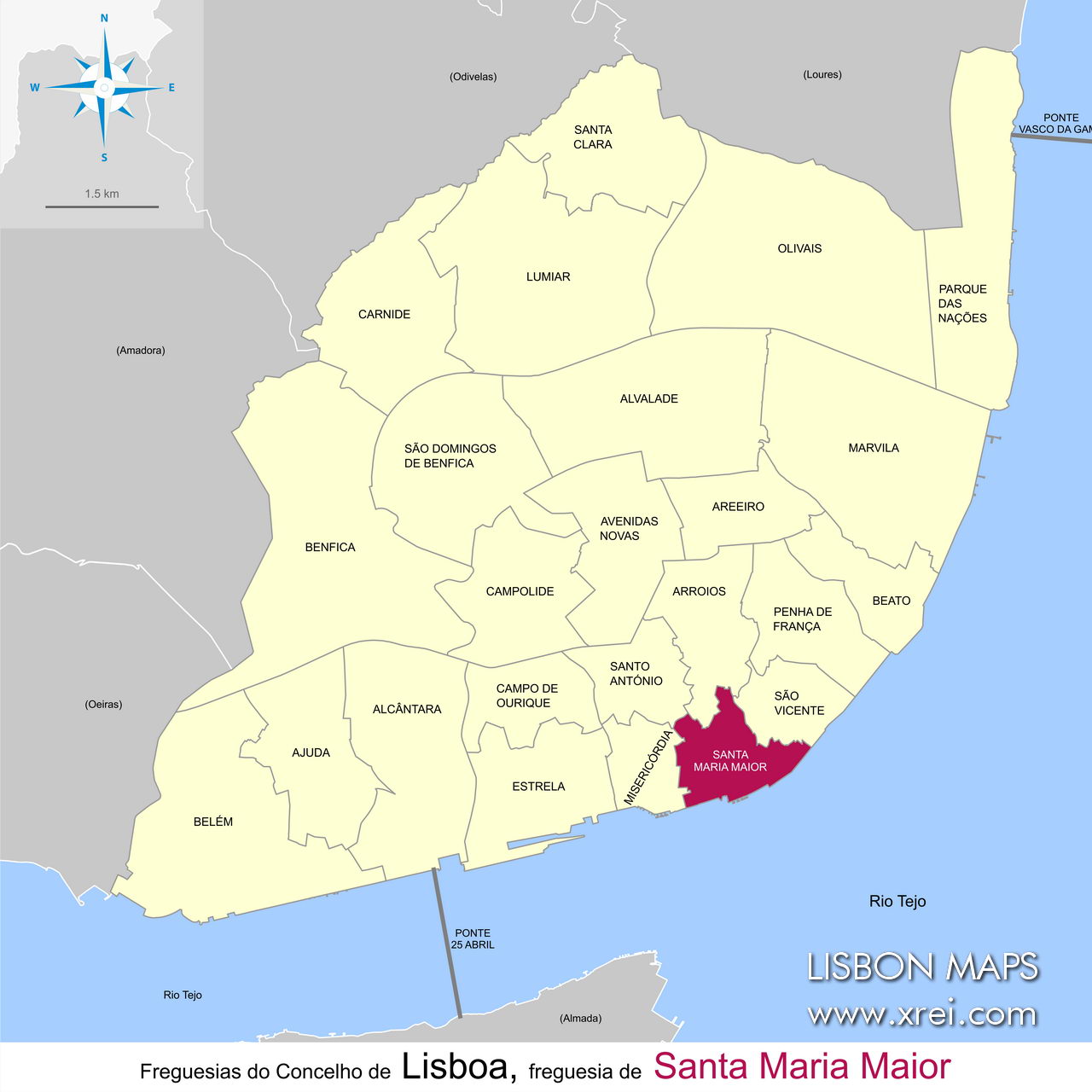
Posizione della Parrocchia di Santa Maria Maior (Chiado) sulla Mappa di Lisbona