
The history of Castelo Branco begins with the Knights Templar, who received these lands in 1165 and built a town and a castle on the hill of Cardosa. The town became a bishop's city in 1771, and its Baroque garden and Templar walls are its main monuments today.
This page lists the main dates in the history of Castelo Branco and the people linked to the city.
Timeline of Castelo Branco
- 1165: Afonso Henriques donates the lands of this part of the Beira to the Order of the Temple, for settlement and defence.
- 1198: King Sancho I confirms the donation.
- Early 13th century: a papal bull confirms the donation and states that the Templars had founded a town and fortress on the site of Cardosa, to which they gave the name Castelo Branco. The first charter comes from the Master of the Order.
- 1214 to 1230: the Templars build the first wall of Castelo Branco Castle.
- 14th century: under King Afonso IV, a second wall encloses the town grown on the slope.
- 16th century: D. Nuno de Noronha, Bishop of Guarda, builds the bishops' palace, today the Tavares Proença Museum.
- 1648: the Spanish offensive of the War of Restoration damages the castle.
- 1725 and 1726: Bishop D. João de Mendonça builds the Episcopal Palace Garden.
- 1771: the Diocese of Castelo Branco is created, the palace becomes the bishops' residence, and King José I raises the town to a city.
- Early 19th century: French troops under Junot damage the town during the Peninsular War.
- 1831: the bishops leave the palace, and the diocese is later joined to Portalegre.
- 1910: Francisco Tavares Proença Júnior founds the city museum.
- 1971: the museum moves into the former bishops' palace.
- 2005: the Cargaleiro Museum opens.
- 2018: the palace, the garden and the walkway are classified as a National Monument.
People linked to Castelo Branco
- D. João de Mendonça: the Bishop of Guarda who built the Baroque garden.
- Francisco Tavares Proença Júnior: the archaeologist who founded the city museum in 1910.
- Manuel Cargaleiro: the painter and ceramicist whose work fills the Cargaleiro Museum.
Places to visit in Castelo Branco
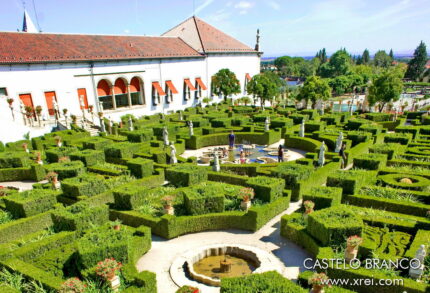
Castelo Branco, Portugal
Episcopal Palace Garden
Castelo Branco Castle
Tavares Proença Museum
Cargaleiro Museum
History of Castelo Branco
Visiting Castelo Branco