

Graça
The Bairro da Graça is a historic neighbourhood situated on Colina de Santo André, the highest hill in Lisbon, featuring a wide variety of buildings, urban art murals, streets, squares, gardens, workers' housing estates, viewpoints and palaces. Walking through the streets of the Bairro da Graça it is possible to observe the constant movement of residents going about their daily lives as in a traditional village within a large city, alongside Lisbon's trams (the famous Tram 28 passes through here), tuk-tuks, public transport and cars.
Graça is one of Lisbon's most authentic neighbourhoods, where you experience what it truly means to be a Lisboeta, where you can enjoy fantastic panoramic views over the entire city and taste Portuguese cuisine in one of the many local restaurants. It is a neighbourhood full of its own character, with countless shops, cafés, pastry shops, bakeries and fishmongers. The Bairro da Graça offers a wide variety of attractions and local commerce within easy walking distance — everything is close by. The Bairro da Graça is close to Alfama, close to the Castelo de São Jorge, close to the Feira da Ladra flea market. It is a village within the city where everyone knows and greets one another. The Bairro da Graça has undergone extensive rehabilitation in recent years, leading to growing demand from new residents, both national and international. It is a safe and peaceful neighbourhood.
Graça is administered by the Junta de Freguesia de São Vicente.
Top 10 Attractions in Bairro da Graça
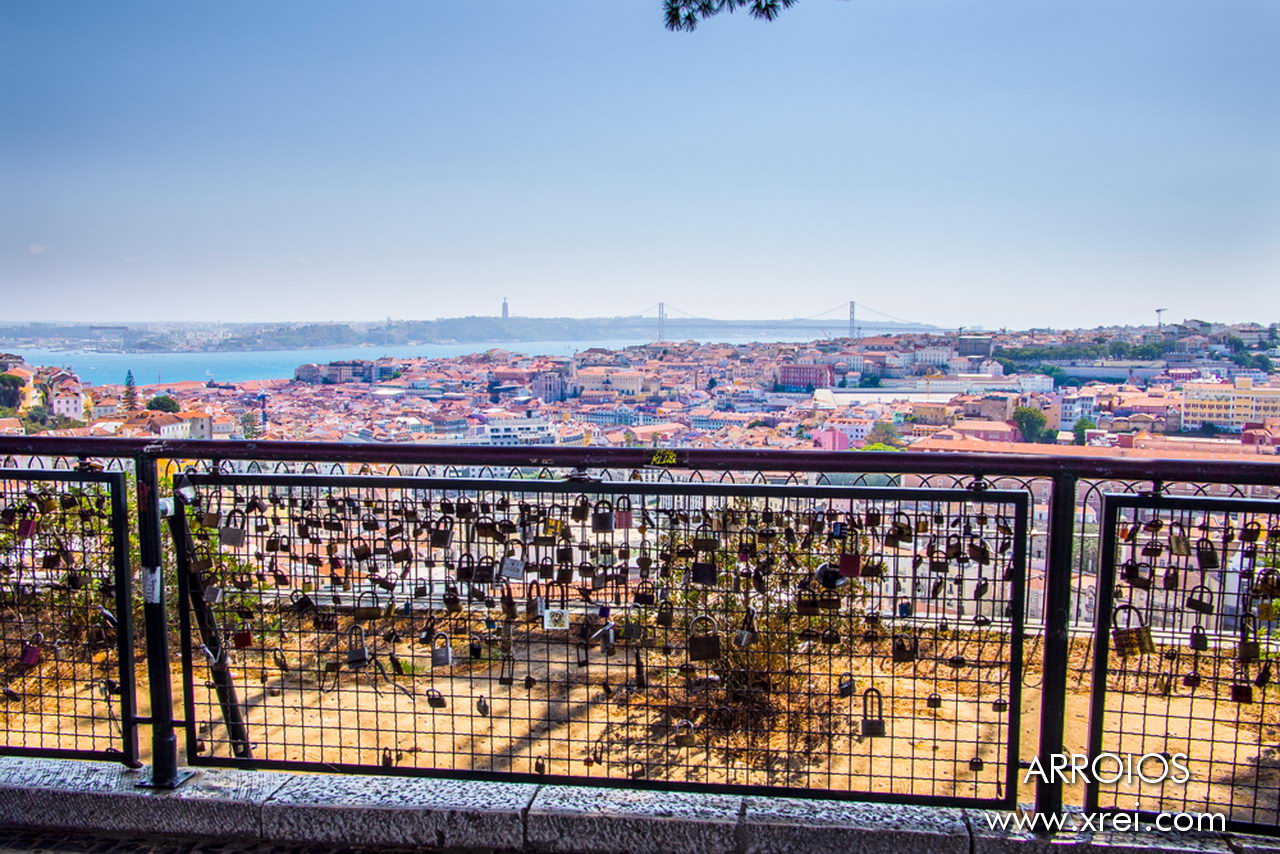
1. Miradouro Sophia de Mello Breyner Andersen: Commonly known as the Miradouro da Graça, this is one of the most popular viewpoints among tourists and Lisbon residents, located on Largo da Graça opposite the Igreja da Graça. It is a privileged spot for taking in views over the Mouraria, Baixa, Alfama, the Castelo, the Ponte 25 de Abril, the Tagus River and the Serra da Arrábida on the far bank. An esplanade serves visitors on site. The main highlights of the Miradouro Sophia de Mello Breyner Andersen are the panoramic view over Lisbon from the Tagus River to the Avenidas Novas; the Igreja e Convento da Graça; the viewpoint esplanade where you can enjoy the view in the shade of the trees; and the bust dedicated to poet Sophia de Mello Breyner Andersen, inaugurated in 2009 and sculpted by João Cutileiro.

2. Igreja e Convento da Graça is an 18th-century construction attributed to architects Caetano Tomás de Sousa and Manuel Caetano de Sousa. The original convent was inaugurated in 1271 to house fifty monks of the Order of Augustinian Hermits, and was dedicated to the cult of Nossa Senhora da Graça.

The main highlights of the Igreja e Convento da Graça are:
- Cloister, the convent's principal attraction, built in Classical style, featuring 17th-century azulejo panels with bird and floral motifs; azulejo panels representing Mercy, Faith, Hope, Justice, Liberty and Charity; and azulejo panels depicting scenes from the Passion of Christ.
- Main façade, notable for a medallion bearing the effigy of Saint Augustine dating from the 13th century, a niche with an image of Saint Augustine, and a bell tower by Manuel da Costa Negreiros.
- South lateral façade, remarkable for the scale of the surrounding landscape.
- Church ceiling divided into five sections, painted with scenes of angels and a legend reading "Ave Maria" by João Vaz and Elói Ferreira do Amaral.
- Chapel-Mor, reconstructed twice — between 1765 and 1785, and again between 1896 and 1905. Its main highlights are a central painting depicting a scene from the life of Saint Augustine; four medallions representing the Evangelists Mark, Luke, Matthew and John; and twelve canvases depicting the stages of Saint Augustine's life, by Pedro Alexandrino.
- Sacristy, notable for paintings depicting the Assumption of Our Lady and portraits of Frei António Botado and Mestre de Foios Pereira by Pedro Alexandrino; a marble sarcophagus of the Secretary of State of Dom Pedro II (1648–1706), Mendo de Foios Pereira; and seven 18th-century azulejo panels depicting the life of Saint Mary.
- Capela dos Pretos Cativos, housing four images of Black saints: Santa Efigénia, Santo Estêvão, Santo António de Notto and São Benedito.
- Capela do Senhor dos Passos, notable for the altar and medallion representing the Eternal Father by Estêvão Rodrigues, and seven oil paintings depicting scenes from the life of Jesus Christ by Francisco José da Rocha.
3. Miradouro de Nossa Senhora do Monte, located on Largo do Monte at approximately 90 metres above sea level, is one of the highest viewpoints in Lisbon. It is a must-visit for anyone in the city, offering magnificent views alongside bars, restaurants and cafés, and is a favourite gathering spot for locals and tourists alike, particularly at sunset. The main highlights of the Miradouro de Nossa Senhora do Monte are the views over the Castelo de São Jorge, the Baixa Pombalina, the Convento do Carmo, Monsanto, the Avenidas Novas, the Penha de França and the Mouraria; and the Capela de São Gens, dedicated to the first Archbishop of Lisbon, who was martyred on this site by the Romans for spreading Christianity. The chapel's centrepiece is the Chair of São Gens which, according to legend, has the power to cure infertility.
4. Voz do Operário is an educational and benevolent society in Lisbon offering innovative teaching methods, located on Rua da Voz do Operário. It was founded during the growth of the Workers' Movement in Portugal in the second half of the 19th century, linked to the tobacco industry. The institution was created with the aim of providing literacy education and organising strike action among a large portion of the more than five thousand workers in that industry. The Voz do Operário was the scene of several important historical milestones, including the founding of the newspaper "Voz do Operário" in 1879, the creation of the Sociedade Cooperativa A Voz do Operário, the first School Committee in 1891, and the start of construction of the current building in 1912. The institution merits a visit for its Biblioteca Social da Voz do Operário, one of the most important national libraries for the study of the 19th-century trade union and workers' movement.
5. Vila Berta is a residential and office complex located on Rua do Sol à Graça, built in the early 20th century by businessman Joaquim Francisco Tojal to house his family, friends, and the master craftsmen and workers employed at the Estaleiro Tojal. Joaquim Francisco Tojal purchased the land — part of the Quinta do Alcaide Fidalgo — in 1887 and named the development "Vila Berta" in honour of his daughter. Vila Berta was home to tailors, dressmakers, artists, construction professionals, engineers, architects and other workers, particularly from the 1960s onwards. The main points of interest of Vila Berta are the architecture of the buildings; the Art Nouveau azulejo tiles; and the wrought iron railings.

6. Capela de Nossa Senhora da Glória is an 18th-century building located on Rua de Nossa Senhora da Glória, notable for its ceiling decoration by F. A. Martins; the Chapel-Mor with 18th-century azulejo tiles depicting floral motifs and a medallion related to the Virgin Mary, by Pedro Alexandrino de Carvalho; and the gilded carved wood altarpiece by woodcarver António Nunes Colares.
7. Palácio dos Condes da Figueira is one of the few palaces in Lisbon built before the 1755 earthquake, located on Calçada da Graça. Dom João II authorised Dom João de Mendonça to build the palace near the Arco de Santo André in 1490, one of Lisbon's historic gateways demolished in the early 20th century. The palace became known as the "Palácio dos Condes da Figueira" in the 19th century when Dona Maria de Mendonça married the First Count of Figueira. The main highlights are the 17th-century main doorway topped by the Mendonça coat of arms, and the 17th- and 18th-century azulejo panels.
8. Palácio dos Senhores da Trofa is a 17th-century building now housing a hostel, located on Calçada da Graça. The main points of interest are the central courtyard; the façade windows; and the 17th-century gateway.
9. Vila Sousa is a residential complex located on Largo da Graça. João Luís de Sousa commissioned the construction of Vila Sousa in 1890, adapting an abandoned palace to accommodate his family and workers. The main highlights are the main entrance bearing the inscription "Villa Sousa", 1890 and "João Luís Sousa & Filho"; the central courtyard; and the decorated main façade.

10. Cine Royal (now a Pingo Doce supermarket) is a 1920s building housing a supermarket, located on Rua da Graça. The Cine Royal was one of Lisbon's earliest sound cinemas, with a capacity of 900 seats and an orchestra pit, inaugurated in 1929 to a design by architect Manuel Joaquim Norte Júnior (1878–1962) and owned by Galician businessman Agapito Serra Fernandes. The building served various functions over the years, including as the terminus of the Ascensor da Glória connecting Rua da Graça to Rua da Palma, as a cinema from 1929 to 1983, and subsequently as a supermarket. The main highlights of the former Cine Royal building are the main façade, the clock, and the symbol carved above the entrance door.
Further Attractions in Bairro da Graça
- Bairro da Estrela de Ouro is a residential area made up of four streets — Rua Virgínia, Rua Rosalina, Rua Josefa Maria and Rua Serra Vidal — with a distinctive urban character visible in its two-storey buildings and five-pointed stars set in Portuguese cobblestone pavement. The Bairro da Estrela de Ouro was built by Agapito Serra Fernandes in 1908 to house his family and company employees. The main attractions are the red and yellow painted houses, the stars embedded in the ground and the buildings, and the Vivenda Rosalina, the former residence of Agapito Serra Fernandes.
- Jardim da Cerca da Graça is described as "the largest publicly accessible green space in the historic area and the second largest in Lisbon, after the Jardim Botânico", covering approximately 1.7 hectares. The Jardim da Cerca da Graça is popular with tourists and Lisbon residents throughout the day, particularly at weekends, for its various attractions including views over the Mouraria, the Castelo de São Jorge, the Ponte 25 de Abril, Cristo Rei and the Tagus River. The garden features a central lawn, three viewpoints, a picnic area, a kiosk with esplanade, a children's playground and a cycle path.
- Jardim Augusto Gil is a garden located on Largo da Graça, featuring a lake, a statue inscribed "Mãe e Filho" (Mother and Son), and a convenient position close to the Miradouro and the Igreja da Graça.
- Teatro da Graça
- Bairro da Estrela de Ouro
- Capela de Santa Verónica
- Convento das Mónicas
- Escola Secundária Gil Vicente
- Jardim do Convento da Graça
- Palácio Figueira
- Reservatório da Verónica
- Quartel Sapadores
Historic Shops in Bairro da Graça
- Farmácia Morão is classified as a Historic Shop, located on Largo da Graça since its founding in 1896 by pharmacist José Augusto Morão.
Main Streets and Squares of Bairro da Graça
Largo da Graça is one of the busiest thoroughfares in the Bairro da Graça during the day, with the constant movement of Lisbon trams, tuk-tuks and taxis, tourists, local residents and firefighters from the two nearby fire stations. Largo da Graça connects Calçada da Graça to Rua da Voz do Operário and is home to several attractions including Le Bar à Crêpes, Pitéu da Graça and the Jardim da Graça. Largo da Graça has carried this name since 1700, owing to the presence of the former Convento de Nossa Senhora da Graça.

Calçada da Graça, together with Largo da Graça and Rua da Graça, forms the busiest part of this historic Lisbon neighbourhood, owing to the proximity of important points of interest including the Igreja e Convento da Graça, the Miradouro da Graça and the Palácio dos Condes da Figueira. Calçada da Graça connects Largo da Graça to Rua do Salvador.
Rua da Graça is one of the neighbourhood's most important streets, with a high volume of foot traffic and a concentration of restaurants, cafés, commercial establishments and public service institutions. Rua da Graça is one of the main entry and exit points of the Bairro da Graça via Rua dos Sapadores, which connects directly to the Bairro da Penha de França. The street features several points of interest, including the Pingo Doce supermarket on the former site of the Cine Royal, the Bairro Estrela de Ouro, and access to the Miradouro de Nossa Senhora do Monte via Rua da Senhora do Monte. Rua da Graça takes its name from the construction of the Convento de Nossa Senhora da Graça.
Rua da Voz do Operário is one of the streets providing access to the Bairro da Graça and to Alfama — somewhat steep, with narrow pavements and tram rails that make the road surface slippery. Rua Voz do Operário draws visitors due to the headquarters of "A Voz do Operário", and its proximity to the Feira da Ladra flea market, the Igreja de São Vicente de Fora and Alfama. The street takes its name from the presence of the Voz do Operário society at this location since 1915.

Rua da Senhora do Monte is the steepest street in the Bairro da Graça, leading up to the Miradouro de Nossa Senhora do Monte at approximately ninety metres above sea level — the highest point in this Lisbon neighbourhood. Despite the altitude, it is a must-visit for anyone in Lisbon, offering a unique panoramic view over the Portuguese capital, though the street regularly sees congestion from cars, tuk-tuks, buses and vans. Rua de Nossa Senhora do Monte connects the Miradouro de Nossa Senhora do Monte to Rua da Graça, and takes its name from the founding of the Ermida de Nossa Senhora do Monte e de São Gens in 1147.
History of Bairro da Graça
Graça was the location chosen by Portugal's first king, Dom Afonso Henriques, to prepare the conquest of Lisbon in 1147. This neighbourhood was home to the Arab cemetery that was later used for the construction of two convents — one donated to the monks of São Vicente and another to the monks of Santo Agostinho — both dedicated to Nossa Senhora da Graça. The palaces of Graça were built between the 16th and 18th centuries. Graça remained a rural area until the Lisbon earthquake of 1 November 1755, after which only the Convento dos Agostinhos survived. The Bairro da Graça began to take its current shape from the 19th century onwards, with the construction of Largo da Graça and Calçada da Graça. The neighbourhood lost its rural character following the construction of Santa Apolónia railway station, which brought new residents, particularly workers and industrialists linked to manufacturing.
Location of the São Vicente Parish (Graça) on the Lisbon Map
