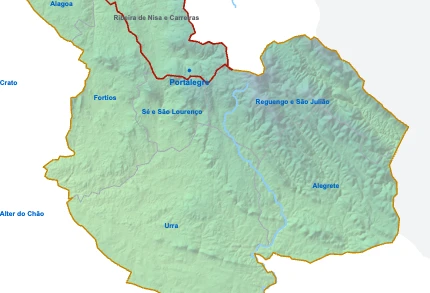
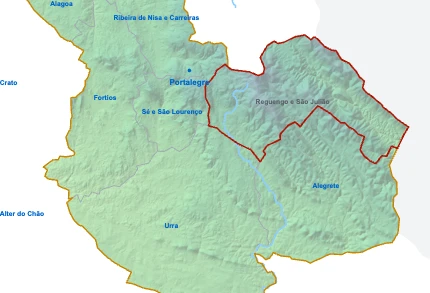
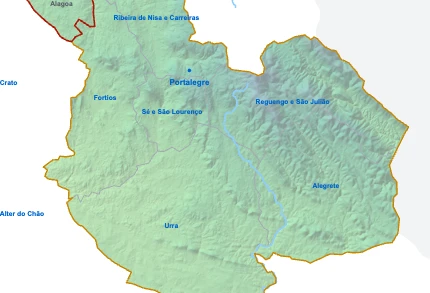
Portalegre, Portugal

Portalegre

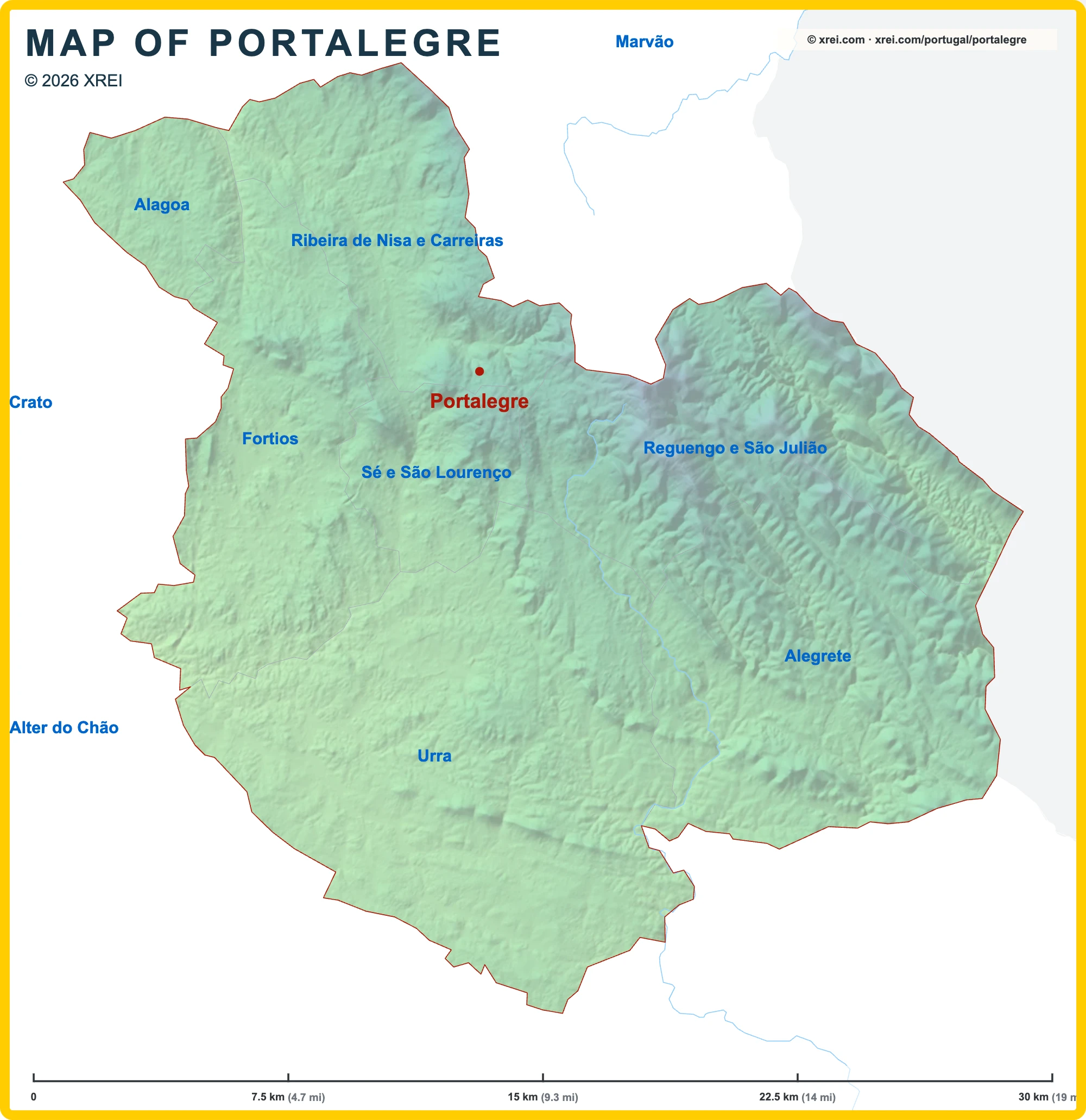
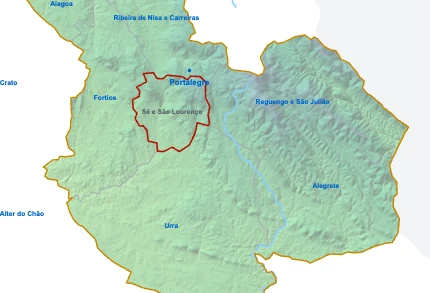
Portalegre is the least populous district capital city in Portugal, located within the Parque Natural da Serra de São Mamede, in the Alentejo region and the Alto Alentejo sub-region. It is a city rich in cultural heritage, notably in crafts, traditional costumes, gastronomy, folklore, and traditional songs and dances. Portalegre attracts tourism primarily through its gastronomy and food products, notably wines, olive oils, cheeses, cured meats, and convent pastries. The Portalegre region is known for its gastronomy, agricultural fields, cork production, vineyards, crafts, livestock, cheeses, convent pastries, the border castles of the Raia zone of Portugal, Roman monuments, and ancient archaeology.
Places to visit in the city of Portalegre

1. Historic centre of the city of Portalegre

The historic centre of Portalegre is a quiet place steeped in history, where one can feel the calm, appreciate the Alentejo townscape, with whitewashed blue-and-white houses interspersed with stately manor houses. In the narrow, winding streets of the historic centre of Portalegre we find traditional shops and houses with ancient façades dating back to the Middle Ages. The centre of Portalegre is organised around two main areas:

  • Largo do Rossio: where we find the Avenida Liberdade garden and the plátano do Rossio, a plane tree planted in 1838, now one of the iconic landmarks of Portalegre, standing over thirty metres tall and known as the largest plane tree on the Iberian Peninsula.
  • Praça da República: with arcaded terraces and cafés, and Baroque-style palaces, where the Escola Superior de Educação de Portalegre is housed.

2. Serra de São Mamede

Parque Natural da Serra de São Mamede: a natural park created in 1989, encompassing the municipalities of Arronches, Castelo de Vide, Marvão and Portalegre, forming part of the Montes de Toledo mountain range. The Serra de São Mamede is the highest mountain range south of the Tagus River, reaching 1,025 metres in altitude, with nature trails of rock and vegetation linking small villages — an excellent location for birdwatching, with a landscape that changes with every season. Within the Serra de São Mamede we find the Parque Natural de São Mamede, a protected area of Portugal covering 31,750 hectares across the four municipalities of Portalegre, Castelo de Vide, Marvão and Arronches. The Parque Natural de São Mamede features woodland of Cork Oak, Holm Oak, Oak, Chestnut and Maritime Pine, with a low-growing scrub layer of Cistus. The Parque Natural de São Mamede is an outstanding area for birdwatching, as it lies along the migratory route of many bird species between Europe and Africa, including the Bonelli’s Eagle, Griffon Vulture, Black Vulture, Black Redstart, Black Wheatear, Black Kite, Eagle Owl, Short-toed Snake Eagle, Eurasian Sparrowhawk, Montagu’s Harrier, Red-legged Partridge, Common Blackbird, Coal Tit, Great Tit, Blue Tit, Long-tailed Tit, Eurasian Jay, Common Stonechat, and European Robin. Here we also spot Otters, Badgers, Polecats, Weasels, Wildcats, Foxes, Wild Rabbits, Wild Boar, Stone Martens, Hares, Deer, and other wild animals. In some areas of the natural park we find bat colonies, as well as amphibians and reptiles. The four main walking trails are the Alegrete trail at 11 km, the Esperança trail at 16 km, the Galegos trail at 11.5 km, and the Marvão trail at 8 km. The built heritage to visit in the Serra de São Mamede includes: the Póvoa e Meadas dam, the Centro de Interpretação da Identidade Local da Esperança, the Castelo de Marvão, the São Mamede viewpoint, the Sinagoga museum, the Roman city and museum of Ammaia, and the rock paintings of Vale de Junco or Lapa dos Gaviões.

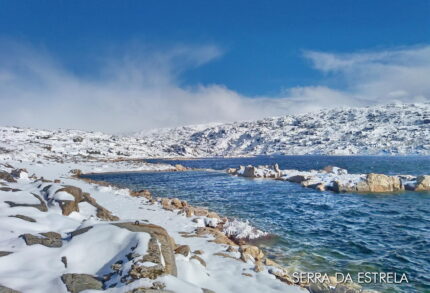
  • The Pico de São Mamede: located at approximately 1,025 metres in altitude, it is the highest point in mainland Portugal south of the Tagus. From here one can enjoy a panoramic view over the Apartadura dam, the village of Marvão, the Serra da Estrela and Spanish Extremadura.
  • Miradouro da Ermida de Nossa Senhora da Lapa: a hermitage located approximately 1 km from the village of Besteiros. It deserves special mention for the small church carved into the rock, and for the views it offers over the Parque Natural da Serra de São Mamede.

3. Sé Catedral de Portalegre

Sé Catedral de Portalegre: a 16th-century Renaissance architectural monument, classified as a National Monument. The Cathedral is distinguished by its two bell towers, Baroque portals, and 18th-century azulejo tiles that decorate the entire sacristy.

4. Mosteiro de São Bernardo

Mosteiro de Nossa Senhora da Conceição de Monjas da Ordem de Cister: known as the Convento, or Mosteiro de São Bernardo, it is a building of Manueline, Renaissance and Baroque architecture classified as a National Monument. The convent was inaugurated in 1518 with the purpose of receiving “dowerless maidens”. The convent was dissolved in 1878; in 1911 it was converted into a barracks; between 1932 and 1961 it served as premises for the Museu Municipal de Portalegre; in the early 1980s it housed the Escola Prática da Guarda Nacional Republicana. The main attractions of the Mosteiro de São Bernardo are the imposing beauty of the Monastery itself, and the fact that it is home to the largest and most sumptuous tomb in Portugal — the tomb of D. Jorge de Melo, former Bishop of Guarda. The Convento de São Bernardo is regarded as one of the principal convents of confectionery, alongside the Convento de Santa Clara. The convent pastries originating from the Convento de Santa Clara include Toucinho do céu, Rebuçados de ovos, Rabanadas da abadessa, Morcelas doces de São Bernardo, Bolo podre conventual, Torrão real de ovos, Sarrabulho doce, Sopa doce de São Bernardo, and Pastéis de toucinho do céu.

5. Convento de Santa Clara

Convento de Santa Clara: a 14th-century convent founded by Queen D. Leonor Teles. The convent cloister is the only cloister of Fernandine architecture in Portugal. The Convento de Santa Clara is regarded as one of the principal convents of confectionery, alongside the Convento de São Bernardo. The convent pastries originating from the Convento de Santa Clara include Queijo dourado, Doce de amêndoa, Toucinho do céu, Manjar branco, Pastéis de Santa Clara, Presunto doce, Lampreia de massapão e amêndoa, Leite serafim, Receita de fartes, Bolo Conforto, and Pastéis de mimo. The Portalegre municipal library is housed in the Convento de Santa Clara.

6. Casa-Museu José Régio

Casa-Museu José Régio: a museum installed in the former home of the teacher and writer José Maria dos Reis Pereira, known as José Régio. The house dates from the late 17th century and houses the works and collections of José Régio, with exhibitions of sculpture, painting, faience, sacred art, pastoral work and textiles. José Régio was a great collector of sacred art, folk art and crafts. The main attractions are the sacred art objects, the figures of Christ Crucified, and the Barros de Portalegre.

7. Museu da Tapeçaria de Portalegre Guy Fino

Museu da Tapeçaria de Portalegre Guy Fino: a museum dedicated to the Tapeçaria de Portalegre, a decorative mural tapestry consisting of an entirely hand-crafted technique inspired by original works by painters — tapestry replicas of works by: Almada Negreiros, Anna Christina Dryselius, António Charrua, António DaCosta, Armando Alves, Barbara Walraven, Bruno Munari, Carlos Botelho, Carlos Carreiro, Carlos Santos, Cláudia Lima, Costa Pinheiro, Cruzeiro Seixas, Danielle Moser, David Adickes, Eduardo Nery, Emília Nadal, Eugénio Granell, Figueiredo Sobral, Gilberto Pereira, Graça Morais, Guilherme Camarinha, Joana Vasconcelos, John Olsen, Jorge Martins, José de Guimarães, José Nuno da Câmara Pereira, José Sousa Lara, Júlio (Saul Dias), Júlio Resende, Lourdes Castro, Luís Filipe de Abreu, Luís Pinto-Coelho, Manuel Amado, Manuel Cargaleiro, Marcello Moraes, Maria João Franco, Matégot, Menez, Nadiz Afonso, Otto Nielsen, Paul Mathieu, Renato Torres, Rigo 23, Roger Kathy, Rogério Ribeiro, Rui Moreira, Sérgio Telles, Tom Phillips, Vieira da Silva, and Vitor Pomar. The Museu da Tapeçaria de Portalegre Guy Fino is housed in an 18th-century palace, organised on the ground floor with the history of Portalegre tapestry manufacturing, and on the first floor with tapestry works in chronological order from the 1940s to the present day.

8. Museu Municipal de Portalegre

Museu Municipal de Portalegre: a museum inaugurated in 1918, housed in a 16th-century manor house situated next to the Cathedral. In the Museu Municipal de Portalegre one can view a collection comprising sacred art from the convents of Portalegre, Portuguese faience from the 17th century to the early 20th century, furniture in the D. João V, D. José and Renaissance styles, paintings by Portuguese artists, a collection of Santo António figures, silver snuff boxes, and the first automobile to circulate in Portalegre.

9. Capela do Calvário

Capela do Calvário: an 18th-century Mannerist chapel situated in Portalegre.

10. Castelo de Portalegre

Castelo de Portalegre: a 13th-century Gothic castle classified as National Heritage since 1946. The Castelo de Portalegre was one of the most important fortifications in the defensive system of the Alto Alentejo. Following recent renovation works, the castle has been transformed into medieval castle ruins combined with contemporary architecture. Within the castle walls surrounding Portalegre we find the Portas do Postigo, Portas de Alegrete, Portas de Elvas, Portas da Deveza, Portas do Espírito Santo, Portas do Bispo, Portas de São Francisco, and the Portas de Évora.

11. Miradouro da Serra

Miradouro da Serra: a viewpoint located in the hills above Portalegre at an approximate altitude of 670 metres, offering a panoramic view over the city of Portalegre.

12. Capela de Nossa Senhora da Penha

Capela de Nossa Senhora da Penha: a chapel classified as a Property of Public Interest, situated at the top of a hill in the Serra da Penha at an approximate altitude of 628 metres, alongside the Estrada Nacional 18, near Portalegre. Outside the chapel we find the Miradouro da Penha, from which one can enjoy a panoramic view over the surrounding landscape.

13. The palaces and manor houses of Portalegre

  • Palácio dos Tavares Falcões, 16th century
  • Palácio dos Caldeira Castelo-Branco, 16th–17th centuries
  • Paço Episcopal, 16th–17th centuries
  • Paços do Concelho, 17th century
  • Palácio Amarelo, 17th century
  • Palácio Andrade e Sousa, 17th century
  • Palácio Achioli, 17th century
  • Palácio Avilez, 18th century
  • Palácio Caldeira de Castel-Branco Barahona, or Palácio
  • Barahona, 18th century
  • Palácio Póvoas, 18th century
  • Solar dos Viscondes de Portalegre
  • Solar das Avencas

14. The fountains of Portalegre

  • Fonte do Outeiro, bearing the city coat of arms
  • Fontes do Corro
  • Fonte das Três Bicas, topped with a small balcony
  • Fonte da Concha
  • Fonte da Boneca, crafted in lioz limestone
  • Fonte do Mergulho, which supplied the Convento de Santa Clara
  • Fonte da Misericórdia
  • Fonte Nova, by sculptor Augusto Desirat
  • Fonte do Rossio
  • Fonte do Neptuno

Other places to visit in the district of Portalegre

Castelo de Marvão

Castelo de Marvão: a castle situated within the Parque Natural de São Mamede, whose construction began in the 12th century and was completed in the 13th century. It played an important role as the first line of defence during the Portuguese Restoration War, and during the French invasions of the 19th century. The castle’s main attractions include the keep, a restaurant, an interpretive centre on Portalegre, and an exhibition hall.

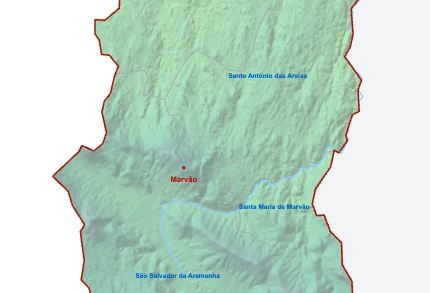
  • Marvão: a Portuguese village of approximately 500 inhabitants situated near the border between Portugal and Spain. Marvão is set at the top of the Serra do Sapoio, with the castle walls protecting the entire settlement. Marvão is one of the most emblematic villages in Portugal. The notable heritage of Marvão includes the Castelo de Marvão, the Capela do Espírito Santo, the Casa da Cultura, the Convento de Nossa Senhora da Estrela, the Museu Municipal, the Roman City of Ammaia, the Lagar / Museu António Picado Nunes, the Quinta Pedagógica das Avelãs and the Torre da Portagem. Fully integrated within the Parque Natural da Serra de São Mamede, Marvão is a municipality defined by its natural landscape, with particular note for the Sever River and the Serra de São Mamede. Marvão is the municipal capital, comprising the parishes of Beirã, Santa Maria de Marvão, Santo António das Areias, and São Salvador da Aramenha. Near Marvão we find the Torre Medieval da Portagem, a square tower probably dating from the 14th century, built to watch over the Ponte Romana de Portagem, a bridge built over the Sever River in the late 16th and early 17th centuries using granite stones reused from an earlier Roman bridge. Here we find the Praia Fluvial de Portagem, a river beach fed by the waters of the Sever River.
  • Ammaia: the ruins of an ancient Roman city dating from the late 1st century BC, situated in the Parque Natural da Serra de São Mamede, classified as a National Monument since 1949.

Castelo de Elvas

Castelo de Elvas: a 13th-century castle classified as a World Heritage Site and National Monument, set in a commanding position overlooking the town of Elvas and the Guadiana River. The Castelo de Elvas is part of the Turismo Militar project, which presents historical itineraries with the aim of showcasing the Military History of Portugal.

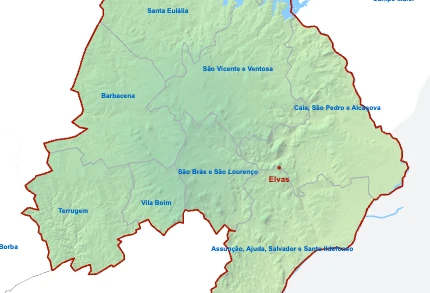
  • Elvas: a Portuguese city of approximately 20,000 inhabitants located close to the border with Spain. Elvas was settled by Visigoths, Celts, Romans and Arabs until the Reconquista in 1229. The historic centre of Elvas is protected by the largest set of land-based bastioned fortifications in the world, with a perimeter of eight to ten kilometres covering an area of approximately 300 hectares. Part of the city of Elvas was classified as a World Heritage Site, namely the historic city centre, the 17th-century bastioned walls, the Forte de Santa Luzia, the Forte da Graça, the Aqueduto da Amoreira with its 843 arches, the fortim de São Pedro, the fortim de São Mamede and the Fortim de São Domingos. The heritage of Elvas also includes the Museu Municipal de Fotografia João Carpinteiro, the Museu Militar do Forte de Santa Luzia, the Museu de Arte Contemporânea, the Museu Rural and the Museu de Arqueologia. Elvas has a strong presence in equestrian tourism, notably through the Centro Hípico de São Brás and the Parque e Clube de Tiro e Caça de Elvas. The gastronomy of Elvas, typically Alentejo in character, features specialities such as bread soups, roast lamb, salt cod, coriander migas, Elvas olives, and Elvas plums.
  • Aqueduto da Amoreira: a magnificent 16th–17th-century aqueduct, classified as a UNESCO World Heritage Site, part of the “Garrison Border Town of Elvas and its Fortifications”, and a National Monument. It is considered the largest aqueduct on the Iberian Peninsula, with 7.5 kilometres in length, 843 arches rising to multiple tiers, and towers reaching 31 metres in height.
  • Forte de Nossa Senhora da Graça: also known as the Forte Conde de Lippe, a spectacular 18th-century fortification with a citadel, classified as a UNESCO World Heritage Site and National Monument, situated at the top of Monte da Graça and forming part of the “Garrison Border Town of Elvas and its Fortifications”. The Forte de Nossa Senhora da Graça is a large, well-preserved space that requires considerable time to explore. The fort comprises three defensive lines considered a masterpiece of military architecture. The Forte de Nossa Senhora da Graça was the fortress that completed the defensive circuit of the city of Elvas.
  • Forte de Santa Luzia: a fort dating from 1648, classified as a UNESCO World Heritage Site and National Monument, designed with a star-shaped plan to defend the southern approach to the city of Elvas.
  • Museu Militar de Elvas:

Monumento Natural das Portas de Ródão

Monumento Natural das Portas de Ródão: known as Portas de Rodão, this is a tranquil place formed by a rocky outcrop between escarpments 170 metres high that resemble two gates with the Tagus River at their centre, creating a natural landscape of great appeal. Beyond the Portas de Rodão there is a large lake, evidence that the formation originated through millions of years of erosion. At the top of the Portas de Rodão one can visit the castle of Rei Wamba and the Palaeolithic settlement of Vilas Ruivas. This is an outstanding location for birdwatching, with regular sightings of vultures, birds of prey and other species. The Portas de Rodão is one of the geosites of the Geoparque Naturtejo da Meseta Meridional, which is part of the UNESCO Global Geoparks Network and covers an area comprising the municipalities of Castelo Branco, Idanha-a-Nova, Nisa, Oleiros, Proença-a-Nova and Vila Velha de Ródão.

Castelo de Vide

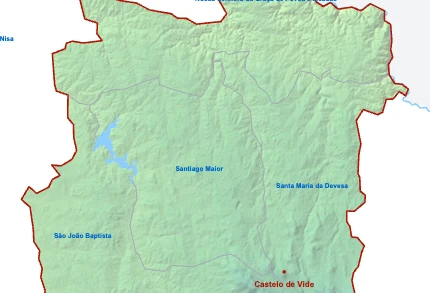
  • Castelo de Vide: a Portuguese village situated on a hill of the Serra de São Mamede with approximately 3,400 inhabitants. Castelo de Vide is considered by many to be the “Sintra of the Alentejo” — an Alentejo village of unique character, with whitewashed houses, sloping streets and surrounding walls. In Castelo de Vide one can visit an important and extensive heritage, notably: the Castelo Medieval de Vide, the judiaria de Castelo de Vide, a Jewish quarter that includes a Sinagoga, the Praça D. Pedro V, the Igreja São João Batista, the Igreja Matriz and the manor houses found throughout the village. Near the village of Castelo de Vide we find the Monte da Pena, a site where the Capela de Nossa Senhora da Pena stands, with a viewpoint over Castelo de Vide. The modern part of Castelo de Vide has municipal swimming pools, pools with water slides, a municipal sports hall, an athletics track and a football pitch. The most important festivals in Castelo de Vide are the Carnaval Trapalhão, held annually in February, Semana Santa, held annually in April, and the Mercado Medieval, held annually in August and September. The Festival Andanças — International Festival of Traditional Music and Dance, held annually in August — has been growing in significance in recent years.
  • Castelo Medieval de Vide: a 14th-century castle classified as a National Monument, situated at the top of the hill in the Serra de São Mamede. The Castelo Medieval de Vide is one of the major attractions of the district of Portalegre. Within the walls we find the medieval village, the Jewish quarter and the synagogue.
  • Anta da Melriça: situated near the village of Castelo de Vide, this is a megalithic monument of standing stone that originally served a funerary function.

Castelo de Belver, in Gavião

Castelo de Belver is a 13th-century castle considered one of the most complete examples of medieval Portuguese military architecture, set in a commanding position above the confluence of the Ribeira de Belver with the right bank of the Tagus River. Gavião: a village of approximately 3,200 inhabitants, profoundly shaped by its beautiful natural surroundings. In the municipality of Gavião, highlights include the Castelo de Belver, the bridge over the Tagus River at Belver, the miradouro do Outeirinho, the miradouro do Pintalgaio, the chapel of Nossa Senhora do Pilar, the Centro de Interpretação do Castelo de Belver, the Caminho da Fonte Velha, the Igreja Matriz de Gavião, the Museu do Sabão, the Museu da Vinha e do Vinho, the Núcleo Museológico das Mantas e Tapeçarias de Belver, the Praia Fluvial do Alamal, the Observatório de Avifauna and the Ribeira da Venda.

  • Praia Fluvial de Ortiga: a sandy river beach on the Tagus River next to the Belver dam, where we find the Ortiga campsite. Nearby, several paths through the natural landscape lead to the natural viewpoint of Cova, the GEOSSITIO Terraço com material Paleolítico, and the settlement of Ortiga.
  • Anta do Penedo Gordo: a megalithic monument situated to the north of the Belver dam.

Castelo de Alegrete

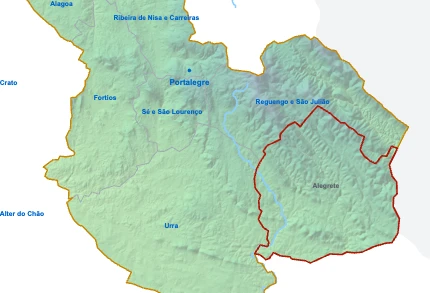
Castelo de Alegrete: a small Gothic castle built in the Middle Ages, situated in the village of Alegrete, Portalegre. From the castle there is a panoramic view over the village and the surrounding hill landscape. Due to its location, it was one of the most important fortifications in the Alto Alentejo.

Fluviário de Mora

Fluviário de Mora: an aquarium situated in the Parque Ecológico do Gameiro, in the parish of Cabeção. The Fluviário de Mora comprises a series of aquariums dedicated to freshwater ecosystems, displaying representative habitats along the course of an Iberian river, from source through estuary to the sea. The Fluviário de Mora runs scientific and educational programmes on a range of themes, including the Lontrário, the Sala Saramugo, the Sala Monstros do Rio, a Multimedia Exhibition Room, a classroom, an auditorium, and the Sala Habitats Exóticos, featuring species from the Amazon River and the African Great Lakes. It is a special attraction for families and children — a unique place to learn about nature. Near the Fluviário de Mora one can visit the town of Mora, where we find:

  • Museu Interativo do Megalitismo: a museum situated in the former Mora railway station, awarded the “Best Public Project” prize, where visitors can explore the megalithic heritage of the Municipality of Mora through three spaces representing everyday life of past populations, dedicated to the theme: “Life, Death and Contemplation”, through a 3D video depicting life in a Neolithic settlement.

Parque Ecológico do Gameiro

Parque Ecológico do Gameiro: a natural park surrounding the Fluviário de Mora in the village of Cabeção, featuring a river beach, campsite, picnic area, children’s playground, bar/café, Gameiro wooden boardwalks along the Ribeira da Raia, a sports court and an Environmental Interpretation Centre. The Parque Ecológico do Gameiro is a superb place to enjoy a day in nature, with a football pitch, café, showers, ample shade, in a clean and well-kept environment.

Castelo de Alter do Chão

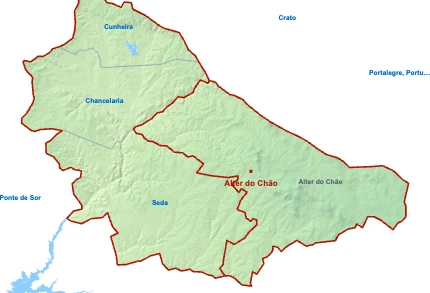
Castelo de Alter do Chão: a medieval castle of 14th-century architecture, built with schist and granite walls reinforced by six towers. The Castelo de Alter do Chão is a former defensive stronghold of the Alentejo region, situated in the Portuguese village of Alter do Chão, in the district of Portalegre with approximately 3,100 inhabitants. Alter do Chão was founded in 204 AD under the name Elteri during the Roman occupation. Here one can visit the Castelo de Alter do Chão, the Igreja de Nosso Senhor Jesus do Outeiro, the Igreja da Misericórdia, the Capela de Santana, and the Coudelaria founded in 1748 by the Portuguese king D. João V, with the purpose of breeding Lusitano horses for the Royal Riding School.

Museu Militar de Elvas

Museu Militar de Elvas: a museum situated within the walls of the city of Elvas, in the building of the Convento de São Domingos and the Igreja de São Domingos. In the Museu Militar de Elvas one can explore animal traction equipment and military harnesses, healthcare in the various military medical specialities, the Military vehicle collection — including a military tank at the museum entrance, the M5-A1 Stuart battle tank (1942 model), the M47 Patton and Unimog 411 vehicles used in the Portuguese colonial campaigns — military communications, the Centro de Interpretação do Património de Elvas, and the Centro de Animação e Treino Equestre de Elvas.

Castelo de Campo Maior

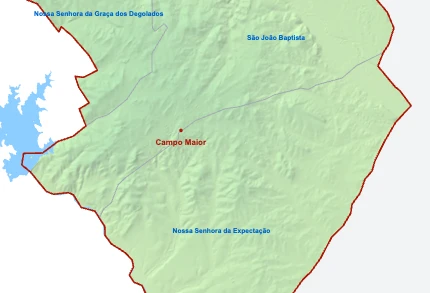
Castelo de Campo Maior: a castle of military architecture ordered built by D. Dinis in 1310, classified as a National Monument, situated in the Alentejo village of Campo Maior. Campo Maior was once the most important military centre in Portugal after Elvas. It served as a border defence, which is why it was expanded in the 15th century with a system of walls enclosing the entire urban perimeter. Within the walls of the village one can visit further attractions, including the Lagar Museu do Palácio Visconde d’Olivã, the Chapel of Bones of Campo Maior, the Igreja Matriz, the Igreja de São João Batista, the Museu Aberto de Campo Maior, the Praça da República where we find the Pelourinho de Campo Maior and the Town Hall, and on the boundary between the old village and the new expansion of Campo Maior we find the Municipal Garden, with green areas, terraces, and the statue of Comendador Nabeiro, a local entrepreneur who has contributed to local development through job creation in the coffee industry. The natural heritage of Campo Maior deserves mention, notably the Caia River dam and the Abrilongo dam. Campo Maior is known for the Festas do Povo, held annually in September. During these festivities, the village is “dressed” in paper flowers and transformed into an immense garden.

  • Centro de Ciência e do Café: a space created by the industrialist Comendador Rui Nabeiro, in a building with a total area of 3,426 m², where visitors can explore the history, transformation process and everything related to the world of coffee through exhibitions and interactive displays. The Centro de Ciência e do Café belongs to the Nabeiro group, creator of the Portuguese brand Delta Café since 1961. A space well worth visiting.

Adega Mayor

Adega Mayor: a winery designed by architect Siza Vieira, where across an estate of 350 hectares a winery has been created with views over the vineyard, an olive grove, Spain and the Serra de Portalegre. Here one can experience workshops, guided tours through the world of aromas of the wines produced on this estate, tastings of regional gastronomic products, and walks across the Adega Mayor estate.

Castelo de Amieira do Tejo

Castelo de Amieira do Tejo: a 14th-century Gothic castle that formed part of the defensive line along the border between Portugal and Spain, situated in the village of Amieira do Tejo. The Castelo de Amieira is a small castle in good condition.

Museu do Sabão

Museu do Sabão: a museum housed in the former primary school of Belver, preserving the culture of the soap-making industry since the 16th century, which was concentrated primarily in the Alto Alentejo and Castelo Branco areas. The economic and social importance of the soap industry in the village of Belver was notable for the presence of several artisan producers and the Real Fábrica de Sabão. The Museu do Sabão is a museum with extensive information on the manufacture, history and use of soap, aiming to disseminate the knowledge accumulated by past generations and honour the memory of Belver’s soap makers.

Centro de Interpretação da Batalha de Atoleiros

Centro de Interpretação da Batalha de Atoleiros: a museum presenting a multimedia reconstruction of the Battle of Atoleiros, fought on 6 April 1384 near the village of Fronteira.

Rail Bike Marvão

Rail Bike Marvão: an experience with two routes on a pedal-powered car that glides along the former Marvão railway line, between the historic stations within the Parque Natural da Serra de São Mamede, allowing visitors to observe nature and wildlife, cross a bridge 30 metres high, and enjoy panoramic views over the Castelo de Marvão and the historic village of Castelo de Vide. This experience requires physical effort.

Menhir de Meada

Menhir de Meada: a menhir from the Neo-Chalcolithic period (2500–3500 BC), situated in Castelo de Vide, classified as the tallest menhir on the Iberian Peninsula at approximately 7 metres in height, and a National Monument. The area around the menhir is surrounded by smaller menhirs and cork oak trees.

Anta de Pavia

Anta de Pavia: a dolmen dating from the 4th or 3rd millennium BC, transformed into the chapel of São Dinis in the 17th century, situated in the centre of the small settlement of Pavia.

Ponte de Nossa Senhora da Ajuda

Ponte de Nossa Senhora da Ajuda: a 16th-century bridge three hundred and eighty metres long and five and a half metres wide, supported by nineteen arches, creating a remarkable landscape over the Guadiana River.

Mosteiro de Flor da Rosa

Mosteiro de Flor da Rosa: also known as the Mosteiro da Ordem do Hospital de Flor da Rosa, this is a fortified 14th-century monastery classified as a National Monument, converted in 1995 into a Pousadas de Portugal hotel unit. The convent church currently houses the Núcleo de Escultura Medieval do Museu Nacional de Arte Antiga and an exhibition of sculpture by João Cutileiro.

  • Anta da Aldeia da Mata: a well-preserved megalithic monument situated near the Mosteiro de Flor da Rosa, set in open land on private property surrounded by pasture and cork oak trees — a typical Alentejo landscape. To visit the Anta da Aldeia da Mata it is necessary to pass through the property gate. Livestock are present on the private land and caution with the animals is advised.

Castelo de Avis

Castelo de Avis: a 13th-century castle situated in the village of Avis, a Portuguese village located at an altitude of 201 metres with approximately 4,200 inhabitants. The village of Avis was the seat of the Order of Avis, one of the most important Military Orders in Portugal. The village breathes history, with highlights including the historic centre, the Castelo de Avis, the Igreja Matriz, the Igreja de Ervedal, the Museu do Campo Alentejano, the Centro Interpretativo da Ordem de Avis and the Convento de São Bento da Ordem de Avis. Avis offers outdoor sports and rural tourism facilities, including the Maranhão reservoir campsite and the Avis nautical club complex, with a river beach, swimming pools, restaurant and green areas. The most important festivals and pilgrimages in Avis are the Feira Medieval Ibérica held in May, and the Feira Franca de Avis, held in July.

Museu Municipal da Fotografia João Carpinteiro

Museu Municipal da Fotografia João Carpinteiro: a museum housed in the former Cinema Central building, where visitors can explore the history of photography, a collection of cameras belonging to Dr. João Carpinteiro, learn how a photographic development laboratory works, and access a library and an image archive.

Barragem de Póvoa

Barragem de Póvoa: a dam near Castelo de Vide that forms the small Póvoa e Meadas reservoir. It is a location surrounded by nature, popular for outdoor sports and picnics.

Ponte de Vila Formosa

Ponte de Vila Formosa: an ancient Roman bridge from the 1st or 2nd century AD, with 6 arches spanning 100 metres over the Ribeira de Seda, situated at km 8 of the EN 369. The bridge formed part of the ancient Roman road linking Lisbon to Mérida in Spain. Owing to its good state of conservation, it is still used for motor traffic. The Ponte de Vila Formosa is classified as a National Monument.

Barragem do Caia

Barragem do Caia: the dam with the largest reservoir in the district of Portalegre, fed by the Caia River. The dam is popular for water sports, including windsurfing, kitesurfing, canoeing, stand-up paddleboarding and mountain biking, as well as nature activities including birdwatching, hiking and fishing.

Convento de Nossa Senhora da Estrela

Convento de Nossa Senhora da Estrela: a 15th-century convent situated in the village of Santa Maria de Marvão, classified as a Property of Public Interest.

Vila de Arronches

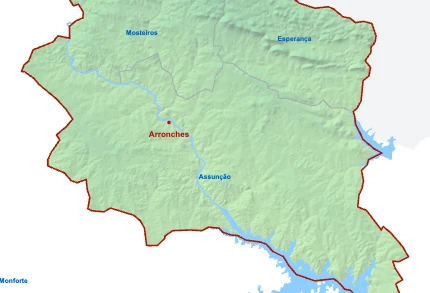
  • Arronches: a Portuguese village situated near the border with approximately 2,800 inhabitants. Arronches lies within the Parque Natural da Serra de São Mamede, making it possible to engage in outdoor sports activities and walks through nature. In the village of Arronches we highlight the Castelo de Arronches, the Igreja Matriz, the Igreja da Misericórdia, the Igreja de Nossa Senhora da Luz, the medieval tower and the Passeio do Vassalo.

Vila de Fronteira

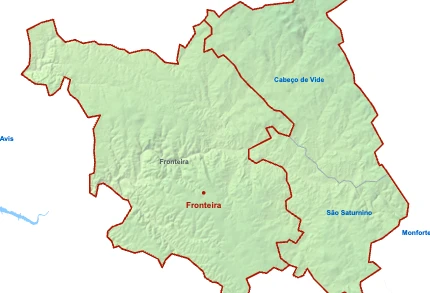
  • Fronteira: a traditional Portuguese village of approximately 3,000 inhabitants, founded by the Portuguese king D. Dinis in the 13th century. Near Fronteira we find Atoleiros, the site where D. Nuno Álvares Pereira defeated the Castilians in 1384, securing Portugal’s independence. In the village of Fronteira, highlights include the Igreja Matriz, the Igreja do Senhor dos Mártires, the Paços do Concelho building, the railway station with azulejo tile panels depicting the lifestyle of the region, the 18th-century manor houses, the Centro de Interpretação da Batalha de Atoleiros, the Termas da Sulfúrea, the Miradouro do Santuário de Nossa Senhora de Vila Velha, and the Praia Fluvial da Ribeira Grande. The most important festivals and pilgrimages in Fronteira are: the Festas Honra de Nossa Senhora da Vila Velha, held annually in August; the Commemoration of the Battle of Atoleiros, a municipal public holiday held annually in April; the Feira Medieval, held annually in April; and the festival in honour of Nossa Senhora das Candeias, held annually in February.

Vila de Monforte

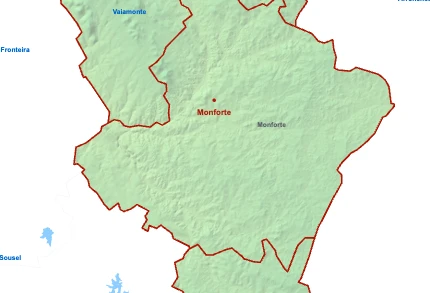
  • Monforte: a village of 3,000 inhabitants situated in the district of Portalegre. Monforte is known as the place of origin of the Serra d’Aires dog and the Rafeiro Alentejano. In Monforte we highlight the Centro de Reprodução do Rafeiro Alentejano, the Centro Interpretativo Tauromáquico, the Herdade do Perdigão, the Igreja do Calvário, the Igreja de Nossa Senhora da Conceição, the Igreja de São João Batista, the Museu Municipal, the old bridge of Monforte, the ruins of Palma, the Torre das Figueiras and the Torre do Frade.

Ponte de Sor

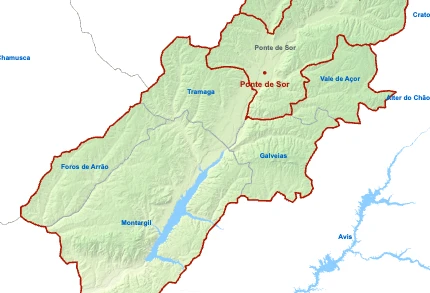
  • Ponte de Sor: a city and municipality in the district of Portalegre with approximately 15,000 inhabitants. In the municipality of Ponte de Sor one can visit the Centro de Artes e Cultura, the Igreja Matriz de Ponte de Sor, the Montargil reservoir, the six chapels of Galveias, the Oásis Parque water park, the water mills, the Núcleo Megalítico de Montargil, the Necrópole de Santo André, and the riverside area of Ponte de Sor. The most important festivals and pilgrimages in Ponte de Sor are the festa da Salgueirinha, held annually on Easter Monday; the festival Centrum Sete Sois Sete Luas, held annually between July and September; the October fair, held annually in October; and the International Hot Air Balloon Festival, held annually in November. Ponte de Sor is served by the Aeródromo Municipal de Ponte de Sor, with glider flights and higher education courses in aeronautics and aerospace, taught in the Campus Universitário building.

The Gastronomy of Portalegre

The traditional dishes of Portalegre are:

  • Cozido de grão
  • Codorniz frita
  • Cozido à Crato
  • Ensopado de borrego
  • Lacão assado
  • Lebre com feijão branco
  • Lebre com arroz
  • Maranhos à Belverense
  • Perdiz de escabeche
  • Pastéis de Santa Clara
  • Queijadas de Portalegre
  • Sericaia
  • Queijo de Nisa

The crafts of Portalegre

The defining craft of the city is the art of tapestry, considered the finest tapestry in Portugal and among the best in the world. The crafts of Portalegre also encompass the traditions of blacksmithing and tinsmithing.

History of Portalegre

Portalegre was founded during the Roman occupation, when it was known as Portus Alacer or Porto Alegre. Portalegre served as a shelter for travellers passing through the region. The city was fortified due to its proximity to the Spanish border, and in 1290 a castle was built with twelve towers and seven gates to protect the town from outsiders. Portalegre was elevated to city status in 1550. In the 17th century the Real Fábrica de Lanifícios was inaugurated, contributing to the city’s development. In the 19th century the Fábrica Robinson was built, dedicated to the processing and transformation of cork. On 18 July 1835, Portalegre was designated capital of the district.

The Economy of Portalegre

Agriculture represents the greatest economic weight in the district of Portalegre, with production of cereals, olive oil, chestnuts and wine; livestock farming, including cattle, goats, pigs and horses; the bread-making industry, the dairy, coffee and tea industry, cork production, and tourism. The district of Portalegre has the largest expanse of montado woodland in Europe. Tourism has grown in the interior Alentejo over recent decades, driven by rural tourism with quality accommodation, nature tourism, wine tourism, nautical tourism linked to the reservoirs, cultural and religious circuit tourism, gastronomy and wine tourism, and health tourism linked to thermal spas. The business and industrial economy of the district of Portalegre is supported by thirteen industrial zones:

  1. Zona Industrial de Alter do Chão
  2. Zona Industrial de Avis
  3. Zona Industrial de Campo Maior
  4. Zona Industrial de Castelo de Vide
  5. Zona Industrial do Crato
  6. Zona Industrial de Elvas
  7. Zona Industrial de Fronteira
  8. Zona Industrial do Gavião
  9. Zona Industrial de Marvão
  10. Zona Industrial de Monforte
  11. Zona Industrial de Nisa
  12. Zona Industrial de Portalegre
  13. Zona Industrial de Sousel

Geographical location of the district of Portalegre

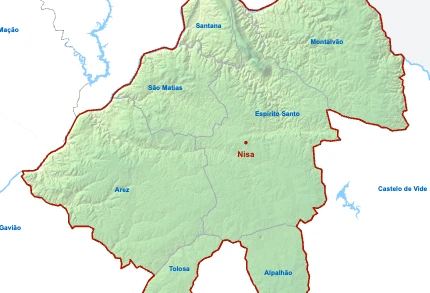
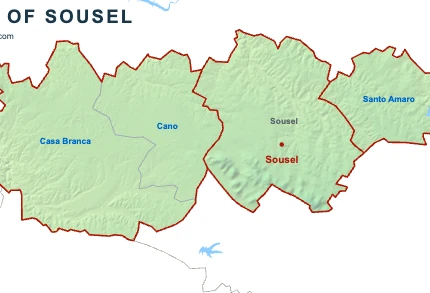
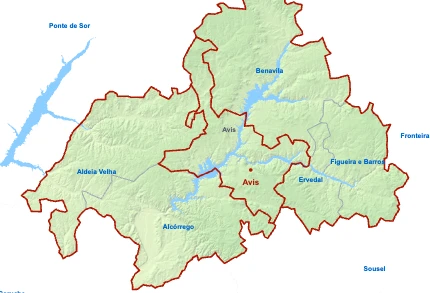
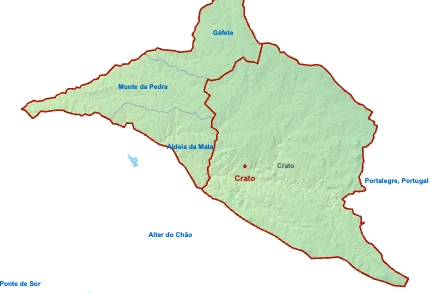
Portalegre borders the district of Castelo Branco to the north, the district of Évora to the south, the district of Santarém to the west, and Spain to the east. The district of Portalegre has 69 parishes, divided across 15 municipalities comprising the city of Elvas, the city of Portalegre, the city of Ponte de Sor, the village of Campo Maior, the village of Nisa, the village of Alter do Chão, the village of Castelo de Vide, the village of Fronteira, the village of Arronches, the village of Sousel, the village of Avis, the village of Crato, the village of Gavião, the village of Monforte, and the village of Marvão. The most important rivers in the district of Portalegre are the Avis River, the Caia River, the Guadiana River, the Sever River, and the Tagus River. The most important mountain ranges in the district of Portalegre are the Serra Monte da Penha, Serra de São Mamede, Serra de Nisa, Serra de Marvão and Serra de Portalegre.

Festivals and Pilgrimages of Portalegre

  • Made in Portalegre: held in October, every two years;
  • Portalegre JazzFest: held annually in February;
  • Feira da Doçaria Conventual: held annually in April;
  • Campeonato de todo-o-terreno baja 500: held annually in October;
  • Festival Internacional de Teatro: held annually in November.

Quick Facts about Portalegre

  • City population: approximately 22,000 inhabitants
  • Municipal foundation: 1259
  • Region: Alentejo
  • Sub-region: Alto Alentejo
  • District: Portalegre
  • Municipal holiday: 23 May

Wir sind nah bei Ihnen

XREI ist mit Büros in ganz Portugal vertreten – von Porto bis zur Algarve.

Norden

Porto – ICON-Gebäude

Rua Direita de Francos, 165 Piso 1 · 4100-211 Porto

Großraum Lissabon

Lissabon — Rua Castilho

Rua Castilho, 39 · 1250-068 Lisboa

Großraum Lissabon

Estoril

Avenida Aida, 353A · 2765-187 Estoril

Alentejo-Küste

Comporta

Av. 18 Dezembro, 37 · 7570-779 Carvalhal

Algarve

Vilamoura — Marina Plaza

Av. da Marina, 3 · Marina Plaza Loja 14/15 · 8125-401 Quarteira