Santarém, Portugal

Santarém, Portugal

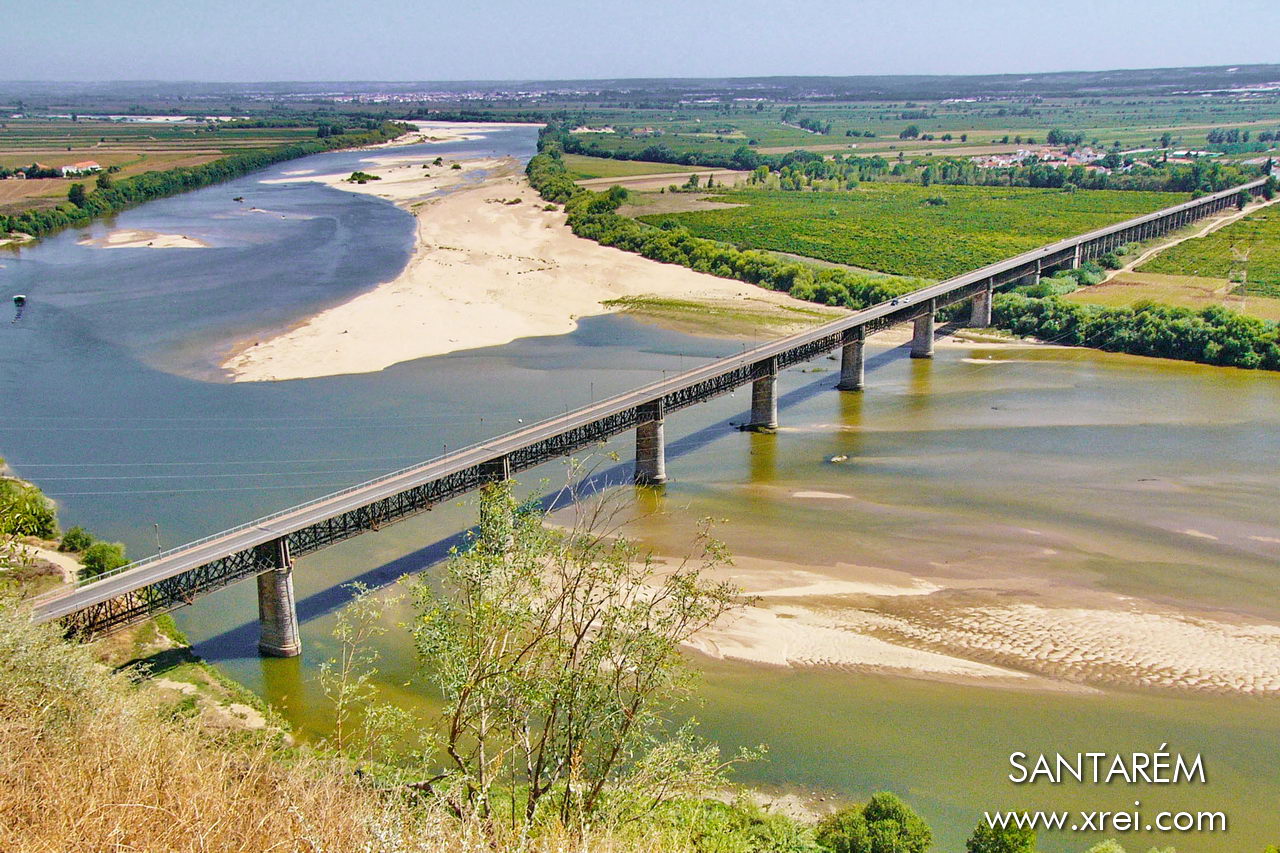
Santarém, with a view of the Tagus River floodplains and the Dom Luís I bridge
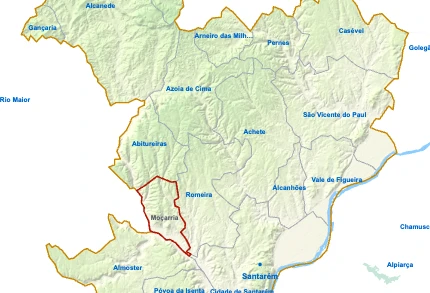
Santarém

The Santarém region is known for the Tagus River floodplains — vast plains flooded by the river, with extremely fertile land for agriculture. A production area for wine, olive oil, cereals and fruit, where herds of cattle and horses can be seen grazing. The city of Santarém was elevated to city status in 1868, is the capital of the Ribatejo and of the Santarém district, located in the Ribatejo region and the sub-region of Lezíria do Tejo, on the right bank of the Tagus River. Santarém is a place of popular Portuguese traditions, including the fandango dance and the art of bullfighting with campinos (mounted peasant herders), bulls and horses. Santarém is the capital of Gothic architecture, and the land of freedom, from where the military set out in the early hours of 25 April 1974 to overthrow the former Portuguese dictatorial regime. Santarém is one of Portugal’s religious centres, being the district where the sanctuary of Nossa Senhora de Fátima is located.

The Santarém district is divided into three areas:

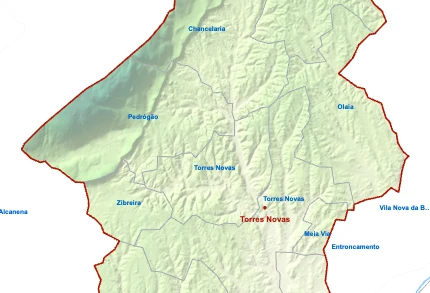
  1. O Bairro or “Ribatejo Norte”: located on the right bank of the Tagus River. O Bairro covers the municipalities of Vila Franca, Rio Maior, Torres Novas and Tomar. The landscape of this region is characterised by the agricultural production of olive trees, wine, maize and wheat.
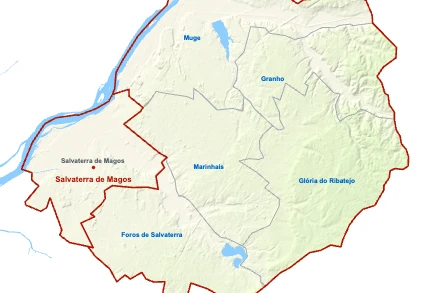
  2. A Charneca or “Ribatejo Sul”: located on the left bank of the Tagus River. A Charneca encompasses the municipalities of Benavente, Salvaterra de Magos, Almeirim, Alpiarça, Chamusca, Golegã and Coruche. In this region, cereals, wine and rice are cultivated. A characteristic feature of the landscape in this area is the existence of vast plains with eucalyptus trees, pine trees and cork oak woodland — it is from here that cork is extracted.
  3. A Lezíria or “Terras da Borda d’Agua”: this is the most fertile area of the Ribatejo and one of the most fertile in Europe. A Lezíria corresponds geographically to the municipalities of Almeirim, Alpiarça, Azambuja, Benavente, Cartaxo, Chamusca, Coruche, Golegã, Rio Maior, Salvaterra de Magos and Santarém. It covers an area of approximately 20,000 hectares and has the largest area of cork oak woodland in the entire country. A Lezíria has varied and extensive agricultural production: vegetables, fruit, cereals, rice paddies, pine forests, olive groves and vineyards.

Places to visit in the city of Santarém

1. The city of Santarém

Santarém is organised into three distinct areas:

  • Historic Centre of Santarém: notable for its streets paved with traditional Portuguese cobblestone and lined with historic buildings, the entire historic centre should be explored on foot. Surrounding the historic centre are the Jardim da Liberdade, the courthouse building, the Santarém market, the Igreja da Nossa Senhora da Piedade, and the Jardim da República. One of the entrances to the historic area is through Praça Sá da Bandeira, in front of the Santarém seminary — a square where the statue of Sá da Bandeira stands, surrounded by cafés with outdoor terraces. Continuing along Rua Serpa Pinto, you will find local shops spread across a network of narrow streets, with side streets, squares and historic buildings lining the traditional Portuguese cobblestone roads.
  • Alfange: this is the area located on the riverfront of the Tagus River to the south of the Dom Luís I bridge, a former hub of intense fishing, commercial and industrial activity until the 14th century. The Alfange of Santarém has been undergoing recovery through the Al-Margem project.
  • Ribeira de Santarém: this is the part of the city situated on the Tagus riverfront to the north of the Dom Luís I bridge. The name “Santarém” originates from this location, as “Santa Iria” or “Irene” (7th–8th century) is believed to be buried here. The Ribeira de Santarém area grew between the 12th and 14th centuries due to trade arriving from Lisbon along the Tagus River. The Ribeira began to lose importance in 1861, the year the railway arrived in the city. This part of the city is particularly known for its large number of restaurants and its traditional fishing boats. The Ribeira de Santarém has a heritage worth discovering, including the Ponte D. Luís, inaugurated in 1881 — a spectacular bridge set against the landscape of the Tagus floodplains — as well as Praça Oliveira Marreca, the Capela de Nossa Senhora das Neves, the former Hospital de Santa Iria, the Igreja de Santa Iria, the Ponte do Alcorce, the Igreja de Santa Cruz, the railway station, the Fonte de Palhais and the Museu Etnográfico da Ribeira de Santarém.

2. Jardim das Portas do Sol

Jardim das Portas do Sol: a garden situated within the walls of the former Castelo de Santarém, at the edge of the historic city, on an elevated point above the Tagus River, with a stunning view over the Dom Luís I bridge, the Tagus River and the Tagus floodplains. It is one of the most appreciated places to visit in Santarém. Of the Castelo de Santarém — a former medieval castle of which only a few sections of the old walls and the Torre das Cabaças remain — the castle’s clock tower was built in the 15th century and is among the earliest clock towers in Portugal. In the late 20th century, the Tower was converted into a museum, the Núcleo Museológico do Tempo, whose collections are organised on floor 1 with the Sala dos Pesos, which shows visitors the era when timekeeping was done by observing the stars; on floor 2 where the “Sala da Máquina” can be found, transporting visitors to the Industrial Revolution and the emergence of the mechanical clock; and floor 3 which features the “Sala de Observação”, taking visitors to the top of the tower, where time across the entire city of Santarém can be observed.

3. Casa dos Patudos

Casa dos Patudos is a house museum located in a palace in Alpiarça, 10 km from Santarém — a legacy left by José de Mascarenhas Relvas to the municipality of Alpiarça to be converted into a museum. The house was built in 1906 on the orders of José Relvas, who bequeathed his estate in his will. Casa dos Patudos holds a collection of works dating from the late Middle Ages to the early 20th century, encompassing architecture, painting, sculpture and other arts, as well as furniture, textiles and porcelain. Among the best-known pieces is a painting by Rembrandt. Casa dos Patudos is classified as a Property of Public Interest.

4. Igreja da Graça

Igreja de Santa Maria da Graça: also known as the Igreja de Santo Agostinho, this is a former male convent with 14th-century Gothic architecture. The façade is imposing, featuring a rose window carved from a single stone, set above the entrance decorated with two ogival arches. Inside the church, visitors can explore a collection of mausoleums and heraldic funerary slabs, where ancestral members of the Portuguese nobility are buried. The Igreja da Graça is located in the historic centre of Santarém, opposite Largo Pedro Álvares Cabral, where the statue of Pedro Álvares Cabral stands. The Igreja de Santa Maria da Graça has been classified as a National Monument since 1910.

5. Igreja de Santa Maria de Marvila

Igreja de Santa Maria de Marvila: a 16th-century church located at Largo de Marvila, in the heart of Santarém’s historic centre. The main attractions of the Igreja de Marvila are the interior decorated with more than 65,000 tiles, the chancel and the imposing Gothic portal at the church entrance.

6. Ponte Rainha D. Amélia

Ponte Rainha D. Amélia: a 1904 railway bridge measuring 840 metres, built with an iron structure, converted for road use in 2001 with a single lane and two pedestrian walkways from which the view over the Tagus River can be appreciated.

7. Ponte D. Luís I

Ponte D. Luís I: known as the “Ponte de Santarém”, this is a metal bridge that crosses the Tagus River on National Road 114, linking Santarém to Almeirim. Inaugurated in 1881, it was considered at the time one of the finest examples of iron architecture. This bridge forms part of the iconic view seen from the Jardim das Portas do Sol.

8. Torre das Cabaças

Torre das Cabaças: a 15th-century clock tower with 8 windows, classified as a National Monument, known as the Torre do Relógio. The name “Cabaças” originates from the 18th century, when 8 stone gourds were placed at the top of the tower, which locals interpreted as a representation of the heads of their municipal councillors.

9. Museu Diocesano de Santarém

Museu Diocesano de Santarém: a sacred art museum highly appreciated by visitors, located in the Sé Catedral de Santarém, formally known as the Igreja Nossa Senhora da Conceição, created with the aim of preserving works of art from the Santarém district.

10. Igreja de Nossa Senhora da Piedade

Igreja de Nossa Senhora da Piedade: a 17th-century church of Mannerist plain style architecture with Baroque influence. The church is located in the historic centre of Santarém, on the site of the former city gate.

Other attractions in the Santarém region

Santuário de Nossa Senhora de Fátima

Santuário de Nossa Senhora de Fátima: one of the most important religious tourism destinations in the world, located 59 km from the city of Santarém and 26 km from the city of Leiria. The Sanctuary of Fátima is composed of the sanctuary square, the Basílica de Nossa Senhora do Rosário — a Baroque-style basilica standing 65 metres tall — the Chapel of the Apparitions (where visitors can see the pedestal bearing the original sculpture of Nossa Senhora de Fátima, marking the spot where a small holm oak once stood, above which the Blessed Virgin Mary is believed to have appeared to the three shepherd children), and the Basílica da Santíssima Trindade, a large church dedicated to the Holy Trinity with 8,633 seats. The Fátima sanctuary was the setting for the most significant religious events in the Christian church, known as the Miracle of Fátima, comprising the apparitions of the Angel of Peace and of Nossa Senhora de Fátima.

Valinhos em Fátima

Valinhos em Fátima: a religious destination comprising the fields that the three shepherd children of Fátima would cross from their homes in Aljustrel to the Cova da Iria to tend their flocks — the site where two of the Angel of Peace’s apparitions took place in 1916. Today visitors can follow the Via Sacra route to the Calvário Húngaro, where the sculptures of the Angel of Portugal, the Loca do Cabeço (Anjo da Paz), and the various Stations of the Cross can be found.

Casa de Lúcia

Casa de Lúcia is a house museum in the parish of Aljustrel. It is the place where Sister Lúcia — one of the 3 shepherd children who witnessed the miracle of Fátima — lived until the age of fourteen and where she was first questioned. Casa de Lúcia was donated by Lúcia herself in 1981 to the Sanctuary of Fátima. It recreates the family’s daily life. The main highlight is the Poço do Arneiro, located at the back of the house, where the Angel appeared for the second time, and where Lúcia saw a vision of one of the popes weeping in a large house. The house museum is a short distance from the sanctuary of Fátima; a tourist train runs between the sanctuary and the house museum.

Casa de Francisco e Jacinta Marto

Casa de Francisco e Jacinta Marto: also known as the Casa dos Pastorinhos, this is a house museum located in Aljustrel near Casa de Lúcia, Fátima. It is a very simple house that reflects the humble way in which the shepherd children lived their lives.

Convento de Cristo (Tomar)

Convento de Cristo: a monumental complex classified as a National Monument and a UNESCO World Heritage Site, built from 1160 onwards for the Order of the Knights Templar, and expanded until the 18th century in various architectural styles, including Romanesque, Gothic, Manueline, Renaissance and Mannerism. The Convento de Cristo stands at the western summit of the city of Tomar and is composed of the Castelo Templário de Tomar, the Renaissance-era convent of the Order of Christ, the conventual enclosure (Mata dos Sete Montes), the Ermida da Imaculada Conceição, and the conventual aqueduct (Aqueduto dos Pegões). The Convento de Cristo is among the most appreciated attractions in Portugal.

City of Tomar

Tomar: a historic city linked to the Knights Templar since 1159. It was in that year that this religious order received Tomar as a reward for the assistance provided to D. Afonso Henriques during the Christian Reconquest. The castle of Tomar and the Convento de Cristo are UNESCO World Heritage Sites. In Tomar, highlights include the Sinagoga, the Mata dos Sete Montes and the Igreja de Santa Maria do Olival. Tomar holds the Festa dos Tabuleiros every year. The gastronomy of Tomar includes dishes such as couves à Prior, bucho da Junceira, castanhas doces, queijadas de amêndoa, fatias de Tomar, “bolos de cama” and “beija-me depressa”.

Grutas de Mira de Aire

Grutas de Mira de Aire: the largest caves in Portugal, discovered only in 1947 and currently classified as one of the 7 Natural Wonders of Portugal. These are limestone caves formed more than 150 million years ago. They are located in Mira de Aire, in the municipality of Porto de Mós, on the eastern side of the Parque Natural das Serras de Aire e Candeeiros, between Leiria and Santarém. The Grutas de Mira de Aire are open to the public, managed for tourism to ensure their preservation and visitor safety. The Grutas de Mira de Aire complex offers accommodation, a restaurant, a water park, a geological exhibition and a natural surroundings. Visitors can explore 600 metres of caves in approximately one hour, out of a total extension of 11 kilometres and a depth of 110 metres. The temperature inside the caves is 17°C, and the caves are artificially lit to ensure visitor safety. The descent is made by stairs and the return to the surface by lift. Inside the Grutas de Mira de Aire, visitors can observe several galleries featuring ancient stalactites and stalagmites.

Parque Natural das Serras de Aire e Candeeiros

Parque Natural das Serras de Aire e Candeeiros: a natural park covering approximately 39,000 hectares, a protected area since 1979, with a limestone rock landscape and Portugal’s largest underground freshwater reservoir, fed by rainwater in the form of underground streams, extending from Rio Maior to Porto de Mós. Here, more than fifteen hundred caves can be found, along with algares (vertical caverns carved naturally into the limestone by water erosion), lapiaz fields (karst relief, a type of geological relief characterised by the dissolution of rock), dolines (some with lagoons), uvalas and the Polje de Minde. In other words, rocks shaped by erosion, creating caves, caverns, lakes and other spectacular features. In the Parque Natural das Serras de Aire e Candeeiros, visitors will find the Grutas de Mira de Aire — a well-known geological attraction in Portugal — and the Olhos de Água do Alviela springs, responsible for supplying water to Lisbon since 1880. The Parque Natural das Serras de Aire e Candeeiros is also a birdwatching site, home to bats, rare mammals, reptiles, amphibians and insects, with more than 300 species of butterflies and other species. Here visitors will also find the Monumento Natural das Pegadas de Dinossauros da Serra de Aire, an area of approximately 20 hectares classified as a Natural Monument and discovered in 1994, containing traces of sauropods (one of the two main groups of dinosaurs, characterised by large bodies, a long neck ending in a small head, and a very long tail) — among the 20 largest, oldest and clearest dinosaur trackways known, dating back 175 million years. The Park covers the municipalities of Alcobaça, Porto de Mós, Alcanena, Rio Maior, Santarém, Torres Novas and Ourém. The main attractions of the Parque Natural das Serras de Aire e Candeeiros are the aldeia da Barrenta, the Centro de Ciência Viva do Alviela, the Centro de Interpretação Subterrâneo da Gruta da Pena, the Centro de Interpretação das Nascentes do Alviela, the Gruta dos Moinhos Velhos, the 175-million-year-old Dinosaur Footprints, the Grutas de Mira d’Aire, and the Centro de Interpretação Subterrâneo da Gruta do Almonda — comprising several underground streams over 15 km leading to the source of the Almonda river, with the most extensive karst network currently known in Portugal, and the presence of deposits dating from the Lower Palaeolithic to the Roman period.

Ecopista de Porto de Mós

Ecopista de Porto de Mós: a greenway located to the north of the Parque Natural das Serras de Aire e Candeeiros, extending approximately 12 km between the Minas da Bezerra and Porto de Mós. The greenway was adapted from the former railway line that connected the mines to Porto de Mós. It is now a popular route among sports enthusiasts for running, walking and cycling along a path surrounded by nature, history and remarkable landscapes.

Grutas da Moeda

Grutas da Moeda: located in São Mamede, approximately five minutes by car from Fátima. The Grutas da Moeda were accidentally discovered in 1971 by two hunters pursuing a fox. The temperature inside the caves reaches 18 degrees and they have a depth of 45 metres. The main highlights are the Lago da Felicidade, the Sala do Presépio, the Pastor, the Cascata, the Cúpula Vermelha, the Marítima, the Capela Imperfeita, the Abóboda Vermelha, the Fonte das Lágrimas and the Centro de Interpretação Científico-Ambiental.

Grutas de Alvados

Grutas de Alvados: caves more than 50,000 years old, located within the Parque Natural das Serras de Aire e Candeeiros. Inside, the caves have a total change in level of 100 metres, passing through several chambers decorated with stalagmites and stalactites, at a constant average temperature of 17°C.

Centro Ciência Viva de Constância

Centro Ciência Viva de Constância: the Constância branch of the National Agency for Scientific and Technological Culture. The Centro Ciência Viva de Constância is located at Alto de Santa Bárbara, outside light pollution zones, offering an excellent panoramic view. It is dedicated to Astronomy, covering an area of 10,000 m² with a planetarium, a heliophysics laboratory, a multimedia auditorium, an open-air amphitheatre and five astronomical observation domes. A mobile dome installed on the roof terrace of the main building is equipped with a 10-inch catadioptric Schmidt-Cassegrain telescope. The Science Centre features several outdoor modules depicting the solar system, a carousel representing the Sun, the Earth and the Moon, a terrestrial globe, a celestial sphere and an analemmatic sundial.

Castelo de Almourol

Castelo de Almourol: a castle classified as a National Monument, located on an island in the Tagus River, and one of the most well-known and emblematic Templar castles in Portugal. The Castelo de Almourol dates from the 12th century, built on a site previously occupied by the Alans, Visigoths and Muslims from the 3rd to the 8th century. From the top of the walls, visitors have panoramic views over the Tagus River and the lush surrounding nature. Kayaking on the river is one of the most adventurous ways to explore the surroundings of the castle, and is very popular during the warm summer months.

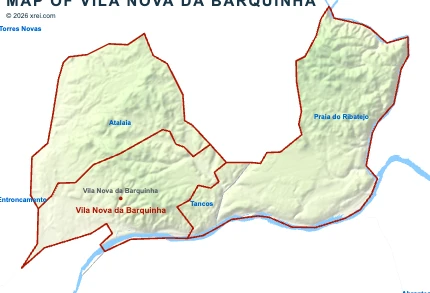
Vila Nova de Barquinha

Vila Nova de Barquinha: a locality situated in the floodplain beside the Tagus River. Vila Nova de Barquinha’s main attractions include the Castelo de Almourol, the Parque de Barquinha by the river — a place where locals walk and practise sport, including canoeing on the Tagus River — the Igreja Matriz da Atalaia, the Capela de Nossa Senhora dos Remédios, the Capela de Roque Amador and the bullring. The event that attracts the most visitors to this locality is the Grande Feira de Vila Nova de Barquinha, which includes bullfights.

Salinas Naturais de Rio Maior

Salinas Naturais de Rio Maior: also known as the Salinas da Fonte da Bica, these are saltworks located 30 km from the ocean, dating from 1177 and classified as a Property of Public Interest — the only saltworks in Portugal where rock salt is still produced. According to anthropological studies, it is believed that the collection of rock salt dates back to prehistoric times. Technical studies indicate that the saltworks are crossed by an underground current that feeds a well, producing salt water seven times saltier than seawater. The saltworks are surrounded by vineyards and agricultural land, making the surrounding landscape quite striking.

Parque do Mouchão

Parque do Mouchão: a park located on a small island in the Nabão River, in the city of Tomar. It is a green and pleasant spot ideal for relaxing in the city centre surrounded by the river. The Parque do Mouchão is connected to both banks of the city by four pedestrian bridges, including the Ponte Velha, or Ponte de Dom Manuel — a centuries-old bridge built over the remains of a former Roman bridge. In the centre of the park, visitors can see the water wheel of Parque do Mouchão, a wooden watermill powered by the river.

Ecoparque Sensorial da Pia do Urso

Ecoparque Sensorial da Pia do Urso: a stone-house village located in the Serra de Aire e Candeeiros, popular with nature lovers and outdoor walkers. The village has an ecopark adapted for visually impaired visitors, with sensory trails. At the Ecoparque Sensorial da Pia do Urso, visitors can discover local stories, enjoy picnics, go walking and experience nature. The legend of the village of Pia dos Ursos tells that bears once came to this spot to drink water from the natural stone basins.

Castelo de Ourém

Castelo de Ourém: also known as the Paço dos Condes de Ourém, this is a Romantic-style castle from the 12th century, standing above the medieval town of Ourém and the Seiça stream. Near the Castelo de Ourém stands the Igreja da Colegiada de Nossa Senhora da Misericórdia, a Baroque-style church founded by D. Afonso Henriques, remodelled and enlarged in 1445 by Count D. Afonso, destroyed by the 1755 earthquake, and rebuilt between 1758 and 1766.

Castelo de Abrantes

Castelo de Abrantes: also known as the Fortaleza de Abrantes, this is a 12th-century medieval castle, originally Romanesque in style and later Gothic following a 13th-century remodelling, built in stone masonry. It stands to the east of the city of Abrantes, in a dominant position above the right bank of the Tagus River. From the castle garden, visitors can enjoy a sweeping panoramic view, and from the walls there are impressive views over the city of Abrantes. Inside the walls stands the Igreja de Santa Maria do Castelo in Gothic style, converted into a historical museum, housing collections of Roman sculpture, 15th- and 16th-century funerary sculpture, Sevillian tile panels and other works of art.

Museu Nacional Ferroviário

Museu Nacional Ferroviário: a museum with a collection of 36,000 objects related to railway heritage, including equipment, uniforms, tools, carriages and historic steam, diesel and electric locomotives, with representative models of the Portuguese Royal Train and the Presidential Train. Visitors can learn about the history of railways in Portugal, Europe and the world, through a permanent exhibition and various temporary exhibitions. The Museu Nacional Ferroviário is located in the Complexo Ferroviário do Entroncamento. The Santarém railway station was inaugurated in 1861 and was in operation between 1870 and 1925. The building features 19th-century tile panels depicting the traditions and history of the Ribatejo. The Museum is housed in one of the station’s buildings and its main attractions are the locomotives in the Salão do Príncipe and the Salão D. Maria Pia.

Igreja de Santa Maria dos Olivais

Igreja de Santa Maria dos Olivais: a 12th-century Gothic church classified as a National Monument, located in the city of Tomar. The Igreja de Santa Maria dos Olivais was founded by the Templar master Gualdino Pais on the site of a 7th-century Benedictine monastery. It was the former seat of the Knights Templar, served as the mother church for all churches in the territories discovered in Asia, Africa and the Americas, and acted as the pantheon of the Grand Masters of the Knights Templar. The church stands in the former Roman city of Sélio.

Igreja de São João Batista (Tomar)

Igreja de São João Batista: a 15th-century church classified as a National Monument, located in the city of Tomar, in the square where the Festa dos Tabuleiros takes place — a pagan festival held every four years in July. Inside the church, visitors can admire 16th-century paintings including a Last Supper by Gregório Lopes.

Museu de Arte Pré-Histórica e do Sagrado no Vale do Tejo

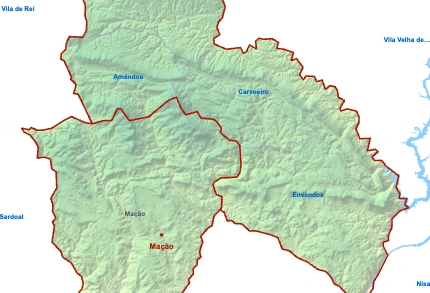
Museu de Arte Pré-Histórica e do Sagrado no Vale do Tejo: a museum located in Mação, responsible for guided visits to the Gravuras Rupestres do Vale do Ocreza — Palaeolithic rock engravings located along the banks of the Ocreza River, from the Pracana dam to Barca da Amieira, skirting the A23 viaduct, with the engravings found in the last 4 of 14 kilometres.

Museu de Cera de Fátima

Museu de Cera de Fátima: a museum that uses highly realistic wax figures and scenes to depict the story of the Fátima shepherd children and the most important historical events related to the apparitions of Our Lady and the Angel of Portugal.

Aqueduto dos Pegões

Aqueduto dos Pegões: a 1614 aqueduct approximately 6 km long, with a maximum height of 30 metres, composed of 16 ogival arches topped by 58 full-round arches, classified as a National Monument. The Aqueduto dos Pegões was built to supply water to the Convento de Cristo in Tomar. Today visitors can walk along 1 km of the aqueduct at their own risk, as there are no lateral barriers.

Parque Ambiental de Santa Margarida

Parque Ambiental de Santa Margarida: a natural park located near the town of Constância, with environmental education programmes, where visitors can explore the Aromatic and Medicinal Plant Garden, follow environmental interpretation trails, climb the Observation Tower and learn about environmental topics. At the Parque Ambiental de Santa Margarida, visitors can also explore the tropical butterfly house, an educational space aimed at raising awareness of the importance of butterfly conservation and their role in the ecosystem.

Sé Catedral de Santarém

Sé Catedral de Santarém: formerly known as the Igreja do Seminário or Igreja de Nossa Senhora da Conceição do Colégio dos Jesuítas, this is a 17th-century church with a Mannerist-style façade and Baroque interior, located in the centre of the city of Santarém. The church was formerly a Jesuit temple and was elevated to Cathedral status in 1975 following the creation of the Diocese of Santarém. Next to the Sé Catedral de Santarém stands the Museu Diocesano de Santarém, where visitors can explore a permanent exhibition spread across several rooms, featuring more than a hundred pieces of sacred art.

Falcoaria Real

Falcoaria Real: a birds of prey training facility located in Salvaterra de Magos, classified by UNESCO as an Intangible Cultural Heritage of Humanity. The aim of the Falcoaria Real is to safeguard a millennia-old heritage, defined as one of the oldest relationships between Man and Bird. Visitors can explore the history of the town of Salvaterra de Magos and discover the interactive exhibition on the world of falconry from the Neolithic era to the present day. At the Falcoaria Real, visitors can watch demonstration flights in which falcons are trained in free flight to capture “false prey” launched by the falconers.

Torre de Dornes

Torre de Dornes: a pentagonal-plan stone masonry tower, classified as a Property of Public Interest, built over a former Roman tower to defend the Tagus line. The Torre de Dornes is located in the village of Dornes, on a peninsula of the Zêzere River, facing the Santuário de Nossa Senhora do Pranto.

Reserva Natural do Estuário do Tejo

Reserva Natural do Estuário do Tejo: a nature reserve integrated within the largest wetland area in Portugal, located to the south of Santarém. It is a saltmarsh zone, with a habitat rich in molluscs and crustaceans, a nursery for various marine fish species, and a transitional zone between the marine and freshwater environments for migratory fish. Waterbirds are of extreme European significance in the Tagus estuary, with approximately 120,000 individuals of wintering species, including more than 10,000 ducks, 50,000 waders, flamingos, greylag geese and dunlins. The Reserva Natural do Estuário do Tejo is a calm and tranquil place, sought out for birdwatching, walking and cycling in the surrounding areas. Here visitors will find EVOA, a Bird Visiting and Observation Space built in the Lezíria do Ribatejo. Its main attractions include the Interpretation Centre, the main lagoon, the shallow lagoon, the large lagoon, and the Tagus estuary — one of the ten most important wetlands in Europe, the most important in Portugal, visited annually by 120,000 birds. The main goals of EVOA are:

  • The conservation of birdlife in the Tagus Estuary and the Lezíria de Vila Franca de Xira, by creating conditions to attract the greatest possible diversity of birds occurring in the estuary and floodplains, conditions for birdwatching while maintaining tranquillity, contributing to raising awareness of the importance of birds, and facilitating their scientific study.
  • Increasing the availability of tidal refuge areas for wintering estuarine birds. Expanding areas suitable for the nesting of various waterbird species.
  • Promoting the construction and conservation work of the Lezíria Grande de Vila Franca de Xira.
  • Raising awareness of the importance of water management, of which the Lezíria is an excellent example,
  • and demonstrating a model of self-sustainability in nature conservation management. In this region, visitors will also find the Salinas do Samouco — a feeding, refuge and nesting site for thousands of birds — and the Núcleo do Moinho de Maré de Corroios, a tidal mill built in 1403, where visitors can explore the ecomuseum with a long-term exhibition entitled 600 Years of Milling at the Moinho de Maré de Corroios.

Museu dos Fósforos

Museu dos Fósforos: a museum housed in the Convento de São Francisco in Tomar, home to the largest phillumenist collection in Europe, begun in 1953 by Aquiles de Mota Lima. The Museu dos Fósforos holds a collection of approximately 43,000 matchboxes representing 122 countries, depicting famous paintings, musical instruments, films, celebrities, jewels and precious stones, myths and legends. It is a remarkable example of world graphic art history represented on matchboxes. The Convento de São Francisco is a convent inaugurated in 1242, converted into a military barracks in the 19th century. Its main attractions are the façade and the cloister.

Centro Ciência Viva do Alviela

Centro Ciência Viva do Alviela – Carsoscópio: the Alviela branch of the National Agency for Scientific and Technological Culture. It is a Science Alive Centre with the aim of enhancing the natural heritage of the Alviela river spring and surrounding area, serving as a strategic resource for science communication and environmental education. The interactive exhibitions cover relevant aspects of the Maciço Calcário Estremenho, the water cycle, limestone rock, caves, bats and pollution.

Pego da Rainha

Pego da Rainha: a lake fed by a natural waterfall, surrounded by lush green nature and rock, located near Mação. Access is via the Estradão Florestal Bica da Cabroeira, a dirt track a short distance away.

Museu de Aguarela Roque Gameiro

Museu de Aguarela Roque Gameiro: a museum, highly appreciated by the public for being 100% dedicated to the art of watercolour, housed in the Casa dos Açores in Minde. The Museu de Aguarela Roque Gameiro is devoted to watercolour art, with a collection of works by Alfredo Roque Gameiro and the Calouste Gulbenkian Foundation.

Igreja Paroquial de Fátima

Igreja Paroquial de Fátima: a small church located in Fátima, known for being the baptism site of the three shepherd children of Fátima.

Igreja da Nossa Senhora do Castelo

Igreja da Nossa Senhora do Castelo: a well-preserved church located at the summit, with a privileged view over the Vale do Soraia, with the town of Coruche, the Sorraia River and the surrounding floodplains. The sunset viewed from this spot is of rare beauty.

Santuário do Santíssimo Milagre de Santarém

Santuário do Santíssimo Milagre de Santarém: also known as the Igreja de Santo Estêvão, this is a 13th-century church classified as a National Monument, located in the centre of the city of Santarém. The church became known as the Santuário do Santíssimo Milagre following the occurrence of a miracle in 1226. The church’s architecture shows Renaissance influences with Mannerist and Baroque elements, the result of a restructuring during the 16th century. Its original Gothic architecture was destroyed by an earthquake, with only two pointed arches of the transept remaining.

Museu interativo “O Milagre de Fátima”

Museu interativo “O Milagre de Fátima”: a museum located near the Sanctuary of Fátima, featuring an interactive programme that tells the story of the miracle of Fátima and other aspects of the Catholic Church through 3D technologies.

Miradouro do Castro

Miradouro do Castro: a viewpoint located beside the N348 road, with panoramic views over the Zêzere River and the surrounding lush green landscape. The viewpoint has a seating area with tables and benches where visitors can rest and take in the scenery.

Consolata Museu – Arte Sacra e Etnologia

Consolata Museu – Arte Sacra e Etnologia: a museum located in Fátima with the aim of sharing the history of Christ and the religious missions throughout the world. The Consolata Museu brings together a collection of Portuguese sacred art and ethnographic items from various countries, including nativity scenes, images of the Christ Child, and crucifixes from the 14th to the 20th centuries.

Escadinhas de Nossa Senhora da Piedade

Escadinhas de Nossa Senhora da Piedade: a stairway built in the 19th century, beginning at the Estrada do Prado in the city of Tomar, comprising 24 flights of steps with approximately 300 steps (288), providing access to the Chapel square, from where there is an impressive view over the city of Tomar, the castle and the Convento de Cristo. At the top of the stairway stands the Ermida de Nossa Senhora da Piedade, a well-restored and well-maintained 14th-century chapel.

Castelo de Torres Novas

Castelo de Torres Novas: a well-preserved medieval castle classified as a National Monument, located in the centre of Torres Novas near the Almonda River, in a commanding position above the city. From the castle walls, visitors can enjoy views over the city. The Castelo de Torres Novas is one of the city’s iconic landmarks, well worth a visit for its history and outstanding location, offering a pleasant walk through its gardens and views over the city from its walls.

Levada de Tomar

Levada de Tomar: a museological complex beside the Ponte Velha over the Nabão River in Tomar, comprising the first mills and oil presses installed by the Templars during the 12th and 13th centuries, where in 1901 a power station was installed to supply electricity to the city of Tomar. The Levada de Tomar is a very pleasant riverside spot for a historical and cultural stroll. Here visitors will find the Convento de Santa Iria — a late 15th-century convent classified as a Property of Public Interest — and the Ponte Velha over the Nabão River, originally known as the Ponte de Dom Manuel, built over a former Roman structure.

Vila de Alcanena

Alcanena: a Ribatejo municipality seat, located almost entirely within the Parque Natural de Serra de Aires e Candeeiros. This town is particularly notable as the source of the water supply for Lisbon. In the municipality of Alcanena, there is heritage worth visiting, including the Nascentes do Alviela complex, with its river beach, interpretation centre and campsite, and the Mata de Minde. The Nascentes do Alviela is a trail that begins at the Olhos d’Água do Alviela — the spring of the Alviela River, where the waters emerge at the surface. The Nascente do Alviela has been one of the main water supply sources for Lisbon since 1880, following the construction of the Alviela aqueduct.

Sinagoga de Tomar

Sinagoga de Tomar: a building classified as a National Monument, housing the Museu Luso-Hebraico Abraão Zacuto, located in the former synagogue of the historic Jewish quarter of Tomar’s historic centre. The Sinagoga de Tomar is the only Jewish temple from the Renaissance period still in existence in Portugal. The interior of the building is imposing, with 4 columns representing the mothers of Israel: Sara, Rachel, Rebecca and Leah. The ceiling features 12 arches symbolising the 12 tribes of Israel.

Casa do Administrador (Museu Municipal de Ourém)

Casa do Administrador: a branch of the Museu Municipal de Ourém, the place where the three Fátima visionaries Jacinta, Francisco and Lúcia stayed overnight between 13 and 15 August 1917. This museum portrays the characteristics and realities of the municipality of Ourém over recent decades, using visual resources adapted for visually impaired visitors, those with cognitive disabilities and reduced mobility.

Funpark – Kartódromo de Fátima

Funpark – Kartódromo de Fátima: a karting circuit located on the Estrada de Minde, covering more than 200,000 square metres and including a karting track, facilities for climbing, slides, abseiling, paintball and supporting infrastructure. The Funpark – Kartódromo de Fátima offers event organisation services for groups.

Parque Aquático Santarém

Parque Aquático Santarém: an aquatic complex with a recreational pool featuring two water play areas and a waterfall, a jacuzzi, slides with 3 foam runs and two spiral runs, a wave pool, a paddling pool for babies and a children’s pool, as well as an indoor 25-metre pool with 8 lanes for official swimming competitions.

Aquagruta

Aquagruta: a water park with a swimming pool, children’s water play area, 3 water slides (toboggan slides), sunbathing area, bar and terrace. Aquagruta is set in a space with the Polje de Mira-Minde and the Serra de Aire as a backdrop.

Grutas de Lapas

Grutas de Lapas: a group of caves of public interest running along the village of Lapas, formed by the limestone massif and the karst action of the Almonda River. Near the caves, by the river, Neolithic artefacts and bones have been found. It is believed that the caves served as shelter for peoples who inhabited Portugal more than a thousand years ago.

Jardim Horto de Camões

Jardim Horto de Camões: a garden dedicated to Camões, an important Portuguese poet. In the Jardim Horto de Camões, visitors will find the statue of Luís de Camões beside a stone structure marking the key dates and voyages from Lisbon to Macau, via Africa and India; the Miradouro do Zêzere, from which a magnificent view over the river can be enjoyed; the garden where visitors can relax at their leisure; and a half-tonne armillary sphere, gifted by the University of Fine Arts of Lisbon, marking the 500th anniversary of the Portuguese Discoveries described by Camões in “Os Lusíadas”. The garden is located in Constância, facing the Tagus River and its tributary, the Zêzere River. In Constância, visitors will also find the Centro Ciência Viva de Constância Planetário de Ptolomeu in the open-air auditorium.

Fonte das Figueiras

Fonte das Figueiras: a 14th-century Gothic fountain that served as a water supply for local communities in medieval Portugal. The fountain, classified as a National Monument, is located within the former belt of walls connecting the Porta de Atamarma — the access to Marvila — to the Ribeira, situated beside the Tagus.

Praia Fluvial do Carvoeiro

Praia Fluvial do Carvoeiro: located approximately 25 minutes from Mação, it includes a children’s pool and support facilities for visitors with reduced mobility. The Praia Fluvial do Carvoeiro was awarded the Blue Flag distinction in 2014.

Praia Fluvial de Ortiga

Praia Fluvial de Ortiga: a river beach located in the municipality of Mação, offering services including a bar, restaurant, floating pool, landing jetty, changing rooms, medical post, campsite and car park.

Albufeira da Pracana

Albufeira da Pracana: a reservoir located on the Ocreza River, built in 1951. It is suitable for various sports activities.

Adega Cooperativa de Alcanhões

Adega Cooperativa de Alcanhões: a winery producing the Ribatejo wines Cardeal D. Guilherme, Terras do Paço and Adiafa, where wine tastings are available.

Aeródromo de Santarém (LPSR)

Aeródromo de Santarém (LPSR): also known as the Aeródromo Cosme Pedrogão – Pára-Clube de Santarém, this is an aerodrome with an asphalt runway measuring 1,207 metres in length and 28 metres in width, located approximately four kilometres from Santarém. It offers passenger transport services and a school where it is possible to attend a pilot training course for the Level 1 Pilot Licence.

Other points of interest

  • Quinta da Cardiga
  • Ollem Turismo Fluvial: a company offering cultural and scenic river routes linked to the history of the Ribatejo.
  • Mata Nacional dos Sete Montes: a well-maintained landscaped park covering 39 hectares, located in the centre of the city of Tomar, connected to the Castelo de Tomar.
  • Capela de São Pedro do Castro: a church classified as a Property of Public Interest, located at the top of a hill with outstanding panoramic views over the mountains and the Zêzere River.
  • Museu Vida de Cristo: a thematic wax museum about the life of Jesus Christ, located in Fátima, with 210 wax figures arranged in 33 scenes.

Villages, towns and cities to visit near Santarém

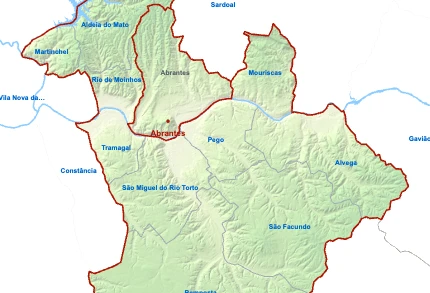
Abrantes

Abrantes: a city located in the Santarém district with approximately 10,000 inhabitants. In Abrantes, visitors can explore the historic centre, the EcoMuseu de Martinchel, the Barragem de Castelo de Bode, the Parque Urbano Ribeirinho de Abrantes, the Municipal Art Gallery and the Castelo de Abrantes. The city’s May festivities are well worth attending, as the Ruas Floridas competitions are held, giving the city a unique beauty and colour. Abrantes is also known for its confectionery, including palha de Abrantes and tigeladas.

Aldeia Água Travessa

Aldeia Água Travessa: a village located to the south of the municipality of Abrantes. Água Travessa is noted for the typical landscape of the Ribatejo scrubland, with vast cork oak plains producing cork.

Aldeia de Aljustrel

Aldeia de Aljustrel: a village located in the municipality of Ourém, where visitors can explore the Monte dos Valinhos and the Calvário Húngaro, as well as the houses where the three shepherd children who, according to believers, witnessed Nossa Senhora de Fátima, once lived.

Aldeia do Arripiado

Aldeia do Arripiado: a village located in the parish of Carregueira, to the north of the municipality of Chamusca, the place where the Lezíria do Ribatejo begins. The main attractions of this locality are the flowers that bring colour to the streets, traditional handcrafted boats and embroidery.

Aldeia das Caneiras

Aldeia das Caneiras: a village located approximately three kilometres from Santarém, one of the most traditional villages of the Avieira culture. Its defining elements include the bateira avieira — a typical river craft of this stretch of the Tagus — the Avieira house, dwellings built during the second half of the 19th century by families from Vieira de Leiria, and the traditional cuisine of river soup, shad, meagre and lamprey.

Aldeia de Entrevinhas

Aldeia de Entrevinhas: a village located in the municipality of Sardoal, noted for the vineyards of Quinta de Vale do Armo, the Moinhos de Entrevinhas and the Parque da Lapa.

Aldeia do Pereiro

Aldeia do Pereiro: a village located in the municipality of Mação, known for its streets typically decorated with flowers during the summer.

Aldeia de Santa Margarida da Coutada

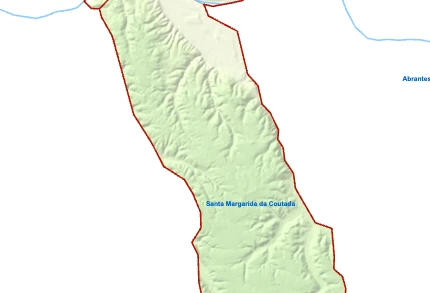
Aldeia de Santa Margarida da Coutada: a village located in the municipality of Constância. It is known for the Santa Margarida military camp. Its main attractions are the butterfly house and the nature trails sought out for walking and outdoor activities.

Almeirim

Almeirim: a Ribatejo municipality seat, noted for its history and gastronomy. The town’s heritage includes buildings such as the Igreja Paroquial de São João Batista, the Quinta de Santa Marta and the bullring. Traditional cuisine in Almeirim includes specialities such as Sopa da Pedra.

Cartaxo

Cartaxo: a city located in the Ribatejo, an important transit point, with rural houses, the Igreja de São João Batista, the Capela do Senhor dos Passos, the Cruzeiro do Senhor dos Aflitos, the bullring, the Complexo Desportivo e Cultural da Quinta das Pratas and the Eco-Museu Rural e do Vinho. The most important festivals and fairs in Cartaxo are the Festa do Vinho, held annually in May, and the Feira dos Santos. The municipality of Cartaxo offers organised tourist routes, including the Rota do Vinho, designed to visit the quintas, wineries and agricultural estates of the region.

Constância

Constância: a town located between the Tagus and Zêzere rivers, the place that inspired the Portuguese poet Luís Vaz de Camões to write some of his works. The heritage of Constância includes the Igreja de Nossa Senhora dos Mártires, the Igreja da Misericórdia, the Casa Memória de Camões and the metal bridge over the Zêzere River designed by Gustave Eiffel. The most important festivals in Constância are the Festa de Nossa Senhora da Boa Viagem, with a procession of boats held annually in April, and the “Pormonas Camonianas”, which recreate the medieval period and pay homage to Camões, held annually in June.

Coruche

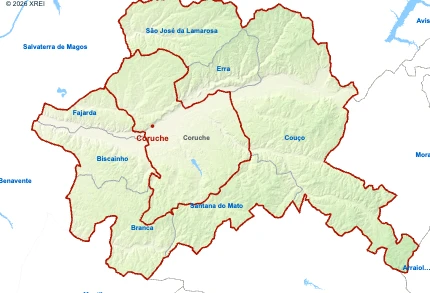
Coruche: a town located on the right bank of the Sorraia River, one of the most important agricultural centres in the country. In Coruche, highlights include the landscape of scrubland, the estates of Mata-Lobos and Mata-Lobinhos, Quinta Grande and the bullring. The festivals and fairs worth noting here are the Jornadas de Gastronomia, held annually in October, and the Festa dos Sabores do Toiro Bravo, held annually in May. Coruche is also known for its gastronomic specialities, including: Canja de toiro bravo, Açorda de sável, Cabrito frito à caçador, Febra e cachola de azeite e vinagre, Farinheira de sangue, Espetadas de vitela brava em pau de loureiro, Favada com nacos de vitela brava, Bife à Vítor Mendes, Bolo de nozes, Areias do Sorraia and Azevias.

Dornes

Dornes: a village located in Ferreira do Zêzere. It is considered one of the most beautiful villages in Portugal, and the Grande Rota do Rio Zêzere passes through it. Its main attractions are the church, boat trips and the walk along the banks of the Zêzere River to its mouth.

Ferreira do Zêzere

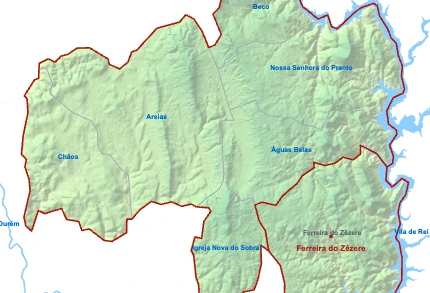
Ferreira do Zêzere: a town situated in a transition zone between the Ribatejo floodplain and the mountain ranges of central Portugal, with landscapes of unique beauty. The Ferreira do Zêzere area has significant human and natural heritage, including the Igreja Matriz, the Capela de São Pedro de Castro, the Pentagonal Tower, the Triangular Windmill, the blue lagoon and the Barragem de Castelo de Bode. The crafts of Ferreira do Zêzere include wicker basketry, blankets and towels made on hand looms. The gastronomy of Ferreira do Zêzere features blood sausage with rice and Areias cheese as its main highlights.

Golegã

Golegã: a town surrounded by the Tagus and Almonda rivers, known throughout the country as the Portuguese capital of the horse, where the Feira Nacional do Cavalo is held in November, attracting thousands of visitors. At this fair, visitors can sample traditional Ribatejo cuisine and taste água-pé (freshly produced wine). The fair includes horse-related activities, featuring Lusitano breed horses and equestrian competitions in carriage driving, show jumping and horseball. In the town of Golegã, visitors can explore the Igreja Matriz, the Igreja de Nossa Senhora dos Anjos, the Quinta da Cardiga, the Casa-Estúdio Carlos Relvas, the Museu de Pintura e Escultura Martins Correia and the Reserva Natural do Paúl do Boquilobo, where the largest grey heron colony on the Iberian Peninsula can be observed.

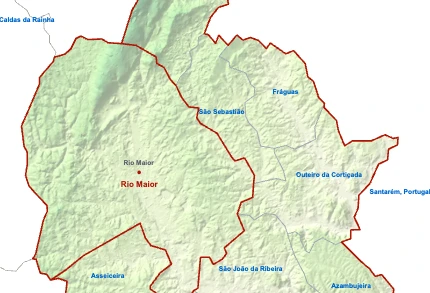
Rio Maior

Rio Maior: a city located between the Serra dos Candeeiros and the Ribatejo plains. In the municipality of Rio Maior, highlights include the aldeia das Alcobertas, the Igreja da Misericórdia and the Marinhas de Sal de Rio Maior — saltworks classified as a Property of Public Interest for being unique in Portugal, known since the 12th century and fed by a well producing water 7 times saltier than seawater. The most important fairs in Rio Maior are the Feira Nacional de Cebola — held annually, including activities such as an onion exhibition and a best onion bunch competition — and the Feira das Tasquinhas — a gastronomy, craft and confectionery fair held annually.

Geographical location of Santarém

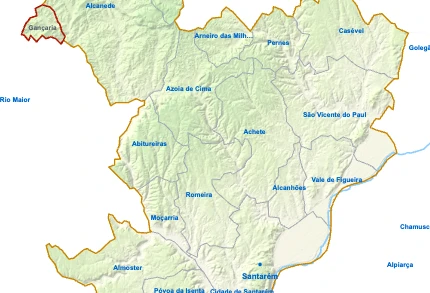
Santarém is located approximately 80 km from Lisbon, one hour by car or 41 minutes by train. Located in the Ribatejo district, on the right bank of the Tagus River, it borders the districts of Castelo Branco and Leiria to the north, the districts of Lisbon and Évora to the south, the districts of Leiria and Lisbon to the west, and the districts of Portalegre and Évora to the east.

Towns and cities of the Santarém district

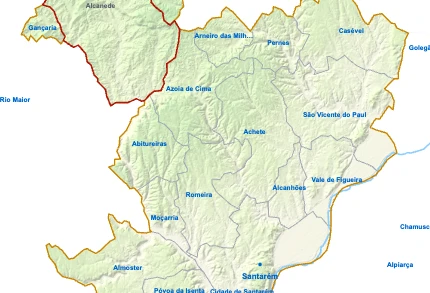
The Santarém district is composed of the following cities: Abrantes, Almeirim, Cartaxo, Entroncamento, Fátima, Ourém, Rio Maior, Samora Correia, Santarém, Tomar, Torres Novas. And the towns of Alcanena, Alcanhões, Alcobertas, Alpiarça, Amiais de Baixo, Benavente, Benfica do Ribatejo, Caxarias, Chamusca, Constância, Coruche, Couço, Fazendas de Almeirim, Ferreira do Zêzere, Freixianda, Glória do Ribatejo, Golegã, Mação, Marinhais, Marmeleira, Minde, Olival, Pontével, Riachos, Salvaterra de Magos, Sardoal, Tramagal, Tremês, Vale de Santarém, Vila Chã de Ourique and Vila Nova da Barquinha.

Access to Santarém

Santarém is a city with good road and rail connections, linked by the A1 motorway towards Lisbon, the A6 motorway towards Caia on the border with Spain, the A23 motorway towards Vilar Formoso on the border with Spain, and the A15 motorway towards Caldas da Rainha and Óbidos.

The rivers and mountain ranges of Santarém

The Santarém district has one of the finest alluvial plains in Europe and a large number of streams. The most important rivers of Santarém are the Almonda, the Alviela, the Rio Maior, the Sorraia, the Tagus and the Zêzere. The most important mountain ranges of the Ribatejo are the Serra de Aire, the Serra de Candeeiros and the Serra de Montejunto.

The Economy of Santarém

The Santarém district is a highly industrialised area, with industries including leather tanning, ceramics, timber, food processing, chemicals, cellulose, civil construction and tourism, with particular concentration around the Sanctuary of Nossa Senhora de Fátima, which is visited by several million people every year. In terms of industrial and service companies, the Ribatejo has a business area with five business parks: the Parque de Negócios de Abrantes, the Parque de Negócios do Cartaxo, the Parque de Negócios de Rio Maior, the Parque de Negócios de Santarém and the Parque de Negócios de Torres Novas. Agriculture in Santarém has a major impact on the regional economy. Thanks to the surrounding rivers, the area has some of Portugal’s most fertile soils, with more than 300,000 hectares dedicated to irrigated agriculture, including rice production — this is the region that produces the largest quantity of carolino rice in the country — as well as wine, olive oil, and the country’s largest production of tomatoes and maize. The Ribatejo has approximately 110,000 hectares of forest, representing 10% of the national territory. The forests of the Santarém district are composed largely of cork oak, the tree from which cork is produced. In Santarém, more than ten million eggs are produced per week and 70% of the country’s cured ham is produced here.

The Gastronomy of Santarém

The flavours of the countryside and the floodplains are reflected in the local cuisine. The gastronomy of Santarém includes diverse specialities with bold flavours, including:

  • Ensopado de enguias
  • Entrecosto com arroz de feijão
  • Espetadas em Pau de Loureiro
  • Fataça assada na Telha
  • Lapardana
  • Magusto com bacalhau assado
  • Massa à Barrão
  • Naco de Touro Bravo Avinhado
  • Pernil de Porco Assado
  • Petingas de Escabeche
  • Tomatada de Ovos
  • Sável Frito com açorda de Ovos
  • Sopa de Peixe
  • Sopa na Pedra
  • Arrepiados de Almoster
  • Celestes de Santa Clara
  • Pampilhos

Ribatejo Wines: the Ribatejo district includes six demarcated wine production regions: Tomar, Chamusca, Cartaxo, Almeirim, Santarém and Coruche, with notable grape varieties including: Arinto, Cabernet Sauvignon, Castelão, Fernão Pires, Merlot, Tália, Trincadeira, Touriga Nacional and Vital.

The Crafts of Santarém

The crafts of Santarém consist mainly of items in wood, embroidery, bulrush weaving, ceramics, basketry, cork and leather goods.

A brief history of Santarém

Santarém has been inhabited since 4000 BC, owing to its excellent strategic location. Various peoples occupied this region, including the Phoenicians, Greeks, Romans, Alans and Muslims. In 1147 it was conquered by D. Afonso Henriques and incorporated into the Kingdom of Portugal. Santarém served as a royal residence and capital of Portugal during the reign of D. Afonso in the 14th century. In 1531 an earthquake damaged part of the city. After 1640, Santarém grew economically through commercial activity on the Tagus River. The capital of the Ribatejo district was elevated to city status in 1868, entering a new period of economic dynamism that enabled the launch of important projects, including the Passeio do Largo de Sá da Bandeira in 1876, the Passeio da Rainha (now Jardim da República) in 1877, and the Jardim das Portas do Sol in 1902. Santarém was home to several kings and important figures in Portuguese society, including D. Afonso III, D. Afonso V, D. João I, D. João II, Pedro Álvares Cabral — the discoverer of Brazil — and Luís Vaz de Camões, author of “Os Lusíadas”.

Festivals and Fairs of Santarém

Festivals and fairs play an important role in the economy of the Santarém region. The most noteworthy include:

  • Festas de São José: held annually on 19 March, the feast day of St. Joseph, patron saint of carpenters and craftsmen.
  • Expo Caça: held annually during the month of May.
  • Feira da Agricultura ou do Ribatejo: held annually in early June. It is the event that attracts the most visitors to Santarém. The main attractions of the Feira da Agricultura are traditional Ribatejo cuisine, folk group performances and fandango.
  • Feira do Gado: held every Saturday.
  • Feira Quinzenal: held on the second and fourth Sundays of each month.
  • Feira do Milagre: held during the second and third weeks of October.
  • Festival Nacional de Gastronomia: held annually in October.
  • Festival Internacional de Folclore Celestino Graça: held annually in September.

Quick Facts about Santarém

  • Municipal population: approximately 57,000 inhabitants
  • A native of Santarém is referred to as “Escalabitano” or “Santareno”
  • Area: 552.54 km²
  • Municipal foundation: 1095
  • District: Santarém
  • Former province: Ribatejo
  • Aerodrome: 1
  • Hospitals:
    • CUF Santarém Hospital
    • Hospital Distrital de Santarém
  • Higher Education:
    • Escola Superior de Educação de Santarém — Instituto Politécnico de Santarém
    • ISLA – Instituto Superior de Gestão e Administração de Santarém

Vi er tæt på dig

XREI opererer fra kontorer over hele Portugal — fra Porto til Algarve.

Nord

Porto — Edifício ICON

Rua Direita de Francos, 165 Piso 1 · 4100-211 Porto

Stor-Lissabon

Lissabon — Rua Castilho

Rua Castilho, 39 · 1250-068 Lisboa

Stor-Lissabon

Estoril

Avenida Aida, 353A · 2765-187 Estoril

Alentejos kyst

Comporta

Av. 18 Dezembro, 37 · 7570-779 Carvalhal

Algarve

Vilamoura — Marina Plaza

Av. da Marina, 3 · Marina Plaza Loja 14/15 · 8125-401 Quarteira