Viana do Castelo, Portugal

Viana do Castelo, Portugal

Viana do Castelo

Viana do Castelo

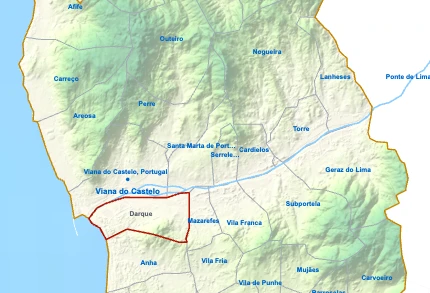
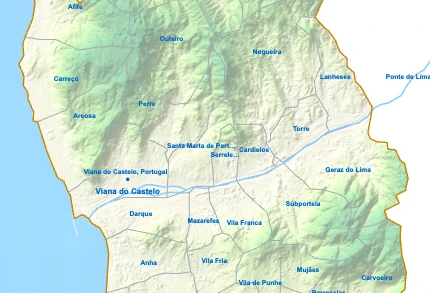
Viana do Castelo, known as the “Princess of the Lima”, is the district capital and the northernmost Atlantic city in Portugal, located approximately 45 to 60 minutes from Porto International Airport. It is a city in Alto Minho, renowned for its multiple historical, cultural, gastronomic and traditional offerings, situated at the mouth of the Lima River. The historic centre of Viana do Castelo is rich in significant monuments, with a distinctive architecture marked by important buildings, fountains and a natural landscape of river, sea and hills, which accounts for its major tourist appeal and for the inclusion of Viana do Castelo in the list of Portuguese “Healthy Cities”. The traditionality of Viana do Castelo is reflected in the festivities, pilgrimages, crafts and gastronomy of the city, with local cuisine widely recognised across the region through such emblematic flavours as Bacalhau à Viana, Arroz de Polvo à Moda do Minho and Pescada à Vianense. The city also expresses its ethnography and folklore through artisanal crafts, traditional costumes and the jewellery of the iconic Coração de Viana. It is in Viana that we find the Parque Nacional da Peneda-Gerês, one of the most sought-after natural attractions in Portugal, designated by UNESCO as a World Biosphere Reserve.

Top Attractions in Viana do Castelo (Top 10)

In the district of Viana do Castelo, the most visited and appreciated attractions are the Parque Nacional Peneda-Gerês, the Fortaleza de Valença, the Santuário de Santa Luzia and the journey there via the Elevador de Santa Luzia, the Praia de Moledo, the Fundação Gil Eannes, the Parque de Lazer do Castelinho, the Santuário de Nossa Senhora da Peneda, the Ecovia do Vez with the Passadiço do Sistelo, the Praia do Cabedelo, and the Espigueiros do Soajo. In addition to these, we have compiled all the attractions in Viana do Castelo, described below.

Points of Interest in Viana do Castelo

The Santuário de Santa Luzia, also known as the Santuário do Sagrado Coração de Jesus, is the temple-monument that crowns the city of Viana do Castelo, with a Greek cross façade ornamented with colourful stained glass, located at the summit of Monte de Santa Luzia, where it stands out in a setting of great natural beauty, evoking the city’s religious traditions and the cult of the Sagrado Coração de Jesus. To enjoy the privileged views over the surrounding greenery, the Lima River and the urban fabric of the city, visitors can ascend to the sanctuary via the Elevador de Santa Luzia, which connects Praça da Galiza to the temple, climbing the natural hillside on the longest funicular journey in the country. In the vicinity of the hills, visitors can explore the Citânia Santa Luzia, locally known as the Cidade Velha de Santa Luzia, which takes us back to the Iron Age, delimited by the ruins of ancient walls. Heading towards the riverside area of Viana do Castelo, we find the 16th-century Forte de Santiago da Barra, which incorporates some features of Manueline architecture; the Fundação Gil Eannes, a floating museum located in the former commercial dock of Viana do Castelo, which uses the former hospital ship to present a museum collection whose holdings relate to the historical and cultural role of the sea; and the Centro Cultural de Viana do Castelo, a modern-architecture building situated alongside the Lima River.

Moving into the historic centre, we also find the emblematic Museu do Traje de Viana do Castelo, a 20th-century building of Estado Novo architecture, whose collection preserves representative elements of the costumes and customs of Alto Minho, focusing primarily on the women’s costumes of Viana, whose historical and symbolic role is nationally recognised. A short distance away, visitors are invited to discover the 16th-century Sé Catedral de Viana do Castelo, of Gothic architecture, whose façade displays sculptures of six apostles that mark the faith of Viana (Santo André, São Bartolomeu, São João, São Paulo, São Pedro and São Tiago), while the rich interior showcases the artistic collection of the Capela do Senhor Jesus dos Mareantes. From the religious heritage of this part of the city, we highlight the 16th-century Igreja da Misericórdia, of Mannerist and Renaissance architecture, with valuable interior elements of gilded woodwork and tilework; the 16th-century Igreja de São Domingos, which holds some of the most valuable and distinguished examples of national gilded woodcarving; and the Romanesque Capela das Almas from the 13th century, next to the Jardim da Marginal on the Lima riverfront, where we find the Ponte Rodoferroviária de Viana do Castelo, an iron crossing resting on nine granite pillars, better known as the Ponte Eiffel. Here we also find the Núcleo Museológico de Arqueologia, known as the Casa dos Nichos, a 15th-century building with a stone façade, whose collection covers prehistoric, Iron Age and Roman antiquity.

Sport and Leisure in the Viana do Castelo Region

Sport and leisure in the Viana do Castelo region is closely linked to water sports and beach activities. On the southern coastal stretch of the Lima River, there are beaches particularly popular with enthusiasts of surfing, windsurfing and kitesurfing. Praia do Cabedelo is the most acclaimed, distinguished by the natural beauty of its white sands, set within a landscape of native vegetation and dunes, near local campsites, and also by the strong swell that makes it ideal for water sports. Heading south, we find other inviting beaches, such as Praia de Luzia Mar with its extensive sands, wooden boardwalks and attractive green surroundings; Praia do Rodanho, home to the highest dune systems in northern Portugal; Praia da Amorosa, a place of great natural beauty, popular particularly with surfers and close to the Kartódromo de Viana, the only complex of its kind to offer two tracks; Praia de Lordelo, surrounded by low-lying vegetation and an urban setting; and Praia de Castelo do Neiva, set within a rural environment that preserves a fishing character. At this point, we highlight two places of great interest on Monte de São Lourenço: the Castro de São Lourenço, a site of historical and archaeological interest offering beautiful landscape views from a viewpoint overlooking the sea, and the 16th-century Capela de São Lourenço, of Baroque architecture.

To the north of Viana do Castelo, the coastline offers several points of interest for lovers of sport and culture, including Praia do Paçô with its green surroundings, from which visitors can observe the 20th-century Farol de Montedor, with its stone façade and square tower, which stands as the northernmost lighthouse on the Portuguese coast. Moving towards the mouth of the Lima River near the city of Viana do Castelo, we encounter Praia de Carreço, an accessible beach of great natural beauty; Praia do Canto Marinho, with wilder characteristics, enclosed by a pronounced cliff face suitable for walking; and the Forte da Areosa, a small defensive structure with a star-shaped plan and four bastions, built during the Restoration Wars.

Parque Nacional da Peneda-Gerês

The Parque Nacional da Peneda-Gerês is a protected area in northern Portugal, designated by UNESCO as a World Biosphere Reserve, with an extensive natural and built heritage of landscape, historical and cultural interest. Essentially granite and mountainous, this park leads visitors to historic sites such as the Castelo de Lindoso, built in the 13th century for defensive purposes, which now serves in part as the gateway to the Parque Nacional da Peneda-Gerês, a site that incorporates a Military Museum, near which we find the communal threshing floor and the more than fifty Espigueiros de Lindoso, stone structures for agricultural use dating from the 17th and 18th centuries, used for drying grain. The Poço da Gola, a small artificial reservoir with a beautiful waterfall, is another point of interest near the village of Lindoso, from which visitors proceed to the Barragem do Alto Lindoso, one of Portugal’s largest hydroelectric facilities, located on the Lima River, and to the Miradouro Lindoso, accessible via a hiking trail, whose panoramic view encompasses the Serra Amarela and the Lindoso region.

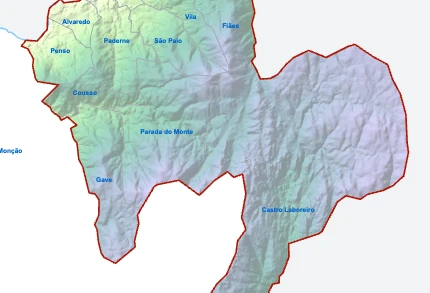
Nearby, traces of Roman occupation can be found at the Ponte de São Miguel, a wooden bridge set within the natural landscape that still preserves the remnants of the original bridge destroyed in the 17th century, and at the Ponte da Cava da Velha, which links the banks of the Rio Laboreiro and is distinguished by its irregular stone deck on a trestle with two arches of unequal size at the base. Religious heritage is also prominent here, particularly at the Santuário de Nossa Senhora da Peneda, an 18th-century temple devoted to the Virgin, set within a natural landscape alongside the granite outcrop of the Penedo da Meadinha, notable for its stairway of virtues with its statuary representing Hope, Faith, Charity and Glory. Travelling into the interior of the park, we find the Castelo de Castro Laboreiro, a difficult-to-reach medieval ruin where portions of the walls and the keep can still be seen, set within a bucolic natural landscape. A few kilometres away, sport and nature highlights include the Meadinha, a rocky granite face popular with climbing enthusiasts, and the Lagoa da Peneda, with a clear expanse of water reflecting the mountains and the surrounding natural rocky landscape.

Natural Points of Interest in Viana do Castelo

The Ecovia do Vez is a 32-kilometre pedestrian and nature trail that incorporates the short Passadiço do Sistelo route, considered one of the most beautiful in the Parque Nacional da Peneda-Gerês. This trail is widely used for hiking and cycling, with the natural scenery along the banks of the Rio Vez and the Lima River being a particular highlight. Close to the Ecovia do Vez we find the Castelo do Visconde de Sistelo, a small 19th-century manor house whose façade imitates a castle with two crenellated towers. A few kilometres away, the area known as Penedo do Castelo invites visitors to enjoy the landscape from the Miradouro da Estrica, a viewpoint built upon a rock. From the river, visitors can reach in Arcos de Valdevez the urban and riverside Praia Fluvial da Valeta, where a watermill and various recreational facilities can be found, as well as the restored Paço de Giela, overlooking this border village, whose tower houses an archaeological museum. The twenty-four Espigueiros do Soajo, set within a natural landscape, are another point of great interest in the village of Arcos de Valdevez, valued for their historical (and current) use in drying maize and for their stone architecture, distinguished by the ventilation slits and the cross that tops each structure.

Just 600 metres away via a footpath, we find the Ponte da Ladeira, as well as the waterway leading to the Poço Negro do Soajo, one of the most celebrated waterfalls in the Alto Minho region, popular with swimmers and nature lovers, part of the Cascatas do Soajo complex, which forms several pools of fresh, crystal-clear water. Similar characteristics are found at the Cascatas do Poço das Canejas and the Poço das Mantas, natural sites suitable for bathing that have recently been restored. From river to mountain, the route leads to one of the gateways to the Parque Nacional da Peneda-Gerês: the Parque Porta do Mezio, located in the village of the same name, covering 3 hectares of mountain terrain that includes tourist and leisure facilities such as the Aldeia dos Pequeninos, the Museu Rural e Etnográfico, a treetop adventure park and various viewpoints, sports areas and dining venues. Given the great natural beauty and ancient history of the region, the Núcleo Megalítico do Mezio is well worth a visit, with its well-preserved megalithic monuments that offer an insight into primitive northern architecture. The Baloiço do Mezio, positioned at one of the highest points of the Serra do Soajo, also merits attention for its spectacular panoramic views.

The Portela do Homem is a mountainous border area in Terras de Bouro, marking the frontier between Portugal and Spain on the Serra do Gerês, delimiting the Parque Nacional da Peneda-Gerês. Nearby, crossing a rustic bridge over the Rio Homem, visitors discover a succession of waterfalls of great natural beauty, whose access to the water can be somewhat uneven and slippery, known as the Cascatas da Portela do Homem. Five kilometres away, at Pé de Cabril, visitors are invited to take in the landscape over the National Park, with the Vilarinho das Furnas reservoir as a prominent feature. The Cascata de Leonte, falling from a granite rock face, and the Cascata da Laja, fed by the Laja stream and surrounded by oak woodland, are also unmissable spots for nature lovers, with the finest views in the region offered on the slopes of the Vale do Gerês, at places such as the pergola of the Miradouro da Junceda and the swing at the Miradouro da Boneca, offering privileged panoramic views over the green valley, rivers and reservoirs. The Miradouro da Pedra Bela, located at approximately 800 metres altitude in Terras de Bouro, is an essential visit, offering magnificent views over the park, and is situated a short distance from the Cascata do Arado, a waterfall near Vila do Gerês where water cuts through rocks and forms a lake, creating a bucolic setting in a green landscape considered one of the most beautiful spots in the region, alongside the Cascata de Fecha de Barjas (also known as the Cascata do Tahiti), located on the route between the village of Ermida and the village of Fafião (Aldeia dos Lobos do Gerês), accessible by crossing the bridge over the Rio Arado. A point of religious interest worth highlighting for its richness and natural setting is the 18th-century Igreja de São Bento da Porta Aberta, a renowned pilgrimage site featuring a distinctive bell tower and a richly decorated interior with tilework, a gilded altarpiece and votive offerings placed at the feet of the image of São Bento on the altar.

Throughout the Parque Nacional da Peneda-Gerês there are numerous points of heritage, leisure and landscape interest. The 19th-century Ponte do Bico, in the Fontist style and located at the confluence of the Rio Homem and the Rio Cávado, and the robust Ponte de Prado, with nine arches and a square-shaped central viewpoint, are sites of significant historical value from which the river and its waterways can be admired. The river beaches along the Rio Cávado include: Praia Fluvial de Adaúfe, with a blue flag, a grassed area suitable for swimming, boat trips and water sports; Praia Fluvial de Verim, an accessible beach ideal for bathing with a volleyball court; and Praia Gerês Albufeira, a beach located in the Albufeira da Caniçada, known for its warm waters and setting, whose idyllic natural scenery includes the Central Elétrica de Vilarinho das Furnas. The waterways lead to the Barragem da Caniçada, between the rivers Cávado, Gerês and Caldo, a hydroelectric facility set within a magnificent landscape. From here, visitors can embark on the Passeios de Barco da Caniçada aboard “O Brancelhe”, the traditional tourist boat that travels across the reservoir waters between the mountains and bays, offering contact with the riverbank landscape of Terras de Bouro, Vieira do Minho and Montalegre.

Leaving the Albufeira da Caniçada in the direction of the village of Ermida, visitors encounter the Miradouro das Rocas with views over the valley of the Rio Arado and the Serra do Gerês; the Miradouro das Cilhas, surrounded by native vegetation, overlooking the Rio Arado, the valley and the Cascata da Rajada; and the Miradouro da Ermida, integrated into its surroundings with stone steps and a wooden handrail, from which the granite massifs of Gerês, the village of Ermida and the surrounding rural landscape can be observed. The Miradouro da Ermida is the starting point of the Trilho do Sobreiral da Ermida do Gerês, from which visitors can reach the Miradouro Vela, located on a large granite rock with wooden railings, near the Cascata da Rajada, allowing walkers to continue to the Cascata do Arado. From here, following one of the unofficial trails of Gerês, visitors can discover the Poço Azul, a small natural basin of blue-toned water between rocky escarpments. The Cascata de Pincães, set along a trail starting in the village of Pincães, is another site deserving attention for its great natural beauty, created by native vegetation and crystal-clear waters.

Attractions along the Lima River in the Parque Natural Peneda-Gerês

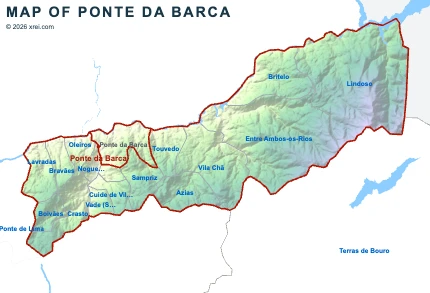
Following the banks of the Lima River through the Parque Natural Peneda-Gerês leads to places of great historical and natural interest. Ponte da Barca is a remote Minho village, distinguished by its natural surroundings, fluvial character and historical and cultural heritage. Notable points of interest include the Ponte de Ponte da Barca, dating from the early 15th century, set within an idyllic landscape over the Lima River. The bridge preserves eight of its original nine arches and bears two inscribed plaques displaying the local coat of arms and the armillary sphere. The village has a nationally recognised racecourse that hosts renowned competitions, including the Grande Prémio de Portugal de Trote e Galope. Following the river, visitors can explore the ancient Benedictine Mosteiro de Bravães, dating from the 12th century, of Romanesque architecture, notable for the rare human figures on its two doorway shafts.

Ponte de Lima is a traditional village recognised for its gastronomy and historical heritage, highlighted by the Ponte Romana de Ponte de Lima, an emblem of the village that presents a medieval section on the left bank of the river between the Igreja de Santo António da Torre Velha and a Roman section, of which five arches from the 1st century remain. The Igreja Matriz de Ponte de Lima, built on the site of an earlier 12th-century church, displays a Romanesque design in dressed stone, with chapels ornamented with gilded woodwork and a high altar adorned with relics of saints. In Ponte de Lima, visitors can explore several cultural spaces, including the Casa de Arnado and the Museu do Brinquedo Português, where visitors can learn about the manufacturing techniques and materials used in the production of Portuguese toys, with permanent and temporary exhibitions, a play room and a workshop; and the Museu dos Terceiros, housed in two former religious buildings of the Franciscan order, which preserve the 16th-century character of their ecclesiastical façades and display a rich collection of sacred art. Proceeding to the Cais da Garrida, part of the Ecovia do Rio Lima, visitors find one of the most beautiful riverside landscapes on the river, with weirs and sluices — a place of considerable importance for the local economy where lamprey fishing is practised. Here, the bronze sculpture Alegoria às Feiras Novas e ao Folclore represents the importance of folklore in Minho society, and the Clube Náutico de Ponte de Lima, a symbol of local sporting culture, distinguished by its success in canoeing.

Attractions along the Portugal–Spain border

In northern Portugal, along the border between Portugal and Spain, there are several notable border heritage treasures. The Rio Minho rises in the Serra de Meira in Spain and flows into the Atlantic Ocean at its mouth between Spain and Portugal, near Caminha. It forms a natural border between the two countries and is a point of undeniable beauty, with a magnificent estuary in the region. The riverside defensive structures are an integral part of the landscape, with particular prominence given to the military architecture of the 17th-century Fortaleza de Valença, situated atop two hills, one of the largest and best-preserved fortresses in the world, with more than five kilometres of wall reinforced by bastions from the 17th and 18th centuries, containing within its walls the 13th-century Igreja de Santa Maria dos Anjos, which reflects Romanesque, Baroque and Revivalist architecture. The physical and symbolic connection between Portugal and Spain is marked by bridges, including the 19th-century Ponte Rodoferroviária de Valença, a metal girder structure spanning the Rio Minho; and the Ponte da Amizade, the border crossing between Vila Nova de Cerveira and Tomiño, resulting from the 2015 “Europa para os Cidadãos” project, which draws on a Charter of Friendship to symbolise the dissolution of borders. This bridge is set within a pentagonal landscape featuring the Forte de São Francisco de Lovelhe, a 17th-century military structure on a small riverside elevation, near the Fundação Bienal de Arte de Cerveira, which promotes contemporary art through multidisciplinary events and a museum space. Before proceeding from Valença to Vila Nova de Cerveira, a visit is recommended to the ancient Romanesque Mosteiro de San Fins, with its earliest buildings dating from 604 AD, showing Galician influences and framed by an oak woodland.

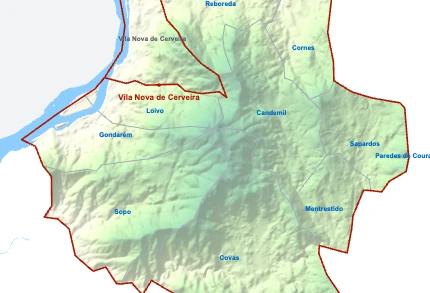
Vila Nova de Cerveira is a border Minho village with several points of historical and natural interest. The Parque de Lazer do Castelinho is a green space with extensive facilities dedicated to leisure, sport (including mini-golf, football and basketball), recreation and eco-education, incorporating an Aqua Park and the Aquamuseu do Rio Minho, a place that represents the memory of the human relationship with the river. In the village, the commanding position of the Castelo de Vila Nova de Cerveira, whose construction began in the 13th century, features an oval layout now converted into a hotel, where visitors can see the pillory and chapel within its walls. In the village centre, the Igreja Matriz de Vila Nova de Cerveira stands out with its façade featuring two bell towers and the interior details of the tabernacle. On the waterfront, the Ecopista do Rio Minho links the Praia da Mota and the Parque de Cerveira, offering a landscape contrast defined by biodiversity along a riverside route of more than 13 kilometres.

The area surrounding Vila Nova de Cerveira offers various points of landscape, rural and religious interest. Among the viewpoints, notable highlights include the Miradouro do Espírito Santo (or Porta do Ceo) on the Serra da Gávea, with the ruins of the Capela do Espírito Santo, of which only the front façade remains and whose portal frames views over the Rio Minho and Spain; and the Miradouro do Cervo, with two swings from which panoramic views over Tomiño and the river can be enjoyed, next to the iron sculpture of “O Cervo”, by local sculptor José Rodrigues. The viewpoints can be visited on foot along a trail beginning at the Capela da Senhora da Encarnação, a small stone-façade chapel with tile-decorated walls and a prominent image of the Saint of the Incarnation. Near the viewpoints, visitors find the Lago do Cervo, a body of water reflecting the green and rocky hillsides, and the traditional Moinhos da Gâvea, visitable by appointment and recently restored for interpretive and tourism purposes.

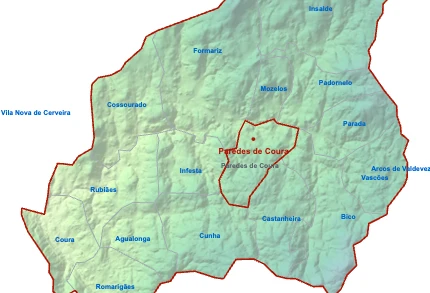
To the north and northwest of the Parque Nacional do Gerês, points of heritage and natural interest are found within the regions of Melgaço, Monção, Paredes de Coura and Ponte da Barca. In Melgaço, the medieval defensive structure of the Castelo de Melgaço, dating from the 13th century, survives only in its keep, yet offers fine views over the historic centre and the surrounding hills. Following the route to the Espaço Memória e Fronteira, housed in the former municipal slaughterhouse, visitors can explore the contemporary history of the settlement. On the road to Monção, the Torre de Lapela, a former keep, evokes the memory of a castle demolished in the 18th century, and opens the way to the village where visitors can explore the 19th-century Palácio da Brejoeira, of Neoclassical architecture, set within an estate of woodland, Alvarinho vineyards and gardens. Along the Rio Minho, we find the tributary that gives rise to the Rio Coura, leading to the idyllic Praia Fluvial do Taboão, with its rural and agricultural surroundings, known for hosting the seasonal Festival Paredes de Coura, as well as the Paisagem Protegida do Corno do Bico, a site of notable biodiversity with a mountainous and agricultural panorama, featuring singular granite boulders and hydrophilic vegetation.

Attractions along the coast, from Caminha to Viana do Castelo

From Caminha to Viana do Castelo, there are several notable points of interest. In Caminha, the Torre do Relógio, erected on medieval walls, displays on its façade an image of the Virgin, a bell set within a metal structure and the clock that gives it its name, allowing entry through an arch into the historic centre. Here we find the 15th-century Igreja Matriz de Caminha, of Spanish inspiration with a Gothic interior featuring various elements from the 17th and 18th centuries; the Renaissance Chafariz de Caminha (16th century), of classical design set on a circular platform with an iron balustrade; and the Capela de Nossa Senhora da Agonia, which blends Rococo and Neoclassical styles. The Rio Minho is a defining feature of the region, and crossing it into Pontevedra, the archaeological site of the Castro de Santa Trega offers a glimpse into one of the most emblematic hillforts of Galicia. At the mouth of the Rio Minho, on returning to Portugal, the coastal beach of the Foz do Minho (or Praia de Caminha) deserves attention for its white sands with a fluvial extension and its proximity to the Mata do Camarido, planted by royal decree of D. Dinis, where visitors can walk or cycle along the beach or through nature.

At the edge of the woodland, we find the Praia do Camarido, with its sands overlooked by the Forte do Ínsua, an irregular star-shaped 17th-century fortress on the Ilhéu da Ínsua in Moledo, with a ravelin and five bastions incorporating a Franciscan convent whose existence has been recorded since the 14th century. Opposite lies the coastal beach of Moledo, with rocky features and white sands, set within a natural landscape recognised for the high iodine content of its therapeutic waters and for its maritime conditions suited to surfing, windsurfing, kitesurfing and bodyboarding. These locations form part of the landscape of the Miradouro do Sino dos Mouros. Also in the municipality of Caminha, Vila Praia de Âncora is another notable tourist village for its historical and cultural heritage, beach facilities, sports and walking trails. In the village, two defensive forts from the 17th and 18th centuries can be found: the Forte da Lagarteira, a fortress in the Portinho de Vila Praia de Âncora area, with a star-shaped plan with lateral bastions and medieval elements; and the Forte do Cão, in the Lugar da Gelfa. Bordered by the Mata Nacional de Gelfa and the dune system, the Praia da Duna do Caldeirão is a local landmark accessible via a boardwalk alongside the river. Near Vila Praia de Âncora, visitors find the coastal chapel of Capela Santo Isidoro, with its ancient headstone cross; and the Anta da Barrosa, a well-preserved dolmen in the Lapa dos Mouros, set within a natural landscape dotted with trees.

On the route between Caminha and Viana do Castelo, we find the Serra de Arga, one of the most celebrated green areas of Minho, distinguished by the singularity of its granite massifs, biodiversity and heritage sites such as mills, wayside shrines, chapels and crosses. Here, a trail departing from Montaria leads along a 10-kilometre footpath to the Cascata do Pincho, a celebrated waterfall on the Rio Âncora that forms a blue-green pool suitable for bathing. At the top of the range, we find the Santuário de Nossa Senhora do Minho, a 20th-century construction with a stone façade and a semicircular roof, set within a natural landscape and celebrated as a place of pilgrimage and religious festivals. Returning to the coastline to discover other beaches on the route to Viana do Castelo, we stop at the Convento de São João de Cabanas, built in 564, which served as headquarters for several religious orders and as a holiday residence of the poet Pedro Homem de Melo, whose verses adorn its walls. Continuing towards Viana do Castelo, a succession of beaches follows, including the breezy Praia da Ínsua, with small natural rock pools at low tide, particularly suited to families with children; the Praia de Afife, whose sea conditions are ideal for surfing; and the Praia da Arda, set within a green landscape and well-suited to ocean sports.

Culture and Festivals of Viana do Castelo

Viana do Castelo is the capital of Portuguese folklore, and its festival season is one of the city’s highlights. Known as the Festas de Nossa Senhora da Agonia, the celebrations include a procession to the sea with hundreds of fishing boats from across the country and from Galicia in Spain, to pay tribute to fishermen. During this time of year, the streets of the Ribeira de Viana do Castelo are decorated with colourful carpets. At the Festas da Senhora da Agonia, visitors can attend a parade featuring women dressed in traditional bridal, stewardess and farmworker costumes. The festival concludes with a fireworks display. This pilgrimage is linked to the Igreja da Agonia, built in 1674 in honour of the patron saint of fishermen, with festivities dating back to 1772. The crafts of Viana do Castelo — in particular pottery, embroidery, gold and silver filigree, and footwear — hold a prominent place in the region’s traditions and are an important tourist attraction. The promotion of Viana’s crafts includes a Craft Fair held during the Festas de Nossa Senhora da Agonia between 10 and 20 August each year.

The crafts of Viana do Castelo include traditional dress unique throughout the country, namely the Traje de Vianesa or de Lavradeira, the Traje de Noiva, the Traje de Campo ou Trabalho, the Traje de Mordoma, the Traje de Morgada, the Traje de Homem, the Traje de Trabalho de Homem and the Traje de Noivo. The local costumes, composed of colourful homespun fabrics, carry the symbolism of everyday use from the 19th century to the mid-20th century, continuing to this day as a feature of the city’s celebrations and pilgrimages, evoking femininity through figures such as the farmworker, the bride and the stewardess, with full colourful embossed-embroidery skirts, covered by gathered aprons and accompanied by a white embroidered-sleeve shirt, shawls, headscarves and local jewellery. Among the gold pieces, particular mention goes to the Portuguese filigree Corações de Viana, a piece of fine gold mesh jewellery representing the cult of the Sacred Heart of Jesus, originating in the reign of D. Maria I.

A Brief History of Viana do Castelo

Viana do Castelo was founded by D. Afonso III in 1258. The city walls of Viana do Castelo were completed in 1374 during the Fernandine Wars with Castile. The city developed significantly in the 15th century thanks to its excellent port, which linked it to the Age of Discoveries. Viana do Castelo was elevated to city status in the 19th century.

Economy of Viana do Castelo

Viana do Castelo has a dynamic and constantly developing economy and business environment. The city invests in the creation of innovative projects, notably the Rede Portuguesa de Cidades Saudáveis, Agenda XXI and the Projeto de Cidades Sustentáveis; and in the creation of infrastructure to support local and foreign companies wishing to establish themselves in the city and municipality, as well as supporting entrepreneurship through initiatives such as the Parque Empresarial da Praia Norte, the Parque Empresarial da Mendela, the Parque Empresarial de Lanheses and the Zona Industrial de Neiva.

Viana do Castelo has very old ties to cod fishing. It is from here that cod fishing vessels depart for fishing grounds in Greenland and Newfoundland. The gastronomy of Viana do Castelo includes specialities such as broa de milho, fish soup (chorinha), coastal prawns, lobster, rojões à moda do Minho, cabrito à Serra d’Arga, cozido à portuguesa, bacalhau à Viana, bacalhau à Gil Eanes, bacalhau de cebolada, arroz de polvo à moda do Minho, arroz de lampreia, pescada à vianense, caldeirada de peixe, meias-luas de Viana, rabanadas, torta de Viana, biscoitos de Viana, Santas Luzias and aletria.

Viana do Castelo was the first Portuguese wine region to export wines, in this case to the markets of Flanders and England in the 15th century. The wines exported were the vinhos verdes of Melgaço and the wines of the Ribeira de Lima. The wine region of Viana do Castelo includes grape varieties such as Alvarinho, Loureiro and Vinhão.

Quick Facts about Viana do Castelo

  • City population: 40,000 inhabitants
  • Municipal population: 91,000 inhabitants
  • Coastline: 24 km
  • Golden and blue flag beaches: 8 (Afife, Arda, Paçô, Carreço, Norte, Cabedelo, Amorosa and Castelo de Neiva)
  • Coastal beaches: 11
  • River beaches and fluvial areas: 17

Estamos Cerca de Ti

XREI opera desde oficinas en todo Portugal — desde Oporto hasta el Algarve.

Norte

Oporto — Edificio ICON

Rua Direita de Francos, 165 Piso 1 · 4100-211 Porto

Gran Lisboa

Lisboa — Rua Castilho

Rua Castilho, 39 · 1250-068 Lisboa

Gran Lisboa

Estoril

Avenida Aida, 353A · 2765-187 Estoril

Costa Alentejana

Comporta

Av. 18 Dezembro, 37 · 7570-779 Carvalhal

Algarve

Vilamoura — Marina Plaza

Av. da Marina, 3 · Marina Plaza Loja 14/15 · 8125-401 Quarteira