Porto, capital of northern Portugal
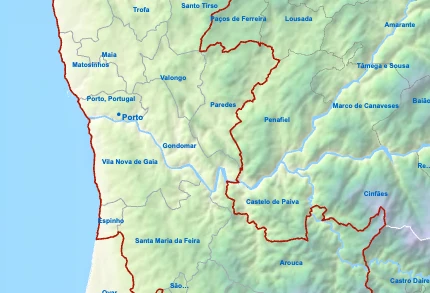
Porto is the most important city in northern Portugal, situated in the northwest of the Iberian Peninsula on the right bank of the Douro River, with a temperate climate and average temperatures in June between 15°C and 25°C. Autumn and winter are harsh, rainy and windy, with temperatures ranging between 5°C and 14°C. The capital of the North received the award of Best European Destination in 2014, given by the European organisation European Best Destinations.

Porto is world-renowned for its wine, its architecture, for being a UNESCO World Cultural Heritage Site since 1996, for its gastronomy and for the hospitality of its people. It is the city that gave Portugal its name through the combination of two words, Cale (present-day Vila Nova de Gaia) and Portus (present-day Porto). People born in Porto are known as “tripeiros” because in 1415 the population of the city offered all available meat to the troops heading to invade Ceuta in Morocco, keeping only the tripe for themselves. From this they created a dish unique in the country: Tripas à Moda do Porto. Porto is also referred to as “Ancient, Most Noble, Always Loyal and Unconquered” owing to the courage of its people, for never having been occupied by foreign powers and never having had a lord to govern it. Porto was the birthplace or home of important figures in Portuguese history, such as Infante D. Henrique, the principal driving force behind the Portuguese Discoveries, or world-renowned figures such as the writer J.K. Rowling. The British author drew inspiration from Porto and the Livraria Lello in particular to create the fictional character Harry Potter and the Hogwarts School of Witchcraft and Wizardry.
Places to visit in Porto (top 10)

1. Igreja e Torre dos Clérigos: The Igreja e Torre dos Clérigos is the landmark of Porto, located on Rua de São Filipe de Nery. The Torre dos Clérigos served many functions for many years, namely: announcing the arrival of boats at the Ribeira and money coming from England; serving as a clock; marking the death of a King or the birth of a Prince through its bells; and the Meridiana, a mortar fired from the tower’s belfry to inform the city of noon. The Igreja e Torre dos Clérigos were built at the behest of the Irmandade dos Clérigos, created through the merger of three confraternities in 1707: the Confraria de Nossa Senhora da Irmandade dos Clérigos, the Irmandade de São Pedro and the Congregação de São Filipe Nery. The construction project arose from the need of the Irmandade dos Clérigos to have a headquarters and a hospital to support its poorer members. It was inaugurated in 1763 in the Baroque style, designed by the Italian Nicolau Nasoni (1691–1773), an Italian artist from Tuscany who arrived in Portugal in 1725 at the invitation of Frei Roque de Távora e Noronha, brother of the Dean of the Sé do Porto, and lived in the city until his death in 1773. Nasoni was responsible for several projects, notably the renovation of the statuary of the Chapel-Major of the Sé do Porto, the Igreja da Misericórdia, the ceilings of the Palácio do Freixo, the ceilings of the Sé Catedral de Lamego, the Igreja do Senhor do Bom Jesus de Matosinhos, the Igreja de Santa Marinha in Vila Nova de Gaia and the Palácio de Solar de Mateus in Vila Real.

Highlights in the Igreja dos Clérigos: the coat of arms of the Irmandade dos Clérigos; the Chapel-Major with a Rococo-style altarpiece by Manuel dos Santos Porto; the altars of the Santíssimo Sacramento, Nossa Senhora das Dores, Santo André Avelino and São Bento; wooden sculptures representing the co-patrons of the Irmandade dos Clérigos: São Pedro ad vincula and São Filipe Nery; the Iberian pipe organ of 1774 by Dom Sebastião Ciais Ferraz da Cunha; the statue representing Santo Emídio, the Patron Saint of Natural Disasters — this statue was gifted by Lisbon to protect the northern city from earthquakes; and the polychrome marble throne where the statue of the patron Nossa Senhora da Assunção can be seen.

In the Torre dos Clérigos: The tower was inaugurated in 1763, with a height of 75 metres that allows it to be seen from anywhere in the city of Porto, 225 steps and 49 bells; an iron cross; the image of São Paulo above the entrance door; and a 360° panoramic view over the city of Porto, the Atlantic Ocean, the Douro River and Vila Nova de Gaia. In the Museu da Irmandade dos Clérigos: visitors can relive the daily life of the Brotherhood members and discover the Salão Nobre, a former Casa do Despacho where oil portraits of the Brotherhood’s presidents, treasurers and benefactors can be seen; the Sala do Cofre, featuring a display of goldsmith pieces and the strongbox; the Sala Nasoni, the site of the former archive where the Brotherhood’s documents were kept — here visitors can see the writing desk where Nicolau Nasoni worked; the Coro Alto, the space used by the choir and Brotherhood members, where vestments (religious garments) and the Holy Thursday Urn designed by Nicolau Nasoni are on display; the infirmary, which operated until the end of the 19th century and houses the Corpus Christus Collection, donated by António Cipriano Miranda — this exhibition is organised in three sections: Núcleo da Paixão; Viagem das Formas; and Imagens de Cristo; and the Sala do Núcleo da Paixão, where the Stations of the Passion of Christ can be seen, namely: Predestination, Judgement, Road to Calvary, Calvary and Resurrection. 2. Igreja de São Francisco: The Igreja de São Francisco is one of the most important churches in the city of Porto, located on Rua de São Francisco. The church has a Gothic physical structure and Baroque interior decoration, and is one of the most exuberant churches in the country owing to the over 300 kg of gilded woodcarving used to line the interior of the medieval structure. The Convento de São Francisco do Porto was inaugurated in 1233 and the church in 1264, having been successively altered between the 14th and 19th centuries. The current church was designed by Teodoro de Sousa Machado between 1795 and 1805, with the following points of interest:
- Church: this structure consists of three naves, five bays and 15 retables, decorative wooden or stone panels. The highlights are:
- Tree of Life: the Tree of Life was reconstructed between 1718 and 1721 by Filipe da Silva and António Gomes, who were considered among the greatest master carvers in Porto. This tree was built into the Retable of Nossa Senhora da Conceição and represents the genealogical tree of the Holy Family, with the Virgin Mary at the top, Jesse, father of David, at the centre of the trunk, various kings of the tribe of Judah, and Christ at the top of the tree. The Tree of Jesse represents the 14 generations separating Jesse from Christ, including David, Solomon and the Virgin Mary. Trees of Life or Trees of Jesse were built throughout Europe from the first, which was depicted in the stained glass of the Basilique de Saint-Denis in Paris in 1144. In Portugal, Trees of Life can be seen in several locations, namely the Igreja de São Francisco in Porto, the Igreja do Convento de São Francisco in Estremoz, the Igreja de Santa Maria de Beja, the Igreja do Colégio de São Paulo de Braga, the Igreja Matriz de Caminha and the Igreja do Senhor do Bom Jesus in Matosinhos;
- Rose Window: the only structure remaining from the original 13th-century construction. The rose window is relatively small and is shaped like a pentagram;
- Chapel-Major: notable for the Tomb of the Pais Menezes family, Marquesses of Abrantes and Counts of Matosinhos;
- Retable of the Martyrs of Morocco: The Retable of the Martyrs of Morocco was created by Manuel Pereira da Costa Noronha in 1750 to honour the sacrifice of five Franciscan friars beheaded in Morocco in 1220. This episode is particularly important for Portugal because the five friars were the first missionaries sent by Saint Francis to North Africa, passed through Coimbra and met Fernando de Bulhões, the future Saint Anthony, at the Mosteiro de Santa Cruz de Coimbra before departing for Morocco. The Five Martyrs of Morocco were Frei Vital, Priest and Preacher of the First Franciscan Order; Frei Berardo de Carbio, known for his preaching abilities and a native of Carbio in Italy; Frei Otto, Priest; Frei Pedro de Santo Geminiano, Deacon, native of Geminiano in Florence; and Frei Adjuto and Frei Acursio, Professed Brothers. These five Franciscan friars passed through Andalusia, still under Muslim rule, where they were condemned for attempting to convince the Islamic leader to be baptised. The Emir of Seville ordered their deportation to Marrakesh, where they were received at the residence of Infante Dom Pedro, brother of Dom Afonso II. The missionaries decided to continue evangelising against the various warnings issued by the Muslim authorities and by Infante Dom Pedro. The friars were ultimately beheaded on the orders of the Almohad Caliph Yusuf al-Mustansir, known as the Miramolin of Morocco. The bodies were recovered by Dom Pedro and sent to the Mosteiro de Santa Cruz de Coimbra, where the relics can still be seen today in five reliquaries. This episode in the history of the Franciscan Order is important for Portugal due to the formation of the Portuguese Kingdom, still in its early stages and in need of political legitimisation through religion; and because the sacrifice of these five Franciscan brothers was what led Fernando de Bulhões, the future Saint Anthony, to join the Franciscan Order.
- Chapel of São João Batista: the chapel of the Carneiro family, commissioned by João Carneiro, former schoolmaster of the Sé de Braga in 1500. The chapel consists of a 16th-century physical structure built in the Manueline style by Diogo de Castilho; with a 16th-century painting representing São João Batista, imported from Flanders (present-day Belgium) to Porto.
- Retable of the Martyrdom in Japan: 23 Franciscan Martyrs of Japan, publicly crucified in the Japanese city of Nagasaki on 5 February 1597. The Vatican proceeded with their canonisation in 1627;
- Sepulchral Chapel of Luís Álvares de Sousa: The Sepulchral Chapel of the third Count of Baião, Luís Álvares de Sousa, was inaugurated in 1474. In this chapel, one of the oldest mural paintings in Portugal can be seen, representing the Senhora da Rosa, by António de Florentim;
- Chapel of Nossa Senhora da Soledade: built in 1765 and executed by Francisco Pereira Campanhã, considered the masterpiece of the Rococo style in the city of Porto;
- Chapel of Nossa Senhora da Conceição: notable for the Tree of Life; the stone sculpture representing Nossa Senhora da Conceição; and the altar of Nossa Senhora da Boa Viagem;
- Museu de São Francisco: a museum space where visitors can see the Sala do Tesouro, the Sala das Sessões and the Cemetery, located in the Casa do Despacho. The Casa do Despacho was inaugurated in 1749 with a design by Nicolau Nasoni, featuring a façade with the typical iron grilles and the Order’s coat of arms above the entrance door; the Sala do Tesouro, with the permanent exhibition on the history of the Venerável Ordem Terceira de São Francisco and its relationship with the city of Porto; and the Sala das Sessões, displaying oil paintings of the institution’s benefactors; paintings depicting the death of Santa Margarida de Cartona; paintings of the Virgin and Child; the Retable of Christ on the Cross in gilded woodcarving by José Teixeira Guimarães; the ceiling by José Martins Tinoco decorated with two coats of arms bearing the arms of the Order, Dom José and Dona Maria Ana Vitória; the 14 armchairs dating from 1748; and the gilded silver monstrance in Dom João V style, weighing 14 kg, with a 16-pointed star decorated with precious stones;
- Catacomb Cemetery: built after the fire that broke out at the Igreja e Convento de São Francisco in 1746, owing to the absence of public cemeteries in Porto (the first public cemetery was the Cemitério da Lapa, built in 1833) and with the aim of burying the benefactors and friars of the Order. This space was inspired by the Roman Catacombs and includes the tombs of all the Order’s benefactors between 1749 and 1866. The main points of interest are the Altar with gilded Baroque woodcarving; the Common Ossuary used from 1751, the year in which a decree was approved defining where friars and benefactors were to be buried if space in the catacombs was unavailable;
- Coffin-Urns: built in 1746.
3. Palácio da Bolsa: the headquarters of the Associação Comercial do Porto, located on Rua Ferreira Borges. The Palácio da Bolsa is Porto’s tribute to its Portuguese and English merchants, to the virtues of Commerce (Imagination, Initiative, Determination, Dialogue and Prosperity) and is the place where all Porto mythology can be observed. The Palácio da Bolsa began to be built after a fire that broke out at the Convento de São Francisco in 1832, on land expropriated following the suppression of the Religious Orders in 1834. The land was donated in 1841 by Dona Maria II to the first President of the Associação Comercial do Porto, Ferreira Borges (1786–1838), to serve as the headquarters of Porto’s merchants. Ferreira Borges was a Supreme Magistrate of Porto’s commerce, a defender of the ideals of Political and Economic Liberalism, author of the Portuguese Commercial Code in 1833, one of the founders of the Associação Comercial do Porto and of the Porto Commercial Court. The Palácio da Bolsa building was designed by Joaquim da Costa Lima and built in several styles, namely Neoclassical, English Palladian, Romanticism and Neo-Arab. The main points of interest are:
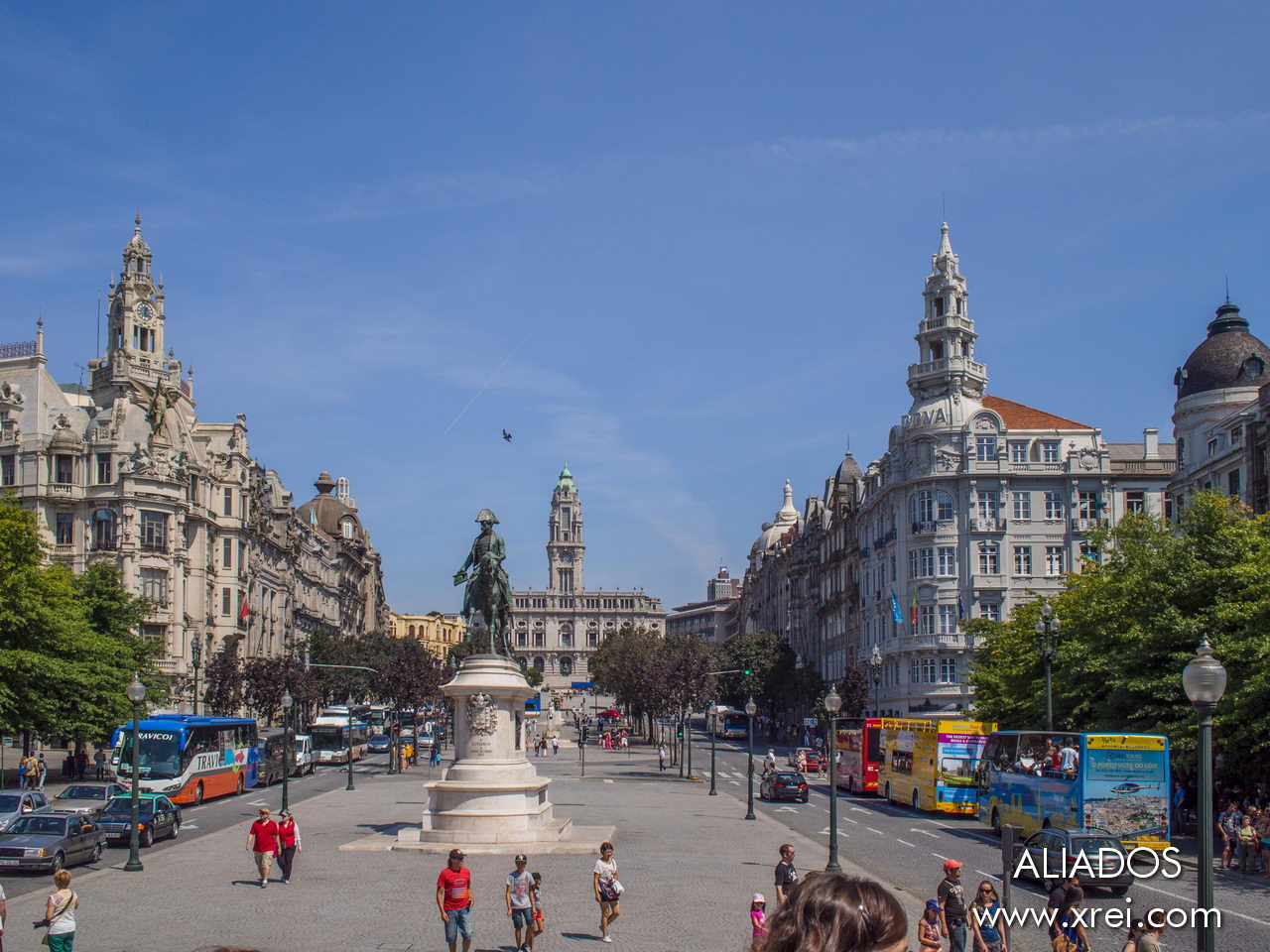
- Salão Árabe do Palácio da Bolsa is the palace’s main attraction and considered by many the “drawing room of the city of Porto”. The Salão Árabe took eighteen years to build in plaster, wood and gold leaf, between 1862 and 1880, and was designed by Gustavo Adolfo Gonçalves and José Marques da Silva in the Neo-Arab style. This hall carries great symbolic weight for the palace and the city, as it represents Porto’s independence from Lisbon’s centralism and highlights the importance of businessmen, entrepreneurs, traders and industrialists in the city. The hall’s decoration features several characteristics, namely: the entrance door deliberately off-centre relative to the hall itself, since perfection belongs to Allah alone — a feature common to most Muslim mosques; Arabic calligraphy on the walls and ceiling: on a magenta background with an Arabic inscription reading “Glory to Allah”; on the ceiling, inscriptions painted on a blue background with the words “Allah will protect the Sultana Dona Maria II”; and a shield with a green background bearing the inscription “No one is above Allah”; the coat of arms of the city of Porto, located above the entrance to the Salão Árabe, is the coat of arms approved on 14 January 1837 by Dona Maria II. The Queen of Portugal approved this coat of arms in recognition of the courage shown by the Porto population during the Siege of Porto in the Civil War between Liberals and Absolutists (1828–1834). The coat of arms in the Salão Árabe is considered by Porto’s citizens to be the true coat of arms of the city, represented with the Dragon surmounting the shield; the presence of the crown; the Arms of Portugal; and the shield representing Nossa Senhora da Vandoma, the Patron Saint of the city of Porto. This coat of arms is the one preceding the currently used coat of arms, and can be seen on other buildings and statuary in the city of Porto, namely at the Câmara Municipal do Porto; the Palácio da Justiça; the Equestrian Statue of Dom Pedro IV in the Praça da Liberdade; the Statue of Infante Dom Henrique in the Jardim do Infante Dom Henrique; the Casa dos 24, located in the Terreiro da Sé do Porto; and the Mausoléu de Dom Pedro IV in the Igreja da Lapa; all built before 1933, the year in which the country’s Municipal Heraldry was reformed.
- Pátio das Nações do Palácio da Bolsa: the entrance courtyard of the Palácio da Bolsa, covering approximately 506 m². The courtyard is the only structure remaining from the former Convento de São Francisco and the space where the cloister once stood. The Pátio das Nações features: six Pompeian cast iron columns supporting the courtyard; the iron and glass dome in the ceiling by Tomás Soller, which illuminates the courtyard with natural light throughout the day — this dome, entirely innovative for its time, was completed in 1881, eight years before the Eiffel Tower in Paris; the nineteen coats of arms designed by Luigi Manini representing the 19 most important countries for Portugal commercially and politically; the mosaic floor of the courtyard, designed by Tomás Soller and inspired by Graeco-Roman mosaics found on the floors of houses in Pompeii, featuring a representation of an electricity pole with lightning bolts; a trumpet symbolising the two mouthpieces of a 19th-century telephone and a postal envelope; the Caduceus, symbol of Mercury; and the representation of Mercury, the God of Commerce;
- Escadaria Nobre do Palácio da Bolsa: designed by Gustavo Adolpho Gonçalves e Sousa, notable for the decorative granite work, a unique work in Europe. The granite work took many years and was led by master stonemason António Gonçalves de Barros. The main highlights are the imposing staircase; the two chandeliers weighing one and a half tonnes each by Soares dos Reis; the iron and glass skylight; the ceiling painting by António Ramalho (1859–1916) representing “The Angel of Portugal”, symbolising the connection to the House of Bragança, Industry, Agriculture and Culture; and the bust of Fontes Pereira de Melo, Prime Minister of the Kingdom, the last work of Soares dos Reis;
- Sala das Audiências do Palácio da Bolsa is the former court room, designed by Joel Pereira da Silva and subsequently renovated by the architect Marques da Silva. It is in this room where members of the Confraria do Vinho do Porto are sworn in, making it a symbol of the bourgeoisie and the city of Porto. The main highlights of the Sala das Audiências are the canvases by Veloso Salgado, begun in 1826, representing various themes and personalities, including the representation of Dom Dinis, the creator of the first Porto Commercial Square or Stock Exchange in 1293; the representation of Infante Dom Henrique; the representation of the Vineyard, the Harvest and Agriculture; and the painting dedicated to the arts, featuring representations of several painters, including Afonso Domingues holding the model of the Mosteiro da Batalha, Domingos Sequeira, author of the Adoration of the Magi, and Machado de Castro, author of the Equestrian Statue of Dom José I in the Terreiro do Paço in Lisbon;
- Sala do Presidente do Palácio da Bolsa: featuring oil paintings representing the Roman Period and the economic activities of Porto by Marques de Oliveira, painted in 1890; and the marble fireplace by Teixeira Lopes;
- Sala do Telégrafo Comercial: housing the first telegraph to operate in Portugal, between 1852 and 1954. This telegraph provided communication between the Palácio da Bolsa and Foz, an independent area of the city where the English and the wealthiest businessmen of Porto lived. This telegraph predates the creation of the Public Telegraph Service by Fontes Pereira de Melo in 1855 with the establishment of three communication lines: Sintra and Lisbon, Porto and Lisbon, and Porto and Elvas;
- Gabinete de Homenagem a Gustave Eiffel: Gustave Eiffel worked at the Palácio da Bolsa between 1875 and 1877 and carried out various works in northern Portugal;
- Sala Dourada: where the Board of the Associação Comercial do Porto meets every Monday. The association is composed of fifteen elected, unpaid members representing fifteen sectors of activity. The highlights are the plaster ceiling decorated in detail with gold fibre; the furniture by Marques da Silva; and the portraits of former presidents;
- Biblioteca do Palácio da Bolsa: the Library is not open to visitors, however its points of interest include two 19th-century globes — one representing the Earth’s surface and one the sky; the portrait of Ferreira Borges from 1836 by José Alves Ferreira; and the ceiling painting representing Echo, the Messenger of Universal Language, by António Carneiro.

4. Livraria Lello: Livraria Lello is one of the most beautiful bookshops in the world, located on Rua das Carmelitas. The bookshop was inaugurated in 1906, but its origins date back to 1881 on Rua do Almada, where the first bookshop of the Lello brothers was created. The bookshop was designed by Xavier Esteves (1864–1944) in the Neo-Gothic style on the land where the Convento de São José e Santa Teresa das Carmelitas Descalças once stood. The main points of interest of Livraria Lello are the bookshop’s interior with bas-reliefs in the Aesthetic and Art Nouveau style representing José Lello and António Lello; busts representing some of the most important Portuguese writers, especially Antero de Quental, Eça de Queiroz, Tomás Ribeiro, Guerra Junqueiro, Camilo Castelo Branco and Teófilo Braga; the imposing central concrete staircase with red-painted steps; the highly decorated ceiling dominated by a stained glass window eight metres long, 3.5 metres wide and comprising 55 glass panels, bearing the following Latin inscription: “Decus in Labore”, meaning “Dignity in Work”, the motto of Livraria Lello; the presence of rails on the floor where trolleys were placed to transport books inside the bookshop; and the main façade built in the Neo-Gothic style with representations of Art and Science by José Bielman. 5. Estação de São Bento: São Bento Station is one of Porto’s main railway stations and one of the most beautiful in the world, located on Praça Almeida Garrett. It is also one of the largest stations in the city of Porto, presenting a façade 60 metres long, 20 metres high, seven entrances and windows at the top of each entrance and an open entrance courtyard of over 500 square metres. São Bento Station includes one of the most sought-after rail routes in the country, the connection to the Douro Railway Line, namely the connection to the small and beautiful village of Pinhão, where 90% of the estates responsible for producing Port Wine are located. São Bento Station was inaugurated in 1916 on the site of the demolished Convento de São Bento de Ave Maria. The convent was founded in the 16th century by the wish of Dom Manuel I and entrusted to the nuns of the Rule of Saint Benedict. São Bento Station was designed by Marques da Silva (1869–1947) and the tiles decorating the station were designed by Jorge Colaço (1862–1942). Marques da Silva was one of the most important architects in the city of Porto and responsible for several works, especially the Casa de Serralves; the Teatro Nacional de São João; the Liceu Rodrigues de Freitas; the Liceu Alexandre Herculano; the Monument dedicated to the Peninsular War at the Rotunda da Boavista; and the tiles of Jorge Colaço (1862–1942). Jorge Colaço was the author of several important projects throughout the country, notably the tile panels of the Palácio-Hotel do Buçaco, located on the main staircase and vestibule and depicting the Battle of Buçaco and episodes of the Discoveries in India and Africa; the tiles of the Passos Perdidos of the Lisbon Medical University; the tiles of the Casa do Alentejo in Lisbon; the exterior of the Igreja de Ildefonso in Porto; the exterior of the Igreja dos Congregados in Porto; the benches of the Jardim do Pescador Olhanense, near the Olhão Market; the Hospital Modelo da Maternidade de Buenos Aires; the Palace of President Marechal Monreal in Cuba; and private residences in São Paulo, Rio de Janeiro, Havana and Montevideo. São Bento Station presents the following points of interest:
- Tile panels depicting episodes from Portuguese History, representing O Encontro de Arcos de Valdevez, located to the left of the station entrance, portraying the Tournament of Arcos de Valdevez, held in 1140 between knights from Portugal and León. It was this tournament that enabled the independence of Portugal in 1143 due to the victory of the Portuguese knights over the Leonese knights; the Submission of Egas Moniz — this tile panel, located to the left of the station entrance, represents Egas Moniz, guardian of Dom Afonso Henriques, meeting Afonso VII of León and Castile in 1127 during the siege of the city of Guimarães. Egas Moniz promised Afonso VII that Dom Afonso Henriques would continue to pay him vassalage. The promise allowed the siege to be lifted, but the future Portuguese King changed his mind and disregarded the promise. There is much debate as to whether this episode actually occurred, but it is depicted throughout Portuguese history and forms part of the country’s founding myths; the Marriage of Dom João I and Dona Filipa de Lencastre: this tile panel, located to the right of the station entrance, represents the marriage of Dom João I with Dona Filipa de Lencastre in 1387 at the Sé Catedral do Porto. This marriage was held to formalise the alliance between Portugal and England signed in 1386, considered the oldest in the world; and the Conquest of Ceuta: this tile panel represents the Conquest of Ceuta, which took place on 2 August 1415, traditionally considered the date on which the Age of Discoveries began. Here, Infante Dom Henrique is depicted — the great architect of the Discoveries strategy, a native of Porto and son of Dom João I and Dona Filipa de Lencastre. Infante Dom Henrique organised the fleet that attacked Ceuta from the city of Porto;
- Tile panels depicting the Evolution of Transport throughout the ages, especially the Roman Cart; Roman Quadrigas; Transport used during the Arab Invasions of the Iberian Peninsula; Transport used during the Muslim Invasion of the Iberian Peninsula; the 16th-century Carriage Procession; the representation of the Mala-Posta, the name given to the postal service; and the representation of the arrival of the first train on the Porto-Braga line, inaugurated in May 1875;
- Tile panels depicting economic and cultural activities, namely Commerce; Agriculture; Industry; Fine Arts; Literature; and Music;
- Tile panels depicting the Four Seasons: Spring; Summer; Autumn; and Winter;
- Tile panels depicting religious festivities: a representation of the Romaria de São Torcato, a parish of Guimarães. São Torcato was a Bishop of Braga in the 8th century, killed in São Torcato, Spain, on 15 May 715 by Muslims. São Torcato was martyred along with 27 faithful, and according to legend, when he was exhumed, a spring of healing water emerged at the site. The Romaria de São Torcato always takes place on the first weekend of July and serves as a thanksgiving for the good flax harvest in March and April; the tile panel depicting the Procissão de Nossa Senhora dos Remédios represents the Procession of Nossa Senhora dos Remédios de Lamego. Devotion to Nossa Senhora dos Remédios or do Bom Remédio began in 1213 through the founding of the Order of the Most Holy Trinity in Rome by São João da Mata and São Félix, with the aim of building a hospital to help Christians who had been enslaved in North Africa. According to legend, Nossa Senhora dos Remédios appeared with a bag full of money which she handed to São João da Mata and São Félix so they could build the hospital. The oldest pilgrimage and sanctuary in Portugal are the Romaria de Nossa Senhora dos Remédios de Lamego and the Santuário de Nossa Senhora dos Remédios in the same locality.

6. Sé Catedral do Porto: The Sé Cathedral is the most important religious temple in the city of Porto, located at the Terreiro da Sé, also known as Morro da Sé or Morro da Pena Ventosa, the site where the city of Porto was born. The Sé was built and expanded between the 12th and 19th centuries, allowing several artistic styles to be observed, including Romanesque, Gothic and Classicist. The Sé do Porto was commissioned by Dom Hugo, the first Bishop of Porto, and according to records, the first stone of the Sé was laid by Dona Teresa, mother of Dom Afonso Henriques, and completed during the reign of Dom Dinis. The points of interest of the Sé Catedral do Porto are:
- the Main façade, featuring the 13th-century Romanesque rose window; the entrance portal built in the Rococo style and inaugurated in the 18th century; and the image representing Nossa Senhora da Assunção, the Cathedral’s patron saint, painted in the 18th century;
- the Chapel of João Gordo: inaugurated in 1333 in the Gothic style. João Gordo was a knight of the Order of Hospitallers who served King Dom Dinis;
- the Cloister: commissioned by Dom João I in the Gothic style from 1385, with successive improvements throughout history. The main points of interest are the eight Baroque portals designed by Nicolau Nasoni and built between 1726 and 1727; and the seven Tile Panels created in the second half of the 18th century with various representations, including scenes from the “Song of Songs”; a divine dialogue between God and the Cathedral’s patron saint; and the “Representation of the Psalms of David”;
- Escadaria Nova: inaugurated in 1736, with access to the second floor of the cloister. The design was by Nicolau Nasoni;
- Lateral Galilée: this galilee, or loggia, was deliberately designed facing the city. The loggia is a spacious area, decorated with columns and arches, generally offering a broad view. This space was designed by Nicolau Nasoni and built in the Baroque style in 1736;
- Chapel-Major: built in 1610 in the Mannerist style to a design by Frei Gonçalo de Morais. The main highlights are the High Altar by Santos Pacheco and Miguel Francisco da Silva, built between 1727 and 1729 in the Baroque style; mural paintings by Nicolau Nasoni; two pipe organs from the 17th and 19th centuries; and the medieval sculpture representing Nossa Senhora da Vandoma, the Patron Saint of the city of Porto;
- Coro Alto Organ: designed by Georg Jann, also author of the organ of the Igreja da Lapa;
- Chapel of Nossa Senhora do Sacramento: notable for the silver altar inaugurated in 1632, with successive alterations until the 19th century;
- Casa do Cabido: an 18th-century building located beside the Sé, with religious sculptures from the 14th to 18th centuries; and tile panels by Vital Rifarto from 1733.
7. Igreja da Lapa: the church of the Venerável Irmandade de Nossa Senhora da Lapa, located at Largo da Lapa. The Irmandade de Nossa Senhora da Lapa was founded in 1757 by Padre Angelo Sequeira, a Brazilian missionary known for his devotion to Nossa Senhora da Lapa and for his remarkable oratorical skills. The Igreja da Lapa was built following a mass delivered by Padre Angelo Sequeira at the site of the current church, during which he asked Nossa Senhora da Lapa to end a storm that had been raging over the city of Porto for several weeks, which according to legend occurred after the end of the ceremony. The Igreja da Lapa was inaugurated in 1757 as the Chapel of Nossa Senhora da Lapa das Confissões on the Campo de Gemalde, on the ancient medieval road connecting Porto and Braga. The current church began construction in 1757 and continued for over a hundred years, to a design by the architect José Figueiredo Seixas. It was in the Igreja da Lapa that Dom Pedro IV prayed practically every day during his siege with approximately 7,500 men by Dom Miguel’s 40,000 soldiers between 1832 and 1833. The church was built in the year Mozart was born; it is the space where the heart of Dom Pedro IV is preserved; and the location of the largest pipe organ in Portugal. The points of interest of the Igreja da Lapa are:
- the Mausoléu de Dom Pedro IV designed by Costa Lima and built in granite, considered Porto’s stone. The granite used in the mausoleum was taken from some of the fortifications used during the Siege of Porto;
- the bell towers of the Igreja da Lapa, built in the second half of the 19th century to a design by José Luís Nogueira Júnior. The west tower was completed in 1855 and the east tower in 1863;
- the Clock, built over eight days to a design by Joaquim José Marques;
- the Pipe Organ, the tallest pipe organ in Portugal, inaugurated in 1995, weighing 34 tonnes, 14 metres tall, 10 metres wide, 5 metres deep, with 4,307 pipes, 4 manual keyboards and a carillon of 42 bells;
- Chapel-Major: featuring the altarpiece inaugurated in 1806, by the carver Manuel Moreira da Silva;
- Cemitério de Nossa Senhora da Lapa: the cemetery of Porto’s elite and the oldest Romantic cemetery in the country, inaugurated in 1833. This space was built in response to the cholera epidemic and the high number of deaths resulting from the Siege of Porto. The cemetery is the burial place of personalities such as Ferreira Borges; Marques da Silva; Camilo Castelo Branco; Arnaldo Gama; Soares dos Passos; and João António de Freitas Fortuna. The cemetery’s attractions include the chapel of the banker Joaquim Pinto Leite, the first chapel built in marble in northern Portugal; the chapel of the Viscount of Lagoaça, who was Mayor of Porto and responsible for creating the first public urinals; the Mausoléu de José Ferreira Borges; the Mausoléu do Bispo Eleito Dom Manuel de Santa Inês, an important figure during the Siege of Porto; the Mausoléu do Coronel Pacheco, hero of the Siege of Porto; and the Mausoléu de João da Silva Ribeiro, the cemetery’s founder;
- Núcleo de Camilo Castelo Branco: Camilo Castelo Branco became a member of the Irmandade da Lapa two months before taking his own life. In this space visitors can discover the documentation relating to the transfer of Camilo Castelo Branco’s body to the Cemitério da Lapa; the revolver with which Camilo Castelo Branco took his own life; and the letters from his widow Ana Plácido to Freitas Fortuna, the Porto businessman who owned a bookshop on Rua das Flores frequented by the Portuguese writer;
- Hospital de Nossa Senhora da Lapa: one of the most important private healthcare units in the city of Porto, located at Largo da Lapa. This hospital was built with the financial support of Dona Luzia Joaquina Bruce, a benefactress of the Irmandade da Lapa. Dona Luzia Joaquina Bruce was born in Maranhão and married João António Lima, a Porto businessman who made his fortune in Brazil. The Hospital da Lapa was built in tribute to João António Lima, who had died some years before construction began. The tribute includes the placement of a statue representing the husband at the top of the hospital;
- Colégio da Real Irmandade de Nossa Senhora da Lapa: The Colégio da Real Irmandade de Nossa Senhora da Lapa operated until the early 20th century, a period in which the number of children in the city of Porto declined sharply. This school was at one point among the most important in the city of Porto.

8. Capela das Almas: an 18th-century chapel located on Rua de Santa Catarina, known for the over 15,000 tiles that can be seen on its façades. This chapel is also known as the Chapel of Santa Catarina and was built in the first half of the 18th century. The main highlights are the façades with approximately 16,000 tiles by Eduardo Leite of the Fábrica de Cerâmica Viúva Lamego. The tiles were inaugurated in 1923 and depict scenes from the life of Saint Francis of Assisi and Santa Catarina; the image of Nossa Senhora das Almas from the 18th century; and the High Altar with a panel representing the Ascension of Christ and an image of the Risen Christ. 9. Mercado do Bulhão: the Mercado do Bulhão is the most important market in Porto, located on Rua Formosa. The Mercado do Bulhão is one of the emblematic buildings of the city of Porto, where the “mulheres tripeiras” can still be seen today selling fresh produce and singing the famous market cries to attract customers. The Mercado do Bulhão was inaugurated in 1917 to a design by António Correia da Silva and owes its name “bolhão” to the fact that the area was once a marshy zone containing a large water bubble, the “bolhão” as it was popularly known. The Mercado do Bolhão is being restructured and modernised to a design by architect Nuno Valentim, with the aim of preserving the building’s original characteristics while incorporating modern spaces, including a logistics basement allowing loading and unloading via a tunnel beneath Rua Formosa and Rua Alexandre Braga, and direct access to the Bolhão Metro station. The main points of interest are the activity of people in the market; the main façade in the Beaux-Arts style; the stone sculptures by Bento Cândido da Silva representing Mercury and Flora, gods of Commerce and Agriculture; the slate roof; the four pinnacles at each of the four corners of the market square; the central gallery where a wide open-air space can be seen with stalls of fresh produce, flowers and plants; and the second floor with a dining area.

10. Mosteiro de Nossa Senhora do Pilar: a 16th-century monastery located at Largo de Aviz in Vila Nova de Gaia, built between 1537 and 1670 with the aims of transferring the monks of the Order of the Discalced Augustinians from the Mosteiro de Grijó — also known as Crúzios because they had their headquarters at the Mosteiro de Santa Cruz de Coimbra — to a strategically positioned monastery that would allow control of the city of Porto in the event of conflict; to promote the urban development of the city of Porto; and to create a support structure for Porto’s residents. For many centuries monasteries were built outside or on the edges of cities to serve as support for the poorest populations in the most varied areas, including food and medical care. The Mosteiro de Nossa Senhora do Pilar, classified as a UNESCO World Heritage Site, is so named due to the presence of an image of Nossa Senhora do Pilar that has been in the Chapel-Major since 1678. Nossa Senhora do Pilar is the subject of great devotion in Spain because she is said to have appeared to Saint James and eight other faithful while they sat, disheartened by the lack of response to the Christian faith, on one of the banks of the Ebro River in Zaragoza. Nossa Senhora appeared upon a marble pillar and requested that a temple be built at the site of the apparition. This miracle is said to have occurred in the year 39 AD, the year construction began on the Cathedral of Zaragoza. The image now in the Mosteiro de Nossa Senhora do Pilar was transported from Zaragoza to Lisbon in 1677 and offered to the city of Porto by the Lisbon Prior Dom Fernando Cruz, a devotee of Nossa Senhora do Pilar, with the aim of helping the cult spread throughout the north of the country. This image is the first copy of the original, currently held in the Cathedral of Zaragoza. The Mosteiro de Nossa Senhora do Pilar played important roles in the history of Portugal, notably during the siege of the Portuguese and English troops led by Wellington by Napoleon’s forces, and during the Siege of Porto (8 September 1832–18 August 1833) that occurred during the Civil War between Liberals and Absolutists. The Mosteiro da Serra do Pilar was designed by João de Ruão and Diogo de Castilho, with the following points of interest: the view over the city of Porto, Vila Nova de Gaia and the Douro River; the innovative cloister, featuring a circular rather than square plan. The cloister was built in the Renaissance style with 36 Ionic columns — Renaissance thinkers considered the circular form divine perfection; the Church: rebuilt in 1598 at the wish of Prior Dom Acúrsio, notable for the image of Nossa Senhora do Pilar from 1678; the Retable of Jesus Christ built by Francisco Correia and inaugurated in 1568; the Centro de Informação do Património Norte: with information on Monuments and Museums of the Northern Region and the four UNESCO World Heritage Sites in northern Portugal, namely the Historic Centre of Porto; the Historic Centre of Guimarães; the Douro Wine Region; the Côa Archaeological Park; and the Zimbório: from which the city of Porto and the Douro River can be observed.
Other places to explore in Porto
Museu Nacional Soares dos Reis: The Museu Nacional Soares dos Reis is the oldest art museum in Portugal, located on Rua de Dom Manuel II. The museum was inaugurated in 1833 under the name “Museu Portuense de Pinturas e Estampas” in the building of the current Biblioteca Municipal do Porto and subsequently transferred in 1940 to the current Palácio das Carrancas. The museum’s collection initially consisted of works and assets confiscated from the Church following the abolition of the Religious Orders in 1834. In 1911 it was renamed Museu Nacional de António Soares dos Reis (1847–1889) in tribute to António Soares dos Reis, considered one of the finest Portuguese sculptors of the 19th century and author of works such as “O Desterrado”. The museum’s points of interest include: works by Soares dos Reis; Romantic-era paintings by Francisco José de Resende, João António Correia, Miguel Angelo Lupi and Luís Pereira de Meneses; paintings by Naturalist artists, including Silva Porto, Columbano and José Malhoa; a collection by Henrique Pousão (1859–1884); 17th-century Portuguese faience pieces; and 17th-century Japanese Namban screens, also available at the Museu do Oriente in Lisbon. Jardim Botânico do Porto: The Jardim Botânico do Porto is the first garden dedicated to the study of Porto’s flora, located on Rua do Campo Alegre. The Jardim Botânico was inaugurated in 1852 in the former Convento das Carmelitas and transferred in 1951 to its current location at the Quinta do Campo Alegre, the home of the grandparents of the writer Sophia de Mello Breyner Andresen and a place that captivated all botany enthusiasts in the city of Porto owing to the great variety of plants, flowers and trees that existed there. Américo Pires de Lima (1886–1966), director of the Instituto de Botânica da Universidade do Porto, was primarily responsible for the purchase and adaptation of the Quinta do Campo Alegre as the current Jardim Botânico from 1951. The main highlights are: the Casa Andresen; the Roseiral; the greenhouses; the Cactus Garden; and the Jotas Garden. Casa do Infante: a museum located on Rua da Alfândega in the heart of the historic centre, the former Royal Custom House and the site where Infante Dom Henrique was born. The Casa do Infante or Alfândega Régia e Casa da Moeda was built from 1325 with the aim of serving as the home of the Porto Customs Administrator. According to tradition, it was common for Dom João I and Dona Filipa de Lencastre to sleep in the homes of the customs administrators in settlements where there were no royal palaces. On 4 March 1394, Infante Dom Henrique was born in this space near the Ribeira do Porto. The building performed several functions throughout history, including the home of the Porto Customs Administrator, Customs House, Mint and Historic Municipal Archive of Porto. The points of interest of the Casa do Infante are the Interpretive Centre “O Infante Dom Henrique e os Novos Mundos”, where the main events of the Portuguese Discoveries are recounted; and the Roman remains from the 4th and 5th centuries. Paço Episcopal: a museum, the official residence of the Bishop of Porto and the Diocese of Porto, located at the Terreiro da Sé. The Paço Episcopal was rebuilt in 1737 to a design by Nicolau Nasoni in the Baroque style at the wish of Bishop Dom Rafael Mendonça (1717–1793). The Paço Episcopal performed several functions throughout the history of Portugal, namely: the Marriage of Dom João I with Dona Filipa de Lencastre in 1387; the visit of Francisco de Borja in 1560; the holding of meetings of the Junta do Governo Supremo do Reino in 1808 to decide what measures to take against Junot, General of Napoleon Bonaparte; it served as an important defensive position during the Siege of Porto; it was Porto’s first Public Library; and it served as the Câmara Municipal between 1916 and 1956 while the building on Avenida dos Aliados was being constructed. The points of interest of the Paço Episcopal building are: the view over the city of Porto; the garden; the main façade of the building in the Baroque style with 24 windows with wrought iron balconies in the Baroque style and the coat of arms of Bishop Dom Rafael de Mendonça; the noble staircase in granite; the chapel built in the 19th century; the portraits of various Bishops of Porto distributed throughout the Paço Episcopal; the Sala dos Espelhos featuring two large Baroque-style mirrors and a carpet offered by the Câmara Municipal do Porto in 2010; the Sala das Audiências, still used today by the Bishop of Porto Dom António Francisco dos Santos; and the Sala do Trono, where the installation ceremony of the Bishop of Porto takes place.

Fundação Serralves: the Fundação Serralves is the most important cultural hub in the city of Porto, located on Rua Dom João de Castro. The Fundação Serralves was legally established in 1989 and the Museu de Arte Contemporânea was built between 1991 and 1999 to a design by Álvaro Siza Vieira, attracting over 500,000 visitors each year for various cultural activities, including Serralves em Festa and Serralves no Outono. The foundation comprises several institutions, namely:

- Museu de Arte Contemporânea, located in the northern area of the Quinta de Serralves, inaugurated in 1999 to a design by Álvaro Siza Vieira, is one of the most important contemporary art museums in Portugal. The museum offers three simultaneous temporary exhibitions every three months, interacting with Parque de Serralves and the Casa de Serralves, an Art Deco building in Portugal. The museum’s points of interest include: the 14 exhibition rooms; the Educational Service Room; the Library; and the Auditorium.


- Casa de Serralves: the Casa Serralves building is the most important example of Art Deco in Portugal, built between 1925 and 1944 to a design by Charles Siclis (1889–1944) and José Marques da Silva to serve as the residence of Carlos Alberto Cabral, a textile industry entrepreneur and Second Count of Vizela (1895–1968). The Casa de Serralves building was acquired by the Portuguese State in 1987 with the aim of creating a museum of contemporary art. The main highlights are: the chapel built in 1882, walled within the building; the interior of the building, notably the circular bathroom, accessible through several bedrooms with a large window, a bathtub carved directly into the marble and marble-decorated walls; and the suites with a sliding partition;

- Parque de Serralves: Parque de Serralves covers approximately eighteen hectares of gardens and landscaped spaces, to a design by Jacques Gréber. The Parque de Serralves is one of the Foundation’s main attractions owing to: the Treetop Walk, a recyclable wooden walkway approximately 260 metres long, suspended between 1.5 and 15 metres above the ground — the project was inaugurated in 2019 to a design by Carlos Castanheira; the Lago da Quinta do Mata Sete, built in the Romantic style; the Miradouro do Lago, built in Art Deco and Romantic style; the Summer cool zone, with the Parterre, a water garden with water jets designed by Marques da Silva in 1927, located at the top of the park, in front of the former dining room of the Casa Serralves; the tennis court; the Pergola; the Geometric Roseiral; the Fauna and flora: the park is home to various animal species, trees, flowers and plants, including: the Pipistrelle Bat, considered one of the smallest mammals in all of Europe; Blackbirds; Robins; the Yellow-spotted Salamander; and the Green Frog;

- Biblioteca de Serralves;
- Casa do Cinema.

Casa da Música: the Casa da Música is Porto’s main concert venue, located on Avenida da Boavista. It was created following the nomination of Porto and Amsterdam as European Capitals of Culture. The Casa da Música building was designed by Dutch architect Rem Koolhaas and built in reinforced concrete with walls 40 cm thick and inclined at 48 degrees at certain points of the structure. Construction was divided into 85 consecutive phases due to the complexity of the build. The highlights of the Casa da Música are: the Sala Suggia, the landmark of the Casa da Música, is the Grand Auditorium and was named in tribute to the cellist of Italian origin Suggia; the Sala 2, the second auditorium of the Casa da Música with capacity for 300 seated and 650 standing; Cibermúsica, the space housing the Casa da Música’s Education Service; the Sala VIP, considered the drawing room of the Casa da Música, stands out for: the tile panels representing Portuguese and Dutch ceramicists, painters and potters between the 16th and 18th centuries; the view over the city of Porto; and the Casa da Música restaurant, where a meal can be enjoyed to the sound of live music. Forte de São João Baptista da Foz: the Forte de São João Batista da Foz is a defensive structure located at the mouth of the Douro River. The first construction was a church built in 1527 at the wish of Dom Miguel da Silva (1480–1556), Bishop of Viseu and Ambassador of Dom Manuel I to Pope Leo X (1475–1521), to a design by the Italian Francesco de Cremona. The fortress began to be built in 1570 with the demolition of most of the church, leaving only the chapel-major which was repurposed as the fortress chapel. The fortress went through several construction phases, namely:
- Design by Simão de Ruão in 1570;
- Restoration War (1640–1668) with the involvement of the Engineer-General of the Kingdom Charles Lassart. In 1655 it was considered the second most important fortress in Portugal, after the Fortaleza de São Julião;
- Design by Reinaldo Oudinot, inaugurated in 1798.
Forte de São Francisco Xavier: The Forte de São Francisco Xavier is a military structure located at Praça João Gonçalves Zarco. The fortress began to be built in 1561 to a design by Lassart. The points of interest are: the entrance portal with the royal coat of arms, giving access to the main square; the Casa do Governador, built to a design by Carvalhais Negreiros; and the Museu da Associação de Comandos.

Funicular dos Guindais: the Funicular dos Guindais is a funicular railway linking the Ribeira area to the Batalha, located on Rua da Ribeira Negra. The funicular covers a route of 281 metres along the Guindais escarpment, between the Ribeira and the Fernandine Walls. The funicular was inaugurated in 1891 and restored in 2004 to a design by Raoul Mesnier de Ponsard, the designer of other lifts built in the country, including the Elevador do Bom Jesus de Braga, the Funicular da Nazaré, the Elevador de Santa Justa and the Elevador da Bica in Lisbon. The points of interest of the Funicular dos Guindais are: the view over the Ribeira area, the Ponte Dom Luís I and the Gaia Wine Cellars; and the proximity to the Ribeira, the Fernandine Walls and the Ponte Dom Luís I. Museu Romântico: the Museu Romântico is the former residence of King Carlos Alberto of Sardinia, located on Rua de Entre-Quintas. The museum is housed in the Quinta da Macieirinha or do Sacramento, an 18th-century building set within grounds that incorporate the Jardins do Palácio de Cristal and the Jardins da Casa Taft. The museum was renovated during 2017 and reinaugurated in 2018 to a design by architect Camilo Rebelo and set designer Tito Celestino. The main highlights of the Museu Romântico are: 18th and 19th-century clothing; and the gardens. World of Discoveries Interactive Museum and Theme Park: an interactive museum space and theme park located on Rua de Miragaia where the History of the Portuguese Discoveries can be explored interactively. The museum was inaugurated in 2014 with the following thematic areas:
- On Board;
- Intentions and Inventions;
- Worlds of the World;
- Ship’s Deck;
- Naval Shipyard;
- Departure from Porto;
- Lisbon;
- North Africa;
- Conquest of Ceuta;
- Sea of Darkness;
- Cape of Storms;
- Sub-Saharan Africa;
- Tropical Forests;
- India;
- Timor and China;
- Macau;
- Japan;
- Brazil;
- Maps of the Known World;
- Voyages of Pêro da Covilhã.
Mercado Ferreira Borges: the Mercado Ferreira Borges is a cultural venue and the home of the Hard Club, located on Rua da Bolsa. The market was inaugurated in 1888 to replace the Mercado da Ribeira and was named in tribute to Ferreira Borges, the founder of the Associação Comercial do Porto and a great driving force behind the Palácio da Bolsa. The market is one of Porto’s landmarks; it was designed by João Carlos Macedo, who opted to create a platform to level the ground and used wrought iron and glass throughout the building. The Mercado Ferreira Borges performed various functions throughout history, including a fruit and vegetable market, a military barracks and a community kitchen for the city’s poorest population. The main points of interest are: a restaurant and performance spaces; the building’s wrought iron and glass structure; and its proximity to the Palácio da Bolsa, the Igreja de São Francisco, Rua das Flores and the Ribeira. Parque da Cidade: the Parque da Cidade is the largest urban park in Portugal, located on Estrada Interior da Circunvalação. The park was inaugurated in 1991 to a design by Sidónio Pardal on a site of approximately 83 hectares, offering routes of ten kilometres in total length. The attractions of the Parque da Cidade are: an Organic Market held on Saturdays; birdwatching; the Pavilhão de Água; the Sea Life Centre; the Queimódromo; the sand volleyball court; the shared cycle path; and the Centro de Educação Ambiental. Torre Medieval: the Torre Medieval is the location of Porto’s Tourist Office, situated on Calçada Dom Pedro Pitões. The medieval tower house was discovered during excavations carried out in the 1940s at the Terreiro da Sé, which completely altered the urban landscape of this square. As a result of the works carried out, the tower house and the pillory were reconstructed; the pillory is located in the centre of the Monte da Ventosa, between the Sé Catedral do Porto and the Paço Episcopal. The current tower house was reconstructed to a design by Rogério de Azevedo. Casa da Câmara: the Casa da Câmara is a tower that reproduces the former medieval seat of Porto’s Câmara Municipal, located at the Terreiro da Sé. The Casa da Câmara or Casa dos 24 was reconstructed in 2002 to a design by Fernando Távora. The Casa dos 24 was so named because it included representatives of the main 24 trades of the city of Porto. The Casa dos 24 operated in this tower beside the city’s medieval walls between 1450 and 1800, but was completely destroyed in 1875 in a fire. The Câmara Municipal do Porto subsequently operated from the Paço Episcopal until the inauguration of the Paços do Concelho on Avenida dos Aliados. Feitoria Inglesa: the Feitoria Inglesa is the headquarters of the British Association of Porto, located on Rua da Cordoaria Velha de Lordelo. The Feitoria Inglesa was built between 1785 and 1790 to a design by John Whitehead, British Consul in Porto. The Feitoria Inglesa is one of the symbols of the British presence in the city and currently has 12 members and 7 Associated Houses, its purpose being to promote Port Wine, especially Vintage Port, with the Wednesday lunches among Port Wine businessmen remaining a well-known tradition. The main highlights of the Feitoria Inglesa are: the main façade with seven arches; the Library; the main staircase; the ballroom; and the kitchen.

Teleférico de Gaia: the Teleférico de Gaia is a cable car from which the Douro River, Vila Nova de Gaia and the city of Porto can be observed, located on Calçada da Serra. The cable car was inaugurated in 2011 and covers a route of 600 metres at a maximum height of 63 metres, linking the Ponte Dom Luís to the Gaia Wine Cellars. The main points of interest are: the view over the city of Porto, the Gaia Wine Cellars and Nossa Senhora do Pilar; and the Miradouro de Nossa Senhora do Pilar. Palácio de Cristal: the Palácio de Cristal was inaugurated on Rua de Dom Manuel II in 1865 to host the Porto International Exhibition, which attracted over 4,300 exhibitors from 25 countries. It is a Porto building where numerous cultural and musical events have since been held. The Palácio de Cristal was inspired by the Crystal Palace in London and came to be used as an exhibition venue, hosting events such as the Exposição de Louças das Caldas in 1901, the Salão Automóvel in 1926, the Exposição Industrial in 1930 and the Exposição Colonial do Porto in 1934. The palace was demolished in 1952 to construct the current sports pavilion with the aim of hosting the World Roller Hockey Championship, in which Portugal was crowned champion. The pavilion has had several names, including Palácio de Cristal, Pavilhão dos Desportos and Super Bock Arena: Pavilhão Rosa Mota. The points of interest of the Palácio de Cristal are the Biblioteca Municipal Almeida Garrett; the Concha Acústica; the Chapel of Alberto da Sardenha; the Centro de Educação Ambiental; the children’s playground; and the Gardens, featuring the Avenida das Tílias e dos Plátanos; the Bosque; and the Jardim Emil David. Palácio da Batalha: the Palácio da Batalha currently houses the NH Collection Porto Batalha hotel, located at Praça da Batalha. The palace was built in the 18th century to serve as the residence of José Anastácio Guedes da Silva Fonseca, the owner of the Quinta da Aveleda known for producing vinho verde. The palace performed various functions throughout history, including as a private residence, a hospital during the Siege of Porto, a post office, a telegraph office and a hotel. Palácio do Freixo: the Palácio do Freixo is a hotel within the Pestana Hotels group, located on Estrada Nacional 108 facing the Douro River. The Pestana Palácio do Freixo – Pousada & National Monument – was built by Dom Jerónimo de Távora e Noronha as a private residence, progressively altered from the original Baroque design by Nicolau Nasoni, with restoration in 2000 and 2003 to a design by Fernando Távora — known for the renovation of the Museu Nacional Soares dos Reis and as one of Álvaro Siza Vieira’s principal teachers — or by David Sinclair between 2007 and 2009. The main highlights are: the Gardens by Nicolau Nasoni built in the 18th century; the Sala dos Espelhos, notable for its stucco and frescoes; the Palatium Restaurant, featuring Porto gastronomy and paintings from 1850; and the Bar Nasoni, distinguished by paintings by Júlio Resende and windows from which the Douro River can be seen.

Miragaia: Miragaia is a typical Porto neighbourhood, located near the Foz do Porto, where the “Tripeiros” — residents with a typical Porto culture — can be found, along with the typical colourful houses with wrought iron balconies built at water level, constructed throughout history. The neighbourhood was outside the medieval walls and was home to the Jewish and Armenian communities. This Porto neighbourhood is also known for the intensity of its São João celebrations and its lively nightlife. The main highlights of Miragaia are: the Palácio das Sereias; the World of Discoveries Interactive Museum and Theme Park; the tram linking the Palácio da Bolsa to Foz; the former Bolsa do Pescado building, now the Hotel Vincci do Porto; the Museu do Carro Elétrico; the riverside esplanade with a cycle path along the Douro River; Rua Senhora da Boa Morte, where the neighbourhood’s colourful houses can be seen and an unobstructed view of the Douro River can be enjoyed; the Miradouro de Santa Catarina; the Chapel of Santa Catarina; the Jardim do Cálem; Lordelo do Ouro; the Aterro das Sobreiras; the Bairro da Cantareira; and the Farol de São Miguel-o-Anjo.
The churches of Porto
Igreja de Santo António dos Congregados: the Igreja de Santo António dos Congregados is a 17th-century church located at Praça Almeida Garrett, which began as a chapel built as the headquarters of the Confraria de Santo António de Lisboa in Porto. The church was inaugurated in 1703 and used as a military supply warehouse and hospital during the Siege of Porto. The main highlights are: the main façade, with tiles by Jorge Colaço and stained glass windows by Albert Leone, inaugurated in 1920; and the Chapel-Major, rebuilt in the 19th century, with mural paintings by Aécio Lima. Igreja de Santa Clara: the Igreja de Santa Clara is a 15th-century church and women’s convent located at Largo Primeiro de Dezembro. The Igreja de Santa Clara is known as the “Church of Gold” owing to the large quantity of gilded woodcarving in the interior. The highlights of the Igreja de Santa Clara are: the Renaissance-style portal; and the interior gilded woodcarving considered a landmark of the 18th-century Porto School of Carvers. Mosteiro e Igreja de Nossa Senhora da Vitória: the Mosteiro e Igreja de Nossa Senhora da Vitória is a 16th-century religious building located on Rua de São Bento da Vitória. This church is situated in the former Judiaria do Porto, the former neighbourhood inhabited by Jews during the Middle Ages, located outside the Fernandine Walls completed in the 14th century. This area is currently an integral part of the Historic Centre of Porto and includes various attractions, namely the Igreja e Torre dos Clérigos, the Miradouro de Nossa Senhora da Vitória and the Livraria Lello. The Mosteiro began construction in 1598 and the church in 1604, completing in 1690, with an initial design by Diogo Marques Lucas. The building performed various functions throughout history, including as a Military Hospital during the French Invasions, a Military Tribunal and the headquarters of the Military Telegraph Service until 1874, when it was almost entirely destroyed by fire. The building was restored to its current appearance between 1984 and 1990 and from 2001, with the event “Porto European Capital of Culture”, it gained new life with the establishment of the headquarters of the Teatro Nacional de São João and through the creation of a Documentation Centre dedicated to students and researchers of performing arts. The highlights of the Mosteiro e Igreja de Nossa Senhora da Vitória are: the retable of the Chapel-Major, considered one of the most important works of the National Baroque or Joanine style. The retable was built between 1716 and 1725 to a design by Gabriel Rodrigues; the retables of the transepts built between 1725 and 1728 by José da Fonseca Lima and José Martins Tinoco; the painting of Nossa Senhora da Vitória by Soares dos Reis; the Coro Alto, with gilded woodcarving executed by Marceliano de Araújo and Gabriel Rodrigues between 1716 and 1719 in the Rococo style, representing the “Stages of the Life of São Bento”; and the Main Cloister built between 1608 and 1728 with three arches, which is very rare in this genre of architecture in Portugal.

Igreja de Santo Ildefonso: the Igreja de Santo Ildefonso is an 18th-century church located at Praça da Batalha, which began construction in 1709, was completed in 1739 in the Baroque style and was dedicated to Santo Ildefonso (606–667), Bishop of Toledo. The highlights of the Igreja de Santo Ildefonso are: the main façade with over 11,000 tiles depicting scenes from the life of Santo Ildefonso and passages from the New Testament by Jorge Colaço; statues representing São Francisco Xavier, Nossa Senhora da Boa Morte, Nossa Senhora de Fátima, Nossa Senhora da Conceição and Santo António; canvases depicting “Santo Sacrifício” and “Triunfo Eucarístico” by Domingos Teixeira Barreto; the Coro Alto featuring the pipe organ by Manuel de Sá Couto inaugurated in 1811; the Museu de Arte Sacra, with various items of a religious nature, including liturgical silverware, gilded woodwork objects and Books of Hours.

Igreja do Carmo: the Igreja do Carmo is an 18th-century church and General Headquarters of the Republican National Guard in the city of Porto, located on Rua do Carmo. The Igreja do Carmo, officially known as the Igreja da Venerável Ordem Terceira de Nossa Senhora do Carmo, began construction in 1756 in the Baroque and Rococo style and was completed in 1768 to an initial design by José de Figueiredo Seixas, a native of Viseu and student of Nicolau Nasoni. The Igreja do Carmo was built to serve as the headquarters of the Ordem Terceira do Carmo in Porto, and was inaugurated in 1736 with only twelve members. The Order of Carmel was already established in Portugal, namely in Lisbon, Setúbal, Faro and Viseu. The Orders can be divided into three categories: the First Order: the order for men (friars and monks); the Second Order: the order for women (nuns and sisters); and the Third Order: the order for lay people — those who do not wish to abandon daily life but who identify with a particular religious order. Third Orders emerged in 1212 when Saint Francis began admitting people who did not want the rigidity of monastic life but nonetheless wished to grow spiritually. This example was subsequently followed by the Dominicans in 1406, the Augustinians in 1409 and the Carmelites in 1452. The main points of interest are:
- Main façade, with the glazed central niche containing the image of Saint Anne, the church’s patron; the Order’s coat of arms on the tympanum; the Sculptures of the Four Evangelists, Matthew, Mark, Luke and John — inaugurated in 1765 and located at the top of the church; the Niches with images of the Prophets Elijah and Elisha sculpted in Italy, located on either side of the church’s main entrance; the Balcony by Nicolau Nasoni;


- Lateral façade with a blue and white tile panel, placed on the façade between 1907 and 1912 by Silvestre Silvestri, an Italian teacher at the Escola Industrial Infante Dom Henrique, and executed by Carlos Branco. The tile panels depict various episodes of Catholicism, namely the Apparition of the Virgin to Saint Simon Stock, an English Carmelite friar who lived in the 13th century; the imposing of the scapular — a piece of cloth placed over the shoulders of Christ — on Mount Carmel; the coats of arms of two Popes; and the coats of arms of the Bishop of Porto Dom António Barroso.

- Casa Escondida: considered the narrowest house in the city of Porto, situated between the two churches: the Igreja do Carmo and the Igreja das Carmelitas. The house was built in 1756 and was frequented by doctors, chaplains, monks and restoration artists. The house has three floors, each with one room: a bedroom, a living room and a kitchen. The main highlights of the Casa Escondida do Porto are: the Bedroom, with a small space where dispatches by the Porto Sacristan and chaplains were conducted; and the Living Room, used as a venue for secret meetings during important periods in Portuguese history, notably during the French Invasions of 1809, during the Siege of Porto of 1832–33, and after the establishment of the Republic in 1910;
- Side Chapels: the six chapels representing the Stations of the Passion of Christ. The chapels were inaugurated in 1771: Jesus in the Garden; Jesus Bound to the Column; The Bound Lord; Senhor dos Passos; “Ecce Homo”; Jesus Crowned with Thorns;
- Chapel-Major: the Chapel-Major was inaugurated in 1773 to a design by Francisco Pereira Campanhã, where visitors can see: the Image of the Crucified Christ; the Image of Saint Anne; the Image of Nossa Senhora do Carmo; the ceiling with a painting representing the Resurrection of Christ; the Catacombs, built in 1845 with space for 140 tombs. The catacombs were used until 1869, the year in which the Order of Carmel purchased a section of the Cemitério de Agramonte, making it the largest private cemetery in the city of Porto with approximately two thousand graves. The catacombs were converted into vaults following the transfer of tombs to the Cemitério de Agramonte.
Igreja dos Carmelitas: the Igreja das Carmelitas is a 17th-century church located on Rua do Carmo, built between 1619 and 1680 in the Baroque style, belonging to the Convento dos Carmelitas Descalços. The Order of the Discalced Carmelites is part of the Order of Carmel, founded in 1593 by Saint Teresa of Ávila and Saint John of the Cross. The church has the following highlights: the main façade with images of São José, Santa Teresa and Nossa Senhora do Carmo; the Chapel-Major with the gilded woodcarving altarpiece by Joaquim Teixeira de Guimarães and executed by José Teixeira Guimarães; the chapel dedicated to Nossa Senhora do Carmo, inaugurated in 1639 to a design by Jerónimo da Mota Teixeira; the chapel dedicated to Nossa Senhora das Dores from 1637, executed and planned by Manuel Tavares; and the 18th-century pipe organ. Museu e Igreja da Misericórdia do Porto: the Museu e Igreja da Misericórdia do Porto is a space showcasing the history of the Santa Casa da Misericórdia do Porto, located on Rua das Flores. This site recounts the history of the Santa Casa in the city of Porto between the 16th century and 2013, having been built on an iconic street of the city, originally called Rua de Santa Catarina das Flores, commissioned in the 16th century by King Dom Manuel to establish a link between the Mosteiro Feminino de São Bento de Ave Maria and the Convento Masculino de São Domingos. The Santa Casa da Misericórdia was founded by Queen Dona Leonor, widow of Dom João II, in 1498 under the name Confraria de Nossa Senhora da Misericórdia in Lisbon. The Misericórdia was inaugurated in Porto the following year with the aim of providing help to the poorest in society owing to the plague, famine and war that existed throughout Europe. The Museu e Igreja da Misericórdia do Porto is known for its 14 Works, namely:
- Corporal Works: Feed the hungry; Give drink to the thirsty; Clothe the naked; Give shelter to pilgrims; Care for the sick; Visit prisoners; Bury the dead;
- Spiritual Works: Give good counsel; Instruct the ignorant; Correct those who err; Forgive injuries; Bear with patience the weaknesses of our neighbour; Pray to God for the living and the dead. The points of interest of the Museu e Igreja da Misericórdia do Porto are: the Igreja da Misericórdia, inaugurated in 1550 and blessed by the Bishop of Porto Dom Rodrigo Pinheiro in 1559. The church was rebuilt in the 18th century to a design by Nicolau Nasoni and presents the following points of interest: paintings by Diogo Teixeira executed in 1591 and 1592 representing “The Annunciation”, “The Visitation” and “The Adoration of the Shepherds”; the Misericórdia do Porto, “History and Action”: highlighting the history of several figures linked to the Santa Casa da Misericórdia do Porto, including: Dom Francisco de Noronha e Menezes; José Rodrigues d’Araújo Porto; Dom Lopo de Almeida; António Monteiro dos Santos; Manuel José Pereira de Lima; José António dos Santos; Manuel António Monteiro dos Santos; “Painting and Sculpture”, featuring: Holy Family; Nossa Senhora da Misericórdia; Adoration of the Magi; and Holy Thursday Urn; “Goldsmithery and Vestments”, featuring: Dead Christ; and Head reliquary of São João Batista;
Igreja de São Martinho da Cedofeita: the Igreja da Cedofeita is considered the oldest church in the city of Porto, located at Largo do Priorado. The first church was built approximately 1,500 years ago during the Suebian occupation, and two legends explain its construction, namely:
- A promise made by the Suebian King Theodimir to Saint Martin following the cure of his son’s illness;
- The church being built in record time, becoming popularly known as “Cito Facta”, meaning “Quickly Made”. This expression gave rise to the word Cedofeita. The Igreja de São Martinho da Cedofeita was remodelled throughout history, notably in 1923, with several points of interest: the 9th-century portal; the tympanum of the north portal; the inscribed stone tablet; and the 11th-century Chapel-Major.
Igreja e Colégio de São Lourenço: the Igreja de São Lourenço is a 16th-century church located at Largo do Colégio, built in several phases: between 1577 and 1622; and the main façade between 1690 and 1709 in the Mannerist and Jesuit-Baroque style, to an initial design by Afonso Álvares. The church is known to Porto residents as the “Igreja dos Grilos” owing to the presence of the Discalced Friars of Saint Augustine, who had come from Spain to Lisbon, where they settled in the Sítio do Grilo and became popularly known as “frades-grilos” (cricket friars), in association with the Convento dos Grilos in Lisbon. The church was administered by several institutions, namely:
- Jesuits: from 1577 until their expulsion decreed by the Marquis of Pombal in 1759;
- University of Coimbra: between 1759 and 1780;
- Discalced Friars of Saint Augustine: between 1780 and 1832;
- Occupation of the building during the Siege of Porto (1832–33) by the Academic Battalion, supporters of Dom Pedro;
- Seminário Maior de Nossa Senhora da Conceição: a function it has performed since 1834. The main points of interest are:
- the Igreja de São Lourenço, with a walkway linking the two bell towers offering a view of the cities of Porto and Vila Nova de Gaia; the two bell towers; the Chapel-Major, with a neoclassical-style altarpiece with a painting representing “Jesus Christ Inflaming the Heart of Saint Augustine” by João Batista Ribeiro; the sepulchral urn of Frei Luís Álvares de Távora, one of the main financiers of the church’s construction; the image of the Deacon São Lourenço, the church’s patron saint; Saint Helena, mother of Saint Augustine; the image of Saint Augustine; the image of Saint Ignatius of Loyola, founder of the Society of Jesus; the chapel of Nossa Senhora da Purificação, with the altarpiece built between 1729 and 1733 by carvers Francisco Pereira de Castro and António Pereira and gilder Pedro da Silva Lisboa; the Altar of the Sacred Heart of Jesus with a panel by Marques de Oliveira from 1882; the reliquary altar, built in the Baroque style with 14 reliquary busts of various saints, including one of the Eleven Thousand Virgins, Santa Úrsula, Santa Luzia, São Sisto Pope and Martyr; the Coro Alto, with an Iberian pipe organ from the 17th century;
- Museu de Arte Sacra e Arqueologia, created by the Auxiliary Bishop of Porto Dom Domingos Pinho de Brandão (1972–1988) in the late 1950s, distinguished by the Archaeology Room with everyday objects from the Iron Age to the 1st century AD; a reconstruction of a Roman house featuring an “impluvium” — a pool common in the courtyards of Roman residences serving as a water reservoir; the Corridor of Confessions, with sacred art covering the Old Testament and the lives of the saints; the Sala Irene Vilar, dedicated to this sculptor, with a Bust of São Nuno de Santa Maria and Irene Vilar’s private numismatics collection. The Corridor of Confessions, also known as the Corridor of Slates, with a sacred art collection organised from the Old Testament through to the lives of the saints; the Sala Dom Domingos Pinho de Brandão (1920–1988), dedicated to the life and work of the museum’s founder, featuring four paintings from the late 16th and early 17th century belonging to Dom Domingos Brandão’s private collection; documentation and photographs related to the founding of the museum; and books written by Dom Domingos Pinho Brandão dedicated to Epigraphy and gilded woodcarving.
Igreja Paroquial do Nosso Senhor do Bonfim: the Igreja do Bonfim is a 19th-century church located on Rua do Monte do Bonfim, built between 1874 and 1894 to a design by José Luís Nogueira Júnior and António Sardinha in the Neoclassical style. The church forms part of the Bonfim parish, known essentially for two characteristics: it was Porto’s industrial hub between the 19th century and the first half of the 20th century; and the factory-working population lived in “ilhas” (communal housing). The Igreja Paroquial de Nosso Senhor do Bonfim is dedicated to Santa Clara, the Senhor do Bonfim and da Boa Morte, with points of interest including: the main façade with a high relief depicting a lamb, symbol of the innocence of Jesus Christ; the image representing Faith; and the two bell towers, 42 metres tall. And the Chapel-Major, built in the Neoclassical style, notable for the painting representing “The Calvary of Christ” by Júlio Costa. Igreja da Santíssima Trindade: the Igreja da Santíssima Trindade is a 19th-century church and one of the largest churches in the city of Porto, located on Rua da Trindade, built in the Neoclassical and Baroque style to a design by Carlos Amarante (1748–1815), responsible for several works throughout the country, including the Templo das Taipas, the well-known and now-defunct Ponte das Barcas in Porto, the Reitoria da Universidade do Porto building, the Palácio da Brejoeira in Monção, the reconstruction of the Fortaleza de Valença and the Igreja do Bom Jesus de Braga. The Ordem Terceira da Santíssima Trindade was created in 1755 by a bull of Pope Benedict XIV and was responsible for administering several religious buildings in Porto until the construction of the Igreja da Trindade, including the Chapel of Senhora da Batalha and the Igreja do Senhor do Calvário. This temple stands out from other Porto churches owing to the quality of its gilded woodcarving, the perfection of its marble and the imposing interior of the building. The main attractions of the Igreja da Santíssima Trindade are: the main façade with a mechanical clock at its centre, between the two bell towers; images representing São João da Malha and São Félix de Valois, founders of the Order of the Most Holy Trinity. The Chapel-Major, designed by Marques da Silva, notable for the gilded woodcarving altarpiece representing the Holy Trinity; the canvas depicting “The Baptism of Christ” by José de Brito. On the side retables: the Sacred Heart of Mary; Nossa Senhora das Dores; Santa Teresinha; São José; the Sacred Heart of Jesus; and the Tomb of Carlos Amarante. Igreja Paroquial de São Nicolau: the Igreja Paroquial de São Nicolau is an 18th-century church located on Rua do Infante Dom Henrique. The first version of the church was built in 1671 and the current version was rebuilt between 1758 and 1762 following a serious fire. São Nicolau (270–342) lived during the height of the persecutions of Christians in the Roman Empire, yet managed to be elected Bishop of Myra, in Turkey. He was one of the principal figures at the Council of Trent (1545–1563). São Nicolau is the Patron Saint of Russia, Greece and Norway, Patron of night watchmen in Armenia and of children in Bari. The saint is always represented in statues and paintings with three children emerging from a barrel of salt and with a bag of coins, two legends being associated with these symbols:
- Three children are said to have been murdered by a butcher, who salted them in a barrel in Myra. Some years later, São Nicolau visited the butcher and discovered the children, still salted, and according to legend, resurrected them;
- In Myra there was a widower with three daughters who were approaching marriageable age. The man had no money for the dowry and so decided that the only way to obtain the money would be through prostitution. São Nicolau learned of the situation and, to prevent this, climbed to the roof of the house where they lived and placed three bags of silver coins down the chimney, which fell into the stockings that were drying beside the fire. The Igreja Paroquial de São Nicolau was rebuilt in the Baroque and Rococo style to a design by Frei Manuel de Jesus Maria, notable for: the main façade with tiles from the second half of the 19th century; the image of São Nicolau in a glazed niche above the entrance portal; the Chapel-Major built in the Rococo style with a gilded woodcarving altarpiece by Frei Manuel Jesus Monteiro; a painting depicting the “Adoration of the Blessed Sacrament” by João Gama Stroberle; and the image of São Nicolau. In the Sacristy, goldsmith pieces by Domingos Sousa Coelho. The Altar of Nossa Senhora da Conceição; and the Altar of Santo Elói with the image of Santo Elói (588–660) of the Confraria dos Ourives. Santo Elói (588–660) was born on 1 December and performed several functions throughout his life, including Official Goldsmith of Kings Clotaire II (584–629) and Dagobert I (606–639), Bishop of Noyon and Tournai, and executed several goldsmith works including reliquaries for Saint Germain de Paris and Saint Martin. Santo Elói is the Patron Saint of Goldsmiths and is always represented with the goldsmith’s hammer. The statue is here in the Igreja Paroquial de São Nicolau because it was the meeting place of the Confraria dos Ourives.
Igreja de São Pedro de Miragaia: the Igreja de São Pedro de Miragaia is an 18th-century church located at Largo de São Pedro de Miragaia, rebuilt from 1740 owing to the growth of the Miragaia neighbourhood. Miragaia began as a fishing neighbourhood built outside the city walls of Porto, with significant population growth from the 18th century. This neighbourhood is known for its houses decorated with tiles and balconies built in wrought iron, and for the regular flooding of the Douro River owing to the construction of houses at river level. The Igreja de São Pedro de Miragaia is distinguished by the main façade with 19th-century tiles; the Chapel-Major inaugurated in 1724 to a design by António Gomes and Caetano da Silva Pinto — gilding of the chapel was completed in 1730 by Francisco Barbosa Monteiro; the Chapel of the Holy Spirit where a triptych by the Flemish painter Berend Van Orley (1492–1542) can be seen, representing “The Holy Spirit Triptych” or “Triptych of Pentecost”: “Pentecost”, “Saint John the Baptist and the donor” and “Saint Paul”. Igreja de São José das Taipas: the Igreja de São José das Taipas is home to the oldest nativity scene in the city of Porto, located at Campo Mártires da Pátria. The church, administered by the Irmandade das Almas de São José das Taipas founded in 1780, was built between 1795 and 1878 in the Neoclassical style to a design by Carlos Cruz Amarante. The construction site was referred to as “Taipas” because it was the space where the bodies of people who contracted the plague in the 16th century were buried and bricked up to prevent the disease from spreading to the rest of the population. The church is currently the starting point for an annual procession honouring the lives lost in the Disaster of the Ponte das Barcas; this procession ends at the bas-relief “Alminhas da Ponte” by Teixeira Lopes. The main points of interest of the Igreja de São José das Taipas are: the painting depicting the “Disaster of the Ponte das Barcas”, a tragic event that occurred during the Second French Invasion on 29 March 1809. This bridge, built on boats, linked Porto to Vila Nova de Gaia and collapsed owing to the panic of people fleeing French troops; the reliquary of Santa Clara (1843–1899), founder of the Congregation of the Franciscan Sisters Hospitallers of the Immaculate Conception, beatified in 2011; the reliquary of the Shepherds of Fátima, Francisco and Jacinta; the painting from the German school depicting Nossa Senhora da Divina Providência; the Crypt; the church tower, from which the city of Porto can be observed; and the Museum Nucleus of the Irmandade das Almas de São José das Taipas, featuring the 18th-century nativity scene by Machado de Castro, considered the oldest nativity scene in the city of Porto. Chapel of the Divine Heart of Jesus: the Chapel of the Divine Heart of Jesus is a 19th-century religious building located on Rua do Almada, near Praça da República. The chapel is known as the “Chapel of the Pestanas” and was built in the Neo-Gothic style between 1878 and 1890, commissioned by José Joaquim Pestana. The Chapel of the Pestanas was inspired by the Sainte-Chapelle in Paris, with the following highlights: the main façade and the chapel’s stained glass windows designed in Belgium.
The beaches of Porto
Praia de Gondarém: the Praia do Gondarém is a beach approximately 115 metres long, located on Avenida do Brasil. The name Gondarém means “rest in battle” and it was the rest area for military personnel. The beach, also known as Praia da Conceição, presents several highlights, namely: a Blue Flag and Golden Beach award; it is a beach very popular with children; sought after for recreational fishing; bars and restaurants nearby. Praia dos Ingleses: the Praia dos Ingleses is a beach approximately 86 metres long, located on Rua Coronel Raúl Peres. The Praia dos Ingleses has the following points of interest: rocks over 570 million years old; it forms part of Praia da Foz. Praia do Homem do Leme: the Praia do Homem do Leme is a beach approximately 374 metres long and was the first beach in Porto to receive a Blue Flag, located on Avenida de Montevideu. The beach is so named for two main reasons: to honour the fishermen; and the presence of the statue “O Homem do Leme” by Américo Gomes, inaugurated in 1934. The beach presents the following attractions: a Blue Flag, Golden Beach and Accessible Beach for all award; the Miradouro da Praia do Homem do Leme; and the Jardim do Homem do Leme. Praia do Castelo do Queijo: the Praia do Castelo do Queijo is the location of the Castelo do Queijo, located at Praça João Gonçalves Zarco. The beach is so named owing to the presence of the castle and a rock shaped like a cheese. The main highlights are: the Castelo do Queijo or Forte de São Francisco Xavier do Queijo; the monument dedicated to Dom João VI; and the Gardens of Avenida de Montevideu.
The bridges of Porto

Ponte D. Maria Pia: the Ponte Dona Maria Pia is the oldest bridge in Porto, linking Porto and Vila Nova de Gaia. The bridge symbolises Porto’s progress in iron architecture, considered the most precocious city in Europe in the use of this material in civil construction. The bridge, considered a cutting-edge work of its time, was built between 1876 and 1877 to a design by Théodore Seyrig, engineer at the firm of Gustave Eiffel, with approximately 150 workers and 1,600,000 kg of iron used. The bridge was inaugurated on 4 November 1877, attended by Dom Luís I and Dona Maria Pia. The bridge was used for rail transport, providing a connection to Lisbon, until the inauguration of the Ponte de São João in 1991. The bridge presents some curiosities:
- The railway deck has a length of 354 metres, a width of 4.5 metres and stands 61 metres above the waters of the Douro River;
- The bridge marks the arrival of the train in Porto;
- When inaugurated, the Ponte D. Maria Pia had the largest iron arch in the world, with a span of 160 metres, and a rise of 42.60 metres;
- The first train to cross the bridge had 24 carriages and carried approximately 1,200 passengers;
- The first person to cross the bridge was a woman: Dona Adelaide Lopes, wife of Pedro Inácio Lopes, Chief Engineer of the Companhia Real dos Caminhos-de-Ferro Portugueses;
- The Ponte Dona Maria Pia is the only Portuguese monument included in the list of the American Society of Engineering.

Ponte Dom Luís I: the Ponte Luís I is the bridge linking the Morro da Sé in Porto and the Serra de Nossa Senhora do Pilar in Vila Nova de Gaia, and between the Ribeira in Porto and the Port Wine Cellars in Vila Nova de Gaia. The bridge was built between 1881 and 1887 to a design by Théodore Seyrig, designer of the Ponte Dona Maria Pia, on behalf of the firm of Gustave Eiffel and representing Société Willebroeck de Bruxelas, a third company. The bridge had two inaugurations: the first inauguration of the upper deck in 1886 and the second inauguration in 1887 with the opening of the lower deck. The Ponte Dom Luís I presents several curiosities, namely:


- The bridge had a toll on the upper deck between 1886 and 1944;
- The upper deck is 392 metres long;
- The lower deck is 174 metres long;
- The upper deck incorporates one of Porto’s Metro Lines, linking the Sé, the Jardim do Morro and Avenida da República in Vila Nova de Gaia;
- The upper deck can be crossed on foot, linking the Sé Catedral do Porto and the Serra de Nossa Senhora do Pilar in Vila Nova de Gaia;
- The lower deck is used by motor vehicles and pedestrians, linking the Ribeira in Porto and the Port Wine Cellars in Vila Nova de Gaia.
Ponte da Arrábida: the Ponte da Arrábida is the first major bridge over the Douro River designed and built by Portuguese engineers. The Ponte da Arrábida was inaugurated in 1963 to a design by Engineer Edgar Cardoso, known as the “Bridge Engineer” and author of several works throughout the country, namely:
- Ponte de Mosteirô of 1968 over the Douro River;
- Ponte da Foz do Rio Sousa, on the right bank of the Douro River, 1948, which was Edgar Cardoso’s first major work;
- Ponte de São João. The highlights of the Ponte da Arrábida are that in 1963 the Ponte da Arrábida had the largest reinforced concrete arch span in the world: 270 metres; the arch has a total weight of 2,200 tonnes; and from 2016 the bridge arch became the only walkable arch in all of Europe.
Ponte de São João: the Ponte São João is a railway bridge linking the city of Porto and Vila Nova de Gaia. The Ponte de São João was inaugurated on 24 June 1991, the feast of São João, to a design by Edgar Cardoso. The bridge was built with the aim of replacing the Ponte Dona Maria Pia in order to provide a more modern rail link between the two cities of the Douro. The Ponte de São João presents the following points of interest: three arches, two measuring 125 metres in length and the central arch measuring 250 metres; and the existence of a laboratory at the base of the bridge where the projects were prepared at full scale. Ponte do Freixo: the Ponte do Freixo is a road bridge linking Porto and Vila Nova de Gaia. The Ponte do Freixo was inaugurated in 1995 to a design by Professor António Reis. The bridge was built with the aim of relieving the heavy traffic on the Ponte da Arrábida and the Ponte Dom Luís I. It has girders 18 metres wide; the bridge deck has four lanes in each direction; the bridge has eight spans; approximately 100,000 vehicles cross the bridge daily.

Ponte do Infante Dom Henrique: the Ponte do Infante Dom Henrique is a road bridge linking Vila Nova de Gaia and Porto. The bridge was inaugurated in 2003 to a design by António Adão da Fonseca and Francisco Milianes Mato. This bridge links the Fontainhas area in Porto to the Serra do Pilar in Vila Nova de Gaia. The Ponte do Infante Dom Henrique has a concrete arch of 280 metres, considered the fourth largest span in the world at the time of inauguration; and the bridge deck has a length of 371 metres and a width of 20 metres.
Historic Cafés of Porto

Café Majestic: the Café Majestic is a historic café located on Rua de Santa Catarina. The Majestic was inaugurated in 1921 under the name Elite and immediately became an attraction in the city, frequented by several important figures throughout history, including Gago Coutinho, Beatriz Costa, José Régio, Teixeira de Pascoaes and Leonardo Coimbra. The Café Majestic experienced its heyday between 1921 and the 1960s through the holding of countless tertúlias and conferences, a period in which it fell into decline until its reinauguration in 1994. In this café it is possible to feel the rhythm and life of Belle Époque Porto, the 1920s, through the marble décor, the furniture, the mirrors surrounding the main room, the detailed stucco ceiling decoration, the chandeliers hanging from the ceiling and through the regular presence of a pianist performing live. The Café Majestic was designed by João Queiroz in the Art Nouveau style, with an environment featuring Belle Époque furniture; mirrors over 90 years old; an inner courtyard inaugurated in 1925 to a design by Pedro Mendes da Silva; and various gastronomic specialities, including Afternoon Tea; rabanadas; walnuts; pine nuts; and the Majestic breakfast. Café Guarany: the Café Guarany is one of the oldest cafés in Porto, located on Avenida dos Aliados. The Café Guarany was inaugurated in 1933 to a design by Rogério de Azevedo, became known as the “Café dos Músicos” because it was the first café in the city of Porto to have a permanent mini-orchestra and the only café in Portugal offering hot-air heating in winter and cool air in summer. The café is so named in tribute to the indigenous tribe that lived in Paraguay, Paraná (Brazil) and Uruguay, and because it was inaugurated by two Brazilian businessmen. The Guarany was renovated in 2003 and is distinguished by the exhibition of the canvases “Os Senhores da Amazónia” by Graça Morais; and a marble bas-relief representing an indigenous person by Henrique Moreira, inaugurated in 1933. Café A Brasileira: the Café A Brasileira is an emblematic café in the city of Porto, located on Rua Sá da Bandeira, inaugurated in 1903 to a design by Francisco de Oliveira Ferreira, with the dining area opened to the public in 1938. A Brasileira was used as a “battlefield” between supporters of the Salazar regime and its opponents, with a curiosity: left-wing politicians sat at tables on the right side of the café and right-wing politicians sat at the tables on the left. The Café A Brasileira was renovated and transformed into a hotel and restaurant by the Pestana Group, while retaining a room where the historic café continues to exist, with highlights including the main façade with an iron and glass canopy; the interior décor of marble and chandeliers; leather-embossed furniture; sculptures by Henrique Moreira; a mirror by Max Ingram; and alabaster designed by Vimioso. Confeitaria do Bolhão: the Confeitaria do Bolhão is the oldest confectionery in Porto, located on Rua Formosa opposite the Mercado do Bolhão, inaugurated in 1896 and purchased by its current owners in 1998, who remodelled the space according to the original design. The Confeitaria do Bolhão offers various gastronomic specialities, including over 50 bread varieties; the Tigelinha do Bolhão; the Bolo-Rei, at Christmas time, baked according to a 19th-century recipe; and the main façade decorated with marble with a window display of house-made confectionery. Café Imperial: the Café Imperial is the space where McDonald’s currently operates, located on Avenida dos Aliados. The Café Imperial was inaugurated in 1936 to a design by Ernesto Korrodi and Ernesto Camilo and became one of the most luxurious cafés in the city of Porto until 1995, when McDonald’s opened. The building was classified as the most beautiful in the world. The café was the setting for various events, including serving as a refuge for those resisting the Salazar dictatorship when they fled down Avenida dos Aliados from the political police; the Café Imperial had a space known as the “Sacristia”. Two legends surround this space: it was called Sacristia because of its proximity to the Sacristy of the Igreja dos Congregados, and it was said to be the preferred lunch spot for many priests, especially on Mondays, their day off. The Café Imperial features a main entrance with a bronze eagle statue by Henrique Moreira; Art Deco stained glass windows above the service counter by Ricardo Leone; a bas-relief by Henrique Moreira; and four enormous chandeliers on the ceiling.
Theatres of Porto
Teatro Sá da Bandeira: the Teatro Sá da Bandeira is the oldest theatre in Porto, located on Rua Sá da Bandeira. The theatre was inaugurated in 1855 with the construction of a large wooden structure to allow theatrical performances by the Companhia Equestre de João Catalão, and became popularly known as the “Teatro Circo”. The original theatre structure grew over the years until the new structure was built in 1876, coinciding with the opening of Rua Sá da Bandeira. The Teatro Sá da Bandeira hosted numerous productions by national and international actors, notably Sarah Bernhardt (1844–1923), who performed at the Sá da Bandeira in 1895 and was considered the greatest actress of her time; Laura Alves, Vasco Santana and Ruy de Carvalho among the national actors; the first cinema screenings in the city of Porto, with the Sá da Bandeira being Porto’s first animatograph in 1897. Aurélio Paz dos Reis (1862–1931) produced the first Portuguese cinema projections and showed them in this space; and it was the first performance venue in the city of Porto to have artificial electric lighting. Teatro Carlos Alberto: the Teatro Carlos Alberto is a theatre in the city of Porto, located on Rua das Oliveiras. The Teatro Carlos Alberto was commissioned by Manuel da Silva Neves and named in tribute to Carlos Alberto, King of Sardinia, who died in exile in Porto in 1849. The theatre was inaugurated in 1897 with the aim of providing theatrical performances for the less privileged classes. The Teatro Carlos Alberto was purchased by the Câmara Municipal do Porto in 1993 and renovated for Porto’s year as Capital of Culture in 2001 to a design by Nuno Lacerda Lopes. Teatro Nacional de São João (1908): the Teatro Nacional de São João is one of the most important theatres in the city of Porto, located at Praça da Batalha. The Teatro Nacional de São João was inaugurated in 1910 to a design by Marques da Silva. The Teatro de São João was built to replace the former Teatro do Príncipe, which burned down in 1908. The Teatro do Príncipe was inaugurated on 13 May 1798, the birthday of Prince Dom João, future King Dom João VI, and was later renamed the Real Teatro de São João. The Teatro de São João presents some curiosities: it was built using some of the stones from the former Teatro do Príncipe; the Teatro do Príncipe, the predecessor of the Teatro Nacional de São João, was built using some stones from the Fernandine Walls. The main highlights are the painted vault of the Auditorium ceiling by Acácio Lima; and the sculptures by Henrique Moreira. Teatro Municipal Rivoli (1913): the Teatro Municipal Rivoli is one of two municipal theatres in the city of Porto, located on Rua do Bonjardim. The Teatro Rivoli was inaugurated in 1913 under the name Teatro Nacional, changing its name in 1932 to Teatro Rivoli. The theatre reached its peak during the 1940s and 1950s under the management of Dona Maria Borges, wife of one of the owners of the former Borges e Irmão bank. After this golden period, the theatre changed ownership several times until 1992, when it was purchased by the Câmara Municipal do Porto, which temporarily closed it for renovation to a design by Pedro Ramalho and reopened in 1997. The main highlights of the Teatro Municipal Rivoli are: the main façade with a bas-relief depicting Theatre and the Performing Arts by Henrique Moreira; the Manuel de Oliveira auditorium; the Café concerto; and the restaurant. Coliseu do Porto: the Coliseu do Porto is the largest performance venue in the country, located on Rua de Passos Manuel. The Coliseu was inaugurated in 1941 in the Modernist style and involved the participation of several architects, namely:
- Cassiano Branco (1897–1970): Cassiano Branco was one of the most important architects in the country during the 1930s and 1940s and was the author of several projects including the Edifício Cine-Teatro Éden and Avenidas Novas in Lisbon, the Portugal dos Pequenitos in Coimbra and the Benguela Railway Station in Angola;
- José Porto: author of several works including the Casa de Manoel de Oliveira in Porto, the Hotel Bergère in Paris, renovations of the Grande Hotel da Batalha and the Hotel Sul Americano in Porto, and the Emporium building on Rua Sá da Bandeira also in Porto;
- Yan Wills: author of the Olympic Stadium of Amsterdam;
- Júlio de Brito: Júlio de Brito was the author of several works, including the Teatro Rivoli and the Junta de Freguesia da Cedofeita building;
- Charles Siclis (1889–1942): French architect responsible for several works in Portugal, including the Casa de Serralves. The main points of interest of the Coliseu do Porto are: the main façade designed by José Porto (1883–1965); the main auditorium with capacity for three thousand seated; the Grande Bar do Coliseu; and Sala Dois.
Teatro Campo Alegre: the Teatro do Campo Alegre is one of two municipal theatres in the city of Porto, located on Rua das Estrelas. The Teatro do Campo Alegre was incorporated into a group of buildings constructed in the Boavista area following the inauguration of the Ponte da Arrábida in 1963, including the Museu de Arte Contemporânea of the Fundação de Serralves, the Casa da Música, the Pólo Universitário do Campo Alegre and the Porto Planetarium. The theatre is the home of a historic Porto theatre company, the Seiva Trupe. The Teatro Campo Alegre has an Auditorium; Café Teatro; Studio Room; and Cine-Studio.
Gaia Wine Cellars, Porto
Burmester: the Caves Burmester are among the oldest Port Wine production cellars, located at Largo Dom Luís I. Burmester was founded in 1750 by Henry Burmester and John Nash and began to grow from 1880 when Johann Wilhelm Burmester purchased various businesses, including a bottle production company and two ships to transport Port Wine to Vila Nova de Gaia. Johann Wilhelm Burmester ultimately died in a shipwreck at Praia dos Cadouços in the Foz do Porto in 1885, passing management of the company to his sons. Burmester produces wine at the Quinta do Arnozelo, located on the left bank of the Douro River, between São João da Pesqueira and Vila Nova de Foz Côa, on an estate of approximately 100 hectares at 300 metres altitude. The main grape varieties of the Caves Burmester are Touriga Nacional, with approximately 50% of production; Touriga Franca; Tinta Roriz; and Tinto Cão.

Sandeman: the Caves Sandeman are a Port Wine production company located at Largo Miguel Bombarda. The Caves Sandeman were founded in 1790 by the Scotsman George Sandeman and were the first Port Wine production company to register their first barrel in 1805. Sandeman is particularly known for its brand logo, representing a man dressed in black with a wide-brimmed hat and a cape. The main highlights of the Caves Sandeman are the granite headquarters building located in the heart of Porto’s historic centre; the Quinta do Seixo, located in the municipality of Tabuaço, in the heart of the UNESCO World Heritage region; and The George restaurant. Espaço Porto Cruz: the Espaço Porto Cruz is a venue offering Port Wine tasting and exploration of Port Wine’s historical evolution, located at Largo Miguel Bombarda. The main highlights of the Espaço Porto Cruz are the Quinta de Ventozelo; the Hotel Gran Cruz House; the Porto Cruz Wine Boutique; the Porto Cruz Restaurant; and the Terraço 360.


Cálem: the Caves Cálem hold the number one Port Wine brand in Portugal, located on Avenida de Diogo Leite. The Caves Cálem were founded in 1859 by António Alves Cálem with the aim of exporting wine to Brazil, which constituted a new route at the time. The attractions of the Caves Cálem are the Museum; the Cellars; and the shop. Adriano Ramos Pinto: Adriano Ramos Pinto, located on Avenida Ramos Pinto in Porto, is one of the most important Port Wine companies in Brazil, where it holds more than half the market for this type of wine. The company was founded by Adriano Ramos Pinto in 1880 and immediately stood out for its different strategy and innovation in relation to Port Wine, including: the creation of labels for specific niches such as the Brazilian Armed Forces, with a label created bearing the inscription “Exército e Marinha”; for the Clergy, with the label “Vinho do Porto para os Prelados”; and for the female market, with the label “Porto Fonte” and “Porto Brasil”. Creation of medicinal wines, including the Vinho do Porto Febrífugo; and the Porto Quinado. Adriano Ramos Pinto was among the first cellars to use Portuguese grape varieties in wine production, and to blend grapes from various regions and altitudes. The main highlights of the Caves Adriano Ramos Pinto are: the Quinta da Ervamoira; the Quinta do Bom Retiro; the Quinta da Urtiga; the Quinta de Bons Ares; and the Museu Ramos Pinto. Caves Ferreira: the Caves Ferreira are one of the most important cellars in the history of Port Wine, located on Avenida de Ramos Pinto. The cellars were founded in 1751 and experienced great growth under Dona Antónia Adelaide Ferreira (1811–1896), known as “A Ferreirinha”, who was respected and admired by all for her great generosity and entrepreneurial spirit. “A Ferreirinha” assumed this prominence following the death of her husband during a boat trip in Régua, during which, according to legend, he drowned because his pockets were full of gold coins. Dona Antónia managed to survive the disaster owing to the size of the skirt she was wearing, which acted as a buoy. The main points of interest of the Caves Ferreira are: the Vintage Cellar, with the Vintage wine — the only Port Wine that can age in the bottle. This cellar offers wines dating from 1815, 1820, 1834, 1847 and thousands of bottles left as an inheritance by “A Ferreirinha”; and the Caves Ferreira building, a former convent distinguished by its size and the wooden decoration in the interior.
The viewpoints of Porto
Miradouro da Serra do Pilar: the Miradouro da Serra do Pilar is a viewpoint in Vila Nova de Gaia, located at Largo Aviz. The Miradouro da Serra do Pilar is also known as the Jardim do Morro and, despite being located in Vila Nova de Gaia, offers the best panoramic view over the city of Porto. The points of interest of the Miradouro da Serra do Pilar are the view over the city of Porto, the Douro River and Vila Nova de Gaia; the Mosteiro e Igreja de Nossa Senhora do Pilar; the Ponte Dom Luís I; and the cable car. Miradouro da Sé Catedral: the Miradouro da Sé Catedral is one of the city’s most popular viewpoints, located at the Terreiro da Sé. The main points of interest of the Miradouro da Sé Catedral are the panoramic view over the Ribeira, Vila Nova de Gaia and the city of Porto; the Sé Catedral do Porto; and the Paço Episcopal. Miradouro de Nossa Senhora da Vitória: the Miradouro de Nossa Senhora da Vitória is one of the city’s more hidden viewpoints, located on Rua de São Bento da Vitória. The viewpoint is in the heart of the Bairro do Olival, a former Jewish neighbourhood, with views over Vila Nova de Gaia, part of Porto and the Ponte Dom Luís; the Igreja de Nossa Senhora da Vitória; and the labyrinthine streets of the former Jewish quarter. Miradouro Bandeirinha da Saúde: the Miradouro Bandeirinha da Saúde is a viewpoint much frequented by Porto residents, located on Rua da Bandeirinha. This viewpoint is so named owing to the introduction of the so-called “bandeirinha da saúde” (health flag), introduced by Philip I. The flag was hoisted following a health examination to determine who did or did not have the Plague. The flag was hung on the granite tower built by Bastião Fernandes. Here, visitors can enjoy the panoramic view over the Ponte da Arrábida, the Alfândega, the Palácio de Cristal and the Douro River; the Fonte das Virtudes; and the steps of the Jardim das Virtudes leading down to Miragaia. Miradouro das Fontainhas: the Miradouro das Fontainhas is a little-known viewpoint in Porto, located on Rua Gomes Freire. The viewpoint is a privileged location in the city owing to its view over four of Porto’s six bridges: the Ponte Luís I, the Ponte do Infante, the Ponte Dona Maria and the Ponte de São João; the panoramic view over the Douro River and the Mosteiro de Nossa Senhora do Pilar; and as a privileged spot from which to watch the fireworks on the night of São João on 24 June.
The city of Porto can be divided into four main areas:
Historic Centre: classified as UNESCO World Cultural Heritage in 1996, this is the oldest area of the city. This part of the city has narrow streets built along the Douro River, two to three-storey buildings with local shops, crafts and typical Porto gastronomy. It has a complex and shadowed yet attractive character, offering something different and unique. The historic centre of Porto is best explored on foot, though it can also be visited by segway, tuk-tuk, bus, mini-train or boat. This part of the city includes the Sé neighbourhood — the highest point of Porto, a neighbourhood unchanged since the Middle Ages — the Barredo, and the Ribeira, the riverside area. City Centre: this area includes the Praça da Liberdade, Avenida dos Aliados, Rua de Santa Catarina, Rua Sá da Bandeira and the Galerias de Paris area. The Praça da Liberdade is where the Câmara Municipal do Porto building and the statue of D. Pedro IV stand. The Avenida dos Aliados is Porto’s main avenue. Its name is a tribute to the Allied countries of the First World War of 1914–1918. Along this avenue there is a large concentration of banks, offices, terraces and cafés. The main highlight of this avenue is the Espelho de Água. The Rua de Santa Catarina, with a length of 1,500 metres, is Porto’s busiest and most commercial street, with a retail area closed to motor traffic. Rua de Santa Catarina has clothing shops, souvenir shops, shoe shops, jewellery shops and other products. All these shops share one characteristic: their floors are finished with traditional Portuguese cobblestone. On this street there is a shopping centre with another unique characteristic, as it is the only shopping centre in Portugal designed to recreate the Ribeira area of Porto. Each restaurant in the food court of the Via Catarina shopping centre represents a restaurant that exists in the Ribeira. On Rua de Santa Catarina, writers and poets such as António Nobre, Arnaldo Gama, Camilo Castelo Branco and Guerra Junqueiro once lived. Beside Rua de Santa Catarina is Rua Sá da Bandeira, home to another Porto landmark: the Mercado do Bolhão, famous for the cries of the typically Porto women selling fish and fresh produce. On Rua Sá da Bandeira stands the Teatro Sá da Bandeira, one of the most important in the city, and the Teatro Rivoli, a landmark of modern musical theatre. On this street there is also a café that is a symbol of the city: Café A Brasileira. Typical Porto houses can also be found here. On Rua Sá da Bandeira stands the Mercado do Bolhão, built in 1850, specialising in cod, Port Wine, cheeses, cured meats and regional bread. The City Centre is completed by Rua dos Clérigos, which includes the Galerias de Paris known for its nightlife — a district similar to Lisbon’s Bairro Alto — the Universidade de Ciências do Porto, the Photography Museum, the Hospital de Santo António, the Ordem Terceira and the Livraria Lello. Avenida da Boavista: at 6 km in length, it is the city’s longest avenue. Built in 1917, it is Porto’s true economic centre, home to the country’s main company offices. This avenue is lined with shops, houses and hotels. Several events take place on Avenida da Boavista, including the Circuito da Boavista. It is here that structures such as the Fundação Serralves, the Casa da Música and the city’s main green space, the Parque da Cidade, are located. At the end of this avenue is the area where the francesinha was created: there was a house near the Boavista roundabout that created this Porto delicacy.

Foz do Porto: the Foz do Porto is one of the richest and most beautiful areas of the city. In Foz it is possible to walk, run or cycle along a seafront promenade built in the 1930s. This area of Porto has as its main attractions the Praia do Molhe, the Praia da Luz, the Praia do Homem do Leme and the Castelo do Queijo.
Main streets and squares of Porto

Avenida dos Aliados: the Avenida dos Aliados is the most important avenue in Porto, considered the “drawing room of Porto” and the heart of the city. This avenue was designed in two distinct phases: in 1916 to a design by British urban planner Barry Parker (1867–1947) and Porto architect Marques da Silva, on the site of the former Bairro do Laranjal; and the renovation of the avenue for Porto’s European Capital of Culture 2001, with designs by Siza Vieira and Souto Moura. The avenue was inspired by the French Boulevard of Flemish origin that was fashionable throughout Europe during the first half of the 20th century. The Avenida dos Aliados is the prime venue for Porto’s civic life, where the city’s most important festivities and demonstrations take place, including New Year’s Eve celebrations, the Festas de São João, the Queima das Fitas and the victories of Futebol Clube do Porto, the city’s most important football club. The main points of interest are the Câmara Municipal do Porto building; the Palácio das Cardosas; the Estátua do Porto, a statue representing a Roman warrior called Porto — this monument was formerly at the top of the Palacete dos Monteiro Moreira, which stood in the current Praça da Liberdade and served as the Câmara Municipal do Porto until its demolition in 1916 at the start of construction of Avenida dos Aliados; the Estátua de Almeida Garrett; the Estátua Equestre de Dom Pedro IV; and the former headquarters of the Café Imperial, now McDonald’s. Praça da Liberdade: the former Praça Nova, or Praça Dom Pedro, which changed its name following the establishment of the Republic in 1910. The main highlights are the Palácio das Cardosas, purchased by Manuel Cardoso dos Santos, left to his wife and daughters, and therefore known as Palácio das Cardosas; and the Estátua Equestre de Dom Pedro IV. Praça Dom João I: built at the same time as Avenida dos Aliados, named in tribute to Dom João I, a king who was important to the history of the city. The highlights of Praça Dom João I are the Palácio Atlântico; the Teatro Municipal Rivoli; the Edifício Realto, referred to as the “Porto skyscraper” as it was for years the tallest building in the country — inaugurated in 1944 to a design by Rogério de Azevedo; and the Corcéis, two statues by João Fragoso representing a man dominating a wild horse. Praça Dona Filipa de Lencastre: designed by Barry Parker, it formed part of the Avenida dos Aliados construction plan. The main points of interest are the Edifício do Comércio do Porto, considered one of the first Modernist projects in Portugal, built between 1928 and 1932 and designed by Rogério de Azevedo; the Hotel Infante Sagres, built by Delfim Ferreira, a Riba de Ave industrialist who was decisive for the economic development of the north of the country. The hotel was designed by Rogério de Azevedo and began construction in 1945, being Porto’s first luxury hotel. The hotel’s highlights are the sculptures by Barata Feyo; the paintings by Abel Moura and Artur da Fonseca; and the stained glass windows by Leone. Terreiro da Sé: the birthplace of the city of Porto and its original nucleus. The Terreiro da Sé was designed and altered in 1939 to a design by Arménio Losa and executed to celebrate the three-hundredth anniversary of Portugal’s independence (1640–1940), celebrated throughout the country, notably in Guimarães with the renovation of the Paço do Duque and the Castle; in Braga; Vila Viçosa; and in Lisbon, with the reconstruction of the Castelo de São Jorge. The medieval city of Porto lasted until 1940, with streets commonly running right up against the Sé. The street in front of the Sé was one of the widest, approximately nine metres across, and was the site of the medieval market. Today, on the pillar of the south tower, the official measures used by merchants for setting up market stalls during the Middle Ages can be seen. The main points of interest of the Terreiro da Sé are: the Sé Catedral do Porto; the Paço Episcopal; the Casa do Cabido; and the panoramic view over Porto and Vila Nova de Gaia. Avenida da Boavista: the Avenida da Boavista is Porto’s largest avenue, approximately 5.5 km long. Boavista is so named owing to the presence of the Quinta da Boavista, known as the Quinta de Santo Ovídeo and the “Boa Vista” (good view) it offered. This avenue is also known as Quinta de Santo Ovídeo, due to its location on the Campo de Santo Ovídeo, present-day Praça da República, and the Monte de Germalde, where the Igreja da Lapa stands. The Avenida da Boavista begins at Porto’s Military Hospital and ends at Praça de Gonçalves Zarco, near the Foz do Douro. Construction of this avenue began in 1850 and it became Porto’s economic and cultural centre. The main attractions of Avenida da Boavista are: the Hospital de Crianças Dona Maria Pia; the Hospital Militar Dom Pedro V, the first military hospital purpose-built in Portugal, inaugurated in 1962; the William Graham development, so named owing to the former Textile Factory, one of the city’s largest, known to Porto residents as “A Fábrica dos Ingleses”; the Fundação Doutor António Cupertino de Miranda; the Museu do Papel Moeda; the Casa da Música; the Parque da Cidade; and the Fundação Serralves. Praça de Mouzinho de Albuquerque / Rotunda da Boavista: so named since 1903 in tribute to Mouzinho de Albuquerque (1855–1902), Governor of Mozambique. The Praça de Mouzinho de Albuquerque is commonly called by Porto residents the “Rotunda da Boavista”, and has two important structures for the city, namely Porto’s first railway station, the Estação Ferroviária do Porto, built in 1875 — the ruins of this building can still be seen today; and the Real Coliseu Portuense, a bullfighting arena that achieved little success with the population, between 1889 and 1895. The Boavista was also the setting for important political and sporting events, including the Corridas de Automóveis da Boavista, Formula 1 races between 1951 and 1960. The main highlights are the Monument dedicated to the Peninsular War, designed to be inaugurated during the centenary of the French Invasions in 1909, though only inaugurated later with the involvement of sculptors Alves de Sousa, Henrique Moreira and Sousa Caldas; and the Centro Comercial Brasília, Porto’s first shopping centre, inaugurated in 1977. Rua das Flores: the Rua das Flores is one of the busiest streets in the city of Porto, located in the heart of the city centre. This street was formerly called Rua de Santa Catarina das Flores and was built by Dom Manuel I on land belonging to the Cabido do Porto, meaning the city’s clergy. Due to this feature, coats of arms can still be seen today on various buildings and palaces where Porto’s bishops and clergy resided. Rua de Cedofeita: so named owing to the Igreja de São Martinho da Cedofeita, built in 559. The street stands out for its typical 18th-century houses and for the presence of the Igreja da Cedofeita, considered the oldest church in Porto. Rua das Carmelitas: the Rua das Carmelitas is so named owing to the former Convento de São José e Santa Teresa das Carmelitas Descalças in the 18th century. The highlights are the Jardim das Oliveiras, the site of the Mercado do Anjo in the 19th century; and Livraria Lello.

Praça da Batalha: so named because it is said to have been the site of a bloody battle between the Muslim army led by Almanzor and the Porto residents in the 10th century. The Porto residents were defeated, causing the city to be devastated. The highlights are the Igreja de Santo Ildefonso; and the Statue of Dom Pedro V, in tribute to Dom Pedro V who declared Porto “The most industrial city in Portugal”.

Ribeira: the Ribeira emerged during the Middle Ages as a site of intense maritime trade. Today it is a tourist area where Porto’s famous gastronomy can be enjoyed, including the Francesinha and Tripas à Moda do Porto, and a popular nightlife venue for both residents and visitors. The main highlights of the Ribeira area are the Escadas do Barredo, a hidden street behind the Ribeira wall. This neighbourhood is a great stairway inhabited by fishermen, fishwives and merchants of the fishing trade. The main highlights are the houses built practically on top of one another, the humility and authenticity of the residents, and the various cafés and bars found at every corner; the Ponte Dom Luís I; the “Ribeira Negra”, a tile panel by Júlio Resende (1917–2011). Júlio Resende painted a work 40 metres long and 3 metres wide in 1984, which can be visited in the Museu dos Transportes e Telecomunicações da Alfândega do Porto. Júlio Resende adapted this 40-metre canvas into the ceramic panel located in the Ribeira neighbourhood, where the daily life of the Ribeira’s people during the 1980s can be seen.


Rua de Santa Catarina: the commercial area of Porto, formerly called Rua da Bela Princesa, was renamed Santa Catarina for two main reasons: the dedication to Santa Catarina de Alexandria; and because this area of the city was home to the Quinta de Santa Catarina, an estate with a small chapel dedicated to Santa Catarina de Alexandria (287–305). Santa Catarina was born in Alexandria into a noble family and was one of the victims of the persecutions carried out by Emperor Maximian. Santa Catarina is the patron saint of students, philosophers and lawyers, and is always represented in paintings or sculptures with the following symbols:
- Broken Wheel, associated with the miracle in which she destroyed the spiked wheel where she was to be tortured, with the sign of the cross;
- Palm: associated with death for the Faith;
- Hands: the hands symbolise service to others;
- Sword: signifies struggle, death and rebirth. The highlights of Rua de Santa Catarina are: the Chapel of Santa Catarina; the Café Majestic; the Via Catarina shopping centre; and the local shops.
Praça Gonçalves Zarco: so named in tribute to Gonçalves Zarco, the Portuguese navigator who discovered the island of Madeira. This square presents some highlights, namely: the Forte de São Francisco Xavier, popularly known as the Forte do Queijo because when it was built in the 15th century there was a circular rock known as the Rochedo do Queijo; and the Equestrian Statue of Dom João VI by the sculptor Barata Feyo, a replica of the statue that Porto gifted to Brazil.

Rua da Alfândega: the Rua da Alfândega was known as Rua da Alfândega Velha until the 14th century and became known as the location of the birthplace of Infante Dom Henrique and one of the routes leading to the Ribeira. The main highlights are the Casa do Infante; and the Ribeira area. Rua de Ferreira Borges: the Rua Ferreira Borges is so named in tribute to the Porto politician Ferreira Borges. The following attractions can be visited here: the Mercado Ferreira Borges; the Igreja de São Francisco; and the Palácio da Bolsa. Rua dos Clérigos: the former street linking the Porta de Santo Elói and the Porta do Olival of the ancient Fernandine Walls. The Rua dos Clérigos lay outside the city walls and was known as the Calçada da Natividade owing to a small chapel dedicated to Nossa Senhora da Natividade that existed there until 1836. The main highlights of Rua dos Clérigos are: the Torre e Igreja dos Clérigos; and the Bairro do Olival. Rua de São João: so named in tribute to São João Batista, it is one of the city’s most important streets. The street was designed by the Porto native João de Almada in the Neoclassical style. This street comes particularly alive on the night of 23 to 24 June when Porto residents and visitors take to the streets to celebrate São João. Praça de Carlos Alberto: the Praça de Carlos Alberto is a tribute to the Italian Carlos Alberto, King of Sardinia and Piedmont, who sought exile in Porto in 1849, the year he lost his throne. The main attractions are the Rua Miguel Bombarda, home to most of Porto’s art galleries; and the monument to the soldiers of the Great War (1914–1918). Praça Almeida Garrett: the square dedicated to Almeida Garrett, a Romantic writer born in the city of Porto. The main highlights are the Estação Ferroviária de São Bento; and the Igreja de Santo António dos Congregados. Rua do Almada: this is the first straight street in Porto built outside the Fernandine Walls during the second half of the 18th century. The name is a tribute to the Marquis of Pombal’s brother, João de Almada e Melo. Rua de São Bento da Vitória: located on Colina do Olival, it is one of the streets of Porto’s former Jewish quarter. It is so named owing to the Igreja de São Bento da Vitória. The attractions are the Igreja de São Bento da Vitória; the Miradouro de São Bento da Vitória; and the Tribunal e Cadeia da Relação, where Camilo Castelo Branco was imprisoned. Rua de Passos Manuel: so named in tribute to Passos Manuel (1801–1862), politician and reformer of Education in Portugal. The attractions are the Coliseu do Porto; and the Ateneu Comercial. Rua de Afonso Martins Alho: the shortest street in Porto, approximately 30 metres long. The street is so named in tribute to the Porto merchant Afonso Martins Alho, who was responsible for negotiating the first commercial treaty between Portugal and England. This agreement was reached during the reign of Edward III and included innovative clauses, namely the exchange of cod for vinho verde from Viana do Castelo. The expression “fino como um alho” (sharp as a clove of garlic) originates from this merchant, who was considered a brilliant negotiator.
Festivals and events in Porto
Porto is a cosmopolitan and traditional city with a great quantity and variety of fairs and festivals attracting all kinds of audiences, namely:
- New Year’s Eve and New Year’s concert on Avenida dos Aliados
- Fantasporto: Porto International Film Festival, held in February
- Camellia Exhibition: held from 5 to 12 March
- Orchid Exhibition: held in March
- Festival Intercéltico do Porto: Celtic music festival held in March and April in various performance venues in Porto, from July 1985, attracting artists from around the world
- Desfile dos Carros Elétricos: held in May in collaboration with the Museu do Carro Elétrico
- Queima das Fitas: university festival in which students take to the streets in academic gowns and cloaks in a float parade, held in May
- FITEI: Festival Internacional de Teatro de Expressão Ibérica, held in May and June
- Optimus Primavera Sound: music festival held in June
- Porto Cartoon World Festival: humorous drawing festival attracting artists from around the world, held in June
- Serralves em Festa: classical music festival held over a weekend in June, continuously 24 hours a day from Friday to Sunday, with free entry
- São João: held between 23 and 24 June, celebrating the birth of Saint John the Baptist. The São João festival in Porto has pre-Christian origins and was originally aimed at celebrating fertility, agricultural harvests and abundance. During this festival a plastic hammer is used to tap people on the head, and a procession and mass are held
- Jazz no Parque: jazz festival held in July
- World Bike Tour: cycling race covering approximately 13 km, starting at the Ponte da Arrábida and finishing in Matosinhos, held in July
- Red Bull Air Race: world air festival combining high speed, low altitude and difficult manoeuvres, held in various cities around the world, including Porto
- Circuito da Boavista: historic motor racing event in the city of Porto, held since 1931, despite a hiatus for some years. It is internationally renowned and attracts prominent drivers owing to the difficulty of the route on Avenida da Boavista
- Festival Internacional de Jazz: jazz festival held in September
- Meia Maratona do Porto: race of approximately 21 km starting at the Ponte do Freixo and finishing at the Jardim do Cálem, near the mouth of the Douro River, held in September
- Portugal Fashion: fashion festival created in 1995, one of the largest fashion events on the Iberian Peninsula, held in November
- FITU: Festival Internacional de Tunas Universitárias — the oldest Academic Tuna festival in the country, attracting tuna groups from across Portugal, Spain, Mexico, Puerto Rico, Peru, Colombia and the Netherlands, held in November
- Corrida de São Silvestre: race held every year on 31 December before New Year’s Eve, covering approximately 10 km and starting and finishing on Avenida dos Aliados
Typical gastronomy of Porto
The gastronomy of Porto is the result of a multicultural and ancient heritage. Porto has an enormous variety of dishes, whether fish, seafood, meat, regional and convent confectionery. Located in the oldest demarcated wine region in the world, Porto offers a wine for every occasion. The most famous is Port Wine. The typical dishes of this city are unique in the world:
- Anho da Festa de São João
- Broa de Milho
- Bacalhau à Gomes de Sá
- Bacalhau à D. Tonho
- Bacalhau Cru Desfiado
- Bacalhau à Zé do Pipo
- Biscoito da Teixeira
- Cabrito Assado com Vinho do Porto
- Cabrito ou Anho Assado
- Caldo Verde
- Canapés à Moda do Porto
- Folhados de Salsicha e Queijo

- Francesinha à Moda do Porto
- Maçapão
- Pão-de-ló
- Papos de Anjo de hóstia
- Paté de Atum à Sapateira
- Polvo com Molho Verde
- Tripas à Moda do Porto: veal tripe with cured meats and white beans
The gastronomy of Porto would not be complete without mention of Port Wine, known as the nectar of the gods. Port Wine is produced in the oldest demarcated wine region in the world, with the creation of the Companhia Geral das Vinhas do Alto do Douro in 1756 by the Marquis of Pombal. Port Wine is cultivated on the banks of the Douro River. This river rises in the Serra de Urbión in Spain at over 2,200 metres altitude. The Douro’s hydrographic network covers an area of 18,558 km² and a total of 930 km, of which 323 km are in Portugal. Port Wine was transported, until 1965, in traditional rabelo boats that sailed down the Douro River to the mouth of Vila Nova de Gaia and Porto to be stored and traded. The last rabelo boat journey was made in September 1965 following the construction of the Carrapatelo dam. Rabelo boats are used in regattas, river trips and cruises on the Douro River. Today, Port Wine is transported by tanker trucks.
Neighbouring towns to visit near Porto
- Amarante: a city of approximately 12,000 inhabitants. Its main highlights are the Tâmega River, the Amarante Golf Course, the Parque Natural do Alvão, the Igreja de São Gonçalo and the Ponte de São Gonçalo.
- Baião: a city of approximately 3,300 inhabitants. It is the municipality with the highest percentage of green and forested area in the district of Porto, approximately 63% of its territory. Baião’s main highlights are the Serra da Aboboreira, the Serra do Marão, the Serra do Castelo de Matos and the rivers Douro, Teixeira and Ovil.
- Gondomar: a city in the district of Porto with approximately 30,000 inhabitants, known for its filigree jewellery and gold. Its most important activity is goldsmithery.
- Maia: a city of approximately 41,000 inhabitants. It is in the municipality of Maia that the Aeroporto Francisco Sá Carneiro is located. Maia has extensive heritage, including the Romano-Gothic Igreja de Águas Santas, the Conventual Igreja de São Salvador de Moreira, the Museu da História e Etnologia das Terras da Maia and the Quinta da Gruta. Maia stands out for its cultural activity: Music Festival, Theatre Festival, the Feira de Artesanato de Portugal and World Press Photo. The city of Maia has, since 1987, a Zoological Garden with approximately 100 animal species.

- Matosinhos: a city of approximately 31,000 inhabitants. Matosinhos is defined by its gastronomy, especially fish and seafood on the coast and meat in the interior. Matosinhos has a rich and varied heritage: the Casa de Chá da Boa Nova, the Piscina das Marés built among the rocks, the Casa de Santiago, the Forte de Nossa Senhora das Neves and the Igreja do Bom Jesus de Matosinhos. The beaches of Matosinhos are renowned throughout the country for their blue flag status and for being ideal for surfing: Praia das Angeiras, Praia da Memória, Praia Cabo do Mundo, Praia da Boa Nova and Praia de Leça.
- Póvoa de Varzim: a city of approximately 40,000 inhabitants. Póvoa de Varzim has been linked to fishing since its foundation, as it has an Atlantic frontage of 13 km. Póvoa de Varzim has several beaches: Barranha, Estela, Codixeira, Pedras Negras, Paimó, Esteiro, Coim, Quião, Santo André, Fragosa, Lagoa, Pontes and Fragosinho. Póvoa de Varzim has a location from which the entire region can be seen: Monte de São Félix in the Serra de Rates at 202 metres altitude.
- Santo Tirso: a city of approximately 14,000 inhabitants. The municipality of Santo Tirso is characterised by a strong presence of nature, being crossed by the rivers Leça and Ave, where it is possible to walk along the Passeio das Margens do Ave. Santo Tirso is a land of convents and monasteries: Convento da Bela, Mosteiro de São Bento, Convento das Clarissas, Mosteiro da Visitação, Convento de Santa Cruz Escolástica and Santuário de Nossa Senhora da Assunção.
- Vila do Conde: a city of approximately 29,000 inhabitants. Vila do Conde has 18 km of beaches (Praia do Turismo, Praia Srª da Guia, Praia de Lagrube and Praia de Mindelo) and strong contact with nature, visible in the numerous gardens and parks in the city: Praça José Régio, Jardim da Praça da República, Jardim da Alameda dos Descobrimentos, Jardim Júlio Graça and the Parque Urbano João Paulo II. Vila do Conde has a Protected Landscape, the Reserva Ornitológica de Mindelo, the first protected area in Portugal. Vila do Conde forms part of the Camino de Santiago.

- Vila Nova de Gaia: the third most populous municipality in Portugal with approximately 300,000 inhabitants and the most populous in the North. Vila Nova de Gaia is world-renowned for Port Wine, the automotive industry and its artists. This city has rich heritage, including the Casa-Museu Teixeira Lopes, the Solar dos Condes de Resende, the Casa da Cultura, the Aqueduto dos Arcos de Sardão, the Aqueduto das Amoreiras, the Mosteiro da Serra do Pilar, the Mosteiro de Grijó, the Mosteiro de Pedroso, the Convento Corpus Christi, the Chapel of Senhor da Pedra, the Chapel of Bom Jesus, the Ponte Maria Pia, the Ponte Luís I, the Ponte da Arrábida, the Ponte de São João, the Ponte do Freixo, the Ponte do Infante, the Crestuma/Lever dam and the countless Port Wine Cellars. Vila Nova de Gaia has strong links to nature and outdoor activities, visible in the various structures in the municipality, including: the Parque Biológico, the Parque de Dunas, the Parque Botânico do Castelo, the Parque Quinta das Devesas, the Parque Ponte Maria Pia, the Reserva Natural Local do Estuário do Douro, the Estação Litoral da Aguda, the Ribeiras de Gaia, the Jardim Zoológico Santo Inácio and the Cantinho das Aromáticas — one of the few urban farms practicing organic agriculture in all of Western Europe. Vila Nova de Gaia is the municipality with the most blue flag beaches in the entire country: Praia dos Lavadores, Praia dos Salgueiros, Praia de Canide Norte, Praia de Canide Sul, Praia Madalena Norte, Praia Madalena Sul, Praia Valadares Norte, Praia Valadares Sul, Praia Dunas Mar, Praia Francemar, Praia Francelos, Praia Sãozinha, Praia Senhor da Pedra, Praia Miramar, Praia Mar e Sol, Praia da Aguda, Praia da Granja and Praia São Felix da Marinha.
Transport in Porto

The city of Porto has a transport network offering several means of travel: by plane, bus, car, boat, train or metro.
Porto Airport
The Aeroporto Francisco Sá Carneiro, located approximately 11 km from Porto, is modern and the recipient of several awards, including third best airport in Europe in 2015, and offers 64 destinations including Barcelona, Milan, Manchester and Bilbao, and 14 airlines. The airport can be reached by bus or metro.
Driving in Porto
If opting for a private car, national roads providing access to the city are toll-free, while motorways have tolls: A1 Lisbon with connection to the Algarve; A3 Valença (Minho) with connection to Galicia; A4 Amarante (Trás-os-Montes) with connection to Bragança; A28 (Porto–Cerveira) and A29 (Porto–Aveiro/Cantanhede). To travel these toll roads, more convenient payment options are available: EASYTOLL, TOLLCARD, TOLLSERVICE and temporary rental of the Via Verde system. Porto is approximately two hours from Galicia, approximately three hours from Lisbon and five hours from the Algarve.
Buses in Porto
Porto has an International Bus Terminal enabling travel to the city centre. The city of Porto has a network of international, Alfa Pendular, Intercidades, Inter-Regional, regional and urban trains among the best in Europe. There are two main stations worth visiting:
- Estação de Campanhã: the busiest in the city
- Estação de São Bento: the most central in the city
Trains in Porto
Urban trains link Porto to cities such as Vila Nova de Gaia, Espinho, Guimarães, Braga, Viana do Castelo and Aveiro. Porto can be reached by boat. There are two marinas in the city:
- Marina do Freixo: located on the right bank of the Douro River, with space for 76 vessels up to 16 metres in length, mooring for vessels up to 100 metres, shower facilities with hot water, a café and a restaurant open to the general public, and technical support for all types of vessels
- Marina do Porto Atlântico: located in Leixões, on the Atlantic Ocean, this marina offers sanitary facilities, showers, a restaurant, customs, a boatyard, 170 parking spaces for vessels up to 30 metres in length, four yacht clubs, mechanical maintenance service, supermarkets, banks, shops and post offices
The port of Leixões is the second largest artificial port in the country, located 4 km north of the mouth of the Douro River, near the city of Porto. It is northern Portugal’s largest port infrastructure with 5 km of quays. The port of Leixões represents 25% of Portuguese international trade and approximately three thousand ships per year pass through it with all types of cargo. The port of Leixões saw a cruise terminal inaugurated in 2015, with 111 cruise ship calls and approximately 127,000 passengers expected by 2018.
Porto Metro
The Porto Metro was considered the largest project in the European Union owing to its length of approximately 60 km of lines. Today, the Porto Metro operates between 06:00 and 01:00 every day and has six lines:
- Line A (Blue): Estádio do Dragão–Senhor de Matosinhos
- Line B (Red): Estádio do Dragão–Póvoa de Varzim
- Line C (Green): Campanhã–ISMAI
- Line D (Yellow): Hospital São João–D João II
- Line E (Purple): Estádio do Dragão–Airport
- Line F (Orange): Senhora da Hora–Fânzeres. Porto has three tram lines:
- Line 1: Infante/Passeio Alegre
- Line 18: Massarelos/Carmo
- Line 22: Batalha/Carmo. One of the city’s landmarks is the Funicular dos Guindais, a funicular railway linking the Batalha area to the Ribeira. Each ticket costs €2.50.
Porto by bicycle
In Porto, much of the city can be explored by bicycle, with six cycle paths covering a large part of the urban area:
- Ciclovia da Asprela: 3.5 km long, built in 2012
- Ciclovia da Prelada: 1.24 km long, inaugurated in 2011. Can be used as a route into the city centre
- Ciclovia da Marginal: begins at the Parque da Cidade, near the Edifício Transparente, and ends at Largo António Cálem. Approximately 7 km long, inaugurated in 2007
- Ciclovia do Parque da Pasteleira: located within the Parque da Pasteleira, 0.7 km long, inaugurated in 2009
- Ciclovia da Foz da Ribeira da Granja: begins at the Parque da Cidade and ends at Largo António Cálem, 3.8 km long, inaugurated in 2009
- Ciclovia da Avenida da Boavista: runs from Praça de Gonçalves Zarco to Avenida do Parque, 2.2 km long, inaugurated in 2011
Crafts of Porto
The crafts of Porto — notably the filigree jewellery of Gondomar, the bobbin lace of Vila do Conde, the lace of Felgueiras, the painted tin toys of Maia, the ceramics and wooden toys of Vila Nova de Gaia, the paper, feather and straw decorations, the embroidered wax candles and the rabelo boat, the traditional vessel for transporting Port Wine — are an important tourist attraction.
The textile industry
Porto has always, since its foundation, been a commercial city. Porto’s economy bases its activity on three main sectors: agriculture, commerce and industry. Porto is the Portuguese capital of the textile and clothing industry (19% of companies), metalworking industries (17%), wholesale and retail trade (27% of companies), real estate, rentals and business services (24%), health and social care (9%) and construction (7%). In addition to these industries, Porto also has activities in goldsmithery and graphic arts.
Porto growing…
From the 1990s, Porto began to integrate the main European city networks, including: Eurocities Association, Atlantic Arc Cities, Association of Riparian Municipalities of the Douro in Portugal and Spain, and the Club of Euro-Metropolises. Integration in organisations of this type led to sustainable economic growth. The success of this economic development policy was recognised in the study “European Cities and Regions of the Future 2014/15” published by the British newspaper Financial Times, which placed the city of Porto in third place on the list of the ten most attractive cities in southern Europe for foreign investment. Ahead of it were Lisbon in second and Barcelona in first place. In that same study, the capital of the North appears in fifth place among medium-sized European cities with the best strategy for direct foreign investment. This study is published twice a year in the Financial Times. Porto is the first Portuguese city to receive an award from the World Council on City Data in recognition of the policies it has implemented for better sustainable development of the city and its citizens. The northern capital is even ahead, in certain indicators, of cities such as Barcelona, London, Milan, Paris and Rotterdam. This distinction means that Porto is a city offering its citizens an excellent quality of life.
Quick facts about Porto
- Population: approximately 238,000 inhabitants
- Population of the Porto Metropolitan Area: approximately 2,500,000 inhabitants
- Area: 41.42 km²
- Number of parishes: 7, namely: União das Freguesias de Aldoar, Foz do Douro e Nevogilde; Bonfim; Campanhã; União das Freguesias de Cedofeita, Santo Ildefonso, Sé, Miragaia, São Nicolau e Vitória; União das Freguesias de Lordelo do Ouro e Massarelos; Paranhos; and Ramalde.
- District: Porto
- Municipalities: 18, namely: Amarante; Baião; Felgueiras; Gondomar; Lousada; Maia; Marco de Canaveses; Matosinhos; Paços de Ferreira; Paredes; Penafiel; Porto; Póvoa de Varzim; Santo Tirso; Trofa; Valongo; Vila do Conde; and Vila Nova de Gaia.
- Former province: Douro Litoral
- Museums: 13
- Hospitals: 23
- Number of companies: 45,276 with a turnover of approximately €44.9 billion
- Main river: Douro
- Airport: 1
Useful websites related to Porto
- Porto Card: A card offering free entry and discounts at over 150 points of interest. Valid for 1, 2, 3 or 4 days with or without unlimited free access to public transport. Available from €6.00! https://visitportoandnorth.ecwid.com/
- Câmara Municipal do Porto: The public authority responsible for the city of Porto https://www.cm-porto.pt/
Map of Porto’s Parishes
[display-map id=”8438″]