Castelo Branco, Portugal

Castelo Branco, Portugal

Castelo Branco

Castelo Branco

Castelo Branco is an inland city in central Portugal, situated on a flat area at the top and slope of Monte da Cardosa, near the Ponsul River and the Ocreza River, tributaries of the Tagus River. In 2006, the city of Castelo Branco was ranked the second best district capital in Portugal for quality of life in a study carried out by the Portuguese Consumer Association (DECO), recognised in the areas of safety, food costs and the quality of healthcare provision. Castelo Branco is a university city with a dynamic academic life visible throughout the city.

The city of Castelo Branco

The city of Castelo Branco can be divided into two main areas:

  1. Historic Centre: where we find the medieval quarter of Castelo Branco, characterised by wide squares and narrow streets. This historic area of Castelo Branco includes notable buildings, namely the Domus Municipalis, the Igreja de São Miguel, the Paço Episcopal, the Museu Francisco Tavares Proença Júnior, the Solar dos Motas, and the Museu Cargaleiro.
  2. Cosmopolitan and Modern Centre: this newer part of Castelo Branco includes structures such as the Town Hall, the Docas Secas (a recreation of maritime docks with terraces, bars, leisure spaces and gardens), the Caixa Geral de Depósitos building, the Cineteatro Avenida, the Public Library and a garden.

Quality of life in Castelo Branco

Castelo Branco is a city that invests in the well-being and quality of life of its residents, reflected in the city’s existing infrastructure, namely:
  • Cycle paths: Ciclovia da Avenida Professor Egas Moniz, Ciclovia do Parque Urbano and Ciclovia da Avenida do Dia de Portugal.
  • Tennis courts: Albi Sport Club tennis courts, with six synthetic courts and three clay courts; Quinta Dr. Barão tennis courts, with one synthetic court.
  • Motorsports: Euro Autocross Circuit, Railcross Track and Kartkross Track.
  • Gardens: Bosque do Castelo, Jardim do Paço Episcopal, Jardim do Parque da Cidade, Jardim da Praça do Município, Jardim das Violetas and Mata dos Loureiros.
  • Urban Park: a Castelo Branco facility with cycle paths, a lake, football pitches with support facilities, a swimming pool complex (outdoor beach pool and heated indoor pool) and a Skate Park.
  • Swimming pools: Piscina de Alcains and Piscina de Salgueiro do Campo.
  • River beaches: Praia Fluvial da Taberna Seca, Praia Fluvial do Sesmo and Praia Fluvial de Almaceda.

Places to visit in Castelo Branco (top 10)

Jardim do Paço Episcopal

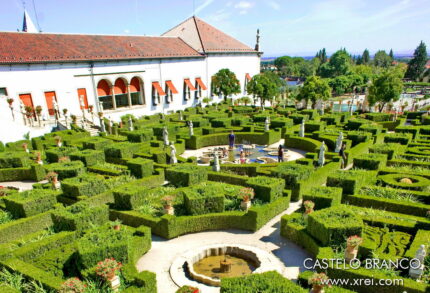
Jardim do Paço Episcopal: a garden inaugurated in 1725 and one of the main attractions of Castelo Branco. It is a small yet magnificent garden located beside the Paço Episcopal, with a wide variety of trees, statues depicting saints, kings and allegorical figures, a broad stairway and five lakes. The Jardim dos Alagados, within the Jardim do Paço Episcopal, is known for its monumental fountain featuring a statue of three intertwined dolphins crowned at the top.

Piscina Praia de Castelo Branco

Piscina Praia de Castelo Branco: a leading leisure facility in the city. The beach pool includes a car park with capacity for 750 vehicles, a lawn area, 3,950 square metres of water and changing facilities with capacity for approximately one thousand people.

Castelo de Castelo Branco

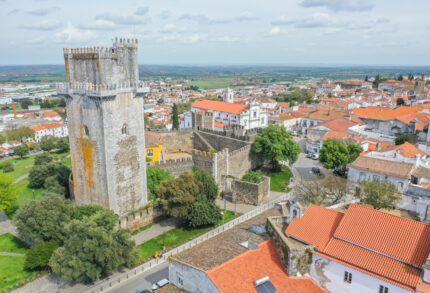
Castelo de Castelo Branco: also known as the Castelo dos Templários, it is the most important historic-military monument in Castelo Branco. It was built by the Knights Templar between 1214 and 1230 as a fortified settlement. Within its main enclosure stood the Igreja de Santa Maria do Castelo, which was largely destroyed during the Spanish invasion of 1704. The Castelo de Castelo Branco formed part of the Linha do Tejo, a defensive line comprising the Castelo de Almourol, the Castelo de Monsanto, the Castelo de Pombal, the Castelo de Tomar and the Castelo do Zêzere.

Parque das Violetas

Parque das Violetas: a wooded park with walking, cycling and skating tracks, green spaces, a children’s playground with slides, and garden benches throughout. It is a peaceful space, ideal for sport and for children to play outdoors.

Museu Cargaleiro

Museu Cargaleiro: a museum inaugurated in 2005 with the aim of showcasing the works of the Fundação Manuel Cargaleiro Collection, a local artist. The museum is housed in the Solar dos Cavaleiros, an 18th-century manor house.

Igreja de São Miguel or Cathedral

Igreja de São Miguel or Cathedral: the Cathedral church of Castelo Branco since 1956, classified as a Property of Public Interest. It is a church with Baroque and Rococo architectural elements from the medieval period, restored in the 18th century.

Centro de Cultura Contemporânea de Castelo Branco

Centro de Cultura Contemporânea de Castelo Branco: a contemporary architecture building that stands out in the city, hosting regular exhibitions of contemporary art from the region. The Centro de Cultura Contemporânea de Castelo Branco includes an auditorium with capacity for 275 people.

Zona de Lazer de Castelo Branco

Zona de Lazer de Castelo Branco: a park situated in the western part of the city, with extensive sports facilities and green spaces. Located near the Escola Superior de Tecnologia, the Escola Superior de Artes Aplicadas and the Escola Superior de Saúde. Here we find 2 football pitches, a multi-sports court, the municipal swimming pool complex, the Piscina Praia de Castelo Branco, a lake and the Castelo Branco Skate Park with eighteen ramps and rails available for skateboarding, inline skating and BMX.

Loki parque

Loki parque: an entertainment park for children and families, equipped with giant inflatables, a slide, a trampoline, karts, a multi-sports court, a disco, a multimedia zone, an indoor tree-climbing course for children and adults, bumperball, indoor paintball and horse riding activities.

Museu Francisco Tavares Proença Júnior

Museu Francisco Tavares Proença Júnior: an art museum housed in the former Paço Episcopal of Castelo Branco, with a permanent exhibition of archaeological finds, 16th-century tapestries and early Portuguese art, including a collection of antique embroidered bedspreads.

Other places to explore in Castelo Branco

Barragem de Santa Águeda

Barragem de Santa Águeda: also known as the Marateca dam, this dam is situated 15 km from the city of Castelo Branco. It is a quiet location of natural scenery, with good conditions for fishing, water sports, nature walks and a beautiful sunset.

Capela de Nossa Senhora da Piedade

Capela de Nossa Senhora da Piedade: the main highlight of this chapel is a set of 18th-century azulejo tiles depicting the Adoration of the Magi, the Last Supper, the Mysteries of the Virgin and images of the Apostles.

Casa Arco do Bispo

Casa Arco do Bispo: a 13th-century house located on the Praça Velha or Praça de Camões, it is an architectural landmark of Castelo Branco.

Celeiro da Ordem de Cristo

Celeiro da Ordem de Cristo: a building belonging to the Order of Christ, used as a public granary until the 19th century.

Centro de Interpretação Ambiental

Centro de Interpretação Ambiental: a space with fourteen interactive exhibits, aimed at promoting the natural heritage of the Parque Natural do Tejo Internacional.

Chafariz de São Marcos

Chafariz de São Marcos: a fountain located on the Largo de São Marcos. It is distinguished by sculpted royal arms of the Portuguese king D. Manuel I, featuring the Cross of Christ and the Armillary Sphere.

Convento da Graça

Convento da Graça: a 16th-century church classified as a Monument of Municipal Interest, housing the headquarters of the Santa Casa da Misericórdia de Castelo Branco. This convent belonged successively to the Order of Saint Francis, the Order of Saint Augustine and the Santa Casa da Misericórdia.

Domus Municipalis

Domus Municipalis: a 16th-century historic building located on the Praça Velha of the city. This building served as the Town Hall, courthouse, prison and library.

Largo e Cruzeiro de São João

Largo e Cruzeiro de São João: a monument built in the 16th century. It served to mark the presence of a chapel dedicated to São João.

Miradouro de São Gens

Miradouro de São Gens: a viewpoint with a panoramic view over the entire city, the Serra da Estrela, the historic village of Monsanto and Spain.

Palácio dos Viscondes de Portalegre

Palácio dos Viscondes de Portalegre: a palace built in 1743. It served as the seat of the Civil Government of Castelo Branco from the 19th century onwards and currently houses the city’s municipal council.

Parque da Cidade

Parque da Cidade: the municipal park of Castelo Branco, located opposite the Museu Francisco Tavares Proença Júnior. The park includes fountains and walkways decorated with the traditional Portuguese black-and-white cobblestone pattern.

Aeródromo de Proença-a-Nova

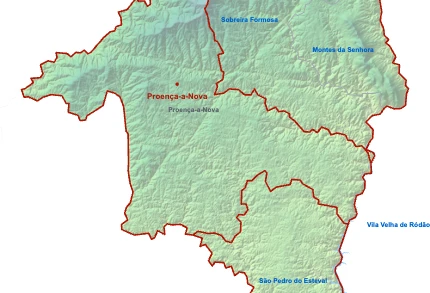
Aeródromo de Proença-a-Nova: an airfield with an 823-metre runway, located in Moitas, 5 km from Proença-a-Nova. The airfield is equipped with a hangar and restaurant. A skydiving centre operates here, with certified instructors offering tandem jumps and freefall courses.

Villages and other attractions to visit near Castelo Branco

Aldeia de Monsanto

Aldeia de Monsanto: one of Portugal’s historic villages, located northeast of Idanha-a-Nova, on the summit of Monsanto hill at 758 metres in altitude. Monsanto was elected the most Portuguese village in Portugal in 1938 by António Ferro, Director of the National Propaganda Secretariat at the time. This distinction earned the village the “Galo de Prata” award, still preserved today in the Torre do Lucano. In the village of Monsanto we highlight the Capela de Santo António, the Casa de Fernando Namora, the Cruzeiro de São Salvador, the Igreja da Misericórdia, the Igreja Matriz, the Castle, the Porta do Espírito Santo and the Torre do Lucano.

Belmonte

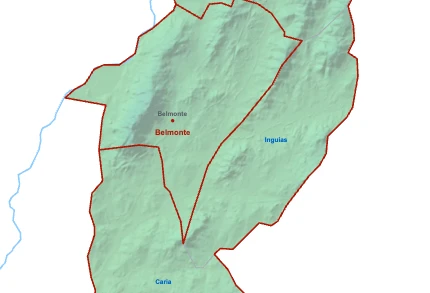
Belmonte: a village located in the Cova da Beira, with a privileged panoramic view over the Serra da Estrela. It was in Belmonte that the Portuguese navigator Pedro Álvares Cabral was born, responsible for the discovery of Brazil in 1500. Belmonte is also known for the significance of its Jewish community. In Belmonte one can visit notable historic heritage, including the Castelo de Belmonte, the Torre Centum Cellas, the Ecomuseu do Rio Zêzere, the Igreja Matriz, the Museu dos Descobrimentos, the Museu Judaico, the Pousada Convento de Belmonte, the Sinagoga Bet Eliahu, the Solar dos Cabrais and the Villa Romana da Quinta da Fórnea.

Serra da Estrela

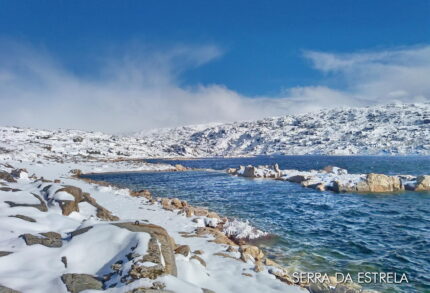
Serra da Estrela: the highest mountain range in mainland Portugal at approximately 2,000 metres, and the location of the headwaters of the Mondego River at Mondeguinho, the Zêzere River at Covão de Ametade, and the Alva River in the Rossim valley. In the Serra da Estrela we find the glacial valleys of Loriga, Manteigas and Covão do Urso. The Serra da Estrela is the only place in Portugal with a ski resort, where winter sports, toboggan runs and snowboarding can be enjoyed in winter. This region is known for Serra cheese, bread, the Serra da Estrela dog breed and natural wool crafts. In the Serra da Estrela it is well worth visiting the Parque Natural da Serra da Estrela, the Museu do Solar do Queijo and the Museu de Lanifícios.

Fundão

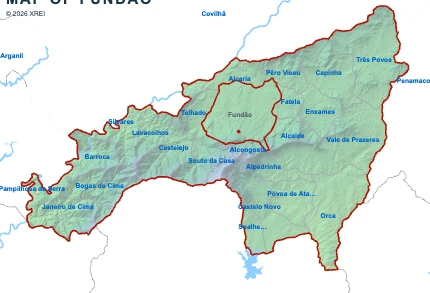
Fundão: a city of approximately 9,000 inhabitants, located at the foot of Monte de São Brás, in the Serra da Gardunha. Fundão is known for the production of cherries, sour cherries, peaches, olive oil and wine. Several hundred cherry producers operate here, establishing Fundão as the cherry capital of Portugal. The Fundão cherry is known as “red gold” and is considered by many to be the finest cherry in the world. In Fundão one can try the pastel de cereja do Fundão, a gastronomic innovation available in all pastry shops since its creation in 2011. Fundão is the seat of a municipality with 23 parishes: Alcaide, Alcaria, Alcongosta, Alpedrinha, Barroca, Bogas de Cima, Capinha, Castelejo, Castelo Novo, Enxames, Fatela, Fundão, Janeiro de Cima e Bogas de Baixo, Lavacolhos, Orca, Pêro Viseu, Póvoa de Atalaia e Atalaia do Campo, Silvares, Soalheira, Souto da Casa, Telhado, Três Povos, Vale de Prazeres and Mata da Rainha.

Penamacor

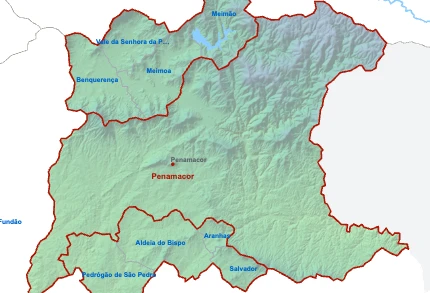
Penamacor: a village of approximately 1,500 inhabitants, where one can visit the Castelo de Penamacor, the Museu Municipal de Penamacor, the Museu Dr. Mário Bento and other historic heritage. It is the seat of a municipality with 9 parishes: Aldeia do Bispo, Águas e Aldeia de João Pires, Aranhas, Benquerença, Meimão, Meimoa, Pedrógão de São Pedro e Bemposta, Penamacor, Salvador and Vale da Senhora da Póvoa.

Idanha-a-Nova

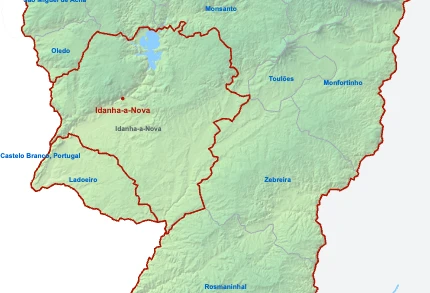
Idanha-a-Nova: a village classified as a UNESCO Creative City of Music, with approximately 2,100 inhabitants, seat of a municipality subdivided into 13 parishes: Aldeia de Santa Margarida, Idanha-a-Nova e Alcafozes, Ladoeiro, Medelim, Monfortinho e Salvaterra do Extremo, Monsanto e Idanha-a-Velha, Oledo, Penha Garcia, Proença-a-Velha, Rosmaninhal, São Miguel de Acha, Toulões and Zebreira e Segura.

Sertã

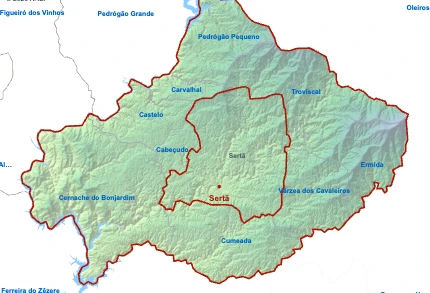
Sertã: a historic village of approximately 5,500 inhabitants, where one can enjoy a rich meat-based gastronomy and visit the Igreja Matriz da Sertã, the Castelo da Sertã, the Ponte da Carvalha, the pillories of Sertã and Pedrógão Pequeno and the Paços do Concelho. Sertã is the seat of a municipality with 10 parishes: Cabeçudo, Carvalhal, Castelo, Cernache de Bonjardim, Nesperal e Palhais, Cumeada e Marmeleiro, Ermida e Figueiredo, Pedrógão Pequeno, Sertã, Troviscal and Várzea dos Cavaleiros.

Cais Fluvial dos Lentiscais

Cais Fluvial dos Lentiscais: located on the Ponsul River approximately 6 km from Castelo Branco. This leisure facility includes a tourist vessel with capacity for eighty people that makes the crossing between the Cais de Lentiscais (Portugal) and the Cais de Cedillo (Spain). From this jetty it is possible to navigate the Tagus River as far as the town of Herrera de Alcântara, in Spain.

Geopark Naturtejo da Meseta Meridional

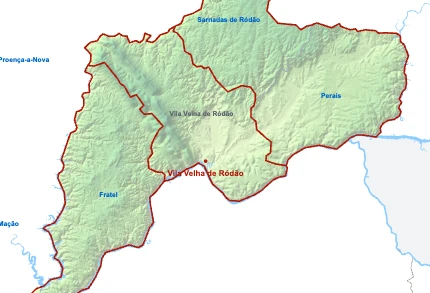
Geopark Naturtejo da Meseta Meridional: a geopark covering the municipalities of Castelo Branco, Idanha-a-Nova, Nisa, Oleiros, Proença-a-Nova and Vila Velha de Ródão, with an area of approximately 4,600 km². The Geopark comprises 16 geomonuments, namely:

  • the Monumento Natural das Portas do Ródão,
  • the Parque Icnológico de Penha Garcia,
  • the Meanders of the Zêzere River,
  • the Roman gold mine of Conhal do Arneiro,
  • the geomorphological viewpoint of Corgas or the epigenetic gorge of Malhada Velha,
  • and other elements of geological heritage. Birdwatching is among the most important activities in the Geopark Naturtejo da Meseta Meridional.

Idanha-a-Velha

Idanha-a-Velha: a village located in the district of Castelo Branco. It contains one of the largest sets of Roman ruins in Portugal. In Idanha-a-Velha one can visit an extensive heritage, including the Arquivo Epigráfico, the Capela de Espírito Santo, the Capela de São Dâmaso, the Capela de São Sebastião, the Igreja de Santa Maria, the Igreja Matriz, the Lagar de Varas, the Palheiros de São Dâmaso, the stepping stones over the Ponsul River, the Ponte Velha Romana over the Ponsul River, the North Gate of the 4th-century AD Roman wall and the Torre dos Templários.

Monfortinho

Monfortinho: a settlement situated near the Spanish border, bathed by the Erges River. According to local tradition, the waters of this river are believed to be beneficial for chronic skin conditions, and digestive, circulatory, respiratory and rheumatic disorders. The notable heritage of Monfortinho includes the Igreja Matriz de Nossa Senhora da Conceição, archaeological remains, former mines and the Castro do Picoito de Monfortinho.

Penha Garcia

Penha Garcia: a village rich in prehistoric and Roman remains, located near the border with Spain. Its hillside position affords a panoramic view over the surrounding natural landscape. In Penha Garcia it is well worth visiting the castle built in the 12th century, rocks over 490 million years old (dating from a period when all continents were joined around the South Pole), water-powered mills and the Fossil Route.

Praia Fluvial de Almaceda

Praia Fluvial de Almaceda: a river beach created on a stream running through the village of Almaceda. On this river beach stands a former olive oil mill that operated using water power. In Almaceda one can follow the Rota dos Lagares, a circular trail exploring the historic olive oil mills, traditionally known as lagares de varas. Also available is the circular mills route, starting in the schist village of Martim Branco.

Praia Fluvial do Sesmo

Praia Fluvial do Sesmo: a river beach located in the village of Sesmo. From this river beach one can explore the villages of Rapoula, Penteado and Malhada do Cervo — three villages of exceptional beauty.

Shopping centres in Castelo Branco

  • Fórum Castelo Branco: a shopping centre with 70 shops, a restaurant area and a Pingo Doce supermarket.
  • Centro Comercial Alegro: a shopping centre with a cinema, shops, restaurants and an Auchan group hypermarket.

Festivals and Pilgrimages of Castelo Branco

  • Nossa Senhora de Mércoles: held annually fifteen days after Easter Sunday.
  • Municipal Holiday: held annually on the third Tuesday after Easter Sunday.
  • Madeira: held annually during the Christmas season.
  • Procissão dos Passos: held annually during Easter.

The gastronomy of Castelo Branco

Castelo Branco is home to a unique gastronomy, full of flavour and distinct from the rest of the country. The traditional dishes of Castelo Branco include:

  • Bucho Recheado,
  • Cabrito Assado,
  • Cabrito Recheado,
  • Empadas de Castelo Branco,
  • Fígado de Cebolada,
  • Sopa de Matação,
  • Sopa de Massa,
  • Arroz Doce,
  • Broas de Mel,
  • Bola de Páscoa,
  • Cavacas,
  • Tigeladas,
  • Queijos de Castelo Branco,
  • Queijo Amarelo da Beira Baixa,
  • Queijo Picante da Beira Baixa.

The crafts of Castelo Branco

The crafts of Castelo Branco are a major tourist attraction with historic importance for the city. They include embroidery, stonework, linen blankets and bedspreads, sheepskin cloaks and cork objects. The embroidery of Castelo Branco deserves special mention. The tradition of Castelo Branco embroidery emerged in the 18th century. Today the art of embroidery is promoted through the Centro de Interpretação do Bordado de Castelo Branco, where visitors can learn about the entire creation process: from linen sowing to weaving, including the history and symbolism. The embroidery can be purchased at three locations: the Mercado Municipal-Artesanato, the Museu Tavares Proença Júnior and the Oficina-Escola de Bordado de Castelo Branco.

Economy of Castelo Branco

Castelo Branco is a fertile area, cultivating a wide variety of fruit, vegetables and olive groves for olive oil production. Cattle, sheep and goat farming supports meat and cheese production. The main artisan products of Castelo Branco are embroidery, regional cheese, olive oil and wine. The subsoil is rich in tungsten, tin and uranium. Castelo Branco has an industrial park of approximately 280 hectares of infrastructure, with direct access to the A23 motorway and over 200 companies across various sectors: agri-food, refrigeration industry, automotive components, metalworking, textiles, clothing, furniture, timber, distribution and logistics. The Instituto Politécnico de Castelo Branco is the park’s principal academic partner. The district of Castelo Branco has great tourism potential, with nature tourism and historic heritage. Tourism and the Instituto Politécnico de Castelo Branco are two major drivers of the regional economy.

Geographical location

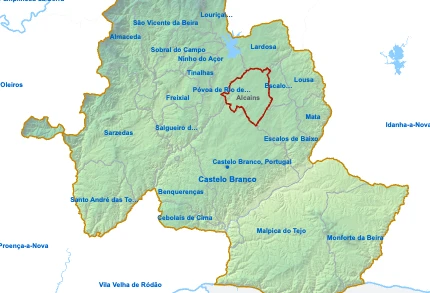
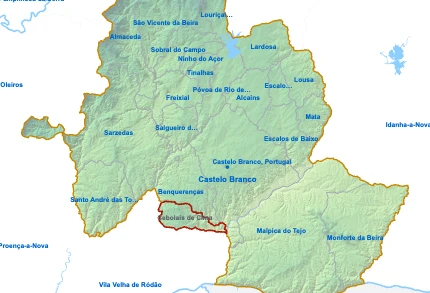
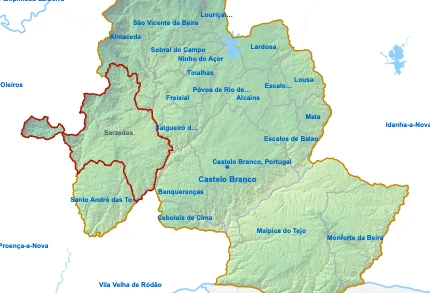
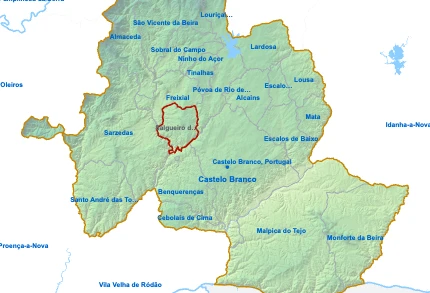
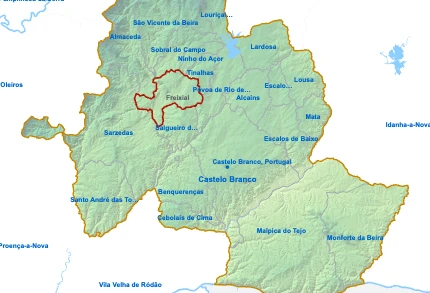
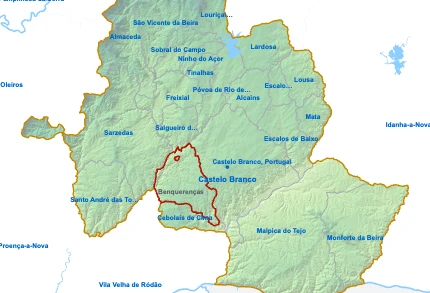
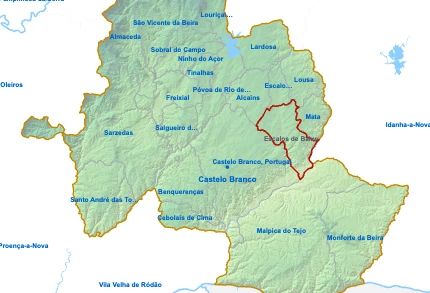
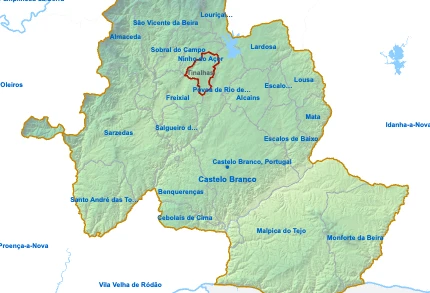
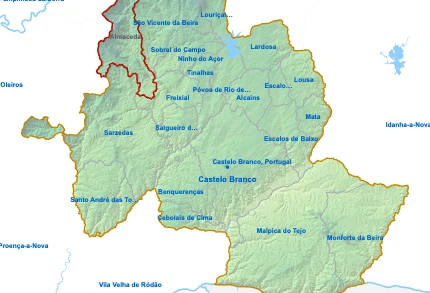
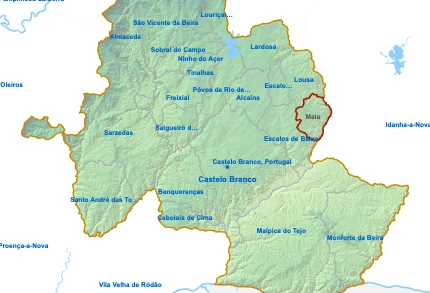
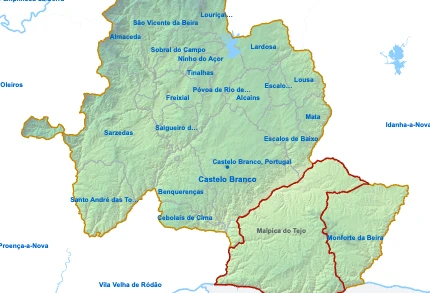
Castelo Branco is a city located in the Centre region of Portugal. The district of Castelo Branco borders Portalegre to the south, Spain to the east and southeast, Santarém to the southwest, Leiria to the west, Coimbra to the northwest and Guarda to the north. The district of Castelo Branco has a temperate climate with temperatures ranging between 25°C in summer and 7°C in winter. The municipality of Castelo Branco is divided into 19 parishes, namely: Alcains, Almaceda, Benquerenças, Castelo Branco, Cebolais de Cima e Retaxo, Escalos de Baixo e Mata, Escalos de Cima e Lousa, Freixial e Juncal do Campo, Lardosa, Louriçal do Campo, Malpica do Tejo, Monforte da Beira, Ninho do Açor e Sobral do Campo, Póvoa de Rio de Moinhos e Cafede, Salgueiro do Campo, Santo André das Tojeiras, São Vicente da Beira, Sarzedas and Tinalhas.

The most important mountain ranges in the district of Castelo Branco are the Serra de Alvelos, the Serra da Estrela, the Serra da Gardunha, the Serra da Malcata and the Serra do Muradal. The most important rivers in the district of Castelo Branco are the Erges River, the Ponsul River, the Ocreza River, the Tagus River and the Zêzere River.

History of Castelo Branco

Castelo Branco began as a castro, a small fortification built on a hilltop during the Roman period. In this era, Castelo Branco was known as Castra Leuca. The settlement of Castelo Branco was granted to the Knights Templar in 1165 by D. Afonso Henriques, the first king of Portugal. It was under the religious order of the Knights Templar that the city of Castelo Branco acquired its current name. On 15 April 1771, D. José I elevated Castelo Branco to the status of city. The major economic growth of Castelo Branco began in 1936 with the water supply from the Ocreza dam.

Quick facts about Castelo Branco

  • A person native to Castelo Branco is known as albicastrense.
  • Population of the district of Castelo Branco: approximately 197,000 inhabitants.
    • Population of the city of Castelo Branco: approximately 34,000 inhabitants.
  • District: Castelo Branco
  • Former Province: Beira Baixa
  • Year of municipal foundation: 1213
  • Airfield: 1
  • Helipad: 1
  • Municipal holiday: Nossa Senhora de Mércoles holiday, third Tuesday after Easter Sunday.

Castelo Branco related places

Estamos Cerca de Ti

XREI opera desde oficinas en todo Portugal — desde Oporto hasta el Algarve.

Norte

Oporto — Edificio ICON

Rua Direita de Francos, 165 Piso 1 · 4100-211 Porto

Gran Lisboa

Lisboa — Rua Castilho

Rua Castilho, 39 · 1250-068 Lisboa

Gran Lisboa

Estoril

Avenida Aida, 353A · 2765-187 Estoril

Costa Alentejana

Comporta

Av. 18 Dezembro, 37 · 7570-779 Carvalhal

Algarve

Vilamoura — Marina Plaza

Av. da Marina, 3 · Marina Plaza Loja 14/15 · 8125-401 Quarteira