
Aveiro
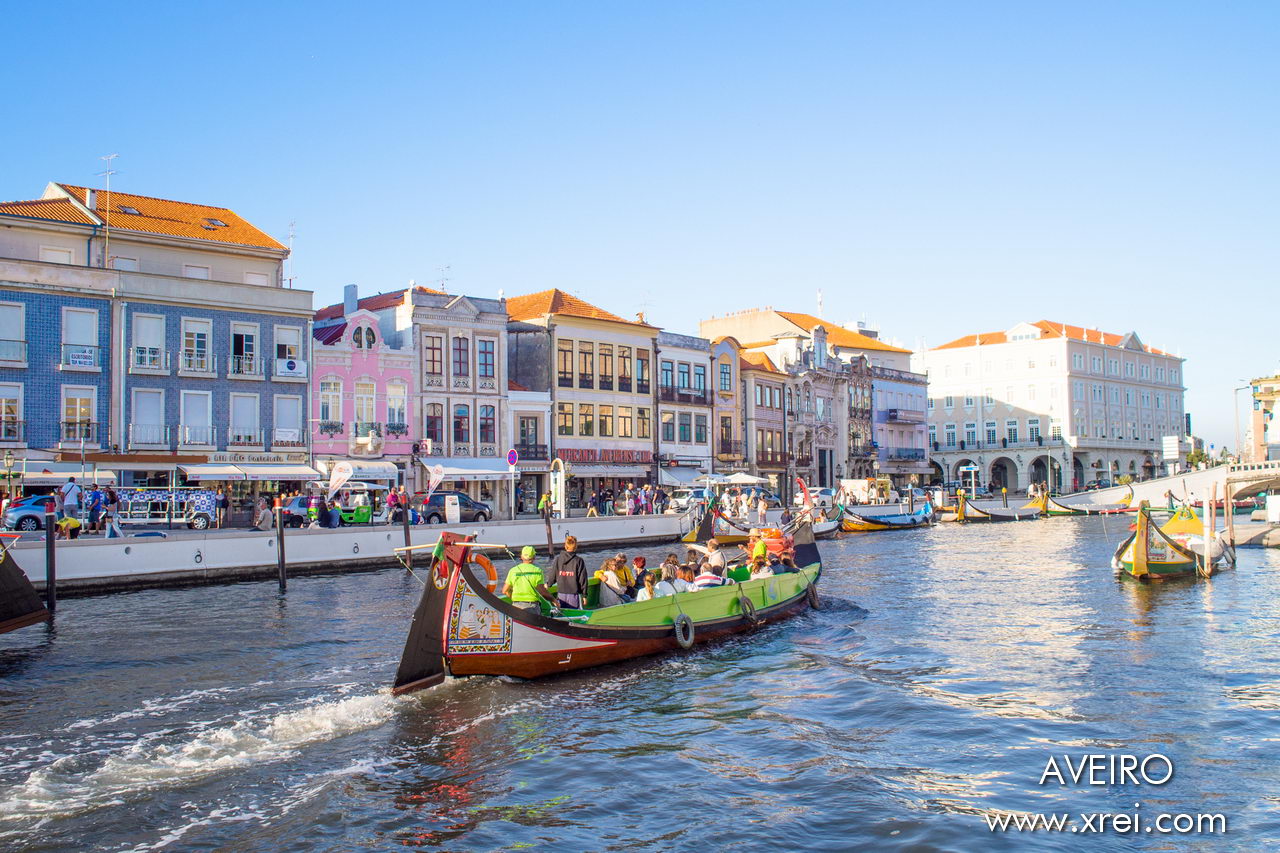
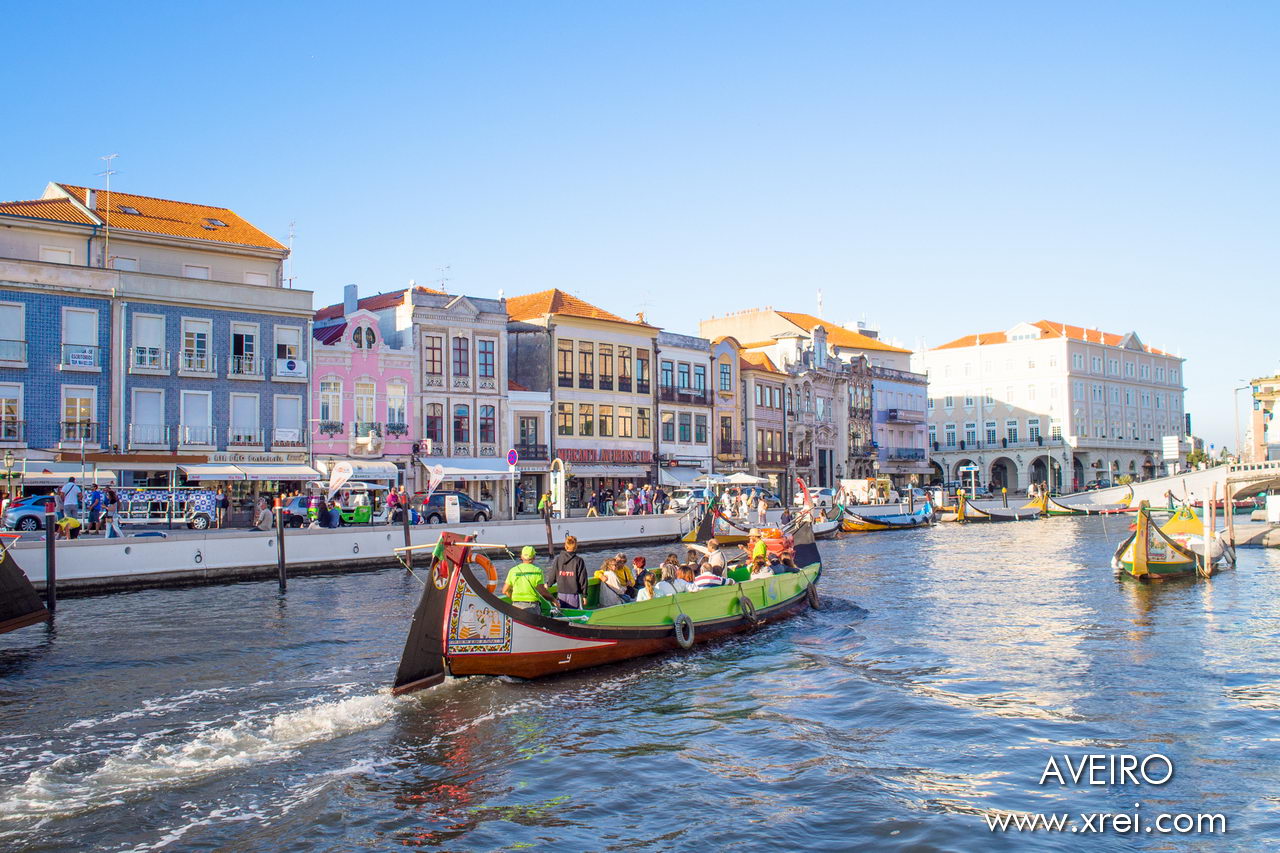
The city of Aveiro is known as “The Venice of Portugal” owing to its large number of canals, bridges, moliceiros — the traditional boats of the region — and its lagoon (Ria). It is a Portuguese city located on the western coast of Portugal, bordered to the north by the district of Porto, to the east by the district of Viseu, to the south by the district of Coimbra and to the west by the Atlantic Ocean. This Atlantic city lies approximately 68 km from Porto and 243 km from Lisbon. Aveiro is a city deeply connected to the sea and has seen a rejuvenation of its population since the establishment of the Universidade de Aveiro. Aveiro was elevated to the status of a town in the 13th century and began to develop around the Igreja de São Miguel, situated on the present-day Praça da República. The Portuguese king Dom João ordered the construction of walls that were later demolished, with their stones repurposed to build a coastal breakwater as protection against the violence of the ocean. The city was granted the privilege of holding a Feira Franca in 1434, a fair that continues to this day, now known as the Feira de Março. Aveiro was elevated to city status in 1759 by King Dom José I of Portugal. Aveiro has always been associated with salt production, fishing and maritime trade since the Middle Ages. The city began to grow from the 15th century with the start of the Age of Discovery. Aveiro was one of the main ports involved in cod fishing during the dictatorial regime of Oliveira Salazar in the 20th century.
Main Attractions in Aveiro
- Salinas de Aveiro: the salt production area of Aveiro, operating within a system of saltmarshes with islands that provide a habitat of great biodiversity for birds and other aquatic organisms. The saltpans are a point of major historical importance for the city of Aveiro and are currently one of the most significant tourist attractions in the city and region.
- Praia da Costa Nova: a high-quality beach situated south of the Ponte da Barra, with an ocean frontage and various facilities including an urban area, numerous restaurants, sports courts for tennis and football, the Clube de Vela da Costa Nova, surf, paddle surf, kitesurf and canoeing schools, and a riverside promenade along the Mira channel of the Ria de Aveiro. The beach is crossed by a cycle path connecting it to the beaches of Ponte da Barra, Praia da Barra and Praia da Vagueira.
- Praia da Barra: the beach situated north of Praia da Costa Nova, home to the Farol de Aveiro — built in the 19th century, it is the tallest lighthouse in Portugal at 62 metres, with a luminous range of 23 nautical miles under normal atmospheric visibility conditions. It is counted among the 26 tallest lighthouses in the world and is one of Aveiro’s main attractions, open to the public every Wednesday from 14:00 to 17:00.
- Paredão da Barra: the breakwater with a pedestrian path running from the Paredão da Barra beach (formerly Praia Velha) to the Farol de Aveiro on the southern jetty.
- Praia de São Jacinto: the beach situated north of the mouth of the Vouga river, with lower visitor numbers owing to its distance from the main settlements. Although physically close to Aveiro, access is via national road 327 from Ovar. Nearby is the small fishing village of São Jacinto, facing the Ria de Aveiro, with an air base and limited commerce, and the São Jacinto campsite.
- Ostraveiro Marinha Passagem: a tourist attraction on the Ria de Aveiro offering boat tours, guided visits to oyster production, and oyster tasting from the Ria de Aveiro.
- Reserva Natural das Dunas de São Jacinto: a nature reserve for the protection of habitats, wild flora and fauna, comprising a dune belt separating the salt waters of the Atlantic Ocean from the brackish waters of the Vouga river. It is popular for birdwatching and contains the Mata de São Jacinto, the Pateira and the dunes — among the ecological and landscape treasures of this region.
- Pateira de Frossos: a trail in the Parque Natural das Dunas de São Jacinto within the Ria de Aveiro, sought out for birdwatching.
- Museu de Aveiro no Mosteiro de Jesus: a museum with an exhibition of sacred art, housed in the former convent of the Dominican women’s order, built in the 15th century and classified as a National Monument since 1910.
- Parque Dom Pedro Infante: a tree-lined park in the city of Aveiro surrounding a lake, with a children’s playground, tea house, monuments and walking areas.
- Beira Mar — Jardim do Rossio: a park in the centre of Aveiro where visitors can take rides on the Moliceiros — the traditional boats of the Ria de Aveiro.
- The Canals of Aveiro: the city of Aveiro has a network of canals running throughout the city and reaching the Ria, with three main canals: the Canal de São Roque — the central canal of the city, navigable by Moliceiro between the Jardim do Rossio and Praça General Humberto Delgado, bounding the city of Aveiro to the north-west and separating it from the saltpans. From this canal it is possible to see the Art Nouveau buildings, the fish market, the Beira-Mar neighbourhood and the Museu de Aveiro; the Canal dos Santos Mártires, which runs south-west through the city; and the Canal das Pirâmides, named after the two pyramids at its entrance.
Further Attractions in Aveiro
- Museu Marítimo de Ílhavo: a museum established in 1937 and expanded in 2001 to its current building, with a permanent exhibition related to memories of work at sea, Portuguese maritime culture and identity.
- Ponte Laços de Amizade: one of Aveiro’s pedestrian bridges, decorated with thousands of colourful ribbons. The idea was created by students of the Universidade de Aveiro and consists of ties placed by two people as a symbol of friendship.
- Ponte dos Carcavelos: a pedestrian bridge over the Canal de São Roque from which the sunset over the Aveiro saltpans can be appreciated.
- Ponte Pedonal Circular: also known as Ponte do Laço, a modern architectural bridge for pedestrian and bicycle use, composed of a circle of 26 metres in circumference connecting the four banks of the canals in Aveiro.
- Navio-Museu Santo André: a satellite of the Museu Marítimo de Ílhavo, installed in a former vessel from the Portuguese cod fishing fleet, built in 1948 and decommissioned in 1997. Visitors can explore and learn about how cod trawling was carried out.
- Workshop de Ovos Moles de Aveiro: an activity offered by a local company to promote the local confectionery tradition of Ovos Moles — a regional speciality of Aveiro with origins in Catholic convents in the 16th century, consisting of an egg and sugar filling encased in a thin wafer.
- Ecomuseu Marinha da Troncalhada: an ecomuseum where visitors can learn about artisanal salt production methods.
- Jardim Oudinot: a coastal park situated along the Mira canal, with a recreational mooring, children’s playgrounds, a picnic area, football, basketball and tennis courts, popular for walking and cycling.
- Marinha da Noeirinha: one of the former saltpans located on the Beira Mar of Aveiro, featuring a wooden building in the shape of a salt pyramid, with a museum shop containing centuries of history related to artisanal salt production.
- Lancha “Praia Costa Nova”: a museum boat managed by private entities offering an extended tourist route through the Ria de Aveiro, allowing visitors to appreciate the lagoon landscape in a more immersive way.
- Capela de São Gonçalinho: a chapel built in 1714, classified by IPPAR in 2003 as a Property of Public Interest.
- Igreja da Misericórdia de Aveiro: a church built in the 17th century, with a façade clad in azulejo tiles.
- Forte da Barra de Aveiro: a fort situated at the mouth of the Vouga river that never served any military function owing to the silting of the coastline. The Forte da Barra de Aveiro has been classified as a Property of Public Interest since 1974.
- Fábrica Centro Ciência Viva de Aveiro: a partnership between the Universidade de Aveiro and the Centro de Ciência Viva network in Portugal, aimed at promoting the dissemination of scientific and technological culture.
- Lugar dos Afetos: a didactic theme park dedicated to emotions, originating in the life project of physician and writer Graça Gonçalves, inspired by nature and human feelings.
- Cais da Ribeira de Esgueira: a quay with a birdwatching point alongside the Ria de Aveiro boardwalk, a location for walking.
- Sé Catedral de Aveiro (Igreja de São Domingos): the seat of the Diocese of Aveiro, classified as a Property of Public Interest since 1996.
- Casa do Major Pessoa: also known as the Museu Arte Nova, a museum housed in an Art Nouveau building classified as a Property of Public Interest since 1997. Inside, visitors can explore a tea room and music room, though it is the building’s exterior that draws the majority of visitors.
- Fórum de Aveiro: an open shopping centre integrated into the natural landscape of the city, including restaurants, shops, cinemas, bookshops and underground parking. The commercial space is designed in the spirit of the ancient Roman forum.
- Universidade de Aveiro: founded in 1973, it is an important centre of technological development in Portugal, located on the Campus Universitário de Santiago.
Geographical Setting of Aveiro
The district of Aveiro is divided into 19 municipalities:
- Águeda
- Albergaria-a-Velha
- Anadia
- Arouca
- Aveiro
- Castelo de Paiva
- Espinho
- Estarreja
- Ílhavo
- Mealhada
- Murtosa
- Oliveira de Azeméis
- Oliveira do Bairro
- Ovar
- Santa Maria da Feira
- São João da Madeira
- Sever do Vouga
- Vagos
- Vale de Cambra
The district of Aveiro is crossed by the rivers Antuã, Caima, Cértima, Frades, Arda, Boco and Arões. The landscape of Aveiro is dominated by the Ria de Aveiro. The Ria includes an estuary, sandbanks, a freshwater lagoon, the Reserva Natural das Dunas de São Jacinto, and flora and fauna of great variety. The wetlands of the Ria support the cultivation of rice and maize. The Ria can be explored by Moliceiro — the traditional boat of the region, formerly used to transport salt. Today the Moliceiro is a tourist attraction. Aveiro is also home to the mountain ranges of Moldes, São Pedro Velho and the Serra do Arade, and a coastal shoreline of beaches extending approximately 40 km.
Places to Visit near Aveiro
Arouca
Arouca: a town and municipal seat located in the district of Aveiro, situated within the hydrographic basin of the Douro river. The municipality of Arouca is subdivided into 16 civil parishes: Alvarenga; Arouca e Burgo; Cabreiros e Albergaria da Serra; Canelas e Espiunca; Chave; Covelo de Paivó e Janarde; Escariz; Fermedo; Mansores; Moldes (Arouca); Rossas; Santa Eulália; São Miguel do Mato; Tropeço; Urrô; and Várzea. In Arouca the highlights are the Mosteiro de Arouca, the bridge over the Paiva river, the Passadiços do Paiva, the Arouca Geopark and the river beaches of Albergaria, Areinho, Espiunca, Janarde, Meitriz, Paradinha and Vau. The local cuisine specialities are Arouquesa beef and convent sweets.
Castelo de Paiva
Castelo de Paiva: a town and municipal seat subdivided into the following civil parishes: Fornos, Raiva, Pedorido e Paraíso, Real, Santa Maria de Sardoura, São Martinho de Sardoura, Sobrado e Bairros. This part of the Aveiro district is profoundly marked by the scenic beauty of the Douro, Paiva, Arda and Sardoura rivers. In Castelo de Paiva the highlights are its proximity to the Douro river, the Catapeixe viewpoint and an environment of unspoiled nature.
Espinho
Espinho: a city in the district of Aveiro, with the four civil parishes of Anta e Guetim, Espinho, Paramos and Silvalde, bordered to the north by Vila Nova de Gaia. Notable attractions in Espinho include the ruins of Castro de Ovil, the Igreja Matriz, the Casino de Espinho and its town centre decorated with Portuguese cobblestone pavement. Espinho has approximately 8 km of beaches with ideal conditions for surfing, kitesurfing and bodyboarding. The beaches of Espinho regularly host European Beach Volleyball, Surf and Bodyboard championships. The main beaches are: Praia Azul, Praia da Baía, Costa Verde, Praia de Marbelo, Praia de Paramos, Praia Pop, Praia Seca, Praia de Sereias and Praia Silvalde.
Mealhada
Mealhada: a city in the south of the district of Aveiro and one of the most significant urban centres of the Bairrada wine sub-region. Mealhada is well known for its restaurants specialising in leitão assado à Bairrada (roast suckling pig) and for the brand “Água, o Pão, o Vinho e o Leitão — 4 Maravilhas da Mesa da Mealhada” (Water, Bread, Wine and Suckling Pig — 4 Wonders of the Mealhada Table), created and registered by the municipality in 2007. Highlights in Mealhada include the Capela de Sant’Ana, the town centre, the Mata Nacional do Buçaco, the Termas do Luso, the Parque da Cidade and the Casino do Luso. Mealhada is divided into 6 civil parishes: Barcouço; Casal Comba; Luso; Mealhada, Ventosa do Bairro e Antes; Pampilhosa; and Vacariça.
Ovar
Ovar: a city and municipal seat divided into 5 civil parishes: Cortegaça; Esmoriz; Maceda; União das Freguesias de Ovar, São João, Arada e São Vicente de Pereira Jusã; and Válega. Walking through Ovar, many buildings can be seen with façades decorated in azulejo tiles — a feature that earned the city its nickname “Cidade Museu do Azulejo” (Azulejo Museum City). Ovar is notable for its great ecological value, owing to its sea, forest and lagoon, with many tourism and leisure activities on offer. Beyond the natural environment, Ovar is home to the Museu e Casa de Júlio Dinis, the Passos de Ovar, the Capela de Nossa Senhora do Bom Sucesso, the Parque Ambiental do Buçaquinho, the Praia do Furadouro, the Praia de Cortegaça, Praia da Barrinha, Praia de São Pedro de Maceda, Praia do Torrão do Lameiro and the Praia Fluvial do Areinho. Ovar is known for its traditional Carnival and for the pão-de-ló de Ovar, a hallmark of the city’s gastronomy.
Gastronomy of Aveiro
The gastronomy of Aveiro reflects the variety and unique flavours that are the result of centuries of wisdom passed from generation to generation. Aveiro’s specialities include:
- Caldeirada de Petinga;
- Caldeira de Enguia;
- Carneiro à Lampantana;
- Chouriço com grelos;
- Enguias de Escabeche;
- Espetadas de Mexilhão;
- Leitão à Bairrada;
- Pão de Vale de Ílhavo;
- Raia em Molho Pitau;
- Regueifa;
- Rojões;
- Vitela Assada.
Festivals of Aveiro
Aveiro has several important festivals and pilgrimages, including:
- Cortejo de Entrega dos Ramos and Festa de São Gonçalinho: held in January
- Festas da Ria: held in July or August depending on the tides
- Festas da Cidade: held on the municipal holiday of 12 May, including the Procissão da Padroeira Santa Joana Princesa
Crafts of Aveiro
The crafts of Aveiro include traditional products and practices, notably:
- folk costumes;
- ceramics;
- tinwork;
- woodwork;
- rag weaving;
- lace;
- embroidery;
- basketry;
- painted yokes;
- miniature boats from Estarreja;
- rugs and boats from Murtosa.
Economy of the Aveiro Region
Aveiro’s most important agricultural products are cereals, fruit, vegetables and wines. This region is home to the Bairrada wine-producing region. Aveiro has a rich livestock sector, particularly Arouquesa cattle and dairy products.
The district of Aveiro accounts for 6.7% of all companies in Portugal, with production reaching 5.7% — a figure surpassed only by Lisbon and Porto. Within the district of Aveiro, the dominant economic sectors are manufacturing and commerce, representing 50% and 32% respectively of the region’s business volume. The fishing sector still holds some importance in the regional economy, accounting for 19% of total sales.
The district of Aveiro’s most important activities remain in the traditional sectors — metalworking, the chemical industry, timber and cork. With the establishment of the Universidade de Aveiro, the region experienced strong growth in technology-based goods and products, with a strong export orientation.
Quick Facts about Aveiro
According to popular tradition, the name “Aveiro” derives from “ave” (bird), owing to the large number of birds found in the region.
- City population: approximately 79,000 inhabitants
- District population: approximately 715,000 inhabitants
- Area: 197.58 km²
- Region: Central Portugal
- District: Aveiro
- Former Province: Beira Litoral
- Municipal holiday: 12 May
- Beaches: 5 beaches in Aveiro
- Praia da Barra;
- Praia da Costa Nova;
- Praia de Espinho;
- Praia do Furadouro;
- Praia da Torreira.
- Thermal spas: 1 (Termas da Cúria)